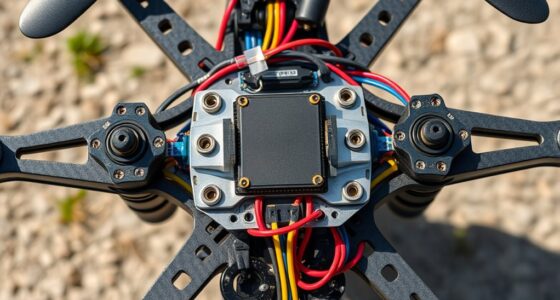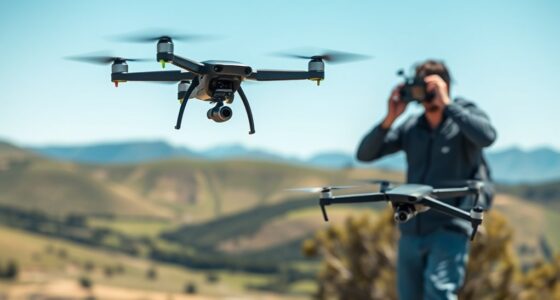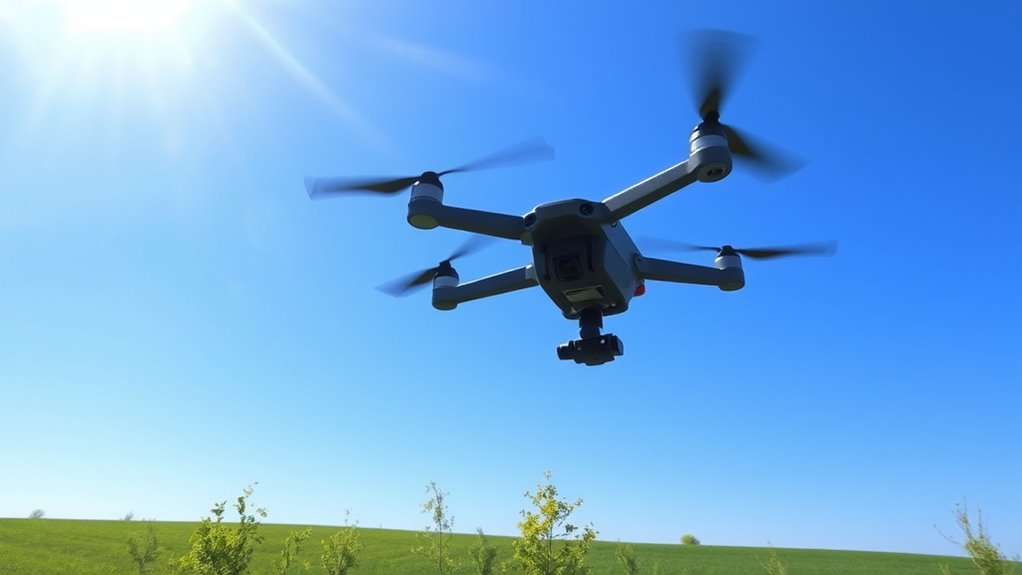
Start with mastering the hover and orientation to build stability and control at various altitudes. Move on to basic flips and rolls to gain confidence in quick maneuvers. Practice the power loop carefully, ensuring smooth pitch and throttle inputs. Learn the split S to control inverted flight and tighten your skills. Finally, navigate gaps and tight spaces with precision. Keep practicing these basics, and you’ll release even more advanced tricks as you progress.
Listen free for 30 days with Audible
Thousands of audiobooks and originals — cancel anytime.
As an affiliate, we earn on qualifying purchases.
Key Takeaways
- Master stable hovering at various altitudes for better control and confidence.
- Practice basic flips and rolls in open space to develop smooth, controlled movements.
- Learn the power loop technique with gentle pitch and throttle for clean, large loops.
- Develop inverted flight skills to safely perform the Split S maneuver.
- Improve navigation through gaps and tight spaces with precise, controlled stick inputs.
Mastering the Hover and Orientation

Mastering the hover and orientation is a fundamental skill that sets the foundation for all your FPV flying. When you learn to hover steadily, you gain better control over your drone’s position and movement. Practice maintaining a stable hover at different altitudes, focusing on smooth throttle adjustments. Simultaneously, work on changing your orientation—knowing which way your drone’s front, back, and sides are facing—without losing control. Use visual cues or camera angles to help keep track of your orientation. This improves your responsiveness and confidence, making complex maneuvers easier. Start in open areas free of obstacles, and practice small adjustments until your hovering becomes smooth and precise. Building these skills early on ensures you’re prepared for more advanced tricks and confident in any flying situation. Additionally, understanding projector contrast ratio can help you evaluate visual clarity in various flying environments, especially when practicing indoors or in low-light conditions. Developing a good sense of spatial awareness is essential for safe and effective FPV flying as you progress to more complex maneuvers. Practicing these basics regularly will accelerate your progress and help you develop a muscle memory for precise control. It’s also helpful to be aware of ear wax odor in your environment, as strong smells can sometimes distract or indicate the need for better ventilation during extended flying sessions.
Performing Basic Flips and Rolls

Learning to perform basic flips and rolls is a key step in developing your FPV flying skills. Flips rotate your drone forward or backward around the pitch axis, while rolls spin it sideways around the roll axis. To start, find an open space with plenty of altitude. Initiate a gentle stick input—push the right stick forward for a flip or tilt it to the side for a roll. Keep your movements smooth and controlled, avoiding sudden jerks. As you gain confidence, practice timing and coordination, making the flips and rolls more precise. Remember, gentle, deliberate inputs lead to cleaner tricks. Practice repeatedly, and focus on maintaining stable altitude and orientation throughout each maneuver. Proper technique is crucial to ensure safe and effective maneuvers while minimizing the risk of crashes. Incorporating stability principles helps improve overall control during complex tricks. Paying attention to drone responsiveness ensures your inputs translate accurately into the desired maneuvers. Additionally, understanding control calibration can enhance your precision during these tricks.
Executing the Power Loop Technique
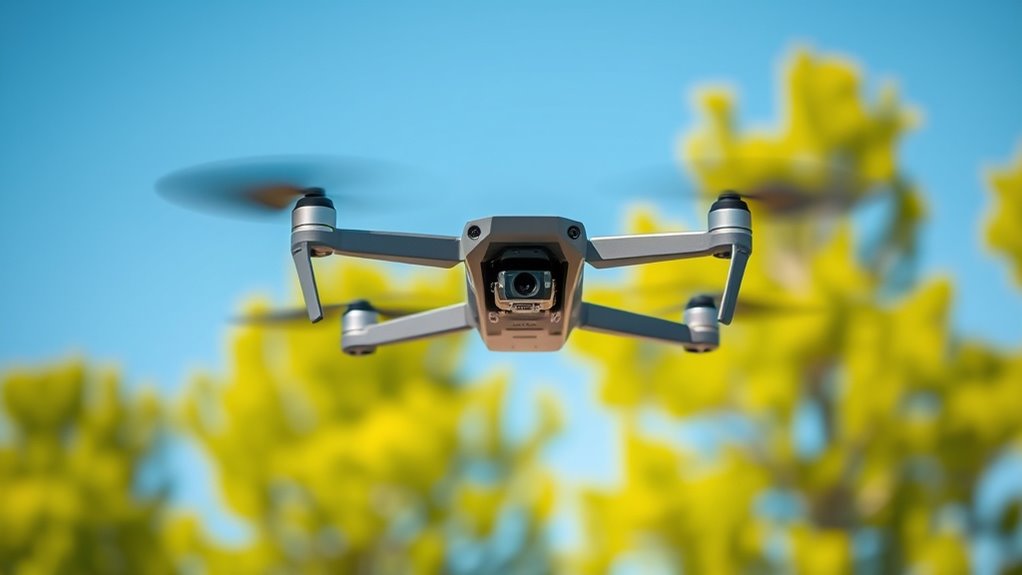
To execute a power loop, start by gaining enough altitude to perform the maneuver safely. Confirm your drone is stable and you have clear space above and around you. Begin with a gentle forward motion, then smoothly pitch the drone upward while increasing throttle. Maintain a consistent angle, keeping the camera tilted at around 10-15° for better visibility. Focus on coordinating your pitch and throttle inputs, avoiding sudden movements. As the drone arcs upward, gradually reduce throttle at the top of the loop to control the descent. Keep your eyes on the drone’s path, and stay smooth with your control sticks. Practice large, gentle loops first, then tighten your turns as you gain confidence. Proper altitude and smooth control are key to mastering the power loop. Remember, understanding your drone’s flight controls and practicing in a safe environment are essential steps toward mastering advanced tricks. Additionally, practicing in an open area free of obstacles helps build confidence and ensures safety during your training sessions. Developing a good sense of timing and coordination is also crucial for executing clean and consistent loops.
Practicing the Split S Maneuver
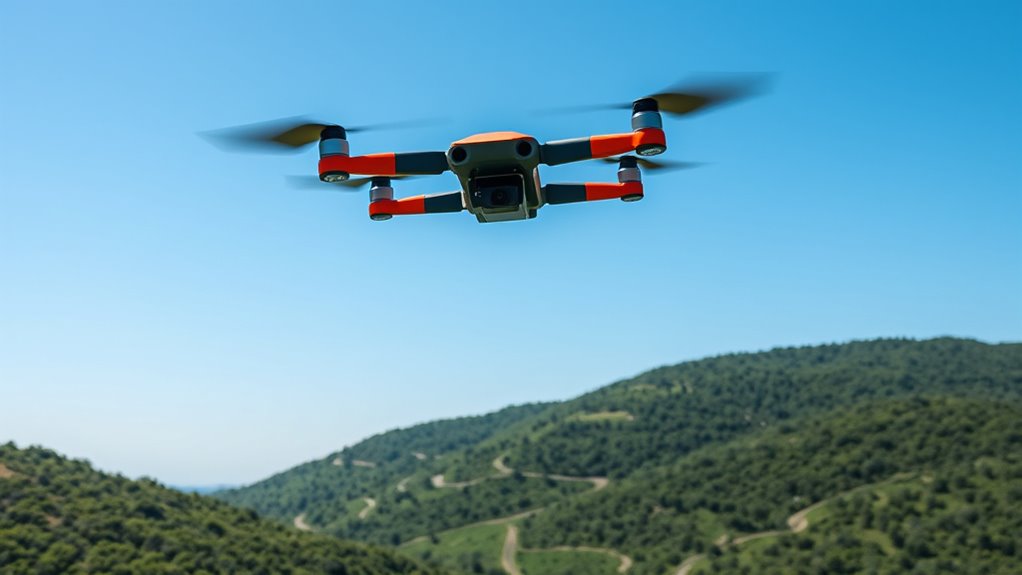
Practicing the Split S maneuver requires you to develop precise control over your drone’s orientation and throttle. Start by gaining confidence with inverted flight, then smoothly initiate a half roll to invert your drone. As you do this, gently reduce throttle to maintain control and prevent altitude loss. Once inverted, continue with a downward half-loop, using subtle throttle adjustments to keep the descent steady. Focus on smooth, coordinated movements between the roll and throttle, avoiding abrupt corrections. Practice at moderate altitude, ensuring plenty of space below. As you improve, work on tightening the maneuver and reducing recovery time. Mastering the Split S helps refine your control over inverted flight and prepares you for more advanced progressions and tricks.
Navigating Gaps and Tight Spaces

Mastering the Split S maneuver sharpens your inverted control, which directly benefits your ability to navigate narrow gaps and tight spaces. When flying through tight areas, precise stick movements and smooth inputs are essential. Focus on maintaining steady throttle and controlled movements to avoid knocking obstacles. To improve your skills:
Mastering the Split S enhances inverted control for precise navigation through tight spaces.
- Start with wide gaps, then gradually reduce size as confidence grows
- Use slow, deliberate stick inputs for better precision
- Keep your eyes ahead to anticipate obstacles early
- Practice smooth throttle adjustments to maintain stability
- Additionally, understanding your drone’s power backup systems can help you plan safe landings in case of power loss during complex maneuvers.
Frequently Asked Questions
How Do I Prevent Crashes During Initial Practice Sessions?
To prevent crashes during initial practice, start in open, obstacle-free areas and fly at low altitudes. Keep your movements slow and deliberate, focusing on smooth stick control. Use beginner-friendly modes if available, and avoid pushing your drone too hard initially. Regularly check your drone’s orientation, and don’t rush into complex tricks. Practice hovering and basic maneuvers to build confidence and develop muscle memory safely.
What Are Common Mistakes Beginners Make With Flips and Rolls?
You often over-rotate or under-rotate during flips and rolls, causing instability. Sometimes, you don’t give enough throttle, making the drone lose altitude or control. Poor timing or abrupt stick movements also lead to shaky tricks. To improve, practice in calm conditions, start with slow, gentle rotations, and focus on smooth, coordinated inputs. With patience and consistent practice, you’ll develop cleaner flips and rolls, boosting your confidence and control.
How Can I Improve My Reaction Time for Quick Maneuvers?
You can improve your reaction time by practicing regularly in open spaces, focusing on smooth stick movements. Use slow, deliberate inputs to build muscle memory, then gradually increase speed. Watch your drone closely and anticipate movements, especially during quick maneuvers like flips or gap flying. Stay relaxed, and don’t rush. Over time, your reflexes will sharpen, allowing you to respond faster and execute tricks more precisely.
What Safety Gear Is Recommended for Beginner FPV Pilots?
You should always wear safety gear like a crash-resistant helmet to protect your head, especially during crashes or falls. Use goggles to shield your eyes from debris and guarantee clear vision. Consider gloves for better grip and hand protection, and wear long sleeves and pants to prevent cuts and scrapes. Having a fire extinguisher nearby is also a smart safety measure in case of electrical issues.
How Do I Choose the Right Drone Settings for Learning Tricks?
Imagine guiding your drone like a steady hand leading a dance. You’ll want to start with gentle, forgiving settings—set low rates for responsiveness, smooth expo for control, and adjust your throttle curves for stability. Keep your PID tuned for a balanced flight, and slow down your rates for precision. These choices create a forgiving environment, allowing you to explore tricks confidently while building your skills and enjoying every moment airborne.
Conclusion
Think of your drone journey as learning to sail through a vast ocean. These beginner tricks are your compass and sail, guiding you through calm waters and choppy waves alike. As you master each maneuver, you’ll gain confidence to navigate uncharted territories with ease. Keep practicing, stay curious, and soon you’ll be charting new courses, turning your drone into a vessel of endless adventure. The horizon is just the beginning—your skills will set you free.
Fall yard work Picks
leaf blowers
As an affiliate, we earn on qualifying purchases.