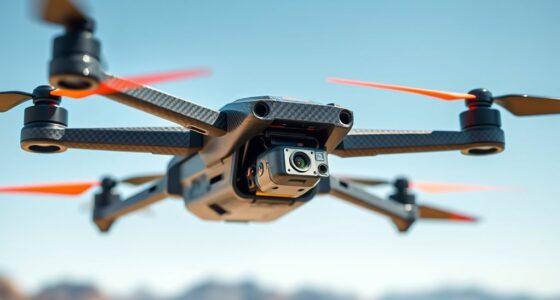
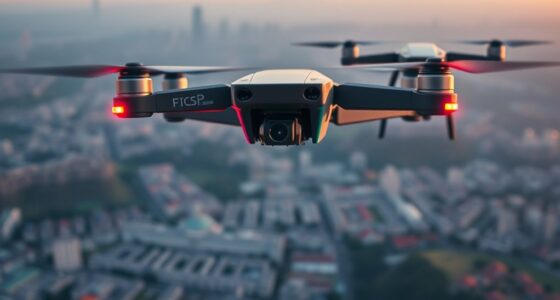
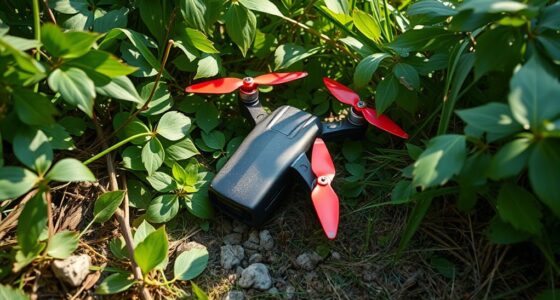
To fly FPV drones safely, always keep a dedicated spotter who watches your drone within sight and communicates clearly. Make sure your fail-safe features like return-to-home are set and tested before each flight. Follow best practices by planning your flight, staying within legal limits, and avoiding reckless behavior. Regularly update your firmware and monitor environmental conditions. Continue exploring these safety strategies to keep your flights secure and compliant.
Key Takeaways
- Always keep a dedicated spotter to monitor the drone and communicate hazards during flight.
- Regularly test and update fail-safe features like return-to-home to ensure reliable emergency response.
- Conduct thorough pre-flight planning, including checking weather, airspace restrictions, and drone registration.
- Maintain visual-line-of-sight (VLOS) and stay within altitude limits of 400 feet for safe operation.
- Use real-time GPS tracking and advanced safety features to enhance monitoring and hazard mitigation.

Soundcore by Anker P20i True Wireless Earbuds, with Big Bass, 30H Playtime
- Powerful Bass with 10mm Drivers: Oversized drivers deliver deep, boosted bass
- Customizable Sound Settings: 22 EQ presets via Soundcore app
- Find My Earbuds Feature: Locate lost earbuds with noise alerts
As an affiliate, we earn on qualifying purchases.
Essential Responsibilities of Spotters and Visual Observers

Spotters and visual observers play a essential role in maintaining safe FPV drone operations by keeping the drone within sight at all times. Your primary responsibility is to continuously monitor the drone’s position, guaranteeing it’s within visual-line-of-sight (VLOS). You need to be able to see the drone’s anti-collision lights, especially during night flights, and maintain a clear view of obstacles, other aircraft, and potential hazards. Proper positioning is fundamental; you should stay within a location that offers an unobstructed, constant view of the drone’s flight path. Effective communication with the pilot is indispensable to relay any concerns or changes in the drone’s status promptly. Your vigilance helps prevent accidents, keeps everyone safe, and assures compliance with safety regulations. Additionally, understanding the importance of European cloud innovation can contribute to safer and more sustainable drone operations. Recognizing how contrast ratio influences image clarity can also be beneficial when evaluating visual aids or displays used during operations. Staying informed about the latest regulatory guidelines can further enhance safety practices and ensure legal compliance during flights.

JLab, Flex, Open Ear Earbuds, Clip On Wireless Bluetooth Earbuds, Open Ear Headphones, Teal
- Long Battery Life: 7+ hours per earbud, 21+ hours total
- Instant Pairing: Fast Bluetooth connection
- Open-Ear Audio: Dual 12mm speakers with bass boost
As an affiliate, we earn on qualifying purchases.
Implementing and Maintaining Fail-safe Mechanisms

Ensuring your FPV drone has reliable fail-safe mechanisms in place is vital for safe operation. You should verify that your drone’s hardware and firmware are properly configured before each flight. Set up automatic return-to-home (RTH) functions, so the drone can safely return if it loses signal or battery drops below a safe threshold. Regularly test fail-safe features during pre-flight checks to confirm they activate correctly. Keep firmware updated to benefit from the latest safety improvements. Maintain clear communication with your spotter, especially during high-risk situations. Document your fail-safe procedures and review them frequently to guarantee proper responses during emergencies. Consistently monitoring environmental conditions and your drone’s status helps you react swiftly, reducing risk and enhancing overall safety. Understanding drone safety protocols is crucial for responsible flying. For optimal safety, familiarize yourself with style guidelines to ensure your procedures align with best practices. Additionally, staying informed about recent safety innovations can provide new tools and techniques to enhance your fail-safe strategies, including advanced monitoring systems that can offer real-time alerts and diagnostics. Staying updated on regulatory requirements also ensures compliance and promotes safe flying practices.

JLab Go Air Pop+, True Wireless Earbuds, Bluetooth Earbuds with Microphone, Dual Connect, EQ3 Sound, Light Blue
- Long Battery Life: Over 9 hours per earbud, 35+ hours total
- Customizable Sound: Switch between Signature, Bass Boost, Balanced
- Compact & Durable: 15% smaller, IPX4 sweat and rain resistant
As an affiliate, we earn on qualifying purchases.
Best Practices for Responsible and Safe Flight Operations

Practicing responsible and safe flight operations starts with thorough planning and adherence to established regulations. Before each flight, check weather conditions, airspace restrictions, and no-fly zones to avoid violations. Always verify your drone is registered and that you have the necessary waivers for beyond visual line-of-sight or extended range flights. Maintain clear communication with your spotter, keeping them informed of your intentions and flight path. Keep your drone within the altitude limit of 400 feet and stay in visual line-of-sight at all times. Avoid reckless flying or operating under the influence of substances. Respect other airspace users, especially manned aircraft, and yield right of way when needed. Following these best practices helps prevent accidents and promotes a culture of safety. Incorporating connected technology into your drone setup can enhance safety features like real-time GPS tracking and automated fail-safes, further reducing risk during flights. Utilizing advanced safety features can also help mitigate potential hazards and ensure safer operations. Additionally, understanding and implementing sound therapy techniques can improve communication and safety awareness for operators with auditory sensitivities.

Kinglucky Upgraded Clip-On Earbuds, Open Ear Earbuds Comfortable Secure Fit
- Upgraded User-Approved Design: Lighter, clearer, smarter earbuds for everyday use
- Lightweight and Adjustable Fit: Only 4g with Ni-Ti memory wire for secure comfort
- Open-Ear Comfort: Designed to fit comfortably with glasses and earrings
As an affiliate, we earn on qualifying purchases.
Frequently Asked Questions
What Are the Legal Penalties for Flying Outside Altitude Limits?
If you fly outside altitude limits, like exceeding 400 feet, you risk fines, license suspension, or even criminal charges, depending on the severity. The FAA enforces these rules to protect manned aircraft, and violations can lead to significant penalties. Always stay within authorized altitudes, keep your drone in sight, and follow all regulations to avoid legal trouble and make certain of safe flying.
How Do Weather Conditions Specifically Affect FPV Drone Fail-Safe Systems?
Weather conditions can seriously impact your FPV drone’s fail-safe systems. For example, strong winds can cause the drone to drift beyond its communication range, preventing automatic return or landing. Rain and low visibility reduce sensor effectiveness, increasing the risk of collision or loss of control. Always check weather forecasts beforehand; if conditions are poor, postpone flying to guarantee your fail-safe mechanisms work effectively and keep everyone safe.
Can Spotters Operate Alone Without the Pilot During Night Flights?
No, you shouldn’t operate alone during night flights. As a spotter, your role is to maintain visual contact with the drone at all times, which is especially critical in low-light conditions. Without the pilot actively controlling the drone, you could miss obstacles or other aircraft. Always work in tandem with the pilot to guarantee safe operation, communication, and compliance with night flying regulations.
What Are the Most Common Causes of Drone Flyaways?
You should know that the most common causes of drone flyaways include signal loss, pilot error, and technical failures. When you lose contact with the drone due to interference or obstacles, it can go off course. Misjudging the drone’s range or failing to activate failsafe features also increases risk. Weather conditions like high winds and rain can contribute too, making it essential to stay vigilant and maintain communication at all times.
How Often Should Pre-Flight Checks Be Performed for Safety Compliance?
Think of your drone as a trusted companion; regular pre-flight checks keep it safe and loyal. You should perform these checks before every flight, especially if conditions change or if you’re flying in new environments. This routine guarantees batteries, controls, and safety features are working perfectly. Don’t skip or rush—each pre-flight is a promise to keep your drone and others safe, preserving your passion for responsible flying.
Conclusion
By staying vigilant as a spotter, properly setting up fail-safes, and following safe flying practices, you minimize risks and enjoy your flights responsibly. Remember, safety isn’t just about avoiding accidents — it’s about respecting others and your equipment. Are you doing everything possible to keep your flights secure and fun? Stay alert, plan ahead, and fly responsibly to ensure everyone has a great experience with your FPV drone adventures.