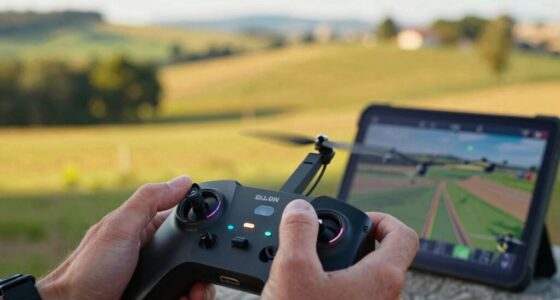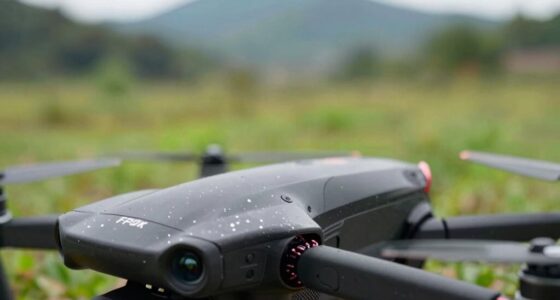

To make an FPV drone great for cinematic flying, it needs advanced stabilization systems, precise flight control, and a high-quality camera gimbal. These features help you capture smooth, professional footage even in complex or turbulent environments. Robust sensors and real-time telemetry allow for on-the-fly adjustments, ensuring stable performance. With the right setup, your shots become more fluid and cinematic. Keep exploring to discover how these elements combine for stunning drone footage.
Prime for Young Adults — start your free trial
Fast free delivery, streaming and member deals for eligible 18–24 year olds.
As an affiliate, we earn on qualifying purchases.
Key Takeaways
- Advanced stabilization systems and high-quality gimbals ensure smooth, professional footage even during complex maneuvers.
- Precise flight control technology allows for accurate, cinematic movements and dynamic subject following.
- Real-time telemetry data enables on-the-fly adjustments for optimal stability in changing conditions.
- Sensor calibration and high-accuracy sensors enhance overall stability and footage quality.
- Flexible gimbal control and creative options support diverse shot framing and complex cinematic sequences.
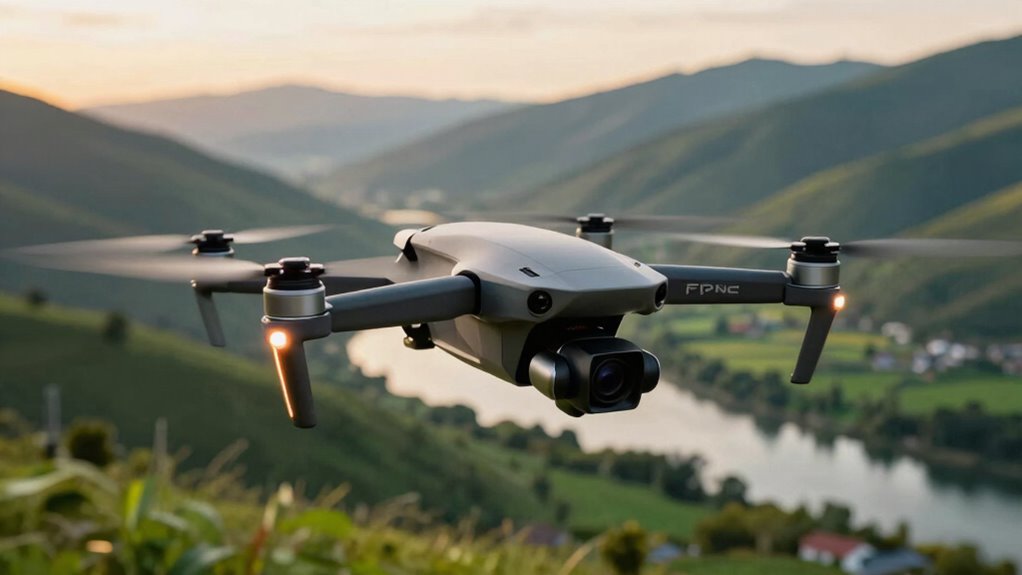
Flying an FPV drone for cinematic purposes allows you to capture stunning, dynamic footage that traditional cameras can’t achieve. The key to creating smooth, professional-looking shots lies in the drone’s ability to maintain excellent aerial stability. When flying at high speeds or executing complex maneuvers, you need a drone that stays steady in the air, minimizing vibrations and unwanted movements. This stability is vital for producing clean, cinematic footage, especially when you’re trying to highlight a landscape or follow a moving subject. An FPV drone designed for cinematic flying often features advanced flight controllers and stabilization systems that help keep the craft balanced, even in challenging conditions. This allows you to focus on your shot composition without constantly fighting the drone’s movements. A robust stabilization system is essential to ensure your footage remains smooth, even in turbulent environments. Additionally, many cinematic FPV drones incorporate high-quality sensors that enhance the drone’s ability to adapt to changing conditions, further improving stability and footage quality. The integration of advanced flight control technology also plays a crucial role in achieving precise, steady shots during complex maneuvers. Incorporating real-time telemetry data can also help pilots make adjustments on the fly to maintain optimal stability. Moreover, sensor calibration is important to keep the drone’s sensors accurate and reliable during flight, contributing to overall stability and performance.
Another essential element that makes an FPV drone suitable for cinematic work is its camera gimbal. Unlike standard FPV setups that might rely solely on a fixed camera, a high-quality gimbal provides stabilization for the camera itself. This means that even if your drone experiences slight shifts or turbulence, the camera stays level and steady, delivering smooth footage. A camera gimbal enables you to capture fluid, professional shots, whether you’re sweeping through a forest or circling a building. The ability to control the camera’s angle independently of the drone’s movement also opens up creative possibilities, letting you frame shots precisely and execute complex cinematic sequences with ease.
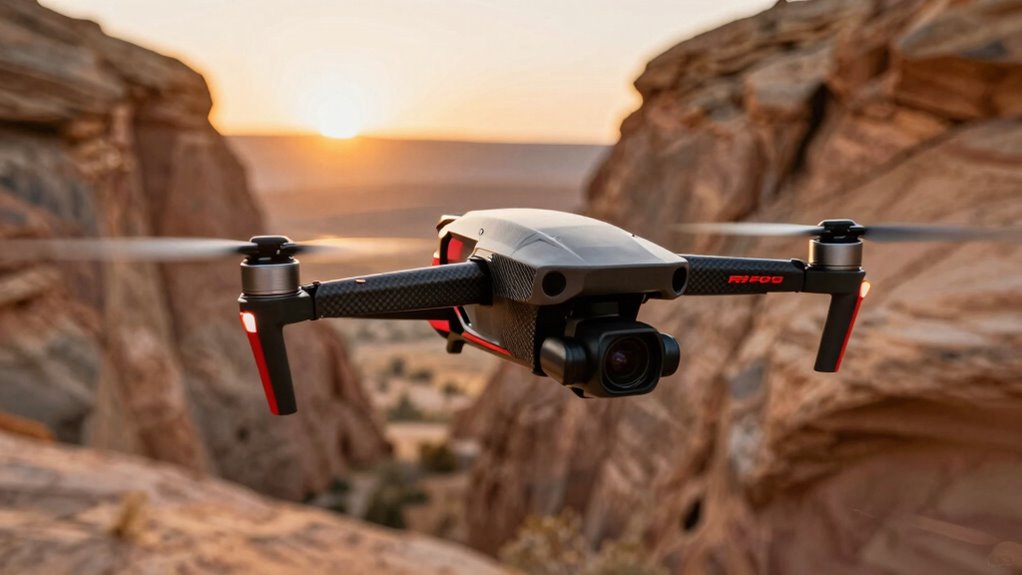
FPV drone with advanced stabilization
As an affiliate, we earn on qualifying purchases.
As an affiliate, we earn on qualifying purchases.
Frequently Asked Questions
What Camera Settings Are Best for Cinematic FPV Flying?
You should prioritize using gimbal stabilization to smooth out footage and choose a lens with a wide aperture for better low-light performance and depth of field. Set your camera to a low ISO to reduce noise, use a slow shutter speed for natural motion blur, and shoot in a flat or LOG color profile for better color grading. These settings help achieve cinematic quality, making your footage look professional and visually appealing.
How Do You Reduce Vibrations for Smoother Footage?
Reducing vibrations is like smoothing out ripples in a pond, making your footage crystal clear. You should use gimbal stabilization to keep your camera steady and attach vibration dampers to absorb shocks. These dampers act like soft cushions, minimizing jello effects and unwanted shakes. Properly balancing your drone and flying smoothly also help, but combining gimbals and dampers truly transforms shaky footage into silky-smooth cinematic shots.
What Is the Ideal Weight for an FPV Drone for Cinematography?
The ideal weight for an FPV drone used in cinematography typically falls between 300 to 500 grams. You should focus on weight optimization by choosing lightweight, durable materials like carbon fiber for the frame and high-quality electronics. This balance guarantees stability, agility, and longer flight times, making your footage smoother. Avoid unnecessary bulk, and select materials that provide strength without adding excessive weight, so your drone can perform precise cinematic maneuvers.
How Important Is Battery Life for Cinematic FPV Flights?
Think of your drone’s battery life as the heartbeat of your cinematic flight; it keeps your story alive. Battery endurance directly impacts how long you can capture smooth, uninterrupted footage. Effective power management guarantees you don’t cut shots short. Without sufficient battery life, your creative flow is interrupted, risking missed shots and shaky footage. Prioritizing battery performance means more control and better cinematic results.
Can Beginner Pilots Achieve Professional Cinematic Footage?
Yes, beginner pilots can achieve professional cinematic footage with practice, especially by focusing on camera stabilization and flight planning. You should start with smooth, controlled maneuvers and learn to stabilize your camera for steady shots. Planning your flight paths beforehand helps avoid mistakes and captures stunning visuals. As you gain experience, your footage will become more polished, bringing a professional touch to your cinematic flying.
As an affiliate, we earn on qualifying purchases.
Conclusion
To make your FPV drone better for cinematic flying, you want smoothness in motion, stability in flight, and clarity in footage. You seek a drone that glides gracefully, stabilizes effortlessly, and captures every detail sharply. You need a craft that moves seamlessly, hovers steadily, and records vividly. When your drone combines these elements, your cinematic flights become a visual story—fluid, steady, and stunning—bringing your creative vision to life with every flight.
As an affiliate, we earn on qualifying purchases.
professional FPV drone for cinematic flying
As an affiliate, we earn on qualifying purchases.
As an affiliate, we earn on qualifying purchases.
NFL season / tailgating Picks
team gear
As an affiliate, we earn on qualifying purchases.