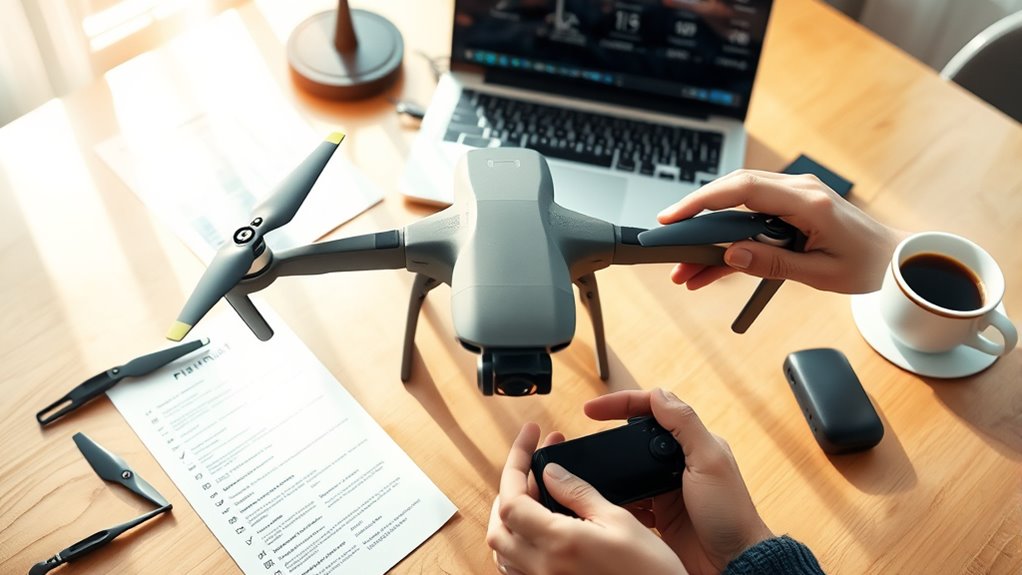
Before every drone flight, you should check the weather to guarantee safe conditions, inspect your drone for damage and proper functioning, and confirm batteries are fully charged. Update firmware and calibrate sensors to maintain accuracy, review your flight area for obstacles, and plan your route with appropriate Return-to-Home settings. Don’t forget to pack safety gear and perform a final visual check. Continuing with this guide will help you master each step for a secure, successful flight.

Get the latest gadgets delivered free with Prime
- Fast, free delivery on millions of items
- Prime Video, Amazon Music and more included
- Member-only deals all year
Key Takeaways
- Assess weather conditions and check for storms, strong winds, or precipitation to ensure safe flying conditions.
- Inspect the drone’s physical condition, including propellers, body, motors, and sensors, for damage or debris.
- Verify battery levels, ensure firmware and software are up to date, and carry extra power sources if needed.
- Confirm GPS signal strength and calibrate compass and sensors away from interference sources.
- Plan the flight route, set Return-to-Home parameters, and review obstacle clearance for safe navigation.
As an affiliate, we earn on qualifying purchases.
Check the Weather Conditions

Before you take off, it’s essential to check the weather conditions. Weather patterns can change quickly, affecting your drone’s flight stability and safety. Look up current forecasts and pay attention to any storm warnings in your area. Strong winds, rain, or snow can impair your drone’s sensors and reduce visibility. If storms are approaching, it’s best to postpone your flight until conditions improve. Even minor weather changes can cause your drone to drift or lose control. Use reliable weather apps or local weather services to get accurate updates. Staying informed helps you avoid dangerous situations and ensures a smooth, safe flight. Always prioritize safety by verifying weather conditions before you launch your drone. Additionally, consider Free Floating in your local area, as it can impact outdoor conditions and drone stability. Being aware of air currents can help you anticipate unexpected movements during flight. Also, understanding weather variability ensures you’re better prepared for sudden changes that could affect your drone’s performance. Monitoring wind speed and direction is crucial, as they directly influence drone stability during flight.
As an affiliate, we earn on qualifying purchases.
Inspect the Drone’s Physical Condition
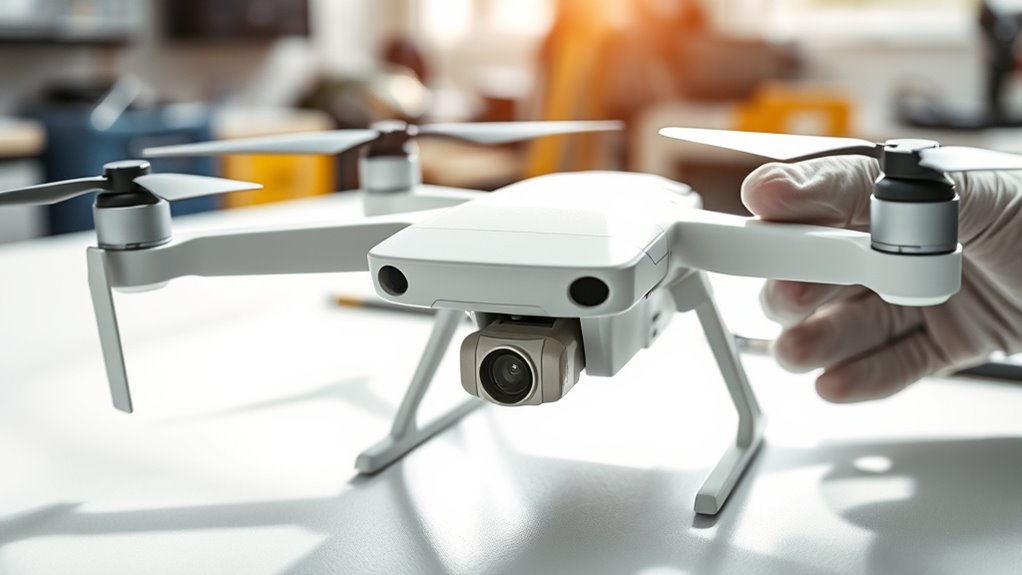
Inspecting your drone’s physical condition is crucial to guarantee a safe and successful flight. A thorough physical inspection helps identify potential issues that could affect performance or safety. Check for any visible damage, loose parts, or debris. Ensure all propellers are intact, free of cracks, and securely attached. Examine the body for cracks or dents that may compromise drone integrity. Confirm that motors and sensors are clean and unobstructed. Regular drone maintenance includes inspecting the landing gear and camera mounts. Use the table below to visualize the physical inspection process:
| Area to Check | Key Points |
|---|---|
| Propellers | No cracks, secure attachment |
| Body Frame | No dents or cracks |
| Motors and Sensors | Clean, unobstructed |
| Landing Gear | Stable, damage-free |
| Camera Mounts | Secure, free of debris |
Additionally, performing a pre-flight check ensures all components are functioning properly and reduces the risk of malfunctions during flight. Regularly inspecting drone components can help prevent unexpected failures during operation. Incorporating routine maintenance checks into your schedule is essential for maintaining consistent performance. To maintain optimal performance, it’s also important to consider proper maintenance routines and ensure your battery and electrical connections are in good condition.
As an affiliate, we earn on qualifying purchases.
Verify Battery Levels and Power Sources

Ensuring your drone has sufficient power for the flight is essential for safety and performance. Start by checking your batteries’ charge levels, making sure they’re fully topped off or at least within safe operating limits. Proper battery maintenance, such as inspecting for damage or swelling, helps prevent mid-flight failures. Confirm that the power sources—whether batteries or external power packs—are securely connected and functioning correctly. Manage your power sources efficiently by carrying extra charged batteries if needed, especially for longer flights. Avoid relying on partially depleted batteries, as they can cause unexpected shutdowns or reduce flight time. Battery capacity is a critical factor in determining your drone’s flight duration and reliability. Good power source management guarantees your drone operates smoothly and minimizes risk during flight. Regularly monitoring power source performance ensures that any potential issues are addressed before takeoff. Additionally, understanding the state of charge can help in planning for unexpected delays or extended flights. Maintaining awareness of battery health can also extend the lifespan of your batteries and ensure consistent performance. Keep track of charging cycles to prevent overuse that could diminish battery effectiveness. Double-check everything before takeoff to keep your flight safe and trouble-free.
As an affiliate, we earn on qualifying purchases.
Ensure Firmware and Software Are Up to Date
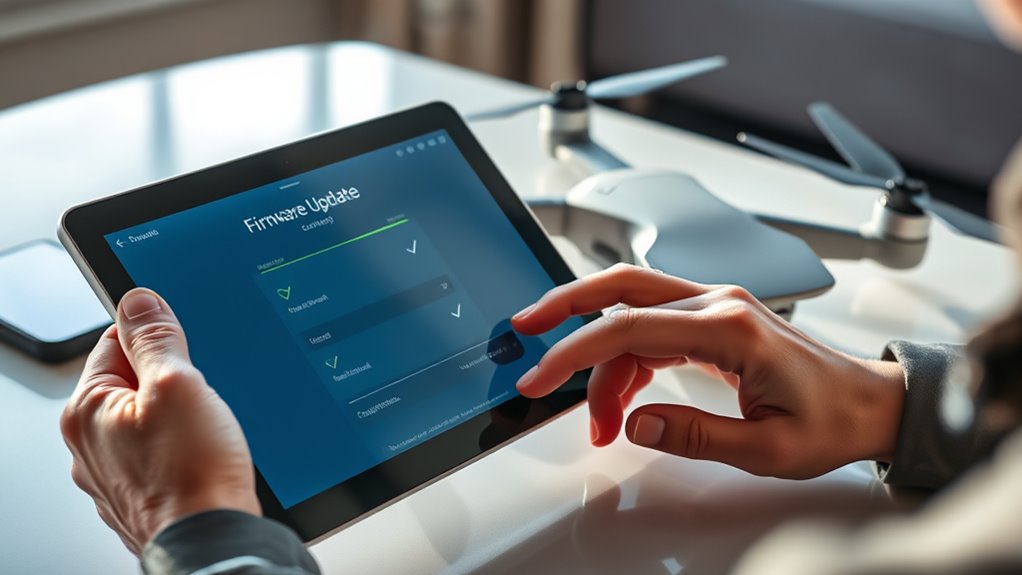
Before taking off, make sure your drone’s firmware is current by checking for updates. Regularly updating the drone software keeps your device running smoothly and securely. Also, verify that your app is compatible with the latest firmware to prevent any connectivity issues. Incorporating energy-efficient technology in your drone’s design can further enhance its performance and sustainability.
Check for Firmware Updates
To keep your drone performing smoothly and safely, you need to check for firmware updates regularly. Firmware troubleshooting is easier when your drone runs the latest version, fixing bugs and improving stability. Follow an update schedule to avoid surprises during flights. Before takeoff, connect your drone to the app or software, and verify if updates are available. Keeping firmware current minimizes risks and enhances features.
- Check the manufacturer’s app or website for recent firmware releases
- Enable automatic updates if available to stay current
- Review release notes to understand what improvements or fixes are included
Staying on top of firmware updates ensures your drone operates reliably, reduces troubleshooting time, and maintains exceptional performance. Regular checks are key to a safe, smooth flight.
Update Drone Software Regularly
Regularly updating your drone’s software is essential to keep it running smoothly and securely. Firmware updates often include important bug fixes, performance improvements, and security patches. To guarantee your drone operates correctly, check for firmware updates regularly from the manufacturer’s app or website. Keeping your software current also enhances app compatibility, reducing the risk of connection issues or feature malfunctions. Before each flight, verify that your drone’s firmware is up to date, and install any available updates promptly. Neglecting these updates can lead to reduced flight stability or potential vulnerabilities. By staying current with firmware updates and software versions, you ensure your drone performs reliably and safely during every flight. Consistent maintenance helps prevent unexpected issues and prolongs your drone’s lifespan.
Verify App Compatibility
How can you guarantee your drone’s app functions seamlessly with the latest firmware? The key is to verify app compatibility before every flight. Check that your app interface is updated to the newest version, ensuring peak performance. Outdated software can lead to compatibility issues, causing glitches or connection drops during flight. Always visit the app store or manufacturer’s website to confirm you have the latest updates installed. Also, review the drone manufacturer’s guidelines for compatibility notes to avoid surprises. Keeping everything current minimizes errors and ensures smooth operation. Compatibility updates are crucial for maintaining reliable performance and avoiding potential flight disruptions.
Calibrate the Compass and Sensors
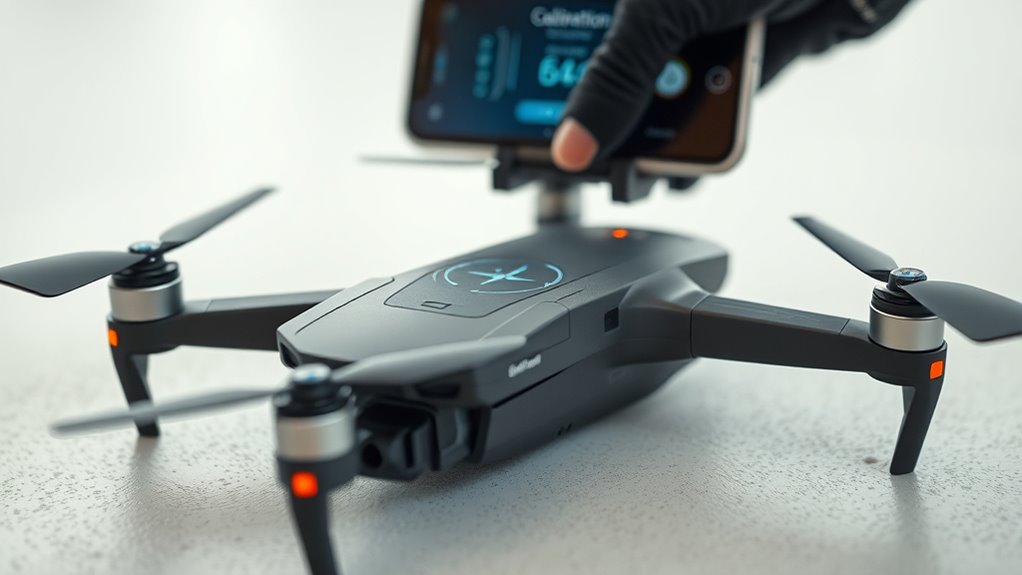
Calibrating your compass and sensors is essential for accurate orientation during flight. Proper calibration helps prevent signal interference that can throw off your drone’s navigation. Take the time now to guarantee your sensors are correctly calibrated for a smooth and safe flight. Ensuring your calibration process is thorough can also prevent costly errors and improve overall drone performance. Remember that many drones rely heavily on sensor accuracy to maintain stability and precise positioning throughout the flight. Regularly checking and updating your calibration settings can significantly enhance your drone’s flight reliability and responsiveness. Additionally, staying informed about AI developments in drone technology can offer new insights into optimizing your calibration procedures.
Ensure Accurate Orientation
To guarantee your drone maintains accurate orientation during flight, it’s essential to calibrate the compass and sensors properly. Proper compass calibration ensures your drone’s navigation is reliable, while sensor alignment guarantees accurate readings for stable flight. Start by performing a compass calibration in an open area, away from metal objects or interference. Next, check sensor alignment to ensure the IMU and gyroscopes are properly calibrated, preventing drift or unstable movements. Additionally, regular maintenance of the navigation and mapping systems helps keep your drone’s orientation precise and reliable. Ensuring proper calibration techniques are followed enhances the safety and accuracy of your flights. These steps help your drone interpret its orientation correctly, reducing the risk of disorientation or flight issues during your mission.
Prevent Signal Interference
Ensuring your drone’s signals remain clear and stable during flight starts with proper calibration of the compass and sensors. This calibration helps prevent signal interference caused by magnetic disturbances or electronic noise. Use frequency management techniques to select the best channel, reducing the chance of interference from nearby devices. If signals still weaken, consider installing signal boosters, which amplify communication between your remote and drone. Always perform compass calibration in an open area away from metal objects or electrical sources, as these can skew sensor readings. Regularly updating firmware also guarantees your drone’s communication systems are refined. By managing frequencies carefully and calibrating sensors properly, you minimize the risk of signal loss, ensuring a safer, smoother flight experience.
Confirm GPS Signal Strength and Lock
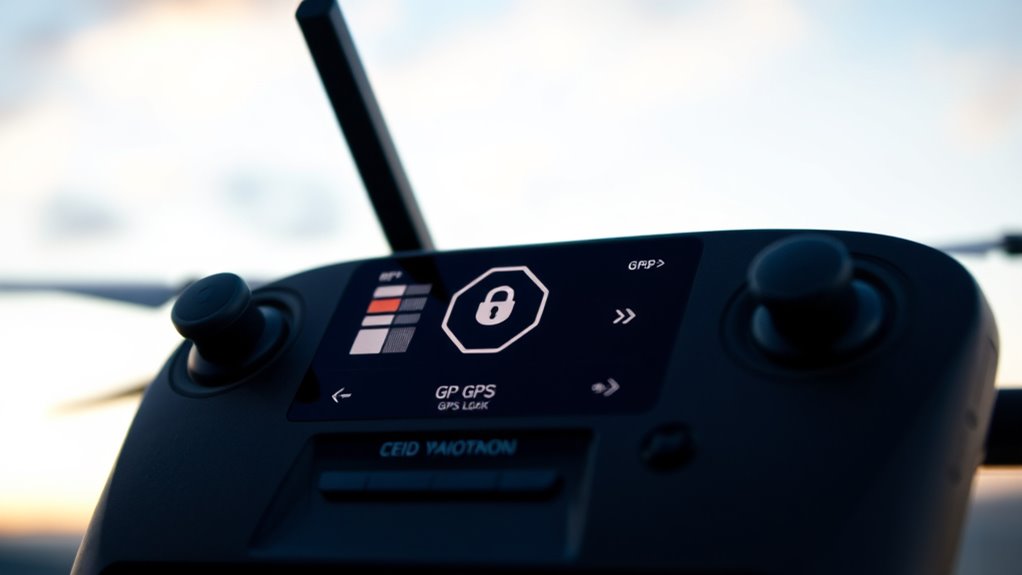
Before you begin your flight, it’s essential to verify that your drone’s GPS signal is strong and locked in. Reliable GPS guarantees accurate positioning, safe navigation, and stable hover. Check the GPS indicator on your drone’s app or controller to confirm signal strength and lock status. Weak or unstable signals can compromise GPS reliability, risking disorientation or loss of control.
- Ensure the GPS icon shows full signal bars and a lock indicator
- Wait until the signal stabilizes before takeoff
- Avoid flying near tall structures or interference sources that can disrupt signal stability
Review Flight Area and Obstacle Clearance
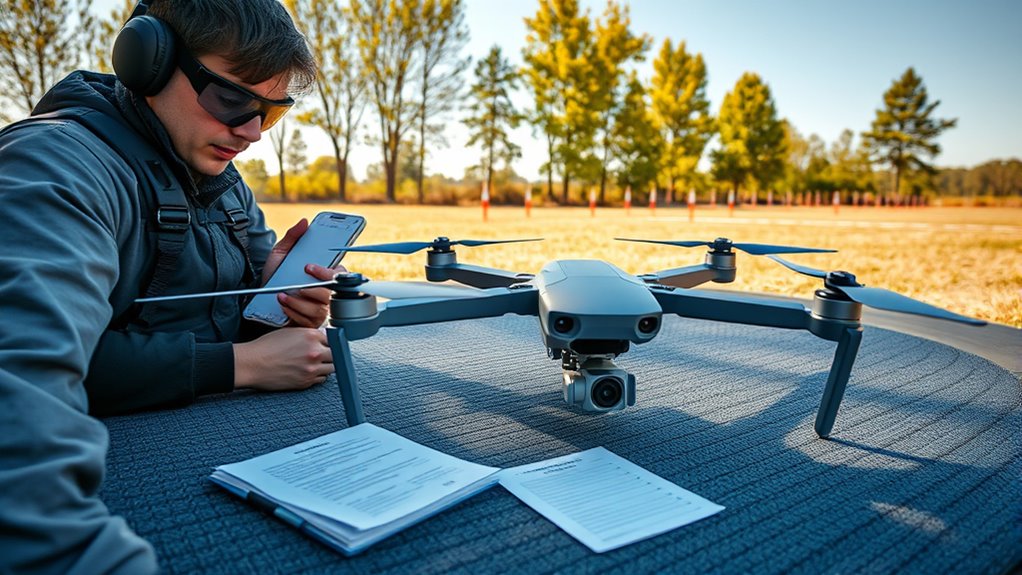
Reviewing your flight area and checking for obstacles is a critical step to prevent accidents and guarantee a safe flight. Conduct a thorough obstacle identification and flight zone analysis to spot potential hazards. Look for trees, power lines, buildings, or other structures that could interfere with your drone’s path. Consider the altitude and proximity of obstacles to ensure safe clearance. Use visual aids or apps to map out the area if necessary. Keep in mind that obstacles might change over time, so re-evaluate before each flight. Here’s a quick guide:
| Obstacle Type | Location | Recommended Clearance |
|---|---|---|
| Trees | North side of flying zone | 50 ft or more |
| Power Lines | Near the landing area | 100 ft or more |
| Buildings | Surrounding structures | 30 ft or more |
| Light Poles | Along the perimeter | 20 ft or more |
| Vegetation | Close to flight path | 10 ft or more |
Set Up Your Flight Plan and Return-to-Home Settings

Once you’ve identified and checked for obstacles in your flight area, the next step is to set up your flight plan and configure your Return-to-Home (RTH) settings. A well-designed flight plan guarantees your drone covers your desired area efficiently, while proper return settings safeguard it during signal loss or low battery. To optimize your flight plan and return settings, consider the following:
After obstacle check, plan your flight route and set RTH parameters for safe, efficient drone operation.
- Map out your flight path, including waypoints and altitude adjustments
- Set the RTH altitude high enough to clear obstacles automatically
- Adjust the return height and RTH trigger points for safety and convenience
Taking these steps helps you execute a smooth flight and ensures your drone returns safely, preventing accidents or loss. Proper setup now saves headaches later.
Pack Essential Accessories and Safety Gear
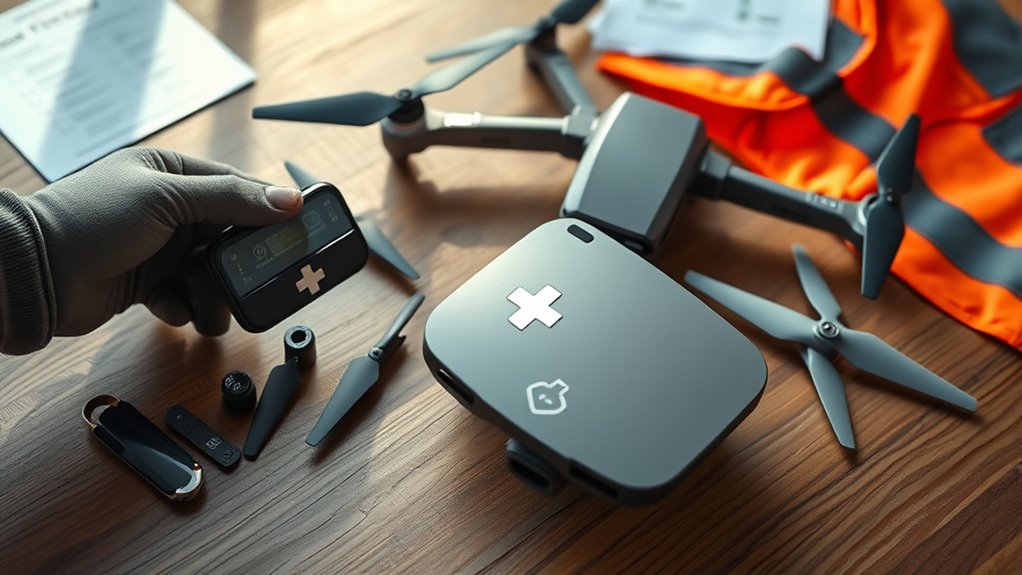
Packing essential accessories and safety gear is a crucial step to guarantee your flight goes smoothly and safely. You should carry extra batteries to assure longer flight times and avoid interruptions if the primary battery runs low. Make certain to pack safety equipment like a first aid kit, safety glasses, and a fire extinguisher if needed. Bringing along spare propellers and tools helps you quickly address mechanical issues. It’s also wise to include a portable charger for your controller or mobile device. Organize all accessories neatly in your bag for easy access during setup and recovery. Properly packing safety equipment not only protects you but also ensures you’re prepared for unexpected situations. Staying well-equipped contributes notably to a safe and successful drone flight.
Perform a Final Visual and Functional Check
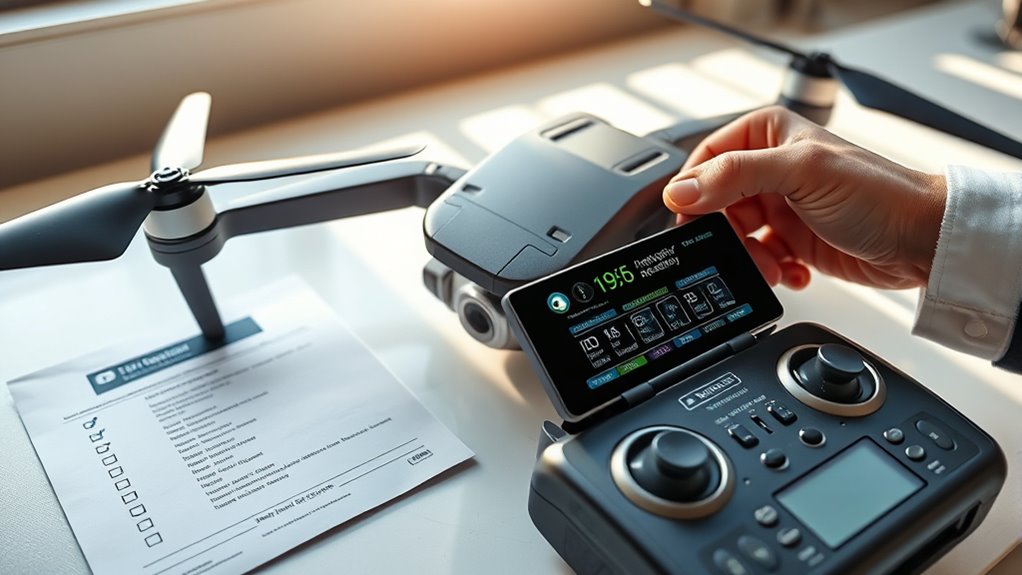
Before taking off, you should perform a thorough visual and functional check to guarantee everything is in proper working order. A careful visual inspection helps identify any damage or loose components, ensuring the drone meets safety protocols. You’ll want to verify that propellers are secure and free of cracks, and that the battery is properly connected and charged. Additionally, test essential functions like camera operation, GPS stability, and flight controls. This final check reduces the risk of malfunctions mid-flight and keeps safety at the forefront. Remember, a quick but detailed review can save time and prevent accidents.
- Inspect propellers for damage or looseness
- Confirm all connections and battery levels
- Test flight controls and camera functions
Frequently Asked Questions
How Often Should I Update My Drone’s Firmware?
You should update your drone’s firmware whenever a new firmware update becomes available, ideally as part of your regular drone software upgrades. Following a consistent firmware update schedule guarantees peak performance, safety, and access to new features. Check the manufacturer’s website or app frequently, and update promptly to prevent compatibility issues or vulnerabilities. Staying current with firmware updates keeps your drone running smoothly and minimizes potential flight problems.
What Are Common Signs of Drone Hardware Issues?
You’ll notice hardware issues if your drone experiences inconsistent flight, unexplained power loss, or unusual noises. Conduct hardware diagnostics regularly to spot problems early. Pay close attention to battery health, as swelling or reduced flight time can signal degradation. Check for loose or damaged components, and make sure all connections are secure. Addressing these signs promptly helps prevent crashes and extends your drone’s lifespan.
How Can I Improve GPS Signal Reliability?
Your GPS signal reliability hinges on optimizing satellite connectivity. To do this, guarantee your drone is in a wide-open area free from tall buildings or trees that block signals. Keep the drone’s firmware updated and avoid flying in areas with heavy interference. Use GPS signal strength indicators during pre-flight checks. These steps enhance GPS signal optimization, giving you a more stable connection and precise positioning, even in challenging environments.
Are There Specific Weather Conditions to Avoid Flying In?
You should avoid flying your drone in bad weather conditions like heavy rain, snow, or fog, which can impair visibility and damage the device. Wind conditions also matter; strong gusts can destabilize your drone and cause crashes. Always check the weather forecast before flying, and steer clear of weather hazards that could compromise safety or flight stability. Flying in ideal weather guarantees better control and reduces the risk of accidents.
What Safety Gear Is Recommended for Drone Operation?
You should always wear protective eyewear to shield your eyes from debris and potential rotor sparks. A safety harness is also recommended, especially during high-altitude or complex flights, to prevent falls and guarantee stability. Additionally, consider gloves for better grip and weather-appropriate gear like a hat or jacket. Prioritizing safety gear helps protect you and enhances your control during your drone operation, making your flights safer and more enjoyable.
Conclusion
Think of your drone as a trusted steed about to embark on a voyage. Just as a knight checks their armor and maps before setting out, you must ensure all systems are go. When you complete your pre-flight checklist, you’re forging a path through the skies with confidence and care. This ritual transforms an ordinary flight into a mindful journey, where each step safeguards your adventure and keeps the wings of your curiosity soaring high.
Halloween Picks
halloween
As an affiliate, we earn on qualifying purchases.