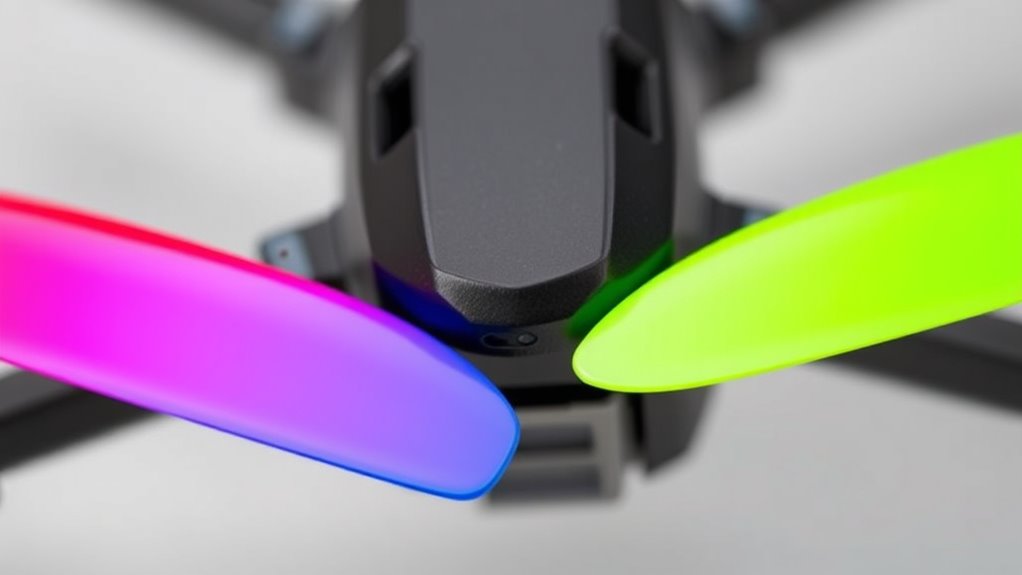

Drone propellers have different colors to help you easily identify the correct placement and rotation, which is especially useful if you’re a beginner. Typically, colors like black or red indicate clockwise rotation, while white or green show counterclockwise. Using these visual cues makes it simpler to assemble your drone correctly and avoid common mistakes that could cause crashes. If you want to discover more tips for safe flying and proper setup, keep exploring further.

Get the latest gadgets delivered free with Prime
- Fast, free delivery on millions of items
- Prime Video, Amazon Music and more included
- Member-only deals all year
Key Takeaways
- Different colors help identify which propeller goes on which motor and its rotation direction.
- Color coding simplifies proper installation, reducing errors during assembly for beginners.
- Black or red propellers usually indicate clockwise rotation; white or green indicate counterclockwise.
- Using color cues ensures the drone maintains balance, stability, and safe flight performance.
- Properly matched and oriented propellers prevent crashes and improve overall drone safety.

Understanding the significance of propeller colors and their orientation is essential for safe and effective drone operation. When you’re starting out, recognizing why drone propellers come in different colors isn’t just about aesthetics; it’s about ensuring proper setup and maintaining drone safety. Manufacturers often use distinct colors for propellers to help you quickly identify the correct placement and rotation direction. This visual cue becomes especially useful during assembly, maintenance, or troubleshooting, reducing the risk of mistakes that could lead to crashes or damage.
The different colors typically indicate which propeller goes on which motor, as well as the direction each should spin. Usually, you’ll see a combination of black and white, red and green, or other contrasting colors. The black or red propeller might be designated for clockwise rotation, while the white or green could be for counterclockwise. This color coding simplifies the process of matching propellers to their respective motors and ensures that you install them correctly. Proper orientation is critical because if the propellers are mismatched or placed incorrectly, the drone may not lift properly or could become unstable during flight.
Propeller materials also play a crucial role in drone safety. Most propellers are made from lightweight plastics, carbon fiber composites, or nylon blends. The choice of material affects durability, flexibility, and overall safety. For beginners, plastic propellers are often recommended because they’re inexpensive and less likely to cause injury if they come into contact with skin. However, they may be more prone to breaking under stress. Carbon fiber propellers are stronger and more rigid, providing better performance but require careful handling to avoid injury or damage. Whichever material you choose, ensuring that your propellers are in good condition—free from cracks or warping—is key to safe flying. Additionally, proper balancing of the propellers can significantly improve flight stability and reduce vibrations.
Understanding the relationship between propeller colors, their orientation, and the propeller materials helps you operate your drone more safely and confidently. Always double-check the markings and instructions provided with your drone, especially if you’re assembling it for the first time. Correct installation reduces the likelihood of crashes caused by incorrect propeller setup. It also improves flight stability, allowing you to enjoy your drone without unnecessary risks. Remember, paying attention to these details isn’t just about following rules; it’s about protecting yourself, others, and your equipment while achieving ideal flight performance.
Frequently Asked Questions
Can Propeller Color Affect Drone Flight Performance?
Propeller color doesn’t directly affect drone flight performance, but it plays a key role in propeller visibility and safety. Color coding standards help you quickly identify the correct propeller orientation, reducing the risk of installation errors. By choosing contrasting colors, you make it easier to see your drone’s spinning blades, especially in low light or high-speed flights, ensuring safer and more accurate operation.
Are Color-Coded Propellers Suitable for All Drone Models?
Color-coded propellers are suitable for many drone models, but not all. The propeller color coding helps with drone identification and orientation, especially during flight. You should check your drone’s manual to verify compatibility, as some models require specific propeller types. Using the right color-coded propellers makes it easier to distinguish front and back, improving control and safety in your flying experience.
How Do I Replace a Damaged Colored Propeller?
To replace a damaged colored propeller, first remove the old one carefully, guaranteeing you don’t disturb the propeller balance. Match the new propeller’s color to maintain consistent orientation, which helps with flight stability. Secure it firmly onto the motor shaft, then check the balance to ensure smooth rotation. Proper color matching is essential for quick identification and consistent flight performance, especially for beginner drone pilots.
Do Different Colors Indicate Different Material Types?
Coincidentally, the different colors on drone propellers often serve as a quick way for you to identify their material types, but they don’t always follow strict standards. Generally, color coding standards help with material identification, making it easier to match propellers for balance and safety. While some manufacturers use specific colors for particular materials, it’s best to check the product details, as color alone isn’t a foolproof indicator of material type.
Is There a Standard Color Scheme for Drone Propellers Globally?
There’s no strict global standard for drone propeller color coding, but many manufacturers use specific colors for safety and orientation. Typically, one propeller is brightly colored (like red or orange) to help identify the front or clockwise rotation, while the others are black or white. Remember, understanding propeller color coding is essential for drone safety tips, ensuring you mount and operate your drone correctly for safe flying.
Conclusion
Now that you know why drone propellers come in different colors and how to tell their orientation, flying becomes a dance you master with confidence. Think of the colors as your guiding stars, leading your drone through the sky’s maze. With this knowledge, you’ll steer your flying companion smoothly, like a captain steering calm seas. Soon, your drone will feel less like a stranger and more like an extension of your own adventurous spirit.
Fall Picks
fall essentials
As an affiliate, we earn on qualifying purchases.