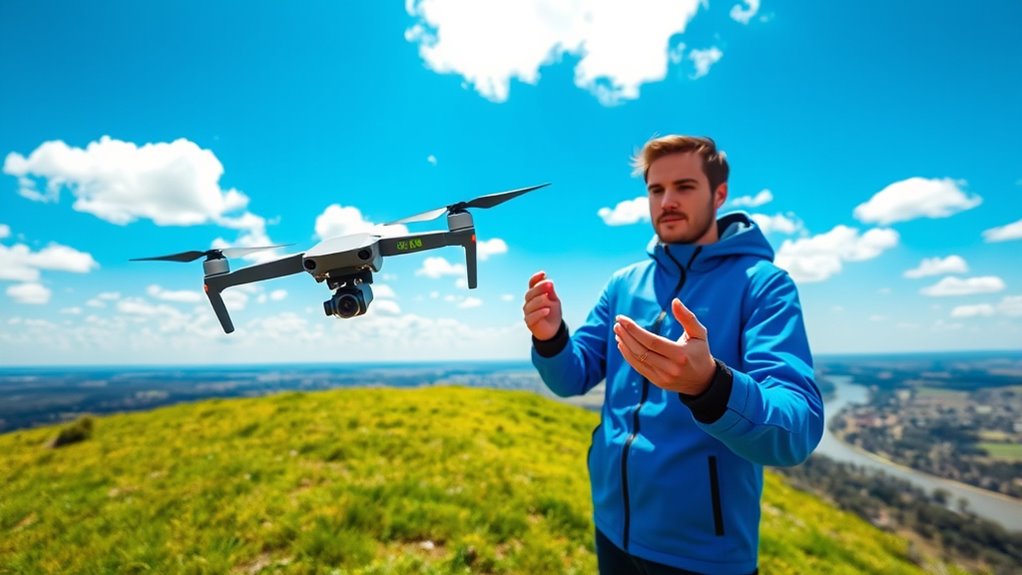

To fly a drone as a beginner, start by choosing a user-friendly model with GPS, stable design, and good visibility features. Fully charge your batteries, inspect propellers, and make certain the environment is safe. Power on your drone, calibrate the sensors, and familiarize yourself with basic controls like ascending, descending, and tilting. Practice steady movements in open areas, follow safety guidelines, and stay aware of regulations. Continue exploring these steps to master drone flying confidently.

Get the latest gadgets delivered free with Prime
- Fast, free delivery on millions of items
- Prime Video, Amazon Music and more included
- Member-only deals all year
Key Takeaways
- Fully charge batteries, secure propellers, and perform safety checks before each flight.
- Familiarize yourself with the drone’s controls, especially the main sticks for maneuvering.
- Calibrate sensors and ensure GPS and compass are properly aligned for stable flight.
- Practice basic maneuvers like hovering, ascending, descending, and turning in open areas.
- Always fly within your line of sight, avoid obstacles, and adhere to local regulations for safety.
beginner GPS drone with return-to-home
As an affiliate, we earn on qualifying purchases.
As an affiliate, we earn on qualifying purchases.
Choosing the Right Drone for Beginners

If you’re new to flying drones, choosing the right one can seem overwhelming. Focus on drones with a reliable drone battery that offers decent flight time, so you can practice without constantly recharging. Look for models with GPS navigation, which helps with stability and easy control, especially if you’re still learning. GPS features enable automatic hover, return-to-home functions, and better positioning, making flying safer and more manageable. Avoid overly complex drones with advanced features that might complicate your first experience. Instead, opt for beginner-friendly models that prioritize ease of use, durability, and essential features like stable flight and accurate GPS navigation. This approach ensures a smoother learning curve and builds your confidence as you start exploring drone flying. Additionally, selecting a drone with high contrast ratio can significantly improve your visibility and control during flight, especially in varying lighting conditions. Incorporating a robust flight controller can further enhance stability and responsiveness, making your first flights more successful and enjoyable. Keeping in mind that a stable body design can also contribute to easier handling and better overall flight experience. Moreover, choosing a drone with vetted safety features can help prevent accidents and give new pilots peace of mind during their initial flights, especially when taking into account environmental factors that affect flight performance.
As an affiliate, we earn on qualifying purchases.
Understanding Your Drone’s Components and Controls

To fly your drone effectively, you need to understand its components and controls. Familiarize yourself with the frame layout, so you know where everything is, and learn what each control stick does. Also, pay attention to the indicator lights to get quick updates on your drone’s status and any issues. Developing an awareness of your drone’s inner guidance can enhance your ability to respond intuitively to different flying situations. Understanding the style of control helps in executing precise maneuvers and maintaining stability during flight. Additionally, being aware of the components involved in stabilization can help you troubleshoot and improve flight performance. Recognizing the importance of smartphone and accessory integration can further improve your flying experience by enabling better control and navigation. Being familiar with these elements can also assist in mastering R sound techniques, which can improve your communication skills if you need to coordinate with others during drone operation.
Drone Frame Layout
Understanding your drone’s frame layout is essential for operating it effectively. You should know where the main components are, including the motors, propellers, and battery. The frame supports your drone’s structure and influences flight stability. Proper propeller safety is crucial—always check that blades are secure before flying and avoid touching spinning propellers. When not flying, store your drone in a safe, dry place, ideally in a dedicated case to prevent damage. Recognizing how the components fit together helps you troubleshoot issues and maintain your drone properly. A clear understanding of the frame layout also ensures you handle your drone correctly during setup and storage, reducing the risk of accidents or damage. Additionally, component placement can impact the drone’s overall balance and flight performance. Being familiar with drone component layout can also make it easier to upgrade or repair parts in the future. Ultimately, knowing your drone’s layout makes flying safer and more enjoyable.
Control Stick Functions
Ever wonder how your drone responds to your movements? That’s all thanks to the control stick functions. The left stick typically controls drone maneuvering—pushing it up makes your drone ascend, pulling down makes it descend, and moving it left or right rotates your drone. The right stick manages directional flight, allowing you to tilt the drone forward, backward, or sideways for smooth navigation. By mastering these controls, you can perform precise maneuvers like turns, flips, and altitude adjustments. It’s essential to get comfortable with how each stick influences your drone’s behavior so you can fly confidently. Practice small movements at first, gradually building your control skills, and soon you’ll be able to navigate with ease and enjoy your flight experience.
Indicator Lights Meaning
Indicator lights on your drone provide immediate feedback on its status and functions. These LED indicators or signal lights help you understand whether your drone is powered on, connected, or experiencing issues. Typically, a steady green light means your drone is ready to fly, while blinking or red signals indicate problems like low battery or connection loss. Familiarizing yourself with these lights guarantees safer operation. Being aware of drone component signals can further enhance your understanding of your device’s current state. Knowing what each indicator light signifies keeps you informed and helps you troubleshoot quickly, making your flying experience smoother. Recognizing filtration efficiency indicators can also assist in maintaining your drone’s optimal performance.
drone with stable flight and high contrast visibility
As an affiliate, we earn on qualifying purchases.
As an affiliate, we earn on qualifying purchases.
Setting Up and Preparing Your Drone for Flight

Before you take off, make sure your drone is fully charged and all batteries are secure. Next, adjust the camera and sensors to your desired settings, ensuring they’re ready for flight. Finally, perform a quick safety check to confirm the propellers are secure and the area is clear of obstacles. It’s also helpful to review smart home integration features if your drone supports such connectivity for enhanced security and control. Additionally, verifying local regulations can help you fly safely and legally in your area. Checking your home environment for potential hazards can further reduce the risk of accidents during flight, especially considering the impact of indoor air quality on overall safety. Being aware of your surrounding environment can also help prevent unexpected issues during flight.
Battery Charging Procedures
To guarantee your drone is ready for flight, start by properly charging its batteries. Good battery maintenance ensures peak performance and longevity. Always use the charger provided or recommended by the manufacturer to prevent damage. Before charging, inspect the batteries for any signs of damage or swelling. Follow charging safety guidelines: avoid overcharging, do not leave batteries unattended, and charge in a cool, dry place away from flammable materials. Make sure the charging port and connectors are clean and secure. Once fully charged, disconnect the batteries promptly to prevent overcharging. Proper charging procedures help maintain battery health and ensure safe operation during your flight. Additionally, always refer to manufacturer guidelines for specific charging instructions to ensure optimal performance. Regularly monitoring your battery health can help identify potential issues early and extend the lifespan of your drone batteries. Being aware of battery safety protocols is essential for a safe flying experience, especially considering the importance of safe charging practices in maintaining battery integrity.
Camera and Sensor Setup
Setting up your drone’s camera and sensors correctly is essential for capturing high-quality footage and ensuring accurate flight data. Start with camera calibration to guarantee your images are sharp and colors are true to life. Follow the manufacturer’s instructions, adjusting settings if needed. Next, check sensor alignment; properly aligned sensors help with stability, obstacle avoidance, and precise positioning. Make sure all sensors are clean and free of dust or debris. Confirm that the camera gimbal moves smoothly and is securely mounted. Proper calibration and alignment prevent issues during flight and improve overall performance. Take a moment to review the setup before flying to ensure everything functions correctly, so you’re ready for a smooth, safe flight with clear footage and reliable sensor data.
Pre-Flight Safety Checks
Are you fully prepared to take your drone into the air? Before flying, perform essential safety checks to guarantee a smooth experience. Start by reviewing weather considerations; avoid flying in strong winds, rain, or extreme temperatures. Next, check propeller safety—inspect for cracks, chips, or loose blades, and securely tighten all screws.
- Confirm GPS and compass calibration
- Ensure batteries are fully charged
- Clear the area of obstacles and bystanders
These steps help prevent accidents and damage. Remember, weather can affect control and stability, so always choose a calm day. Proper pre-flight checks boost safety, protect your drone, and set you up for successful flight. Taking a few minutes now saves time and trouble later.
As an affiliate, we earn on qualifying purchases.
Learning Basic Flight Maneuvers and Controls

Mastering basic flight maneuvers and controls is essential before attempting more complex drone operations. You need to get comfortable with fundamental movements like hovering, turning, ascending, and descending. These skills are vital whether you’re capturing stunning aerial photography or competing in drone racing. Practice smooth, controlled movements to build confidence and precision. Understanding how your drone responds to throttle, pitch, yaw, and roll inputs helps you maintain stability during flights. Spend time in open areas to avoid obstacles and focus on mastering steady control. As you become more confident, you’ll be able to execute more advanced maneuvers and adapt quickly to different flying scenarios. Developing a solid grasp of these basics lays the foundation for safe, enjoyable, and successful drone flying experiences.
Practicing Safe Flying Habits and Regulations

Practicing safe flying habits and understanding regulations are essential steps to guarantee you fly responsibly and avoid legal issues. Always check weather conditions before flying, as wind, rain, and fog can affect your drone’s stability and safety. Familiarize yourself with legal regulations to stay compliant and avoid fines or penalties.
Remember to:
- Keep your drone within visual line of sight at all times
- Avoid flying near airports or restricted areas
- Respect privacy and avoid capturing private property without permission
Handling Common Flight Challenges and Troubleshooting

Even with careful planning and adherence to regulations, technical issues and unexpected obstacles can still arise during your drone flights. Weather conditions, like strong winds or rain, can destabilize your drone or reduce visibility, so always monitor forecasts before flying. Signal interference from nearby electronic devices or structures can disrupt your control link, causing lag or loss of connection. If you experience signal issues, try to land your drone immediately in a safe area and restart the connection. Keep an eye on your drone’s indicators for warnings of interference or weather problems. Being prepared to troubleshoot quickly helps prevent crashes and damage. Familiarize yourself with your drone’s manual to understand its response to common challenges, increasing your confidence and safety during flights.
Capturing Photos and Videos Safely and Effectively

Capturing stunning photos and videos with your drone requires careful planning and attention to safety. To achieve great results, focus on aerial composition by framing your shots thoughtfully and maintaining a steady altitude. Use lighting techniques like shooting during golden hour for softer, more vibrant images or avoiding harsh midday sun that can create unwanted shadows. Always be aware of your surroundings to prevent accidents and respect privacy laws. Remember to:
- Check weather conditions before flying
- Keep your drone within line of sight
- Use smooth, deliberate movements for better footage
These steps ensure your captures are both safe and visually compelling. By combining good aerial composition with effective lighting techniques, you’ll produce high-quality photos and videos while maintaining safety and control.
Gradually Advancing Your Skills and Exploring New Features

Building on your knowledge of safe flying and quality footage, you can enhance your skills by gradually taking on more complex maneuvers and exploring your drone’s advanced features. Practice advanced aerial techniques like smooth panning, orbiting, and altitude adjustments to improve your control and creativity. As you become more comfortable, experiment with intelligent flight modes and obstacle avoidance to expand your flying capabilities. Incorporate aerial photography tips, such as framing your shots carefully and adjusting camera settings, to capture stunning images. Remember to review your drone’s manual to understand all its features fully. By progressing steadily, you’ll build confidence, master new techniques, and *liberate* more creative potential, making your drone flights more impressive and enjoyable.
Frequently Asked Questions
How Do I Choose the Best Drone for My Budget?
You can find the perfect drone for your budget by comparing features like drone camera quality and flight modes, which can make your flying experience feel like you’re in a sci-fi movie! Look for models with advanced flight modes that suit beginners and guarantee the drone camera captures stunning images. Don’t forget to read reviews and consider future upgrades—your ideal drone is out there, waiting to turn your dreams into reality!
What Safety Gear Should I Wear When Flying a Drone?
When flying a drone, you should wear safety goggles to protect your eyes from debris or accidents. Additionally, don’t forget protective gloves to keep your hands safe from sharp edges or hot parts. These safety gear items help prevent injuries and ensure a safer flying experience. Always prioritize safety by wearing the right gear, especially if you’re flying in areas with obstacles or challenging conditions.
How Can I Extend My Drone’s Battery Life?
To extend your drone’s battery life, focus on battery enhancement and power management. Always fly with a fully charged battery, and avoid rapid ascents or aggressive maneuvers that drain power quickly. Use features like return-to-home and low-power modes to conserve energy. Keep your drone’s firmware updated, and fly in ideal weather conditions. These steps help maximize flight time and ensure you get the most out of each battery charge.
Are There Specific Weather Conditions to Avoid When Flying?
You should avoid flying your drone in strong wind conditions, as it can make control difficult and cause crashes. Rain hazards also pose a serious risk, as water can damage your drone’s electronics and impair flight. Always check the weather forecast before flying, and steer clear of windy days or rainy weather to make certain of safe and successful flights. Your drone performs best in clear, calm conditions.
How Do I Update My Drone’s Firmware and Software?
Imagine your drone as a soaring bird needing fresh feathers to stay sharp. To update its firmware and software upgrades, connect it to your computer or mobile device via a secure app or USB. Follow prompts to download the latest firmware, ensuring smooth flights. Keep your drone current, and it’ll perform like a well-trained aviator, ready to conquer new skies with reliable, updated software fueling its wings.
Conclusion
As you continue to explore the skies, remember that every flight is a gentle step forward in your journey. With patience and practice, you’ll discover new heights and perspectives, turning each experience into a delightful adventure. Embrace the learning curve as an opportunity to refine your skills and unleash your drone’s full potential. Before long, you’ll be gliding through the air with confidence, capturing breathtaking views that once only seemed within reach.
Halloween Picks
halloween
As an affiliate, we earn on qualifying purchases.