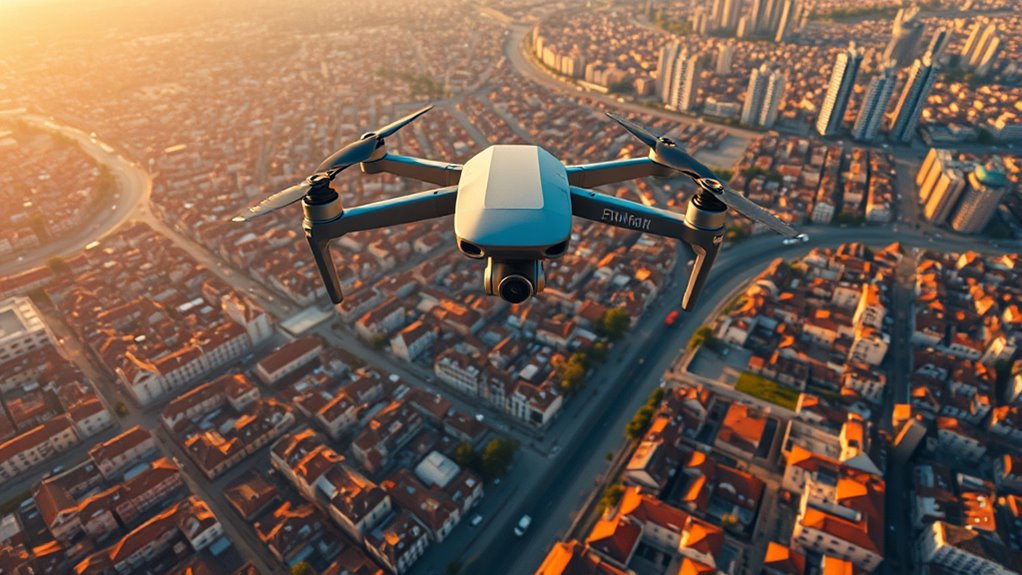
To build a strong drone portfolio, you should showcase a variety of your best aerial shots across landscapes, architecture, and events to highlight your versatility and creative storytelling. Focus on maintaining your equipment, following all drone regulations, and ensuring safe operation. Curate your images thoughtfully, provide context, and seek feedback for improvement. By consistently updating your skills and industry knowledge, you’ll establish credibility and attract opportunities—continue because there’s more to mastering an impressive aerial portfolio.

Get the latest gadgets delivered free with Prime
- Fast, free delivery on millions of items
- Prime Video, Amazon Music and more included
- Member-only deals all year
Key Takeaways
- Curate a diverse collection of high-quality aerial shots across landscapes, architecture, and events to demonstrate versatility.
- Follow local drone regulations and prioritize safety to build trust and credibility with clients and audiences.
- Regularly maintain and calibrate equipment to ensure optimal image quality and reliable performance.
- Organize your portfolio with clear visuals and contextual descriptions to tell a compelling creative story.
- Stay updated on industry trends and technological advancements to showcase ongoing professionalism and skill growth.

Are you ready to take your drone skills to the next level? Building a compelling drone portfolio isn’t just about capturing stunning aerial shots; it’s about showcasing your unique style and technical expertise. To do this effectively, you need to understand the significance of adhering to drone regulations and maintaining your equipment diligently. Staying informed about drone regulations ensures you operate safely and legally, which is vital for building credibility and trust with clients or audiences. Familiarize yourself with local laws, airspace restrictions, and no-fly zones before each flight. This knowledge helps you avoid fines, penalties, or worse—accidents that could tarnish your reputation. Plus, demonstrating responsible flying habits shows professionalism, which can set you apart in the competitive drone photography field.
Equally important is equipment maintenance. Your drone is your primary tool, and keeping it in top condition guarantees quality results and minimizes unexpected failures. Regularly inspect propellers, motors, batteries, and camera gear. Clean lenses and check for any wear or damage after each flight. Calibration is key—ensure your drone’s sensors and cameras are properly aligned to capture sharp, stable images. Well-maintained equipment allows you to push creative boundaries and produce consistent, professional-grade work. When you combine proper regulation compliance with meticulous equipment care, you not only enhance your skills but also build a solid foundation for your portfolio. Additionally, understanding the physics behind drone flight can help you optimize your maneuvers and improve your shot composition.
As you start capturing images and videos, remember that each shot adds to your story. Curate your best work to highlight your versatility—landscapes, architecture, events, or nature. When showcasing your portfolio, consider the narrative you want to tell. Use high-resolution images, organize your work thoughtfully, and provide context or descriptions that reveal your creative process. This helps viewers see your vision and technical mastery. Also, don’t forget to seek feedback from peers or mentors; constructive critique can help sharpen your skills and refine your style.
Finally, keep expanding your expertise by staying updated on new drone regulations and technological advancements. The drone industry evolves rapidly, and continuous learning ensures you remain compliant and competitive. By maintaining your equipment diligently and following drone regulations, you demonstrate professionalism and dedication. These habits not only protect your investment but also elevate your aerial photography to new heights. Building a drone portfolio is a journey of continuous improvement—stay responsible, stay curious, and let your passion for aerial imagery shine through each shot you take.
As an affiliate, we earn on qualifying purchases.
Frequently Asked Questions
What Are the Best Editing Tools for Aerial Photos?
You should consider using Adobe Lightroom or Photoshop for editing aerial photos, as they offer powerful tools for enhancing your images. Drone filters can help reduce glare and improve color accuracy, while post-processing techniques like adjusting contrast, saturation, and sharpness can make your photos stand out. Experiment with these tools to refine your aerial shots, ensuring your drone portfolio impresses viewers with vibrant, professional-quality images.
How Can I Legally Fly My Drone for Portfolio Shoots?
You need to understand drone regulations, obtain flight permissions, and follow local laws to fly legally for portfolio shoots. Check whether your area requires registration, permits, or certifications. Always fly within designated airspace, avoid restricted zones, and stay below altitude limits. By researching regulations, applying for necessary permissions, and maintaining safety practices, you guarantee your aerial photography portfolio is both impressive and compliant with legal standards.
What Camera Settings Produce the Sharpest Aerial Images?
To get the sharpest aerial images, focus on ideal camera settings. Use a narrow aperture like f/8 or f/11 for better depth of field, and set a fast shutter speed to freeze motion. Guarantee flight stability by maintaining smooth, steady movements, which prevents blur. Choose a high-quality lens suited for your drone’s camera, as better optics enhance sharpness and detail in your aerial shots.
How Do I Choose the Right Drone for Professional Photography?
You should choose a drone with excellent camera stabilization to guarantee sharp, clear images, and prioritize models that meet drone safety standards. Look for features like gimbal stabilization, obstacle avoidance, and reliable flight controls to protect your equipment and ensure safety during shoots. Select a drone with a high-quality camera that supports manual settings, giving you control over exposure and focus for professional results.
What Are Common Challenges in Aerial Photography and Solutions?
A stitch in time saves nine, and in aerial photography, addressing challenges early helps. Weather restrictions can ground your drone, so always check forecasts and plan shoots during clear conditions. Limited battery life requires efficient flight planning; carry extra batteries and optimize your routes. By understanding these common issues and preparing accordingly, you’ll capture stunning shots without frustration, turning obstacles into opportunities for creativity.
As an affiliate, we earn on qualifying purchases.
Conclusion
Now that you’ve built your drone portfolio, you might think you’ve mastered the skies. But don’t get too comfortable—there’s always a new angle, a fresh shot, or a stunning landscape waiting just beyond your lens. Ironically, the more you showcase, the more you realize how much there is still to explore. So keep flying, keep capturing, and remember: your journey in aerial photography is just taking off. The sky’s the limit—literally.
As an affiliate, we earn on qualifying purchases.
As an affiliate, we earn on qualifying purchases.
Evergreen bestsellers Picks
bestsellers
As an affiliate, we earn on qualifying purchases.