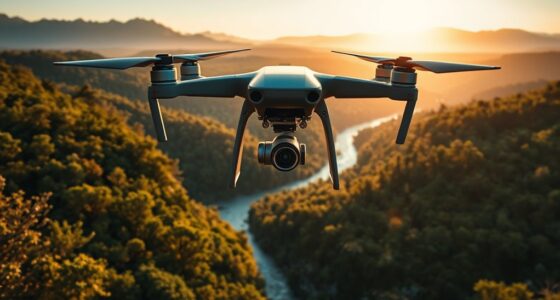

Using ND filters on your drone camera helps you control exposure in bright sunlight, prevent overexposure, and enhance image quality. They also allow you to create smooth motion with longer shutter speeds and reduce glare or reflections in high-contrast scenes. In overcast or low-light conditions, ND filters help retain detail and color. For creative effects, they offer artistic control over motion blur and scene mood. Keep exploring to discover how to choose the right filter for your shooting needs.
Key Takeaways
- ND filters reduce light entering the lens, preventing overexposure in bright sunlight and high-contrast scenes.
- Use ND filters to achieve smooth, cinematic motion by allowing longer shutter speeds.
- They minimize glare and reflections, enhancing color saturation and image clarity.
- ND filters help maintain optimal exposure in low-light or overcast conditions without sacrificing detail.
- Employing ND filters creatively allows for artistic effects like silky water or dynamic cloud movement.
As an affiliate, we earn on qualifying purchases.
Understanding ND Filters and Their Function

ND filters, or neutral density filters, are essential tools that reduce the amount of light entering your drone’s camera lens. They help you capture better footage by controlling exposure, especially in bright conditions. One key benefit is polarization reduction, which minimizes reflections and glare, giving your images a clearer, more natural look. Additionally, ND filters aid in color correction by preventing overexposure that can wash out colors, ensuring your footage remains vibrant and true to life. By balancing light levels, these filters allow you to use wider apertures or slower shutter speeds without sacrificing image quality. This results in smoother motion and professional-looking videos. Overall, understanding how ND filters impact polarization and color correction can markedly improve your drone photography and videography. Recognizing the importance of sensor performance can also help you make informed choices about your equipment, especially as environmentally conscious practices become more important in modern drone technology. Incorporating environmentally friendly equipment and techniques can enhance both the quality of your footage and your commitment to sustainability. Additionally, selecting appropriate filter types for different lighting conditions ensures optimal results across various environments.
Neutral density filters for drone camera
As an affiliate, we earn on qualifying purchases.
As an affiliate, we earn on qualifying purchases.
Bright Sunlight and High-Contrast Scenes

When shooting in bright sunlight or high-contrast scenes, controlling exposure becomes more challenging. ND filters help diminish light, preventing overexposed footage. Polarized filters can also cut glare and enhance color saturation, making your shots clearer. Additionally, using ND filters provides lens protection from dust, debris, and UV rays. Proper filter selection can significantly improve your drone photography experience. These filters ensure sharp, vibrant footage while safeguarding your gear, especially when capturing Floating on Water scenes or reflections.
Drone polarizing filter for glare reduction
As an affiliate, we earn on qualifying purchases.
As an affiliate, we earn on qualifying purchases.
Achieving Smooth Motion With Longer Shutter Speeds

Achieving smooth motion in your drone footage often requires using longer shutter speeds, which allow more light to hit the camera sensor over a single exposure. To do this effectively, you’ll want to use high-quality ND filters that enable proper filter placement without compromising camera compatibility. Longer shutter speeds create motion blur, making movement appear fluid and natural. Keep in mind:
Use ND filters with longer shutter speeds for smooth, natural drone motion.
- Confirm your ND filter is compatible with your drone’s camera model
- Use high-quality filters to prevent vignetting or image degradation
- Maintain proper filter placement to avoid dust or dirt affecting image quality
- Match the ND filter strength to lighting conditions for ideal results
- Selecting the appropriate filter strength can significantly improve your footage quality
- Developing a thorough testing process ensures your filters perform reliably across different shooting scenarios.
- Additionally, understanding your drone’s camera settings can help you optimize your use of ND filters for better results.
- Consulting filter specifications helps ensure you choose the right ND filter for your drone camera.
- Considering the essential oils for camera maintenance can also help keep your equipment in top condition, especially when working in dusty or humid environments.
Drone camera lens protection filters
As an affiliate, we earn on qualifying purchases.
As an affiliate, we earn on qualifying purchases.
Shooting in Overcast or Low-Light Conditions

Shooting in overcast or low-light conditions presents unique challenges, as less available light can make it difficult to capture clear, sharp footage. Using an ND filter helps reduce exposure, preventing overexposed highlights and maintaining detail. This is especially important if you want to incorporate film simulation styles, which rely on specific contrast and color profiles. With proper exposure control, you’ll have more flexibility during color grading, allowing you to enhance mood and tone without losing image quality. Keep in mind that in low-light scenarios, choosing the right ND filter strength is essential—too strong and you might underexpose, too weak and you won’t gain the desired benefits. Ultimately, ND filters enable you to shoot in challenging lighting while preserving the cinematic look you aim for, especially when considering how air quality impacts visual clarity in outdoor environments. Additionally, understanding sensor sensitivity and noise levels can help you optimize image quality under these conditions, as well as how light pollution can affect exposure and image clarity during drone filming.
Creative Effects and Artistic Control
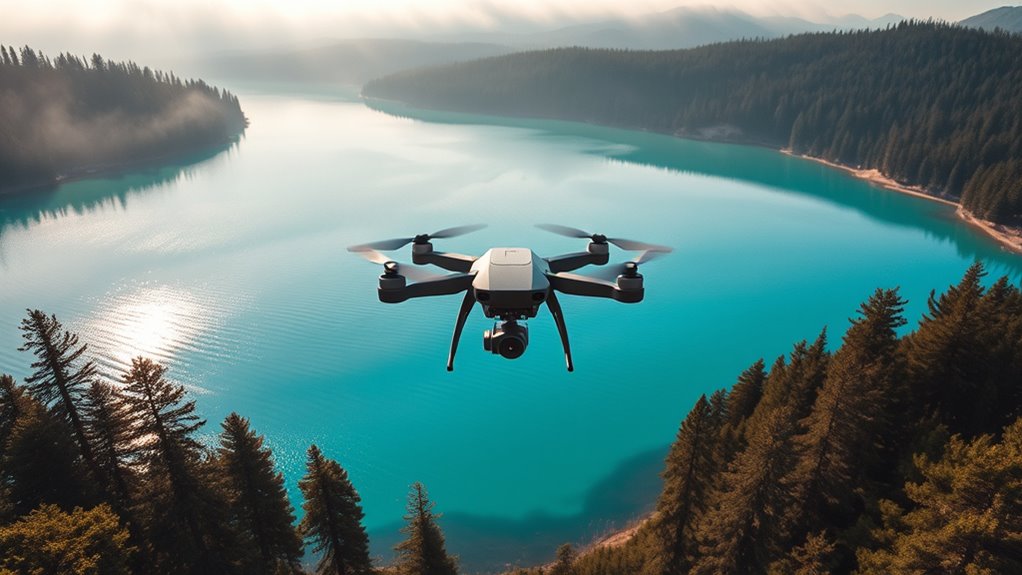
Using ND filters creatively allows you to manipulate exposure and motion, opening up new artistic possibilities for your drone footage. They enable smoother motion blur, giving your shots a cinematic feel, and can help you achieve specific visual effects. By controlling light, you can better match your footage with color grading, enhancing mood and tone. Lens compatibility is essential—you want filters that fit without vignetting or loss of clarity. Consider these techniques:
Harness ND filters to craft cinematic motion, enhance mood, and achieve artistic visual effects in your drone footage.
- Achieve silky water or cloud movement
- Emphasize motion for dynamic scenes
- Create a consistent look across shots
- Enhance color grading by reducing glare and reflections
Additionally, using ND filters thoughtfully can help you control exposure more precisely in challenging lighting conditions. This skill is particularly important when capturing scenes involving cryptid mysteries or haunted locations, where lighting can be unpredictable. With the right ND filter, you gain artistic control, transforming basic footage into compelling, stylized visuals that reflect your creative vision. Understanding light management is crucial for maximizing the potential of your filters and achieving professional results, especially in scenarios where light conditions vary rapidly or unpredictably. Effective use of ND filters can also help reduce the impact of vignetting and maintain image clarity across different lenses, ensuring your footage remains sharp and well-balanced.
Frequently Asked Questions
Can ND Filters Damage My Drone’s Camera Lens?
No, ND filters won’t damage your drone’s camera lens if you use proper filter compatibility and handle them carefully. However, if you force a filter onto a lens or use incompatible filters, you risk lens scratches or damage. Always verify that your filter fits well and remove it gently to prevent scratches. Proper maintenance and handling guarantee your lens stays safe while enjoying the benefits of ND filters.
How Do I Choose the Right ND Filter Strength?
Choosing the right ND filter strength is like finding the perfect key to release your shot’s potential. You should match filter strength to lighting conditions: lower for cloudy days or indoors, higher for bright sunlight. Consider the exposure you want—more filter strength reduces light more, creating smooth motion. By evaluating your scene’s brightness, you guarantee your footage stays sharp and well-exposed, capturing the moment just as you envision it.
Are ND Filters Necessary for All Drone Photography?
ND filters aren’t necessary for all drone photography, but they can greatly improve your shots. They help protect your sensor from long exposures and lens elements from dust or damage. Plus, they guarantee compatibility with your drone camera lens by preventing overexposure in bright conditions. If you’re shooting in bright sunlight or want smoother video, ND filters are a smart choice. Otherwise, you might skip them for simpler shots.
Do ND Filters Affect Image Sharpness or Color Accuracy?
ND filters can affect image sharpness and color accuracy if you don’t choose the right one. You might notice a slight dip in color fidelity or image clarity, especially with lower-quality filters. However, high-quality ND filters minimize these issues, preserving your footage’s true colors and sharpness. To avoid surprises, always opt for reputable brands and test your filters beforehand, ensuring your drone captures crisp, vibrant images every time.
Can ND Filters Be Used With Video Footage for Cinematic Effects?
Yes, you can use ND filters with video footage to create cinematic effects. They help you control exposure and shutter speed, allowing you to achieve that smooth, professional look in your shots. By using different ND filters, you can enhance filming techniques like slow motion and motion blur, making your footage more dynamic and visually appealing. ND filters are essential tools for elevating your drone’s cinematic quality.
Conclusion
Using ND filters transforms your drone footage, balancing exposure like a seasoned artist balancing light and shadow. In bright sunlight, they prevent overexposure, while in low-light conditions, they help you capture subtle details. Think of them as your creative tools—sometimes blocking harsh rays, other times revealing hidden beauty. Embrace the contrast, and let your drone’s camera become a canvas for smooth, stunning shots, regardless of the scene’s brightness or darkness.