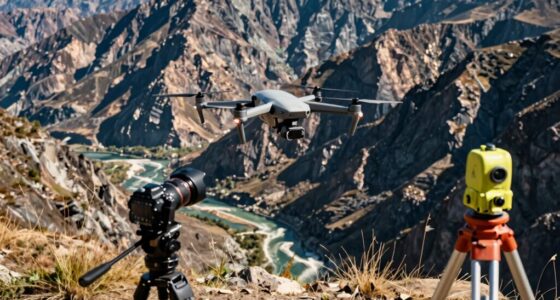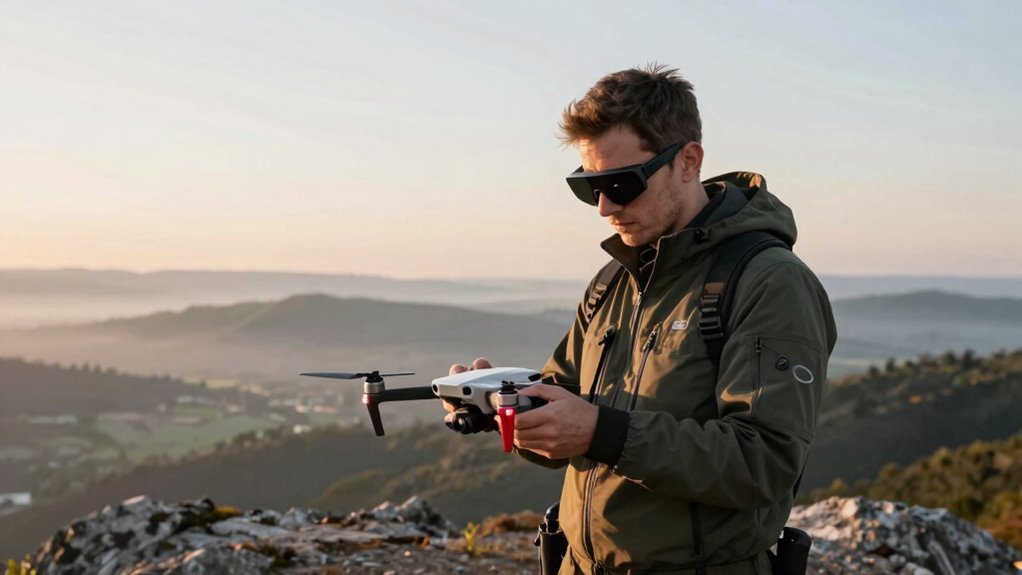

To stand out as a serious drone operator, you need quiet skills that focus on smooth, deliberate movements, and understanding your drone’s sound profile. Flying slowly, avoiding sudden controls, and using natural cover help reduce noise and disturbance. Planning your flights with safety, privacy, and environmental considerations in mind shows responsible flying habits. Mastering these techniques allows you to operate discreetly and safely. Keep going, and you’ll discover more tips to elevate your drone skills further.

Get the latest gadgets delivered free with Prime
- Fast, free delivery on millions of items
- Prime Video, Amazon Music and more included
- Member-only deals all year
Key Takeaways
- Mastering smooth, deliberate controls and slow movements to minimize noise and maintain stability during flight.
- Selecting quieter drones and adjusting flight altitude to reduce environmental impact and enhance stealth.
- Planning flights carefully by scouting locations to avoid hazards and respect privacy and safety zones.
- Using natural cover and environment features to dampen noise and blend into surroundings effectively.
- Prioritizing environmental awareness and responsible practices to minimize disturbance and support conservation efforts.
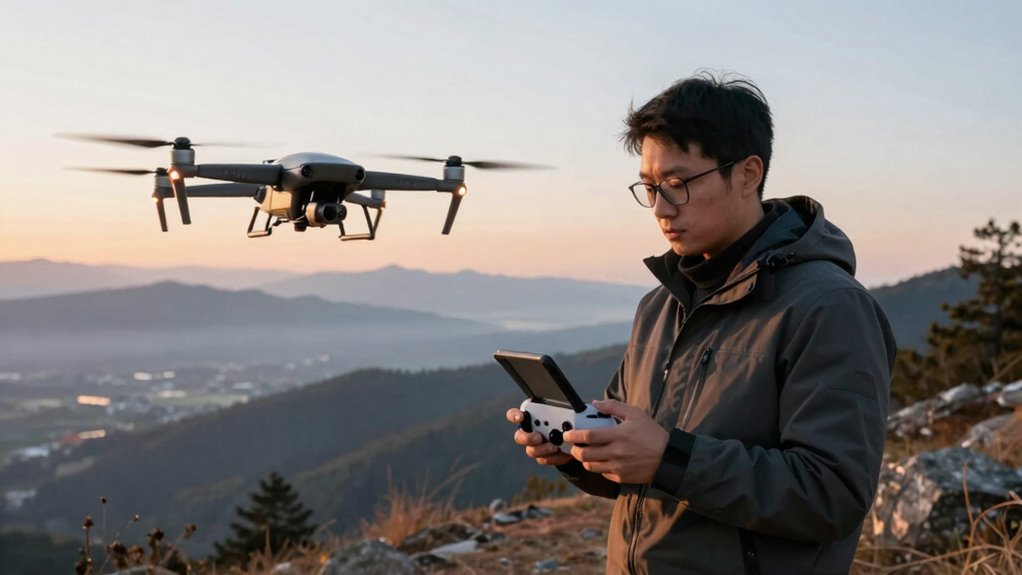
Flying a drone quietly isn’t just about avoiding noise—it’s about mastering skills that allow you to operate smoothly and discreetly. When you focus on noise reduction, you naturally become more attuned to how your drone moves through the air, which directly impacts your ability to capture high-quality aerial photography. Quiet operation helps you blend into the environment, making your shots more natural and less intrusive. But beyond capturing stunning images, these skills are crucial for flight safety. When you fly quietly, you’re more aware of your drone’s behavior and surroundings, reducing the risk of accidents or disturbing others.
Flying quietly enhances safety, improves footage, and fosters respectful, unobtrusive drone operation.
To develop these quiet skills, you need to pay attention to your drone’s flight path and speed. Moving slowly and steadily minimizes noise and keeps your drone stable, resulting in sharper images and videos. It also allows you to react proactively to unexpected obstacles, enhancing overall flight safety. Practicing smooth, deliberate controls helps prevent sudden movements that generate unnecessary noise and could compromise your safety or that of others nearby. Additionally, understanding your drone’s sound profile can help you tailor your flying techniques for different environments. Recognizing the importance of sound profile understanding can help you adapt your flight techniques more effectively.
Another key aspect is understanding your drone’s sound profile. Different models produce varying levels of noise, so choosing a quieter drone can be a good starting point for serious operators. But even with a noisy drone, you can reduce sound by adjusting your flight techniques. For instance, flying at higher altitudes or behind natural cover like trees diminishes the impact of noise on people and wildlife, which is especially important during aerial photography sessions in sensitive environments. Recognizing the importance of biodiversity and its preservation can guide you to operate more responsibly and quietly in natural habitats. Furthermore, being aware of environmental awareness helps you plan flights that minimize disturbance and support conservation efforts. Developing an understanding of sound profile also enables you to make informed decisions about which drone to use for specific projects, maximizing both your stealth and safety. Paying attention to noise reduction techniques can further enhance your ability to operate discretely.
Being discreet also means mastering your environment. Always scout your location beforehand to identify potential hazards and ensure you’re not infringing on privacy or safety zones. This prep work reinforces your commitment to flight safety and demonstrates respect for others’ space, traits that set serious drone operators apart. Additionally, staying mindful of weather conditions helps you maintain control and avoid sudden gusts or turbulence that could jeopardize your quiet operation and safety.
quieter drone for professional photography
As an affiliate, we earn on qualifying purchases.
As an affiliate, we earn on qualifying purchases.
Frequently Asked Questions
How Do Quiet Skills Improve Drone Flight Safety?
Quiet skills improve drone flight safety by enhancing your focus and reducing noise distractions, allowing you to better monitor your drone’s movements. Noise reduction helps you stay alert and prevents auditory fatigue, while clear communication becomes easier with minimal background noise. These skills enable you to respond swiftly to potential hazards, maintain situational awareness, and operate confidently, making your flights safer for both you and others.
Are Quiet Skills Essential for Professional Drone Photography?
Drone noise may seem minor, but it’s essential for professional drone photography. Quiet skills help you maintain flight concentration, preventing distractions caused by loud noises. If your drone operates quietly, you can focus better, guarantee steady shots, and avoid startling your subjects. These skills enable you to capture stunning images with precision, making quiet operation a non-negotiable for serious drone photographers who aim for perfection in every shot.
Can Quiet Skills Prevent Drone Noise Complaints?
Yes, mastering quiet skills can prevent drone noise complaints. By focusing on noise reduction techniques and practicing stealth operation, you minimize disturbances to others. Using quieter propellers, maintaining proper altitude, and controlling your flight path help guarantee your drone stays discreet. These skills show respect for your surroundings and reduce noise pollution, making your flying experience smoother and more acceptable in sensitive areas.
Do Quiet Skills Require Special Training or Practice?
Yes, quiet skills do require special training and practice. You can learn silent techniques through stealth training, which helps you minimize noise and avoid disturbing others. By practicing these skills regularly, you become more adept at controlling your drone’s sound levels. This training enhances your ability to fly discreetly, making you a more responsible and considerate drone operator, especially in noise-sensitive areas.
How Do Quiet Skills Impact Drone Battery Life?
Quiet skills can boost your drone’s battery efficiency by minimizing unnecessary noise, which often indicates excess power use. When you apply noise reduction techniques, you reduce vibrations and motor strain, leading to longer flight times. Research shows that quiet operation can extend battery life by up to 15%. By mastering these skills, you not only protect your drone’s battery but also improve overall flight stability and safety.
drone noise reduction accessories
As an affiliate, we earn on qualifying purchases.
As an affiliate, we earn on qualifying purchases.
Conclusion
Mastering these quiet skills might seem like extra effort, but they truly set serious drone operators apart. You might think, “Isn’t flying enough?” The truth is, honing your skills enhances safety, control, and respect for others’ privacy. Don’t let the challenge discourage you—small, mindful improvements make a big difference. Keep practicing these skills, and you’ll elevate your flying game, earning trust and admiration from fellow enthusiasts and the community alike.
As an affiliate, we earn on qualifying purchases.
discreet drone for wildlife filming
As an affiliate, we earn on qualifying purchases.
As an affiliate, we earn on qualifying purchases.
Halloween Picks
halloween
As an affiliate, we earn on qualifying purchases.