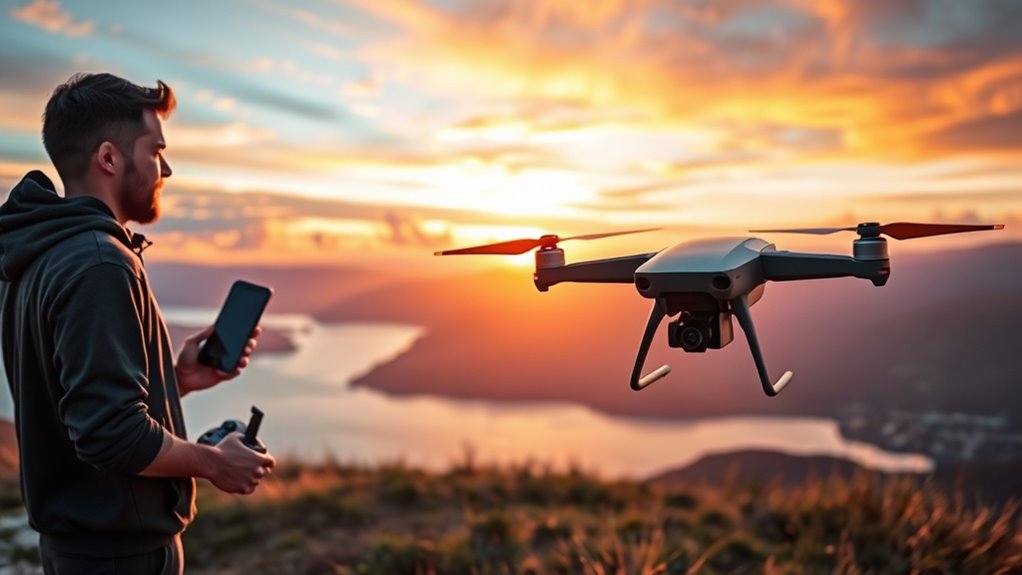

To film yourself safely with Follow Me drones, guarantee your drone is properly calibrated, and choose an open, obstacle-free area for flying. Keep a safe distance from people, avoid flying over crowds, and respect privacy by obtaining permission before filming individuals. Always monitor environmental conditions like wind and battery life, stay within your line of sight, and check for hazards during flight. Continue exploring best practices to keep your filming secure and enjoyable.

Get the latest gadgets delivered free with Prime
- Fast, free delivery on millions of items
- Prime Video, Amazon Music and more included
- Member-only deals all year
Key Takeaways
- Perform thorough pre-flight checks, including battery, weather, GPS, and obstacle calibration, before activating Follow Me mode.
- Choose open, obstacle-free environments with good visibility for safe and effective filming.
- Maintain a safe distance from people, obtain permission, and respect privacy during filming sessions.
- Monitor battery life, signal strength, and surroundings continuously during flight for safety.
- Review footage and inspect equipment after each flight to ensure safety and improve future filming practices.
Follow Me drone with obstacle avoidance
As an affiliate, we earn on qualifying purchases.
As an affiliate, we earn on qualifying purchases.
Understanding the Follow Me Feature and Its Capabilities
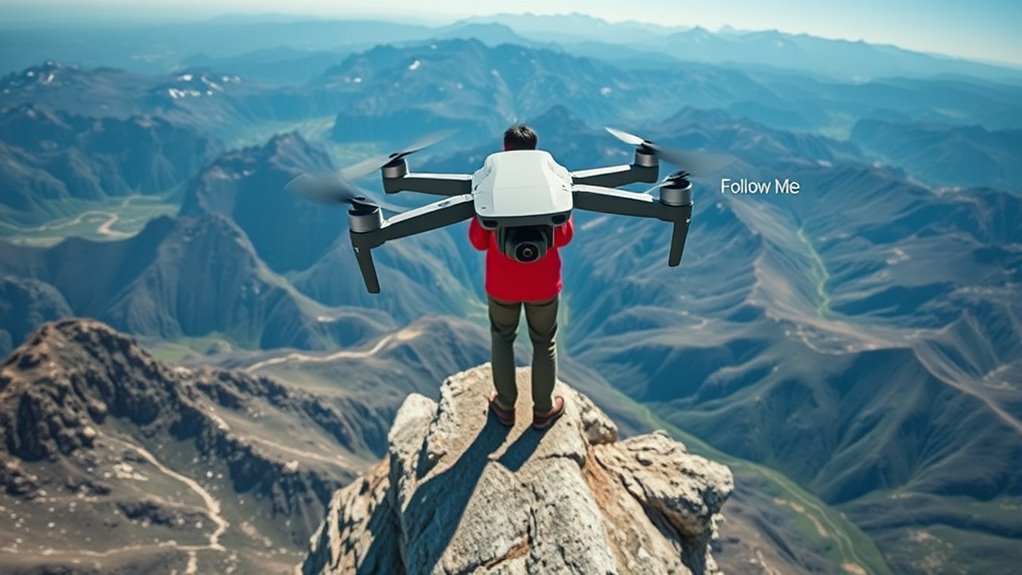
The Follow Me feature allows drones to automatically track and follow a subject without manual control, making it easier to capture dynamic footage. Many drones use gesture controls, so you can activate Follow Me simply by waving your hand or making specific gestures. This makes starting and stopping the feature quick and intuitive. Advanced obstacle avoidance technology works alongside this feature to help the drone detect and navigate around obstacles in real-time, reducing the risk of collisions. With obstacle avoidance, you can focus on your movements and the scenery without constantly worrying about the drone crashing. Incorporating energy-efficient cloud servers can also enhance drone data processing and storage capabilities, supporting more advanced features and longer flight times. Additionally, sensor technology plays a crucial role in obstacle detection and avoidance, providing real-time data that helps keep your drone safe during operation. The integration of real-time data processing further optimizes obstacle avoidance performance, ensuring smooth navigation. Together, gesture controls and obstacle avoidance create a seamless experience, allowing you to film yourself effortlessly while maintaining safety and precision during your flight. Implementing integrated safety features further ensures responsible drone use, protecting both the operator and bystanders.
As an affiliate, we earn on qualifying purchases.
Choosing the Right Location and Environment for Safe Filming
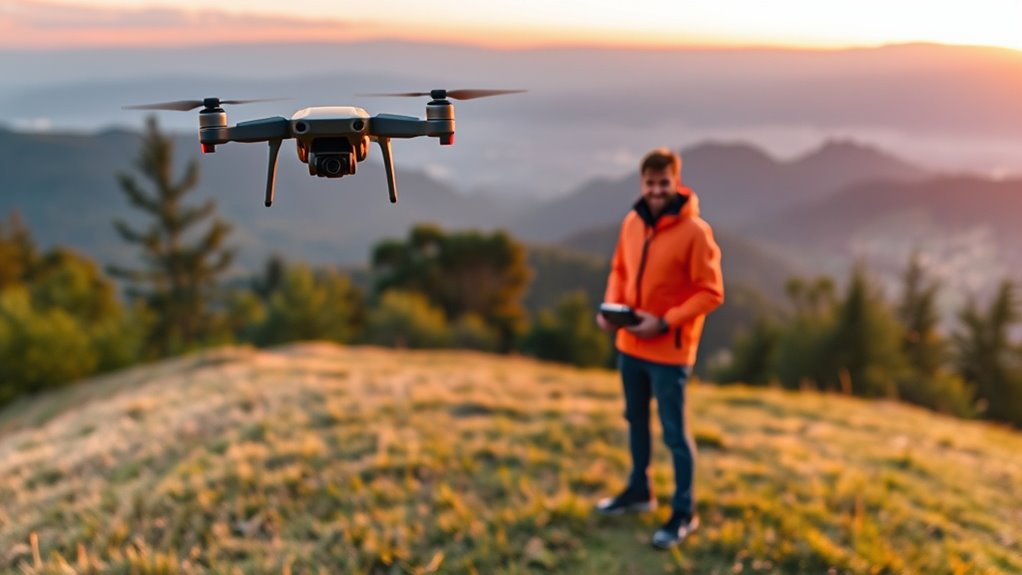
Selecting the right location is essential for safe and successful drone filming. You should choose open, obstacle-free areas to prevent collisions and ensure smooth footage. If you’re interested in wildlife conservation, avoid disturbing animals by maintaining a respectful distance and filming in areas where drone activity is permitted. Consider environmental factors like wind, lighting, and terrain, which can impact your drone’s stability and battery life. Using proper aerial photography techniques, such as steady movements and appropriate altitudes, helps capture high-quality shots without risking safety. Always research local regulations and restrictions before flying. Prioritizing environments with clear visibility and minimal hazards can also help prevent unintended accidents and promote safe drone operation. Regularly update your knowledge of primitive weapons for modern survival to stay prepared for various scenarios. Additionally, understanding connected fitness technology can enhance your awareness of safety features and real-time monitoring options during drone operation. Staying informed about weather conditions is crucial to avoid flying in dangerous or unsuitable conditions, ensuring both safety and optimal footage quality.
As an affiliate, we earn on qualifying purchases.
Pre-Flight Checks and Equipment Preparation
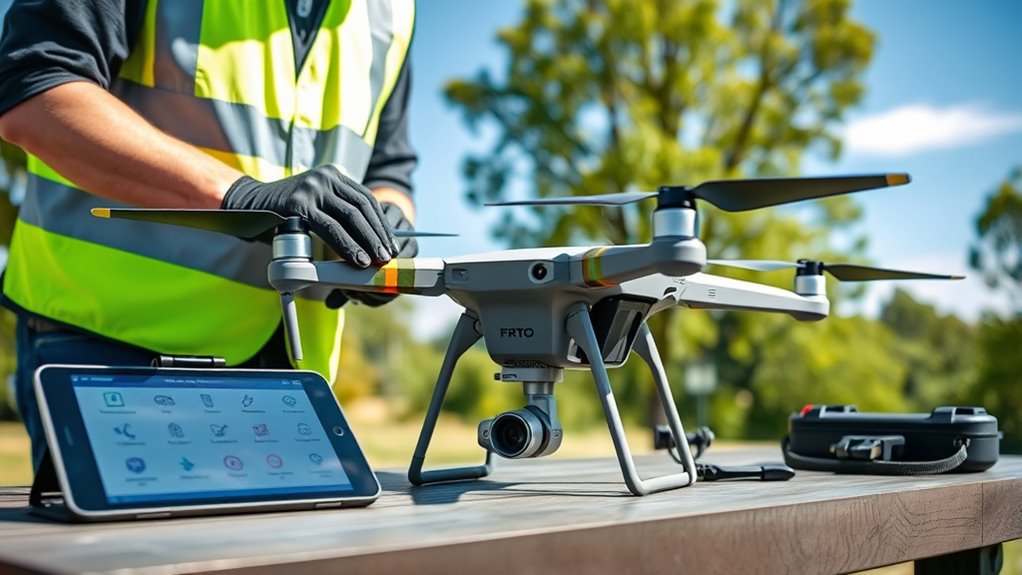
Before taking off, you need to perform thorough pre-flight checks and prepare your equipment to guarantee safe and efficient filming. Start by inspecting your drone’s battery maintenance—ensure batteries are fully charged, securely connected, and free of damage. Check weather considerations; avoid flying in high winds, rain, or fog to prevent accidents. Confirm that your propellers are intact and properly attached. Calibrate the compass and GPS, and verify that your controller is functioning correctly. Review firmware updates and reset settings if necessary. Additionally, ensure the camera and gimbal are secure and working properly. Double-check your surroundings for obstacles. Always review your load‑planning to ensure your drone can handle the intended flight duration and equipment weight. Incorporating risk management strategies can further enhance safety during your flights. Being aware of local regulations will help you stay compliant with any drone flying restrictions in your area. It’s also important to stay informed about weather conditions as they can change rapidly and impact your flight safety. Regularly performing maintenance checks can help identify potential issues before flight.
As an affiliate, we earn on qualifying purchases.
Setting Up Your Drone for Optimal Follow Me Performance
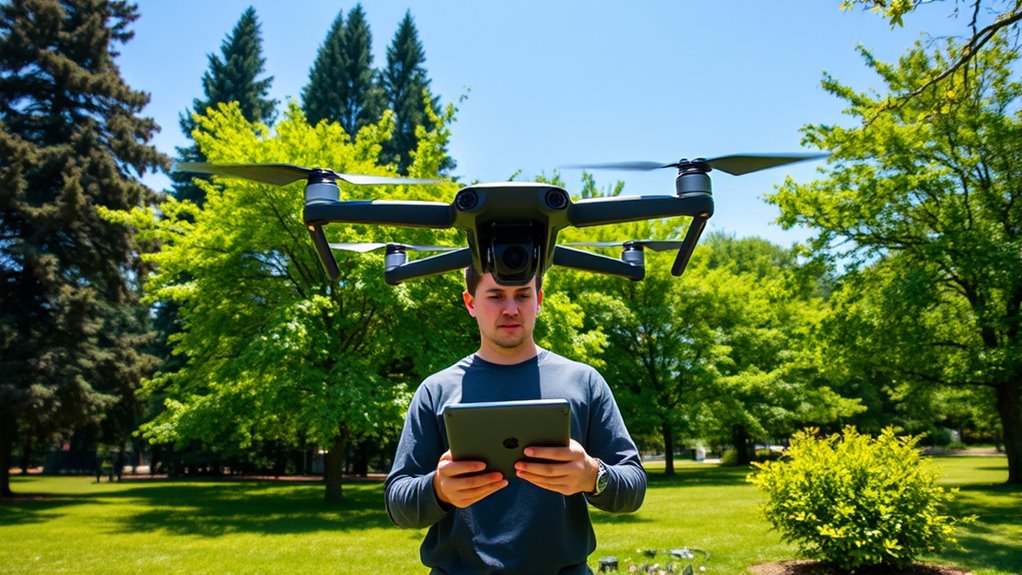
Before you take off, make sure to calibrate your drone to guarantee accurate tracking. Choose a clear, open area free of obstacles and interference to get the best follow me results. Proper setup now will help your drone follow smoothly and capture steady footage. Additionally, ensure you are familiar with safe operation procedures to prevent accidents and ensure a positive experience.
Calibrate Before Flying
To guarantee your Follow Me drone performs reliably, it’s essential to calibrate it properly before each flight. Proper calibration ensures accurate tracking and smooth footage. Before starting, check your drone’s battery maintenance to prevent power issues mid-flight. Consider weather conditions, like wind or rain, which can affect calibration and flight stability. To calibrate effectively:
- Power on your drone and remote controller
- Ensure GPS signals are strong
- Follow manufacturer calibration prompts
- Reset compass if flying in new locations
- Double-check all sensors are clean and unobstructed
Calibration helps optimize the drone’s follow features and maintains reliable performance. Always perform calibration in suitable weather and after battery maintenance to ensure safety and precision during filming. Proper setup minimizes risks and boosts your confidence behind the camera.
Choose Clear, Open Area
Choosing a clear, open area is essential for getting the best Follow Me performance from your drone. Avoid cluttered spaces with trees, buildings, or power lines, as these can interfere with tracking and increase the risk of crashes. Pay attention to weather conditions; strong winds, rain, or fog can impair visibility and drone stability. Make certain your battery management is ideal before flying—fully charge your drone’s battery to maintain consistent performance and avoid mid-flight power loss. A spacious, unobstructed environment allows your drone to follow smoothly and respond accurately to your movements. Always scout your location in advance, checking for potential hazards, and confirm weather conditions are suitable. Proper planning ensures safer flights and the best footage. Additionally, understanding the importance of energetic alignment can help you maintain a calm and focused mindset, enhancing your overall drone operation experience. Being aware of thermal behavior can also help you anticipate how environmental factors might affect your drone’s performance during the flight. Recognizing environmental factors that influence drone stability can further improve your flying experience, especially when considering weather conditions and their impact on flight safety.
Maintaining Safe Distances and Respecting Privacy
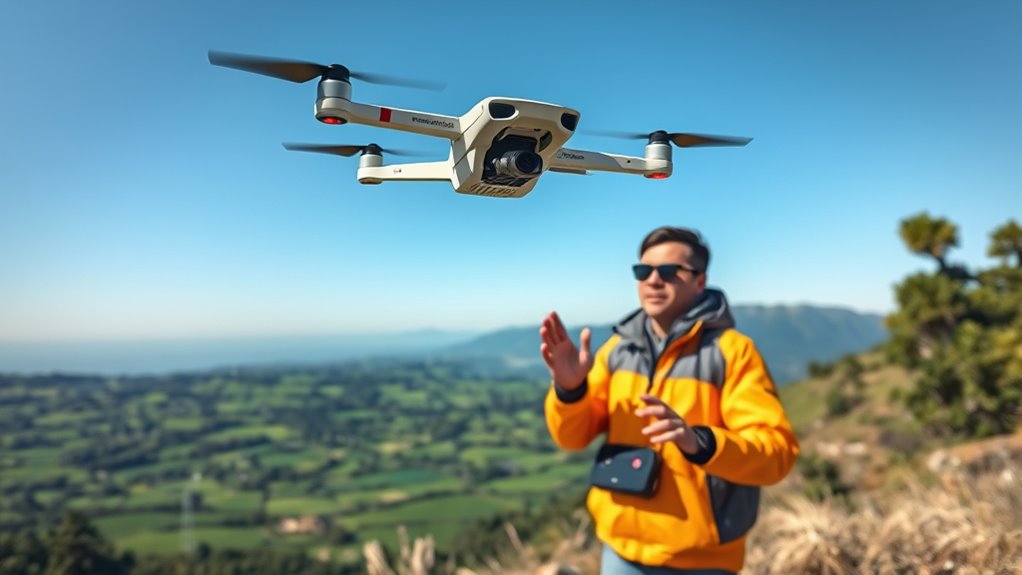
When flying your drone, make sure to keep it at a safe distance from people to avoid accidents. Always ask for permission before recording someone to respect their privacy. By following these simple steps, you help guarantee a responsible and enjoyable filming experience. Additionally, understanding drone safety guidelines can help prevent mishaps and ensure appropriate operation according to local regulations. Practicing attention to detail during flight can further enhance safety and compliance. Being aware of installation and construction considerations, such as avoiding obstacles like trees and wires, can also contribute to safer drone flights. Remember to carry proper safety equipment and be prepared for unexpected situations to ensure a smooth and safe flying experience.
Keep Clear of People
Maintaining a safe distance from people is essential when operating Follow Me drones, as close proximity can cause discomfort or safety hazards. Being mindful of crowd control helps prevent accidents and protects you from liability issues. Always keep a respectful space to avoid startling or invading others’ privacy. Here are key tips to keep clear of people:
- Maintain a safe distance to prevent crowding
- Monitor your drone’s proximity during movement
- Avoid flying directly over groups or crowds
- Be aware of local regulations and privacy laws
- Communicate with bystanders when possible
Obtain Consent Always
To guarantee respectful and legal drone operation, always obtain consent from individuals before capturing their images or filming in private or sensitive areas. Addressing privacy concerns is vital to avoid infringing on others’ rights and to prevent potential legal issues. You should ask for permission explicitly, especially when flying near private property, crowded events, or individuals who may be unaware of your filming. Respect their wishes if they decline, and remember that laws vary by location—familiarize yourself with local regulations. Prioritizing consent not only safeguards people’s privacy but also helps you avoid legal considerations that could lead to fines or restrictions. By maintaining open communication and respecting boundaries, you guarantee your drone use remains responsible and compliant.
Monitoring Your Drone During Flight to Prevent Accidents
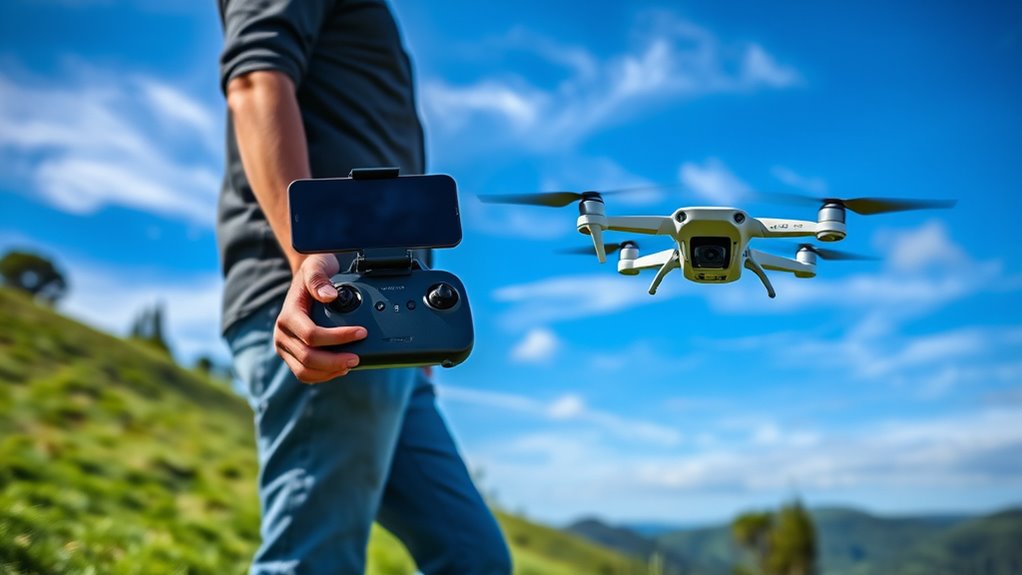
Keeping a close eye on your drone during flight is essential to guarantee a smooth filming experience. Constant monitoring helps you detect potential issues early, preventing accidents. Before flying, perform drone maintenance to ensure all systems are operational. Stay alert to your drone’s battery life and signal strength, and be prepared to initiate emergency procedures if needed. Regularly check for obstacles in the drone’s path, especially in complex environments. Maintain visual contact at all times, using the drone’s camera view as a backup. Remember, staying attentive minimizes risks and keeps your footage safe. By actively monitoring your drone, you reduce crashes and damage, ensuring a successful shoot. Stay vigilant, be prepared, and enjoy capturing your footage confidently.
Post-Flight Tips: Reviewing Footage and Ensuring Equipment Safety
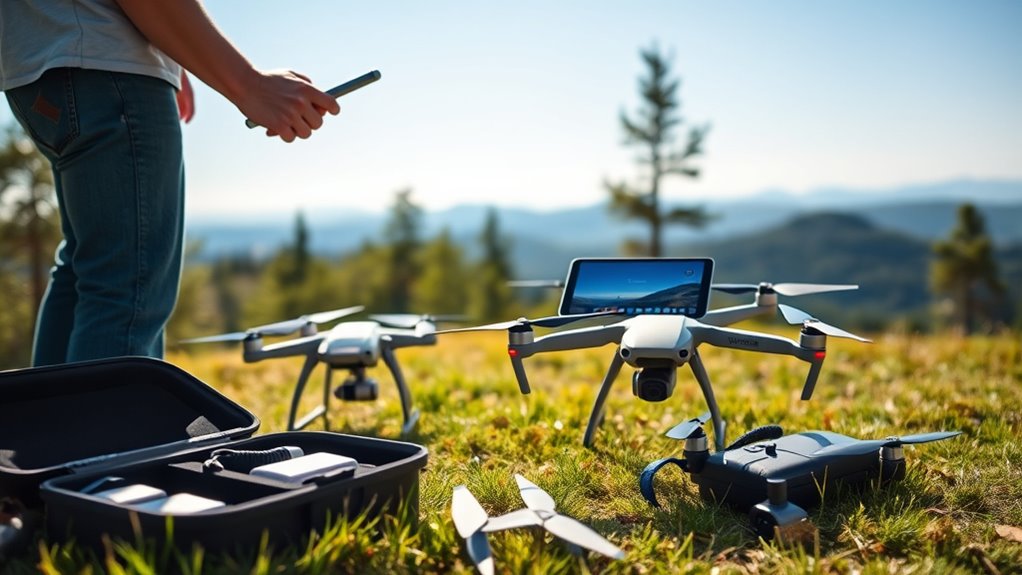
After your drone has landed safely, reviewing your footage is the next step to assess the quality of your shots and spot any issues. Start with a thorough post flight inspection to check for physical damage, loose parts, or signs of wear. This helps make certain your equipment remains safe and ready for future flights. Next, transfer your footage to your device and begin footage editing, trimming unwanted segments and enhancing your videos. Carefully examine your clips for stability and clarity, making adjustments if needed. Keeping your drone in good condition and reviewing your footage regularly helps improve your filming skills and prevents potential problems. Remember, consistent post-flight care extends your drone’s lifespan and guarantees safer, better-quality footage.
Frequently Asked Questions
Can Follow Me Drones Operate Indoors Safely?
Follow me drones can operate indoors, but you need to be cautious. Indoor obstacles like furniture and ceilings can interfere with the drone’s sensors, so always clear the area as much as possible. Keep an eye on your drone’s battery life, as flying indoors can drain it faster. Make sure to stay close and monitor the drone constantly to prevent crashes and guarantee safe operation.
How Do Weather Conditions Affect Follow Me Functionality?
Weather conditions greatly impact follow me drone functionality, mainly through GPS reliability. Wind, rain, or snow can cause instability or loss of signal, making the drone struggle to follow you accurately. Fog or heavy clouds interfere with GPS signals, reducing tracking precision. To guarantee safe operation, avoid flying in bad weather, and always check weather impact on GPS reliability before starting your filming session.
What Are Legal Restrictions on Drone Filming in Public Areas?
You must follow FAA regulations when filming in public areas, including keeping your drone within line of sight and respecting altitude limits. Be aware of privacy concerns, as capturing images of individuals without permission can lead to legal issues. Always check local laws and restrictions, and avoid flying near airports, government buildings, or private property without consent. Staying informed helps you operate responsibly and legally.
How to Troubleshoot if the Drone Loses Tracking?
When your drone’s tracking signal falters, it’s like losing a trusted friend in the fog. First, check for GPS connectivity problems and make sure you’re in an open area free from interference. Restart the drone and controller, and verify the firmware is up to date. Recalibrate the compass if needed. If issues persist, reset the tracking mode and try again, keeping a close eye on the signal strength.
What Safety Gear Should I Wear During Drone Operation?
You should wear protective eyewear to shield your eyes from potential debris or drone malfunctions. Grip gloves are also essential to maintain a firm hold on the drone during handling or emergencies, reducing the risk of slips. Always prioritize safety by wearing these items, especially in unpredictable conditions. This gear helps prevent injuries and guarantees better control, making your drone flights safer and more enjoyable.
Conclusion
Did you know that drones equipped with Follow Me technology can capture stunning footage up to 50% more efficiently? By understanding their capabilities, choosing safe locations, and staying vigilant during flights, you can enjoy smooth, professional-quality videos without risking accidents or privacy breaches. Remember, safe drone practices not only protect your equipment but also ensure everyone around you stays safe. With preparation and awareness, you’ll be capturing incredible footage confidently and responsibly.
Fall Picks
fall essentials
As an affiliate, we earn on qualifying purchases.