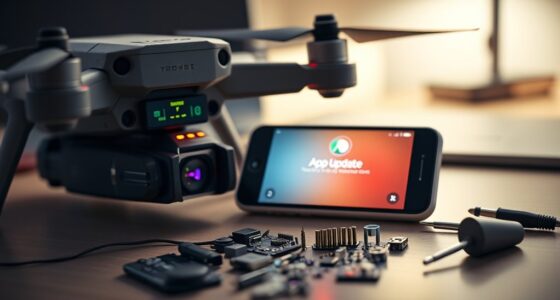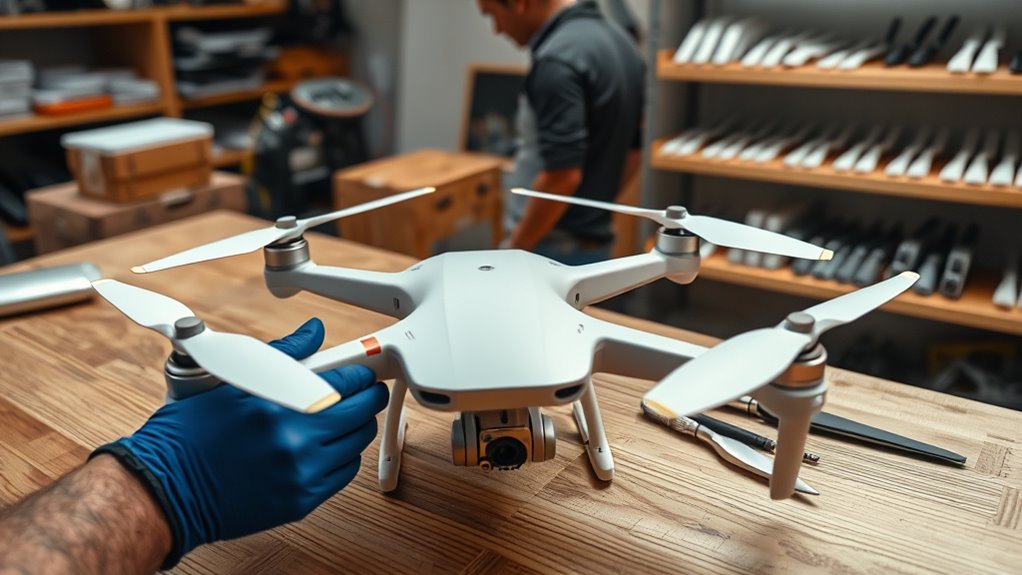
After each flight, make sure to power down your drone completely and disconnect the battery carefully. Inspect the propellers, landing gear, and frame for cracks or damage, then gently clean the surfaces and sensitive parts with a microfiber cloth. Properly handle and store batteries, monitoring their condition and keeping them in a cool, dry place. Keep detailed logs of flight and maintenance activities to prevent issues and keep your drone in top shape—more tips await you.

Get the latest gadgets delivered free with Prime
- Fast, free delivery on millions of items
- Prime Video, Amazon Music and more included
- Member-only deals all year
Key Takeaways
- Power down the drone fully, disconnect the battery, and remove accessories to prevent damage.
- Inspect propellers, landing gear, and wiring for damage or loose parts after each flight.
- Clean the drone surfaces, sensors, and camera lens with a microfiber cloth and compressed air.
- Store batteries in a cool, dry place, and check them for swelling, leaks, or damage regularly.
- Keep detailed records of flights, maintenance, and repairs to monitor drone health and performance.
Products Worth Considering

Amazon Kindle Paperwhite Signature Edition (12th Generation, 2024), 32 GB, Metallic Black

Samsung 27 Odyssey OLED G5 (G50SF) QHD QD-OLED Gaming Monitor

DJI Osmo Mobile 8 Standard Combo Phone Gimbal Stabilizer
As an affiliate, we earn on qualifying purchases.
Power Down and Disconnect Components

Always power down your drone completely before disconnecting any components. This step prevents electrical shorts, reduces the risk of damage, and guarantees safety. First, switch off the main power button or use the remote to turn off the drone. Wait for the motors to stop spinning entirely—this signals that internal circuits have powered down. Once confirmed, carefully disconnect the battery, avoiding abrupt pulls that could damage connectors. If your drone has removable accessories like cameras or lights, turn them off and detach them gently. Taking these precautions minimizes the chance of short circuits, hardware damage, or data corruption. Properly powering down and disconnecting protects your investment and keeps your drone in excellent condition. Power management is essential to ensure all components safely shut down without residual power. Additionally, understanding connected equipment helps in maintaining overall system health and longevity. Recognizing the importance of system shutdown procedures can further prevent unexpected issues during maintenance. Being aware of safe disconnection practices is also key to avoiding accidental damage or safety hazards.
Conduct a Thorough Inspection for Damage

Have you checked your drone thoroughly for damage after each flight? Carefully examine all components, paying close attention to the propellers for chips, cracks, or bends. Ensure they spin smoothly and are securely attached. Inspect the landing gear for cracks, looseness, or dents, which could impact stability during takeoff and landing. Look over the frame for dents, cracks, or loose fittings that might compromise structural integrity. Check wiring connections for fraying, exposed wires, or weak joints. Test motors to confirm they rotate freely without obstruction or unusual noise. Tighten screws and fastenings where needed, but avoid over-tightening. Conducting this detailed inspection helps catch minor issues before they become costly repairs, guaranteeing your drone stays in excellent condition. Regularly reviewing drone safety procedures and maintenance tips ensures optimal performance and longevity. Paying attention to nanotechnology advancements can also improve drone component durability through innovative materials and coatings, enhancing overall material strength and resilience. Additionally, inspecting essential oils for component protection may help preserve delicate drone parts from environmental damage. Incorporating preventive maintenance techniques into your routine can further extend the lifespan of your drone and prevent unexpected failures.
Clean Drone Surfaces and Sensitive Parts

Cleaning drone surfaces and sensitive parts is essential for maintaining ideal performance and extending your drone’s lifespan. Regular cleaning prevents debris buildup, reduces mechanical wear, and guarantees sensors and motors function accurately. Incorporating energy-efficient cleaning methods can further optimize your maintenance routine by reducing power consumption and environmental impact. You can also consider low-impact cleaning techniques that are gentle yet effective on delicate components. Using environmentally friendly cleaning supplies can help minimize chemical exposure and promote sustainable maintenance. Additionally, understanding drone component protection ensures that you avoid damage during cleaning. Here’s what you should do: 1. Use a microfiber cloth to gently wipe down the drone chassis, removing dust, dirt, and organic matter. 2. Blow compressed air into motor chambers and around sensors to clear out bugs and debris. 3. Carefully clean the camera lens and gimbal with a soft, lint-free cloth, avoiding scratches. 4. Avoid water or abrasive cleaners—stick to manufacturer-recommended cleaning methods for electronics and delicate parts. Consistent cleaning keeps your drone in top condition and ready for flight at a moment’s notice.
Handle and Store Batteries Properly

Before charging your batteries, make sure to examine them for swelling, leaks, or damage to prevent potential hazards. Store batteries in a cool, dry place away from direct sunlight or heat sources to preserve their lifespan. During use, keep an eye on battery temperature to avoid overheating and ensure safe operation. For added safety, consider using vetted deals on buy options to select the best quality batteries for your drone. Additionally, regularly checking and maintaining your drone’s battery health can help extend its overall performance and lifespan. Proper storage practices can also minimize the risk of battery degradation over time.
Inspect Before Charging
Inspecting your drone batteries before charging is essential to guarantee safety and maintain battery health. First, check for any swelling, leaks, or cracks—these signs indicate the battery’s compromised. Second, look for dirt or debris on contacts; clean them with alcohol wipes or a pencil eraser to make sure a solid connection. Third, verify the battery temperature; if it’s too hot or cold, allow it to stabilize before charging. Fourth, inspect for corrosion or corrosion residue around terminals, which can cause poor performance. Additionally, regularly checking the battery’s compatibility with your drone model ensures optimal operation and safety. To further preserve your batteries, store them in a cool, dry place when not in use, avoiding extreme temperatures that can degrade battery life. Proper handling and storage also prevent potential hazards like short circuits or fires, extending your battery’s lifespan. Moreover, monitoring the overall battery condition helps identify when a replacement may be necessary, ensuring continued safe operation. By following these steps, you prevent potential hazards like short circuits or fires, extend your battery’s lifespan, and ensure your drone operates safely and reliably after each flight. Regular inspection keeps your drone ready for your next adventure.
Store in Cool, Dry Place
Storing your drone batteries in a cool, dry place helps preserve their performance and lifespan. High temperatures accelerate chemical reactions inside the battery, leading to faster degradation, while moisture can cause corrosion and short circuits. Keep batteries away from direct sunlight, heat sources, and humidity. Use a dedicated storage container, ideally with ventilation, to prevent condensation. Proper storage minimizes capacity loss and reduces safety risks.
| Temperature Range | Storage Benefits | Risks of Improper Storage |
|---|---|---|
| 0°C to 25°C | Extends battery lifespan | Overheating, swelling |
| Above 25°C | Faster capacity decline | Leakage, damage |
| Below 0°C | Temporary performance drop | Freezing, internal damage |
Monitor During Use
Monitoring your drone batteries during use is crucial to prevent damage and guarantee safety. Keep an eye on battery temperature and performance throughout your flight. Here are four key tips:
- Check temperature regularly to avoid overheating, which can lead to swelling or failure.
- Monitor voltage levels to ensure batteries don’t drain too quickly or unevenly.
- Observe battery behavior for signs of swelling, leakage, or unusual bulges.
- Listen for warnings from your drone’s app or controller indicating low power or abnormal performance.
Manage Flight Data and Maintenance Records

Keeping detailed flight logs helps you track how your drone performs over time and identify patterns that may signal maintenance needs. Recording maintenance actions guarantees you stay on top of repairs, part replacements, and software updates. Regularly managing this data helps you plan preventive care and avoid unexpected issues during flights.
Flight Log Documentation
Maintaining accurate flight logs is essential for tracking your drone’s performance, usage patterns, and maintenance history. Proper documentation helps you identify issues early and plan routine checks. To get the most out of your logs, consider these steps:
- Record flight details, including date, location, weather, and flight duration, to monitor environmental impacts.
- Document any anomalies or incidents, such as crashes or abnormal behavior, for troubleshooting.
- Log maintenance activities, like part replacements or repairs, to track wear and schedule future inspections.
- Save media files separately after each flight, noting storage locations to prevent data loss.
Consistent logging guarantees you have a thorough history, making maintenance more effective and extending your drone’s lifespan.
Maintenance Tracking Procedures
How you manage your drone’s flight data and maintenance records directly impacts its longevity and performance. Keeping detailed logs helps you track usage patterns, identify recurring issues, and plan timely maintenance. Record flight details such as date, location, weather conditions, and purpose to understand how external factors affect your drone’s wear. Document maintenance actions like parts replacements, repairs, battery cycles, and software updates to monitor the health of components. Regularly review these records to identify trends or potential problems early. Clear, organized records make troubleshooting easier and ensure you don’t miss critical service intervals. Using a dedicated system—whether digital or manual—keeps your maintenance on track and extends your drone’s lifespan, guaranteeing optimal performance over time.
Prepare Drone for Storage and Transportation

Preparing your drone for storage and transportation involves careful disassembly and cleaning to prevent damage and guarantee readiness for future use. To do this effectively, follow these steps:
Properly disassemble and clean your drone to ensure safe storage and optimal future performance.
- Remove all payloads and accessories to avoid accidental damage during transit.
- Disconnect batteries, ensuring they are fully cooled and stored separately in a dry, cool place.
- Clean the drone thoroughly with a soft cloth, removing dust, dirt, and debris.
- Store the drone in a protective case designed to shield against impacts, dust, and moisture.
Frequently Asked Questions
How Often Should I Perform a Full Drone System Calibration?
You should perform a full drone system calibration after every 25 to 50 flights or whenever you notice flight instability, drifting, or inconsistent sensor readings. Regular calibration ensures peak performance and safety. Always follow your drone manufacturer’s guidelines for calibration procedures, and perform it after firmware updates or major repairs. Keeping up with calibration helps maintain your drone’s accuracy, responsiveness, and flight quality over time.
What Signs Indicate My Drone Needs Immediate Professional Repair?
When your drone acts like a rebellious teenager—suddenly drifting, losing control, or making strange noises—it’s time to call in the pros. Cracks, loose parts, or damaged wiring are clear red flags, indicating urgent repair needs. If your drone’s camera or sensors malfunction or if it won’t power on despite a full charge, don’t wait—professional repair guarantees safety and keeps your drone flying smoothly.
How Can I Extend My Drone’s Battery Lifespan Through Maintenance?
To extend your drone’s battery lifespan, you should regularly inspect for swelling or damage, and always charge and discharge batteries properly. Avoid overcharging or fully depleting them, and store batteries in a cool, dry place. Clean contacts periodically for good electrical connection, and monitor temperature during use. Following these maintenance steps helps prevent degradation and guarantees your batteries last longer, saving you money and enhancing flight performance.
Are There Specific Cleaning Products Recommended for Sensitive Drone Parts?
Your drone’s sensitive parts deserve the gentle touch of manufacturer-recommended cleaning products—nothing more, nothing less. Use a soft microfiber cloth and, for stubborn dirt, a tiny amount of isopropyl alcohol (70%) on the cloth. Avoid abrasive cleaners, water, or harsh chemicals that could damage delicate sensors, lenses, or circuit boards. Think of it as giving your drone a spa day—gentle, precise, and designed to preserve its high-flying perfection.
What Are Best Practices for Organizing and Backing up Flight Data?
You should organize and back up your flight data by maintaining detailed logs, including date, location, weather, and purpose. Transfer videos and images to a secure storage device promptly after each flight. Regularly update your files and back them up to cloud storage or external drives to prevent data loss. Keeping neat records helps track your drone’s performance, maintenance needs, and flight history, ensuring smooth future operations.
Conclusion
Keeping your drone in top shape might seem time-consuming, but with these simple steps, it quickly becomes part of your routine. Regular maintenance not only extends your drone’s lifespan but also guarantees safe, reliable flights every time. Don’t worry if it feels overwhelming at first—once you get into the habit, caring for your drone will become second nature. Enjoy flying with confidence, knowing your drone is well-maintained and ready for your next adventure.