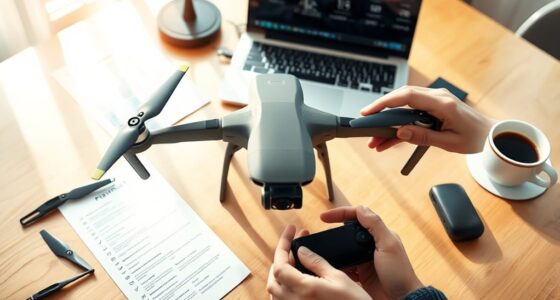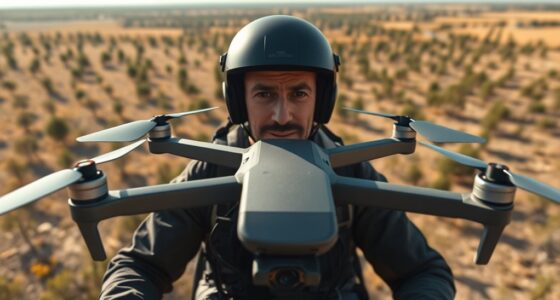
To improve your drone flying skills, you need to tackle various challenges like mastering flight controls, adjusting to environmental factors, and maintaining steady camera work for filming. Developing quick reflexes, understanding your drone’s technology, and balancing different flying styles are essential. Practicing in open spaces and gradually increasing complexity will help boost your confidence. Stay persistent—if you keep exploring these areas, you’ll unlock more advanced techniques to perfect your flying.

Get the latest gadgets delivered free with Prime
- Fast, free delivery on millions of items
- Prime Video, Amazon Music and more included
- Member-only deals all year
Key Takeaways
- Practice in open, obstacle-free areas to develop stable flight control and smooth camera movements.
- Gradually introduce challenging environmental conditions like wind to build adaptive flying skills.
- Focus on mastering gimbal control and camera angles for professional-quality aerial footage.
- Incorporate high-speed maneuvers and tight turns to enhance reflexes and obstacle navigation.
- Study drone technology and telemetry data to improve situational awareness and decision-making.

Mastering drone flying can be challenging, especially as you maneuver complex controls and develop precise maneuvering skills. Whether you’re aiming to capture stunning aerial cinematography or compete in high-speed drone racing, the learning curve can feel steep. Aerial cinematography demands steady hands and smooth movements to produce professional-looking shots. You need to master the art of controlling altitude, angle, and camera gimbal simultaneously, which requires a lot of practice and patience. The slightest miscalculation can ruin a shot or cause a crash, making it essential to understand your drone’s flight dynamics thoroughly. Practicing in open spaces helps you get comfortable with maintaining stable flight and smooth camera movements, but it also introduces the challenge of environmental factors like wind or obstacles.
Mastering drone flying requires patience, practice, and understanding of flight dynamics for smooth, professional shots and precise control.
Drone racing, on the other hand, pushes your reflexes and situational awareness to the limit. Racing drones often reach incredible speeds, and steering through tight courses at high velocity demands lightning-fast decision-making and precise control. The challenge here isn’t just flying fast; it’s controlling your drone accurately while avoiding obstacles in real-time. You must learn to interpret your drone’s telemetry, anticipate its movements, and execute quick maneuvers—all while keeping your focus sharp amid intense competition. This sport requires you to develop a refined sense of spatial awareness and hand-eye coordination, which takes repeated practice and experience.
Balancing these two aspects—smooth, cinematic shots and rapid, agile racing—can be tricky because they require different flying styles. Aerial cinematography emphasizes stability and fluidity, while drone racing emphasizes speed and agility. As you work to improve, you’ll find that mastering one skill set can sometimes conflict with the other. However, cross-training between these disciplines can make you a more versatile pilot. For instance, practicing precise, slow movements for cinematography can improve your overall control, which translates well into racing scenarios where precision at high speeds is essential.
Additionally, understanding your drone’s technology and limitations is indispensable. Learning about battery life, signal range, and obstacle avoidance systems helps you fly more confidently and safely. You’ll also face challenges related to weather conditions, which can unpredictably impact your flying experience. The key to overcoming these hurdles is consistent practice, studying tutorials, and gradually increasing complexity in your flying routines. Developing a strong foundation in flight physics can significantly enhance your ability to adapt to various flying challenges. With perseverance, you’ll find yourself becoming more confident, capable, and prepared to handle the diverse challenges of drone flying, whether capturing breathtaking shots or racing with precision.
Frequently Asked Questions
What Are the Best Beginner Drones for Learning Flight Skills?
You should start with beginner drones like the DJI Mini SE or Holy Stone HS210, which feature simple drone design and stable flight capabilities. These models often include flight simulation modes, helping you practice without crashing. Their intuitive controls make learning easy, and the lightweight build reduces damage risk. Using these drones, you’ll quickly build confidence and improve your skills, setting a solid foundation for more advanced flying adventures.
How Can I Improve My Drone’s Battery Life During Practice?
To improve your drone’s battery life during practice, focus on battery optimization and power management. Always fly in ideal conditions, avoiding extreme temperatures and high wind. Reduce unnecessary payloads and disable features like live streaming when not needed. Use the lowest possible brightness for cameras and avoid rapid, aggressive maneuvers. These steps help conserve power, extend flight times, and give you more practice opportunities to sharpen your drone flying skills efficiently.
Are There Specific Weather Conditions to Avoid When Flying?
Flying your drone is best on clear, calm days, so avoid windy conditions, rain, and storms. These weather factors can make controlling your drone difficult and increase the risk of crashes or damage. When the sky looks unsettled, it’s better to wait for a more stable day. Protect your equipment and enjoy safe flying by choosing weather conditions that foster confidence and smooth performance.
How Do I Troubleshoot Common Drone Control Issues?
To troubleshoot common drone control issues, first check for signal interference from nearby electronic devices or obstacles. Make certain your drone’s calibration techniques are up to date, especially the compass and IMU, to prevent drift or unresponsive controls. Restart your drone and remote, and verify firmware updates. If problems persist, reset the controls or reconnect the devices, and consider flying in a different location to minimize interference.
What Safety Gear Should I Use While Practicing Drone Flying?
Ever wonder how you can stay safe while mastering your drone skills? You should always wear protective eyewear to shield your eyes from potential debris, and attach propeller guards to prevent accidents during crashes. These safety measures give you peace of mind and help avoid injuries. Are you prepared to make your practice sessions safer? Using proper safety gear ensures you can focus on improving your flying skills without unnecessary risks.
Conclusion
Mastering drone flying is like steering a stormy sky—you’ll face turbulence, but each challenge sharpens your wings. Embrace these hurdles as the winds that push you higher, turning every stumble into a graceful glide. With patience and practice, you’ll transform from a novice into a soaring maestro, painting the skies with confidence. So, keep pushing your limits—your journey to flying mastery is a flight worth taking, one skillful maneuver at a time.
Halloween Picks
halloween
As an affiliate, we earn on qualifying purchases.