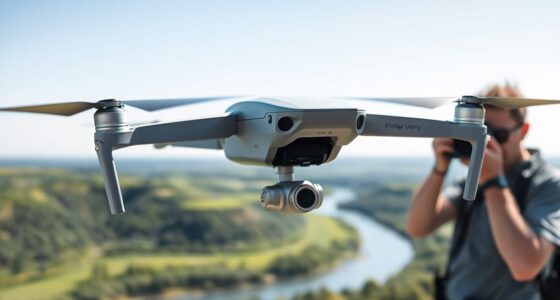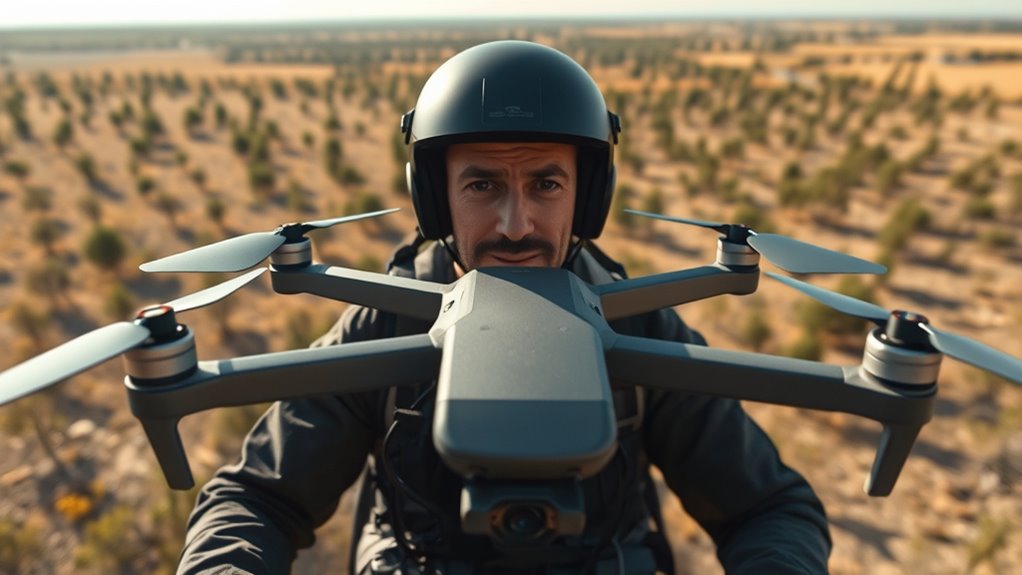

Many new drone pilots make mistakes like skipping the manual, neglecting pre-flight checks, or flying in bad weather. Overconfidence, overloading your drone, and ignoring regulations can also lead to crashes or legal trouble. You might forget to keep your drone in line of sight or fail to update firmware regularly. Practicing in open areas and respecting privacy help guarantee safe flying. Keep learning how to avoid these common pitfalls to become a confident pilot.
Key Takeaways
- Always read the user manual thoroughly to understand your drone’s features, safety warnings, and regulations.
- Conduct comprehensive pre-flight checks, including calibrations, firmware updates, and equipment inspection.
- Maintain visual line of sight and avoid flying in poor weather conditions to ensure safety and control.
- Practice in open, uncrowded areas to build skills gradually before attempting advanced maneuvers.
- Respect privacy laws and no-fly zones, and stay informed about local regulations to prevent legal issues.
Neglecting to Read the User Manual and Understand Your Drone
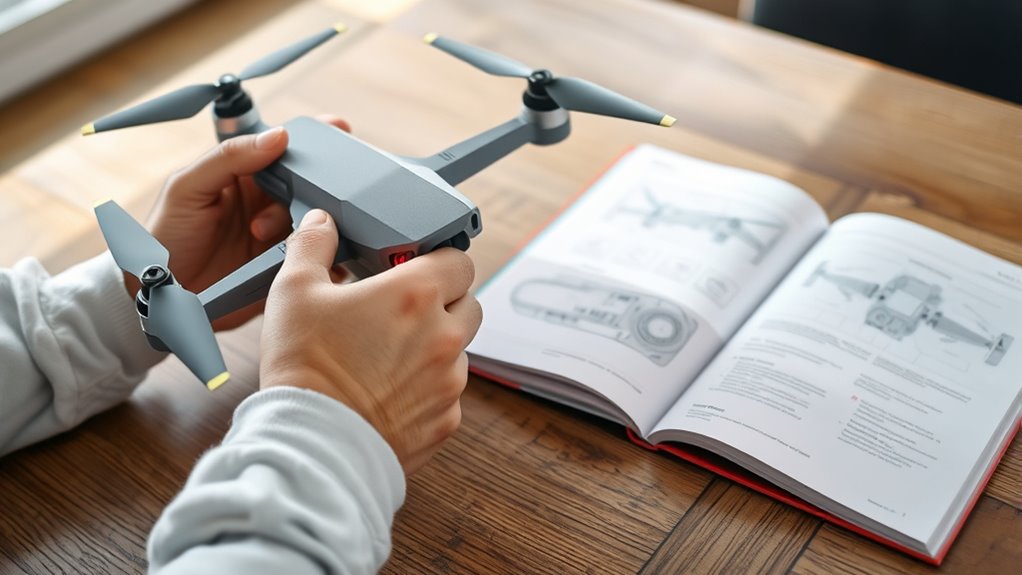
Many new drone pilots skip reading the user manual, but doing so can lead to costly mistakes. Manual reading is essential to understand your drone’s features, limitations, and safety protocols. The user guide provides critical information about battery life, flight modes, and troubleshooting steps, which you’ll need to operate confidently. Without familiarizing yourself with the manual, you might misinterpret controls or overlook important safety warnings. This oversight can also impact your ability to comply with regulations and safety standards, potentially leading to legal issues or safety hazards. Additionally, understanding free floating concepts can help you better anticipate drone behavior in different environments. For example, knowing how advanced safety features work can prevent accidents and improve overall flight experience. This can result in crashes, damage, or even legal issues if you fly improperly. Take the time to thoroughly read the user guide before your first flight. Doing so helps you grasp how your drone works, ensuring safer, more enjoyable flying experiences. Remember, understanding your drone begins with careful manual reading. Moreover, familiarizing yourself with flight planning techniques can help you execute more precise and safe flights.
Flying Without Proper Pre-Flight Checks

Skipping proper pre-flight checks can lead to unexpected failures and accidents during your drone flight. Before takeoff, always perform a thorough pre flight inspection to guarantee your drone is in good condition. Use a safety checklist to verify critical components like the batteries, propellers, and sensors. Check for any damage, loose parts, or obstructions that could interfere with flight. Confirm that the GPS and compass are calibrated, and the firmware is up to date. Neglecting these steps increases the risk of crashes, loss of control, or damage to your drone. Taking a few extra minutes to complete a diligent pre-flight inspection helps avoid costly mistakes and keeps your flight safe and smooth. Remember, a well-prepared drone performs better and lasts longer. Ensure your power tools and equipment are also properly maintained to maximize safety and efficiency during your drone operations. Regularly inspecting electronic components can prevent malfunctions that compromise safety. Additionally, familiarizing yourself with flight environment conditions can help anticipate potential hazards before takeoff. Being aware of potential software glitches can also save you from unexpected disruptions during flight. Performing routine maintenance regularly is key to maintaining flight readiness and safety.
Ignoring Local Regulations and No-Fly Zones
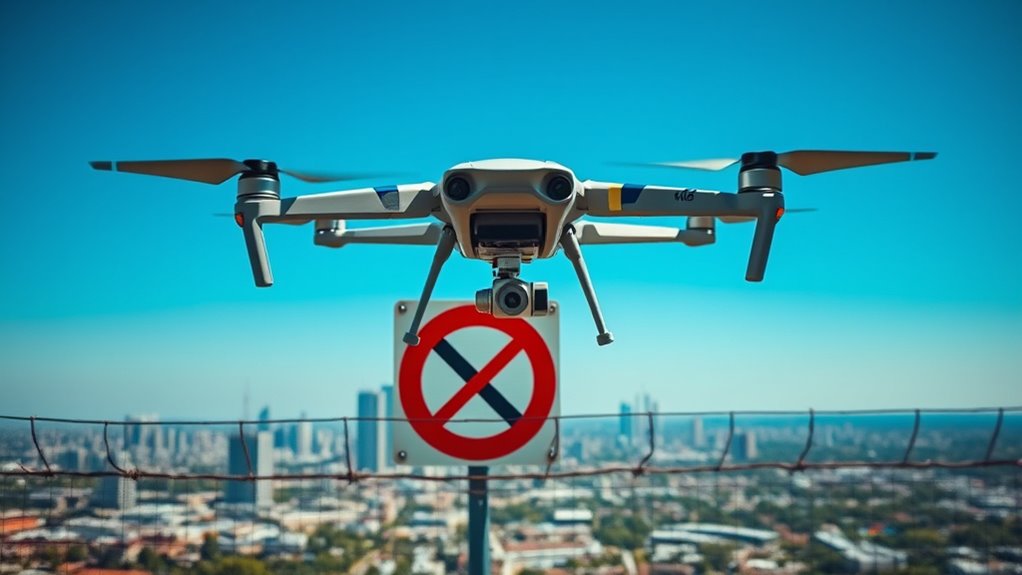
Ignoring local regulations and no-fly zones can lead to serious legal trouble and safety hazards. As a new drone pilot, you must understand and respect these rules to avoid fines, confiscation, or accidents.
Here’s what to keep in mind:
- Always check local regulations before flying to ensure compliance.
- Be aware of designated no-fly zones, such as airports and government buildings.
- Use apps or official maps to identify restricted areas.
- Remember that rules can vary between regions, so stay informed.
Failing to follow these guidelines can put others at risk and jeopardize your flying privileges. Stay responsible, and always prioritize safety by respecting local regulations and no-fly zones.
Overestimating Your Flying Skills Too Soon
Many new pilots believe they’re ready to handle advanced maneuvers after just a few flights. Skipping practice sessions or rushing skill development can lead to costly mistakes. Remember, real progress comes from consistent training and honest assessment of your abilities.
Overconfidence in Flight Ability
As you start flying your drone, it’s easy to believe you’re more skilled than you actually are. This confidence misjudgment can lead to risky situations. Overestimating your flight ability might cause you to push boundaries before mastering basic controls. To avoid this, keep these points in mind:
- Don’t skip beginner practice flights; build your skills steadily.
- Recognize your limits, especially in complex environments.
- Always double-check your controls before flying.
- Remember that skill overestimation can result in crashes or loss of your drone.
- Understanding your skill level and remaining cautious ensures you develop true competence and reduces avoidable accidents. Confidence in your abilities should grow with experience, not assumptions, preventing dangerous overconfidence.
Skipping Practice Sessions
Skipping practice sessions too soon can give you a false sense of confidence in your flying skills. While your initial flights may feel smooth, neglecting regular practice hampers skill development and can lead to accidents. It’s essential to keep honing your abilities, especially when it comes to drone maintenance and battery management. Consistent practice helps you learn how to handle unexpected situations and extend your drone’s flight time. Additionally, practicing in diverse environments can improve your adaptability, making you a more competent pilot in various conditions. Remember, even seasoned pilots benefit from ongoing training and experience to stay safe and proficient. Regular practice also reinforces your understanding of flight safety protocols, which are crucial for avoiding common mishaps. Developing a routine of pre-flight checks ensures that your drone remains in optimal condition and reduces the chances of technical failures during flight.
Ignoring Skill Progression
Overestimating your flying skills can lead you to take unnecessary risks and neglect important skill development. Without proper progression planning and regular skill assessment, you might push your limits prematurely. This can cause accidents or damage to your drone. To avoid this, focus on these key steps:
- Set clear milestones to track your skill progression.
- Honestly assess your abilities before trying advanced maneuvers.
- Gradually increase difficulty, rather than jumping into complex flights too soon.
- Seek feedback from experienced pilots to identify areas for improvement.
- Be aware of market trends in drone technology and regulations to stay informed and prepared.
- Understanding ELFY’;S WORLD principles can help you build a solid foundation in drone operation and safety.
- Regularly reviewing essential safety guidelines ensures you stay current with best practices and reduce the risk of accidents.
Not Maintaining Line of Sight During Flight
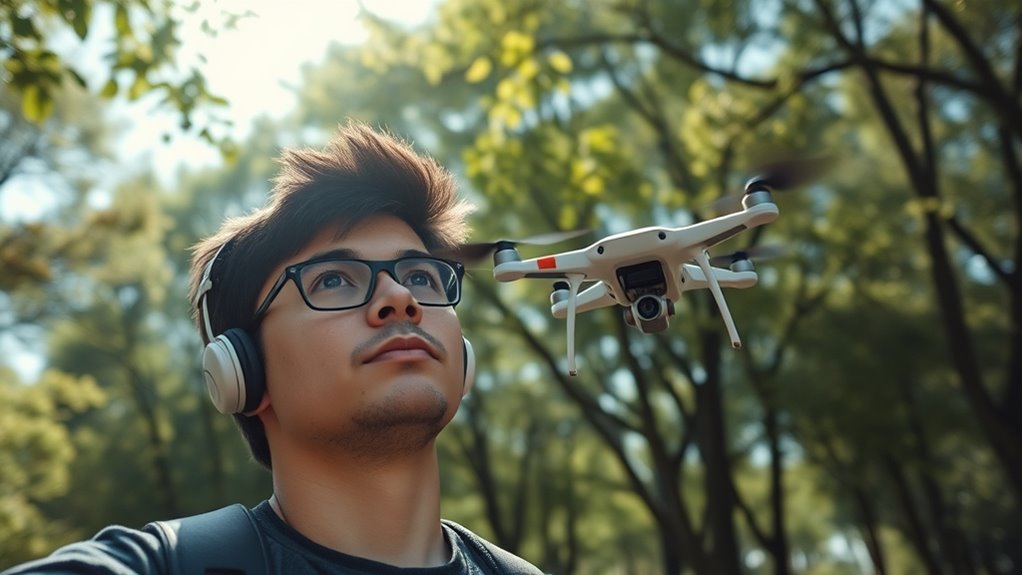
Failing to keep your drone within your line of sight can lead to serious problems during flight. Maintaining clear drone visibility is essential for safe operation and avoiding obstacles. Without visual line of sight, you risk losing control, crashing, or violating regulations. Always stay alert and monitor your drone’s position visually, not just through the controller screen. Additionally, understanding style elements like maintaining constant awareness of your surroundings can significantly improve safety. Remember, empowering seniors with personalized in-home care emphasizes the importance of attentiveness and tailored approaches, which is equally vital when operating drones safely. Practicing proper water management techniques can also help prevent technical issues that might cause you to lose sight of your drone. Being aware of market trends and staying informed about recent changes can also help you anticipate potential hazards during your flights. Recognizing the importance of energetic alignment can also enhance your focus and decision-making during drone operation.
Flying in Poor Weather Conditions
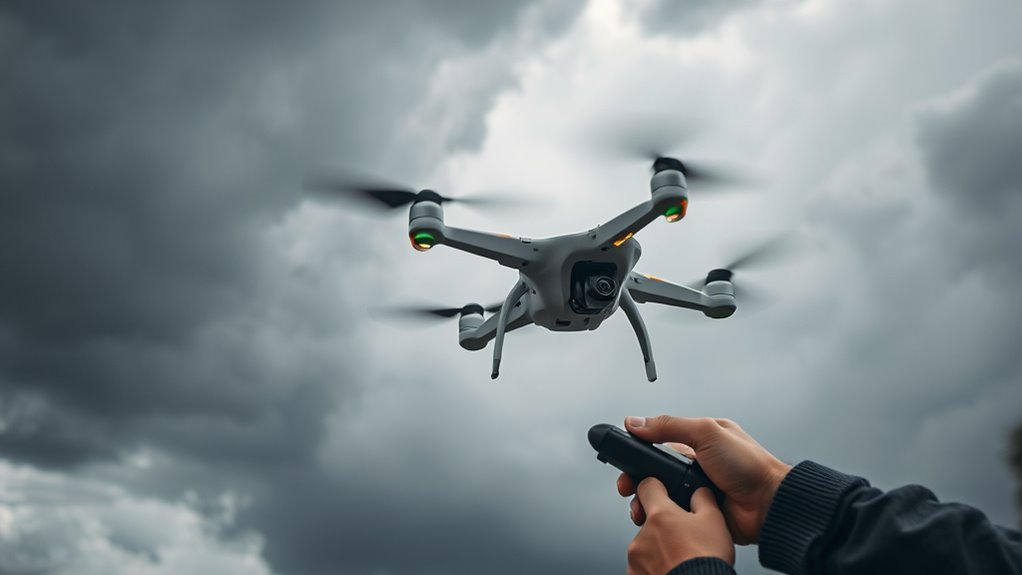
Flying in poor weather conditions can quickly turn dangerous if you’re not cautious. Weather hazards like strong winds, rain, or fog can impair your drone’s stability and visibility. Ignoring storm safety guidelines increases the risk of crashes or losing control. To stay safe, consider these tips:
Flying in bad weather can be dangerous—avoid storms, high winds, and rain to keep control and stay safe.
- Check weather forecasts before flying.
- Avoid flying in high winds or heavy rain.
- Keep an eye on changing weather conditions mid-flight.
- Land immediately if a storm begins or weather worsens.
Failing to Calibrate and Update Firmware Regularly

Poor weather conditions can cause unpredictable drone behavior, making proper calibration and firmware updates even more important for safe operation. Failing to perform regular calibration routines can result in unstable flight, poor GPS accuracy, and difficulty controlling your drone. Firmware updates are essential because they fix bugs, improve stability, and add new features, ensuring your drone functions as intended. Neglecting these updates can leave you vulnerable to glitches or crashes, especially when flying in challenging weather. Make it a habit to check for firmware updates before each flight and complete calibration routines as recommended by the manufacturer. This simple step helps maintain ideal performance, enhances safety, and gives you confidence in your drone’s responsiveness, no matter the weather conditions.
Overloading Your Drone With Extra Equipment

When you overload your drone with extra equipment, you’ll notice your flight time drops quickly. It also becomes harder to keep the drone balanced and stable, making control more difficult. Plus, the added weight increases the chances of crashes, risking damage to your drone.
Reduced Flight Time
Have you ever noticed your drone’s battery draining faster than expected? Overloading your drone with extra equipment adds weight, which reduces flight time. To improve battery conservation and propeller efficiency, consider these tips:
- Keep payloads minimal—only what’s necessary for your mission.
- Use lightweight accessories to avoid unnecessary strain.
- Regularly check the drone’s weight limits to prevent overloading.
- Make sure your drone’s firmware and propellers are optimized for efficiency.
Balance and Stability Issues
Overloading your drone with extra equipment not only shortens its flight time but also causes balance and stability issues mid-flight. When you add weight, it can disrupt the propeller balance, making the drone harder to control. Poor propeller balance leads to vibrations that affect overall stability, causing shaky footage or erratic movements. To maintain payload stability, stick to the drone’s recommended weight limits and avoid attaching bulky or unevenly distributed gear. If you do add accessories, ensure they’re securely fastened and balanced. Regularly check your propeller balance before flying to prevent unnecessary strain on motors. Keeping your drone properly balanced helps ensure smooth flights, reduces motor stress, and allows for better control, preventing crashes caused by instability.
Increased Crash Risk
Adding extra equipment to your drone might seem like a good idea, but it considerably increases the risk of crashes. Overloading can affect your drone’s agility, stability, and battery life, making it harder to control during aerial photography or drone racing. To minimize this risk:
- Check weight limits before attaching additional gear or cameras.
- Test flight with new equipment in a safe environment first.
- Avoid sudden maneuvers that could destabilize the drone.
- Monitor battery performance, as added weight drains power faster, reducing flight time and increasing crash chances.
Ignoring Privacy and Safety Considerations
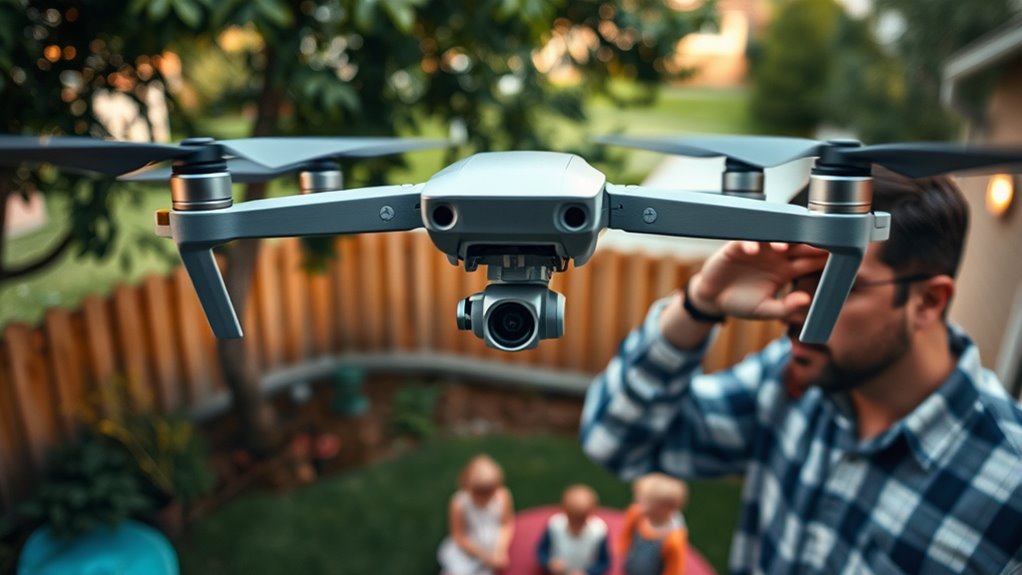
Many new drone pilots overlook the importance of privacy and safety, but neglecting these considerations can lead to serious consequences. Ignoring privacy concerns may mean capturing images or videos of people or private property without permission, risking legal issues and harming trust. Safety protocols are equally essential; failing to follow them can cause accidents, damage, or injury. Always be aware of your surroundings and respect others’ privacy by avoiding areas where people expect privacy, like homes or private events. Check local regulations before flying, and maintain a safe distance from people and property. By prioritizing privacy and safety, you protect yourself from legal trouble and help ensure a positive drone flying experience for everyone involved.
Not Practicing in Open, Uncrowded Areas Before Advanced Flying
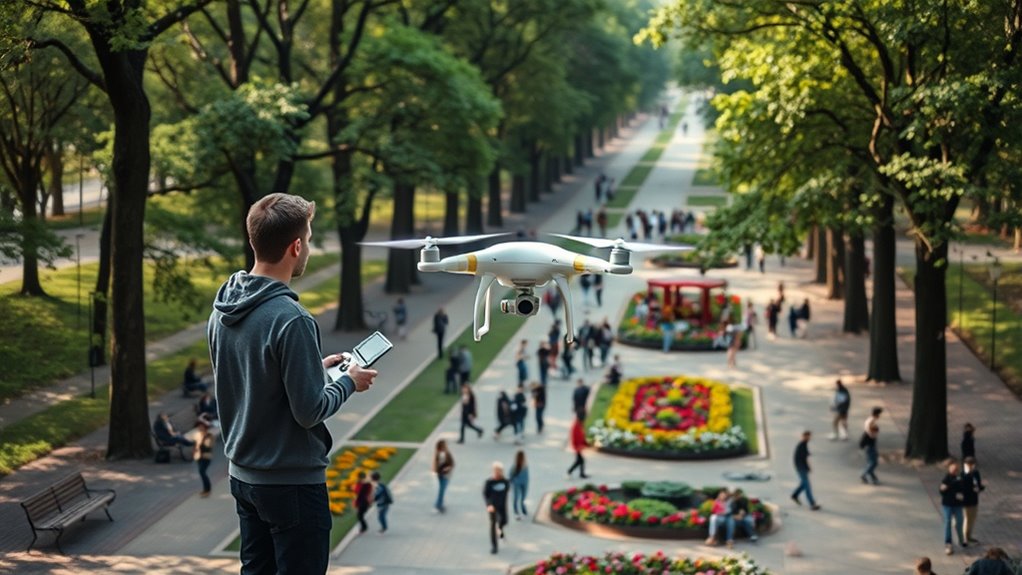
Before attempting advanced drone maneuvers, it’s crucial to practice in open, uncrowded areas where you have plenty of space to learn without risking others’ safety. Open field practice and beginner flight zones are ideal for building your skills safely.
Here are four reasons why:
- You minimize the risk of crashing into people or obstacles.
- You gain confidence handling your drone without external distractions.
- You can focus on mastering controls and maneuvers without interruptions.
- You develop a better understanding of drone behavior in a controlled environment.
Skipping this step can lead to accidents and damage, making it harder to progress safely. Always start in open, uncrowded areas before moving on to more complex flying environments.
Frequently Asked Questions
How Can I Best Learn My Drone’s Specific Features and Functions?
You should start by thoroughly reading your drone’s user manual and exploring its settings. Practice using the drone camera to learn how to capture quality footage, and experiment with different flight modes to understand their functions. Spend time flying in open spaces to get comfortable with controls and features. Watching tutorial videos and joining online drone communities can also help you discover tips and tricks specific to your drone model.
What Are the Key Safety Protocols Before Each Flight?
Think of your drone as a trusted companion before takeoff. You should always perform a thorough pre-flight checklist, inspecting batteries, propellers, and controls. Review emergency procedures, knowing how to quickly land or cut power if needed. Check for weather conditions and airspace restrictions. These safety protocols guarantee your flight’s smooth and safe, giving you confidence that you’re prepared for anything that might come up.
How Do I Identify and Respect Local Drone Regulations?
To identify and respect local drone regulations, you should always check airspace restrictions before flying. Look up local rules online or through official apps, and pay attention to no-fly zones. Honor privacy considerations by avoiding flying over private property without permission. Stay informed about any specific rules for your area, and always follow them to ensure safe and legal drone operations.
When Is the Appropriate Time to Practice Advanced Maneuvers?
Like a seasoned pilot spotting a rare comet, you should practice advanced maneuvers when your skill progression aligns with the right timing considerations. Wait until you’ve confidently mastered basic controls and understand your drone’s behavior. Only then, experiment in open, obstacle-free areas, gradually increasing complexity. Pushing too early risks crashes, but patience guarantees your skills soar smoothly—think of it as upgrading from a rotary phone to a smartphone.
How Do Weather Conditions Affect Drone Flight Safety?
Weather conditions greatly impact your drone’s flight safety. You should avoid flying during weather hazards like rain, snow, or fog, which can damage your drone and impair visibility. Wind turbulence is especially dangerous because it can cause sudden, unpredictable movements, making control difficult. Always check the weather forecast before flying, and if wind speeds exceed your drone’s limits, postpone your flight to stay safe and prevent crashes.
Conclusion
By avoiding these common mistakes, you’ll set yourself up for safer, more enjoyable flying. Notably, studies suggest that pilots who thoroughly learn their drone’s manual and practice regularly tend to have fewer accidents. So, take the time to understand your drone, stay informed about regulations, and practice in open areas. Doing so not only boosts your skills but also proves that preparation truly makes perfect—even in the sky.