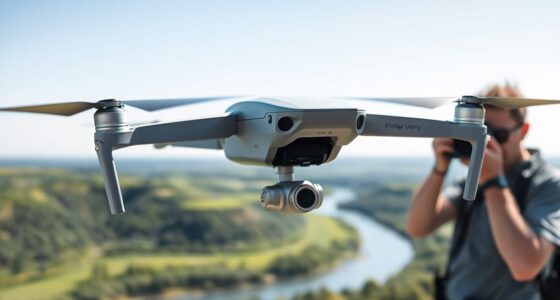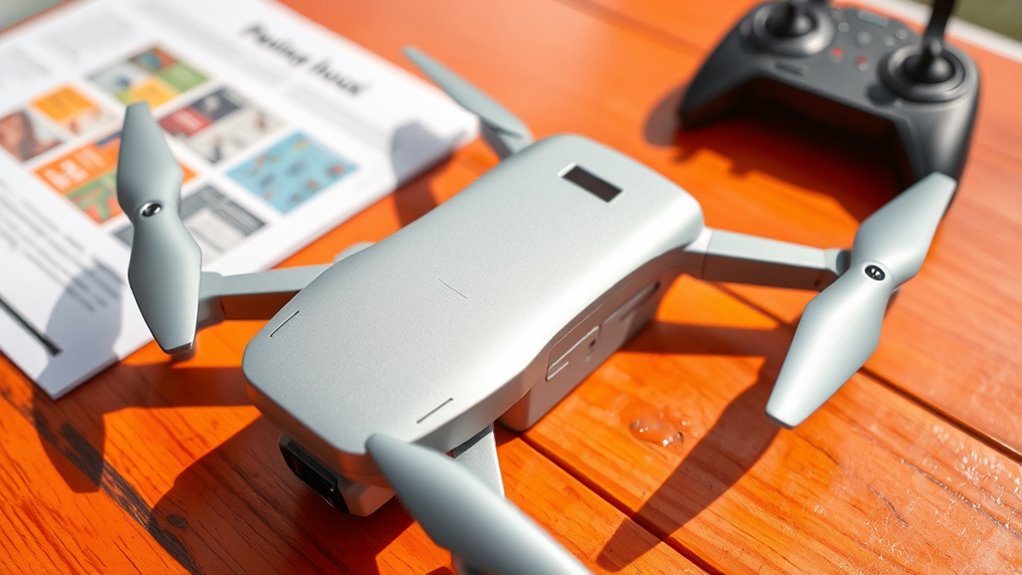

To choose your first drone, start by considering your goals—whether capturing photos, racing, or exploring creative flight modes. Look for models that are user-friendly, with stable flight and helpful features like GPS stabilization or adjustable camera angles. Budget wisely, balancing price with essential features to fit your needs. Think about where you’ll fly most often and choose an easy-to-control drone that offers room to grow. Keep exploring to find the perfect match for your interests.
Listen free for 30 days with Audible
Thousands of audiobooks and originals — cancel anytime.
As an affiliate, we earn on qualifying purchases.
Key Takeaways
- Determine your main purpose: photography, racing, or casual flying.
- Choose a model with user-friendly controls and good stability for beginners.
- Consider flight time, camera quality, and intelligent modes to enhance your experience.
- Set a budget that balances essential features with your skill development goals.
- Ensure compliance with safety standards and environmental practices for responsible flying.
As an affiliate, we earn on qualifying purchases.
Choosing the Right First Drone for Your Goals

Getting your first drone can be exciting but overwhelming, especially with so many options available. Whether you’re interested in capturing stunning aerial photography or immersing yourself in the fast-paced world of drone racing, choosing the right beginner drone is essential. Your decision will influence your overall experience, so it’s important to take into account your goals, budget, and skill level before making a purchase.
If your main goal is aerial photography, look for a drone that offers a high-quality camera and stable flight capabilities. Many beginner drones come equipped with cameras that are perfect for capturing clear photos and smooth videos from the sky. Features like GPS stabilization help keep the drone steady, making it easier to take professional-looking shots. You’ll also want to check the drone’s flight time—longer battery life means more time in the air to experiment with different angles and compositions. Some models even have intelligent flight modes, which can assist you in capturing impressive shots without advanced piloting skills. Keep in mind that drones designed for aerial photography tend to be slightly more expensive but can markedly enhance your creative opportunities. Additionally, understanding European cloud innovation and sustainable technology can inspire you to incorporate eco-friendly practices into your hobby and future projects. Staying aware of modern drone safety standards can also help ensure responsible flying and compliance with regulations.
On the other hand, if you’re drawn to drone racing, your focus should be on agility, speed, and responsiveness. Racing drones are built for quick maneuvers and rapid acceleration, so look for models with high-speed capabilities, durable frames, and good maneuverability. You’ll want a drone that’s nimble enough to weave through obstacle courses and respond instantly to your controls. Many beginner racing drones come ready to fly out of the box, with features like adjustable camera angles and customizable settings to fine-tune performance. While racing drones might not have the fancy cameras or stability features of aerial photography models, they’re perfect for learning fast piloting skills and enjoying the adrenaline rush of high-speed flying. When selecting a racing drone, consider flight control systems that facilitate smoother handling and easier learning for beginners.
In choosing your first drone, think about your budget and how much time you’re willing to dedicate to learning. A basic drone with essential features can be an affordable way to get started, while more advanced models might require a steeper investment but offer better performance and versatility. Think about where you’ll be flying most—open fields, indoor spaces, or urban environments—and select a drone that suits those conditions. Also, check for user-friendly controls and good customer support, especially if you’re new to flying. Remember, your first drone is about learning and having fun, whether you’re capturing breathtaking aerial shots or racing through courses. With the right choice, you’ll build skills, enjoy your flight time, and perhaps even discover a new passion for flying drones.
As an affiliate, we earn on qualifying purchases.
Frequently Asked Questions
What Safety Features Should I Look for in My First Drone?
You should look for safety features like propeller guards, which protect you and the drone during flights, especially indoors. An automatic return feature is also essential; it helps your drone come back safely if it loses signal or battery runs low. These features guarantee safer flying experiences, reduce risks of crashes, and give you peace of mind as a beginner. Prioritize drones with these safety options for a confident start.
How Much Should I Expect to Spend on a Beginner Drone?
You should expect to spend around $50 to $150 on a beginner drone, depending on your budget considerations. Entry-level models typically offer basic features and decent flight stability, making them perfect for beginners. Higher-priced drones may include better camera quality or longer flight times, but sticking within your budget guarantees you get a reliable, easy-to-fly drone without overspending. Always compare drone pricing to find the best value for your initial experience.
Can I Fly a Drone Indoors Safely as a Beginner?
You can definitely enjoy indoor flight as a beginner, but it’s best to approach it with care. Start with a small, lightweight drone designed for indoor use, and always follow safety precautions like keeping clear of fragile items and maintaining a safe distance from yourself and others. With gentle maneuvers and attentive flying, you’ll find indoor flying safe and fun, helping you build confidence before venturing outside.
What Legal Restrictions Apply to Beginner Drone Pilots?
As a beginner drone pilot, you need to follow flying regulations that include staying below 400 feet, avoiding no-fly zones, and keeping your drone within visual line of sight. You might also need licensing requirements if you plan to use your drone commercially or in certain areas. Always check local laws before flying to make sure you’re compliant, keeping safety and legal boundaries in mind.
How Long Does Battery Life Typically Last on Beginner Drones?
They say, “patience is a virtue,” and it’s especially true with drones. Typically, beginner drones offer a battery longevity of about 10 to 30 minutes. The exact flight time depends on power consumption, which varies with flying speed, camera use, and wind conditions. To get the most out of your drone, consider extra batteries and efficient flying techniques, ensuring you maximize your flying time without sacrificing stability.
GPS stabilization drone for beginners
As an affiliate, we earn on qualifying purchases.
As an affiliate, we earn on qualifying purchases.
Conclusion
Choosing the right drone sets the foundation for your flying journey. Remember, over 60% of beginners find that starting with a user-friendly model boosts confidence and enjoyment. Focus on your goals—whether capturing photos or just having fun—and pick a drone that fits your budget and skills. With the right choice, you’ll be soaring confidently in no time, turning your aerial dreams into reality. Happy flying!
easy control aerial photography drone
As an affiliate, we earn on qualifying purchases.
As an affiliate, we earn on qualifying purchases.
Labor Day sales Picks
labor day deals
As an affiliate, we earn on qualifying purchases.