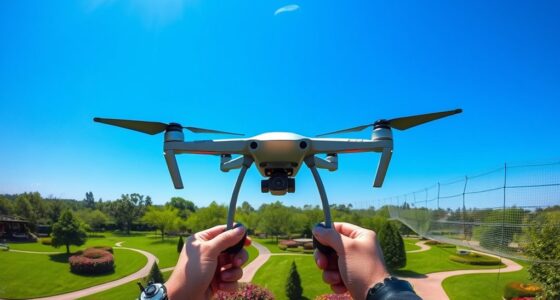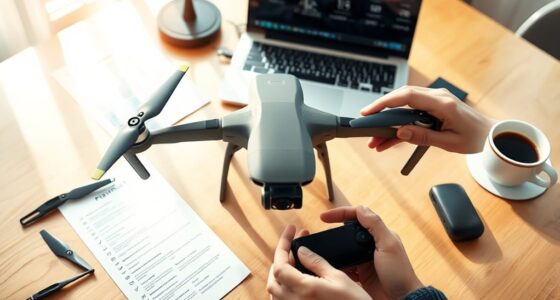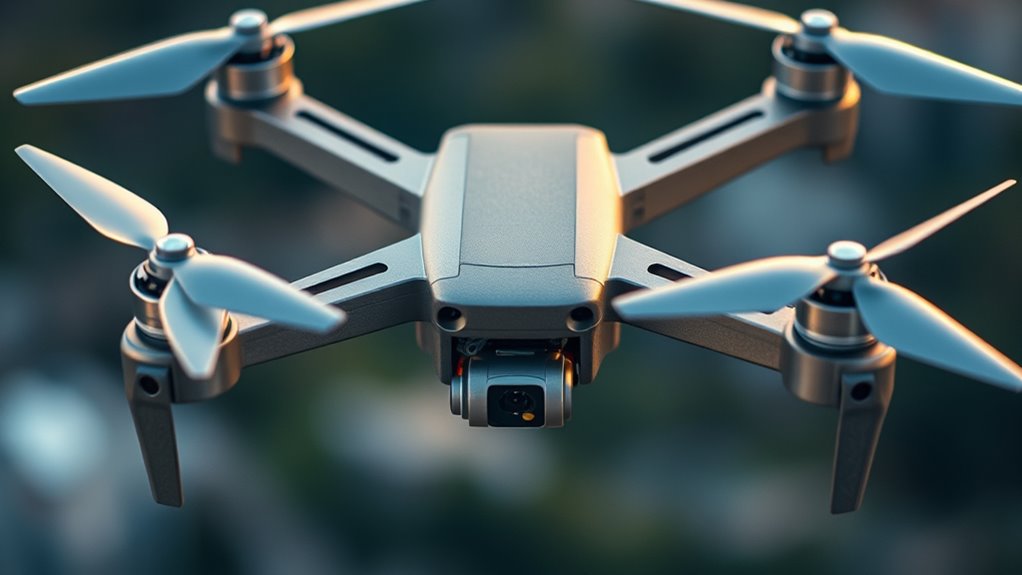
Your quadcopter’s main parts include the frame and body, which support everything else and impact aerodynamics. The propulsion system, with motors and propellers, provides lift and stability, while the flight control system keeps everything balanced and on course. The power supply, usually batteries, drives the system, and sensors help with navigation and obstacle avoidance. Plus, payloads like cameras add functionality. If you explore further, you’ll understand how each part works together for better flight performance.

Get the latest gadgets delivered free — and shop member deals
- Fast, free delivery on millions of items
- Access to Prime Big Deal Days deals on October 6–7
- Prime Video, Amazon Music and more included
Key Takeaways
- The frame and body provide the structural support and influence aerodynamics and repair access.
- Propulsion includes motors and propellers, affecting thrust, stability, and efficiency.
- Flight control systems, sensors, and navigation components ensure stability, obstacle avoidance, and autonomous operation.
- Power systems consist of batteries and power management for sustained flight duration.
- Payload and camera equipment are mounted securely, impacting flight stability and imaging quality.
Frame and Body

Have you ever wondered what holds a drone together? The frame and body are essential for that. They provide the structure that supports all other components. When choosing the material, you want something lightweight yet durable, like carbon fiber or reinforced plastic. This material selection directly impacts the drone’s performance and longevity. The aesthetic design isn’t just about looks; it also influences aerodynamics and ease of access for repairs. A sleek, well-crafted frame reduces air resistance and improves flight stability. You’ll find that the shape and build quality matter just as much as the materials used. Proper material selection can also enhance the drone’s resistance to environmental stresses. Additionally, considering free floating principles can help optimize weight distribution for better flight control. Paying close attention to design and craftsmanship can further improve overall durability and performance. Incorporating proper assembly techniques ensures that all components are securely fastened, reducing the risk of failure during flight. Furthermore, understanding structural integrity is crucial for designing a drone that withstands various flying conditions. Ultimately, a carefully designed frame ensures your drone is both sturdy and efficient, giving you confidence in its ability to handle various flying conditions.
Propulsion System

Your drone’s propulsion system depends on the motor types and power you choose, which directly affect performance. The design and material of the propellers also play a vital role in generating thrust and maintaining stability. Understanding these components helps you optimize your drone’s efficiency and flight behavior. Additionally, selecting the appropriate body jewelry measurements and materials can influence your ability to invest in high-quality propulsion components. For example, considering essential oil properties can inspire innovative ways to enhance drone cooling or maintenance. Keeping track of market trends in drone technology can also guide you toward the most innovative and reliable parts. Staying informed about performance cookies can help you analyze your drone’s flight data for ongoing improvements.
Motor Types and Power
Understanding the different motor types and power options is essential for selecting the right propulsion system for your drone. Brushless motors are popular because they offer higher efficiency, longer lifespan, and better performance compared to brushed motors. Brushless motors use electronic commutation, which reduces wear and tear, making them ideal for longer flights and more demanding applications. When choosing between these motor types, consider your drone’s intended use, flight duration, and budget. The right motor will provide reliable power, smooth operation, and ideal control for your flying experience. Additionally, selecting a motor with an appropriate power rating ensures optimal performance for your specific drone configuration. Understanding motor efficiency can also help you make better decisions for battery life and overall flight times. Proper cooling and ventilation can further enhance motor longevity and performance, especially when operating under high load conditions. Moreover, considering cooling methods can significantly impact overall motor performance under sustained demanding operations.
Propeller Design and Material
The design and material of a drone’s propellers play a crucial role in its overall performance and efficiency. Optimized propeller aerodynamics reduce drag and improve lift, enhancing flight stability. Materials like carbon fiber or plastic influence durability and weight, affecting both agility and noise levels. Lighter materials can decrease propeller noise, making flights quieter. The shape, pitch, and blade count impact aerodynamics, dictating how efficiently the drone moves through the air. Here’s a comparison:
| Material | Propeller Aerodynamics | Propeller Noise |
|---|---|---|
| Carbon Fiber | High efficiency | Low noise |
| Plastic | Moderate efficiency | Moderate noise |
| Wood | Variable performance | Higher noise |
Choosing the right design balances aerodynamics with noise reduction, optimizing your drone’s performance. Additionally, considering material properties helps ensure the propellers withstand environmental stresses while maintaining optimal flight characteristics. Incorporating material durability into design choices can further enhance longevity and reliability during extended use.
Thrust and Stability
Propeller design and material directly influence a drone’s thrust and stability during flight. The shape and pitch of your propellers determine how effectively they generate aerodynamic lift, impacting your drone’s ability to stay aloft and maneuver smoothly. Well-designed props produce consistent thrust, helping maintain gyroscopic stability and preventing unwanted rotations. The material affects durability and weight; lightweight materials like carbon fiber enhance responsiveness, while heavier ones might reduce agility. Properly balanced propellers ensure even thrust distribution, contributing to stable flight. When your drone achieves ideal thrust, it resists turbulence and maintains steady orientation. In essence, the right propeller setup ensures your quadcopter remains stable, responsive, and capable of handling various flight conditions with ease. Additionally, propeller balance plays a crucial role in minimizing vibrations, further enhancing flight stability and longevity of drone components. Ensuring consistent material quality helps optimize overall performance and durability under different operational stresses. Furthermore, selecting the appropriate propeller material can also impact noise levels and efficiency during flight. For optimal results, understanding the relationship between propeller design and flight performance is essential for drone enthusiasts and professionals alike. Proper maintenance and regular inspections of your propellers also contribute significantly to sustaining optimal flight stability.
Flight Control System

Have you ever wondered how a drone stays balanced and on course during flight? That’s the job of the flight control system. It processes data from sensors and makes real-time adjustments to keep you steady. Here’s what it does:
- Stabilizes the drone by balancing motor speeds.
- Coordinates movements for smooth turns and altitude changes.
- Enables autonomous flying by following pre-programmed routes.
- Uses GPS integration to maintain position and navigate precisely.
- Incorporates advanced connected equipment to enhance flight stability and functionality.
This system acts like the drone’s brain, ensuring it responds quickly to changes and keeps its path. Whether you’re flying manually or letting it follow a set course, the flight control system is essential for safe, stable, and accurate flight.
Power Supply and Battery

Ever wondered what powers your drone’s flight? It’s the battery, the core component of your power supply. The battery determines how long you can stay airborne, so understanding its capacity and quality is vital for maximizing flight time. Good battery life depends on proper power management, which involves monitoring charge levels and avoiding over-discharge. Lithium-polymer (LiPo) batteries are common because they offer high energy density and lightweight design, essential for flight efficiency. To optimize performance, always use the recommended battery and verify it’s well-maintained—storing it properly and checking for damage. Efficient power management not only extends your drone’s flight time but also helps prevent potential failures caused by power issues, keeping your flights safe and enjoyable.
Sensors and Navigation Components

Sensors and guidance components are the eyes and brain of your drone, enabling it to perceive its environment and determine its position. These parts are essential for safe and accurate flight. Here’s what they do:
- Use ultrasonic or infrared sensors for obstacle avoidance, helping your drone detect and avoid objects in real-time.
- Rely on GPS modules for precise navigation, allowing your drone to follow waypoints or return home automatically.
- Incorporate accelerometers and gyroscopes to maintain stability and orientation during flight.
- Utilize barometers for altitude hold, ensuring smooth vertical movement.
Together, these components create a responsive system that keeps your drone flying safely and accurately, whether navigating complex environments or following pre-set routes.
Camera and Payload Equipment

Your drone’s camera options vary from simple HD models to advanced thermal or multispectral systems, each with unique features. You’ll also want to contemplate payload capacity and how mounts secure different equipment during flight. Understanding these elements helps you choose the right tools for your specific aerial tasks.
Camera Types and Features
Have you ever wondered how drones capture stunning aerial images and videos? The key lies in choosing the right camera type and features. Here are some important aspects to weigh:
- Camera sensors: Larger sensors capture more light, resulting in clearer, higher-quality images.
- Resolution: Higher megapixels mean sharper photos, especially useful for detailed shots.
- Camera stabilization: Gimbals and electronic stabilization keep footage smooth, reducing shake caused by wind or movement.
- Lens options: Wide-angle lenses provide expansive views, while zoom lenses allow close-up shots from a distance.
Payload Capacity and Mounts
Choosing the right camera type and features is only part of optimizing drone imaging; understanding payload capacity and mounts is equally important. Your drone’s payload capacity determines how much weight it can carry, directly affecting the types of equipment you can use. Knowing this helps you select gear that won’t compromise flight stability or battery life. Payload versatility allows you to switch between different cameras and sensors, expanding your drone’s functionality. Mounting options are also vital, as they secure your equipment firmly and ensure proper alignment during flight. Proper mounts prevent vibrations that can blur images and make setup easier. By understanding payload capacity and mounts, you maximize your drone’s potential, guaranteeing your payload equipment is safely carried and properly positioned for high-quality results.
Frequently Asked Questions
How Do I Troubleshoot Motor Failures During Flight?
If you experience motor failures during flight, first check for propeller issues like damage or imbalance, which can cause motor strain. Make certain your battery health is ideal, as a low or faulty battery can lead to power loss. Try resetting your drone or recalibrating the motors through the controller. If problems persist, land safely and inspect the motors for debris or wear, replacing any faulty components before your next flight.
What Maintenance Is Necessary for Long-Term Drone Use?
Think of your drone as a fine-tuned machine that needs regular TLC. You should routinely check your propellers for cracks or chips and replace them if needed. Keep your battery well-maintained by avoiding overcharging and storing it properly. Regularly inspect and clean motors, and update firmware to keep everything running smoothly. Proper maintenance guarantees your drone stays in flight shape, giving you reliable performance for the long haul.
How Can I Upgrade My Drone’s Camera System?
You can upgrade your drone’s camera system by choosing a compatible camera module and lens. First, check your drone’s lens compatibility to guarantee the new lens fits properly. Then, swap out the existing camera with the upgrade, following your drone’s specific instructions. This improves image quality and overall performance. Be sure to verify compatibility and secure all components properly to avoid any issues during flight.
What Are Common Signs of a Failing GPS Module?
If your drone experiences GPS signal loss or inconsistent positioning, your GPS module might be failing. You may notice frequent signal interruptions, difficulty returning home, or drifting during hover. To troubleshoot, verify your firmware is up-to-date, as updates often fix GPS issues. If problems persist despite updates, consider replacing the GPS module, as hardware failure is a common cause of these signs.
How Do Weather Conditions Affect Drone Components?
Weather impact can seriously affect your drone components and their durability. Wind, rain, and extreme temperatures can cause physical damage, disrupt signals, or lead to corrosion. High humidity can affect electronic parts, while cold weather may reduce battery life. You should always check weather conditions before flying, as adverse weather can compromise your drone’s performance and longevity, making it essential to protect your components from harsh environmental factors.
Conclusion
Now that you understand your drone’s anatomy, you’re like an artist with a powerful brush, ready to create breathtaking scenes. Just as Icarus once soared toward the sun, your knowledge lifts you to new heights—trusting each part to work in harmony. With this understanding, you hold the key to unleashing your drone’s full potential, embracing the thrill of flight and the endless possibilities that await beyond the horizon.
Fall Picks
fall essentials
As an affiliate, we earn on qualifying purchases.