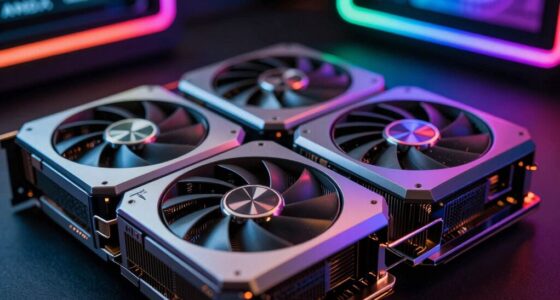

Choosing the right Nvidia GPU for VR in 2026 involves balancing performance, price, and future-proofing. The GeForce RTX 3060 makes a compelling choice for most users due to its strong balance of cost and capability. The RTX 5060 Ti stands out for those seeking higher frame rates and better VR fidelity, but at a higher price. Meanwhile, older models like the GTX 1070 still offer decent performance but lack the latest features needed for the most demanding VR setups. This decision often comes down to whether you prioritize budget, raw power, or a mix of both. Continue reading for a detailed breakdown of each option and what fits different needs best.

Get the latest gadgets delivered free with Prime
- Fast, free delivery on millions of items
- Prime Video, Amazon Music and more included
- Member-only deals all year
Complete the kit



Key Takeaways
- The RTX 3060 strikes the best balance for mainstream VR gamers, offering solid performance at a reasonable price.
- Premium options like the RTX 5070 AMP White Edition deliver the highest frame rates but come with a significantly higher cost.
- Older models such as the GTX 1070, while still capable, are less future-proof and lack features like DLSS and ray tracing, which enhance VR visuals.
- VR-specific features like higher VRAM and better cooling solutions are increasingly important for smooth, long sessions.
- Price-to-performance ratios vary widely; spending more generally yields noticeable improvements in VR experience, but not always proportionally.
| Nvidia GeForce GTX 1070 Founders Edition (Renewed) |  | Best Budget VR-Ready GPU | GPU: NVIDIA GeForce GTX 1070 | Memory: 8GB GDDR5 | Memory Interface: 256-bit | VIEW ON AMAZON | See Our Full Breakdown |
| ASUS Dual GeForce RTX 3050 6GB GDDR6 OC Edition Gaming Graphics Card |  | Best Compact RTX for VR and Gaming | GPU: GeForce RTX 3050 | Memory: 6GB GDDR6 | Boost Clock: 1500 MHz (OC), 1470 MHz (Default) | VIEW ON AMAZON | See Our Full Breakdown |
| MSI Gaming RTX 3050 Ventus 2X 6G OC Graphics Card |  | Best for High-Resolution VR Gaming | Chipset: GeForce RTX 3050 | Boost Clock: 1492 MHz | Memory: 6GB GDDR6 | VIEW ON AMAZON | See Our Full Breakdown |
| ASUS GeForce GTX 1060 6GB Dual-Fan OC Edition VR Ready Graphics Card |  | Best for Entry-Level VR | Boost Clock: 1809 MHz | Memory: 6GB GDDR5 | VR Ready: Yes | VIEW ON AMAZON | See Our Full Breakdown |
| MSI Gaming GeForce RTX 3060 Ventus 2X 12G OC V1 |  | Best High-Performance VR for Enthusiasts | Chipset: NVIDIA GeForce RTX 3060 | Video Memory: 12GB GDDR6 | Memory Interface: 192-bit | VIEW ON AMAZON | See Our Full Breakdown |
| ASUS Dual GeForce RTX 5060 Ti 16GB GDDR7 OC Edition Gaming Graphics Card |  | Best Overall for High AI Performance and Quiet Operation | GPU Architecture: NVIDIA Blackwell | Memory: 16GB GDDR7 | OC Mode Clock: 2632 MHz | VIEW ON AMAZON | See Our Full Breakdown |
| ZOTAC Gaming GeForce RTX 5070 AMP White Edition Graphics Card |  | Best for High-Resolution VR and Style Enthusiasts | Memory: 12GB GDDR7 | Memory Interface: 192-bit | Memory Speed: 28 Gbps | VIEW ON AMAZON | See Our Full Breakdown |
| GIGABYTE GeForce RTX 3060 Gaming OC 12G (REV2.0) Graphics Card |  | Best Budget-Friendly Choice for Versatile VR Performance | Memory: 12GB GDDR6 | Memory Interface: 192-bit | Fans: 3X WINDFORCE | VIEW ON AMAZON | See Our Full Breakdown |
| nvidia gpu for vr | Memory | Memory Interface |
|---|---|---|
| Nvidia GeForce GTX 1070 Founde | 8GB GDDR5 | 256-bit |
| ASUS Dual GeForce RTX 3050 6GB | 6GB GDDR6 | — |
| MSI Gaming RTX 3050 Ventus 2X | 6GB GDDR6 | — |
| ASUS GeForce GTX 1060 6GB Dual | 6GB GDDR5 | — |
| MSI Gaming GeForce RTX 3060 Ve | — | 192-bit |
| ASUS Dual GeForce RTX 5060 Ti | 16GB GDDR7 | — |
| ZOTAC Gaming GeForce RTX 5070 | 12GB GDDR7 | 192-bit |
| GIGABYTE GeForce RTX 3060 Gami | 12GB GDDR6 | 192-bit |
More Details on Our Top Picks
Nvidia GeForce GTX 1070 Founders Edition (Renewed)
The GTX 1070 Founders Edition stands out for delivering solid VR performance at a lower price point, especially when compared to newer models like the RTX 3050. Its 8GB GDDR5 memory and powerful CUDA cores make it capable of handling immersive VR experiences smoothly. However, as a renewed product, its condition can vary, and it lacks the advanced ray-tracing features of newer cards. This makes it a good choice for budget-conscious buyers who prioritize performance over cutting-edge features. Tradeoffs include potential reliability issues due to renewal and limited future-proofing.
Pros:- Strong gaming and VR performance for the price
- 8GB GDDR5 memory supports immersive VR titles
- CUDA cores enhance compute-heavy tasks
Cons:- Renewed condition may lead to reliability concerns
- No bundled accessories or extended warranty info
Best for: VR enthusiasts on a tight budget seeking reliable performance without the latest features
Not ideal for: Users wanting the latest ray-tracing effects or future-proofing for demanding applications
- GPU:NVIDIA GeForce GTX 1070
- Memory:8GB GDDR5
- Memory Interface:256-bit
- Interface:PCI Express 3.0 x16
- VR-Ready:Yes
Our verdict“Ideal for budget-conscious buyers who want dependable VR performance without paying for the latest tech.”
ASUS Dual GeForce RTX 3050 6GB GDDR6 OC Edition Gaming Graphics Card
This ASUS Dual RTX 3050 model shines for its compact 2-slot design, making it suitable for smaller cases while still offering the benefits of NVIDIA’s Ampere architecture. It improves upon the GTX 1070 by supporting ray-tracing and DLSS, which can enhance VR immersion and visual fidelity. Compared to MSI’s RTX 3050 Ventus, its dual-fan cooling and durable stainless steel bracket promote longevity and quieter operation, though it remains limited by 6GB VRAM—potentially insufficient for the most demanding VR titles. Manual tuning may be needed to maximize OC performance, and detailed port specs are not specified.
Pros:- Compact design fits smaller cases
- Supports ray-tracing and DLSS for enhanced VR visuals
- Robust build with dust resistance
Cons:- Limited to 6GB VRAM, which may limit VR performance in demanding titles
- OC mode requires manual tuning for best results
Best for: Small-form-factor PC builders seeking a VR-capable GPU with modern features
Not ideal for: High-end VR users requiring extensive VRAM for future titles or mods
- GPU:GeForce RTX 3050
- Memory:6GB GDDR6
- Boost Clock:1500 MHz (OC), 1470 MHz (Default)
- Design:2-slot
- Fan Design:Axial-tech
- Dust Resistance:IP5X
Our verdict“Best suited for compact PC setups that want modern VR features without sacrificing size, but not for future-proofing VR needs.”
MSI Gaming RTX 3050 Ventus 2X 6G OC Graphics Card
The MSI Ventus 3050 stands out for its support of HDMI 2.1a and DisplayPort 1.4a, making it well-suited for high-resolution VR setups, especially compared to the ASUS RTX 3050’s less specified outputs. Its 1492 MHz boost clock and 6GB GDDR6 ensure solid performance in current VR titles, but the limited VRAM may restrict it in future, more demanding titles. Its specific model can limit compatibility, and it doesn’t detail cooling or noise levels—important factors for intensive VR use. This card is best for gamers who want high-res VR and modern output options, but not for those needing extensive VRAM or quiet operation.
Pros:- Supports HDMI 2.1a and DisplayPort 1.4a for high-res VR
- Boost clock of 1492 MHz enhances performance
- Suitable for demanding VR resolutions
Cons:- Limited to 6GB VRAM, potentially restricting future use
- No detailed cooling or noise info
Best for: VR gamers targeting high resolutions and modern display outputs
Not ideal for: Users who prioritize quiet operation or need larger VRAM for future-proofing
- Chipset:GeForce RTX 3050
- Boost Clock:1492 MHz
- Memory:6GB GDDR6
- Memory Speed:14 Gbps
- Outputs:DisplayPort 1.4a, HDMI 2.1a
Our verdict“Great for high-resolution VR gaming, but not ideal for those seeking maximum VRAM or silent operation.”
ASUS GeForce GTX 1060 6GB Dual-Fan OC Edition VR Ready Graphics Card
The GTX 1060 6GB Dual-Fan is a reliable choice for entry-level VR, especially compared to older cards like the GTX 1070. Its 1809 MHz boost clock offers solid performance for less demanding VR experiences, and dual HDMI ports simplify connectivity. The dual-fan cooling keeps noise levels manageable, and the GPU TWEAK II software makes performance monitoring accessible. However, the 6GB VRAM can limit VR experience quality in more demanding titles and future titles that require more memory. As a refurbished product, warranty and longevity could be concerns, so it’s best suited for casual VR users or those new to VR gaming. This card is a good starter option, but not for high-end VR experiences.
Pros:- High boost clock for good VR performance
- Dual HDMI ports for flexible connectivity
- Dual-fan cooling for quiet operation
Cons:- Renewed condition may limit warranty and reliability
- Limited VRAM restricts future-proofing
Best for: VR beginners or casual users seeking affordable entry-level VR support
Not ideal for: Power users or those planning to run high-fidelity VR titles with demanding graphics
- Boost Clock:1809 MHz
- Memory:6GB GDDR5
- VR Ready:Yes
- Ports:Dual HDMI 2.0
Our verdict“Great for newcomers or casual VR users, but not suited for demanding or future VR applications.”
MSI Gaming GeForce RTX 3060 Ventus 2X 12G OC V1
The MSI RTX 3060 Ventus 12G makes an excellent choice for VR enthusiasts needing high VRAM and high resolutions, especially compared to the RTX 3050 models. Its 12GB GDDR6 memory and 192-bit interface support demanding VR applications, including 8K and multi-monitor setups. The multiple outputs, including HDMI 2.1 and DisplayPort 1.4a, ensure compatibility with the latest VR headsets. However, it requires official software for optimal operation, and noise levels or cooling solutions are not specified—important factors during extended VR sessions. Its high power consumption might also be a concern for some builds. This GPU is ideal for users aiming for future-proof VR without sacrificing high-resolution performance, but it demands a capable power supply.
Pros:- 12GB GDDR6 VRAM supports demanding VR content
- Multiple high-resolution outputs, including HDMI 2.1
- Supports up to 8K resolution for future-proofing
Cons:- High power consumption requires a robust PSU
- Lack of detailed cooling/noise info
Best for: High-end VR users and gamers requiring extensive VRAM and 8K support
Not ideal for: Casual VR users or those with limited power supply capacity
- Chipset:NVIDIA GeForce RTX 3060
- Video Memory:12GB GDDR6
- Memory Interface:192-bit
- Outputs:DisplayPort x 3, HDMI 2.1
- Maximum Resolution:7680 x 4320
Our verdict“Best for VR users seeking high VRAM and 8K support, but not for those with power constraints or seeking silent operation.”
ASUS Dual GeForce RTX 5060 Ti 16GB GDDR7 OC Edition Gaming Graphics Card
This ASUS Dual RTX 5060 Ti stands out for its impressive 16GB GDDR7 memory and NVIDIA Blackwell architecture, making it an excellent choice for those seeking robust AI capabilities in VR. Its high 767 TOPS AI performance surpasses many competitors, including the GIGABYTE RTX 3060, which has less memory and lower AI throughput. The dual BIOS and Axial-tech fans provide customizable, efficient cooling and quiet operation, crucial for immersive VR sessions. However, its 2.5-slot design might pose compatibility challenges in very small cases, and the lack of specific pricing info makes it less accessible for budget-conscious buyers.
Pros:- High AI performance with 767 TOPS, ideal for demanding VR applications
- Efficient cooling via Axial-tech fans ensures quiet operation during long sessions
- Dual BIOS offers customization for different use cases
- Supports OC mode with a boost to 2632 MHz
Cons:- Potential compatibility issues in very small or compact cases
- No clear pricing info may hinder purchase decisions
Best for: High-end VR users who prioritize AI performance, quiet operation, and advanced cooling in a mid-sized build
Not ideal for: Users with ultra-compact cases or strict budget constraints, due to potential compatibility and cost issues
- GPU Architecture:NVIDIA Blackwell
- Memory:16GB GDDR7
- OC Mode Clock:2632 MHz
- Default Mode Clock:2602 MHz
- Design:2.5-slot
- Fan Technology:Axial-tech
Our verdict“This pick makes the most sense for advanced VR users seeking top-tier AI and cooling performance in a versatile card.”
ZOTAC Gaming GeForce RTX 5070 AMP White Edition Graphics Card
The ZOTAC RTX 5070 AMP White Edition offers 12GB of GDDR7 memory and a sleek white aesthetic, making it ideal for VR users who want high-resolution support and visual flair. Its 28 Gbps memory speed and 192-bit interface deliver excellent bandwidth for demanding VR applications, comparable to the GIGABYTE RTX 3060 but with more VR-specific features like 8K readiness. The IceStorm 2.0 cooling with triple fans ensures stable operation during extended VR sessions, yet its high power draw and premium price tag could be barriers for some. The RGB lighting and bundled support stand add to its appeal for style-conscious gamers.
Pros:- High-performance with 12GB GDDR7 and 8K readiness
- Advanced cooling system with triple IceStorm 2.0 fans for stable VR use
- Stylish white design with RGB lighting for aesthetic customization
- Multiple high-resolution outputs including DisplayPort 2.1b and HDMI 2.1b
Cons:- High power consumption may require a stronger PSU
- Premium price could be prohibitive for some buyers
- Potentially larger size might not fit in compact builds
Best for: VR enthusiasts who demand high-resolution support, aesthetic customization, and premium cooling
Not ideal for: Budget-conscious buyers or those with limited power supplies, given its high power consumption and cost
- Memory:12GB GDDR7
- Memory Interface:192-bit
- Memory Speed:28 Gbps
- Architecture:NVIDIA Blackwell
- Cooling:IceStorm 2.0 with 3x 90mm fans
- Display Outputs:3x DisplayPort 2.1b, 1x HDMI 2.1b
Our verdict“This card is perfect for VR users who prioritize resolution, style, and performance, despite higher costs and power needs.”
GIGABYTE GeForce RTX 3060 Gaming OC 12G (REV2.0) Graphics Card
The GIGABYTE RTX 3060 Gaming OC offers a solid 12GB GDDR6 memory and NVIDIA’s Ampere architecture, making it a capable option for VR at a more accessible price point than the 5070 or 5060 Ti. Its triple WINDFORCE fans provide effective cooling, suitable for most VR setups, though it’s not as powerful in AI throughput or high-resolution support as the higher-tier options, like the ASUS Dual RTX 5060 Ti. The card’s power requirements and size mean it needs a compatible case and power supply, but it’s a good fit for users balancing performance and budget.
Pros:- Affordable price relative to high-end VR cards
- Effective triple fan cooling system for stable operation
- Powered by NVIDIA Ampere architecture for efficient ray tracing and AI tasks
- 12GB GDDR6 memory supports demanding VR textures
Cons:- Requires a compatible power supply and sufficient case space
- Less advanced AI and resolution features compared to higher-tier models
- Potentially higher power consumption than lower-tier cards
Best for: Budget-conscious VR users who want reliable performance without premium features
Not ideal for: High-end VR applications demanding maximum AI performance or ultra-high resolutions, where more advanced cards excel
- Memory:12GB GDDR6
- Memory Interface:192-bit
- Fans:3X WINDFORCE
- Generation:REV2.0
- Architecture:NVIDIA Ampere
- Power Requirements:Requires compatible PSU
Our verdict“This card makes sense for VR users needing dependable performance on a budget, though it’s less suited for ultra-high-resolution experiences.”

How We Picked
The GPUs selected for this roundup were evaluated based on their performance in VR environments, including frame rates, latency, and stability. We also prioritized models that support the latest Nvidia features like DLSS and ray tracing, which improve visual quality and performance. Build quality, power efficiency, and cooling solutions influenced the rankings, along with value for price. The goal was to identify options that cater to different budgets and use cases, from entry-level to high-end VR setups, ensuring buyers get the best performance for their investment.Factors to Consider When Choosing Nvidia Gpu For Vr
When choosing an Nvidia GPU for VR, several factors come into play that can significantly affect your experience. Beyond raw specs, understanding how features like VRAM, power requirements, and software support impact performance helps you make a smarter purchase. Avoid common pitfalls such as underestimating your system’s power supply needs or opting for too little VRAM, which can bottleneck performance. Balancing your budget with future VR needs ensures you don’t quickly outgrow your GPU. Here are key considerations to keep in mind:Performance and Frame Rates
VR experiences demand high, stable frame rates to prevent motion sickness and ensure immersion. Look for GPUs capable of maintaining 90Hz or higher consistently in your favorite VR titles. The latest RTX models generally outperform older cards, offering smoother visuals and lower latency. Keep in mind that achieving high frame rates often requires balancing resolution and graphical settings, especially if your CPU or other components are less powerful.
VRAM and Future-Proofing
VR headsets and VR applications are becoming more demanding, which means having enough VRAM is increasingly important. At least 8GB of VRAM is recommended for current VR titles, but 12-16GB provides more headroom for upcoming releases. Insufficient VRAM can cause stuttering or lower quality textures, diminishing your experience. Investing in a GPU with more VRAM might cost more upfront but saves you from upgrading sooner.
Features and Compatibility
Features like DLSS (Deep Learning Super Sampling) and ray tracing greatly enhance VR visuals, making worlds more realistic without a large performance hit. Compatibility with the latest Nvidia drivers and software ensures better stability and support for new VR hardware. Additionally, check that the GPU fits your case and power supply, as some high-end models demand more space and power than budget options.
Price and Value
VR-ready GPUs can vary significantly in price, and more expensive models don’t always translate to proportionally better experiences. It’s essential to match your expectations with your budget—an entry-level GPU might suffice for casual VR, while a high-end card is better for enthusiasts seeking the ultimate visuals. Watch for sales or previous-generation models that still deliver great performance at reduced prices.
Power and Cooling Requirements
Higher-performance GPUs typically require more power and better cooling solutions. Overlooking power supply capacity can lead to system instability, while inadequate cooling can cause thermal throttling, reducing performance. Ensure your PC setup can support your chosen GPU with sufficient wattage and airflow, especially if planning to overclock or run extended VR sessions.
Frequently Asked Questions
How do I know if my PC can handle a high-end Nvidia GPU for VR?
To ensure your PC can support a high-end Nvidia GPU, check that your power supply provides sufficient wattage and has the necessary power connectors. Your CPU and RAM should also be capable enough to avoid bottlenecking the GPU. Additionally, verify that your case has enough space and cooling to accommodate the card. If in doubt, consult the GPU manufacturer’s recommended system requirements and compare them with your current specs.
Is it necessary to buy the most expensive Nvidia GPU for VR?
Not necessarily. While high-end GPUs like the RTX 5070 offer the best performance, many mid-range options like the RTX 3060 provide excellent VR experiences at a more accessible price. The choice depends on your VR headset, desired visual fidelity, and whether your system can support higher-end cards. For casual or less demanding VR use, a mid-tier GPU often delivers more than enough performance without overspending.
How important is VRAM for VR gaming?
VRAM is vital for handling high-resolution textures and complex scenes in VR. Insufficient VRAM leads to stuttering, lower image quality, and potential crashes. For most current VR titles, 8GB is the minimum, but 12GB or more is advisable for future-proofing and running more demanding applications smoothly. Always consider your headset’s resolution and the games you plan to play when selecting VRAM capacity.
Should I prioritize ray tracing and DLSS support in my VR GPU?
YES, especially if you want enhanced realism and smoother performance. Ray tracing adds realistic lighting and shadows, making VR worlds more immersive. DLSS helps boost frame rates by using AI upscaling, which is particularly beneficial in VR to maintain high, stable frame rates. Both features can significantly improve visual fidelity without sacrificing performance, making them worthwhile considerations for serious VR users.
Is it worth upgrading from an older GPU for VR purposes?
Upgrading from an older GPU can provide noticeable improvements in VR quality and stability, especially if your current card struggles with newer titles or higher resolutions. Modern Nvidia GPUs support the latest VR features, higher frame rates, and better power efficiency. Consider your current performance and whether a new GPU can significantly enhance your VR experience before deciding to upgrade.
Conclusion
For most users, the GeForce RTX 3060 offers a strong blend of performance and affordability, making it the best overall choice. If you’re seeking the best possible VR experience and are willing to invest more, the RTX 5070 AMP White Edition stands out as the premium pick. Beginners or casual users should consider mid-range options like the RTX 3050, which still delivers solid performance without breaking the bank. Power users and enthusiasts aiming for maximum realism and future-proofing will find the RTX 5060 Ti or higher-tier models worth the investment. Match your choice to your VR headset, budget, and performance needs to get the best experience in 2026.
Halloween Picks
halloween
As an affiliate, we earn on qualifying purchases.