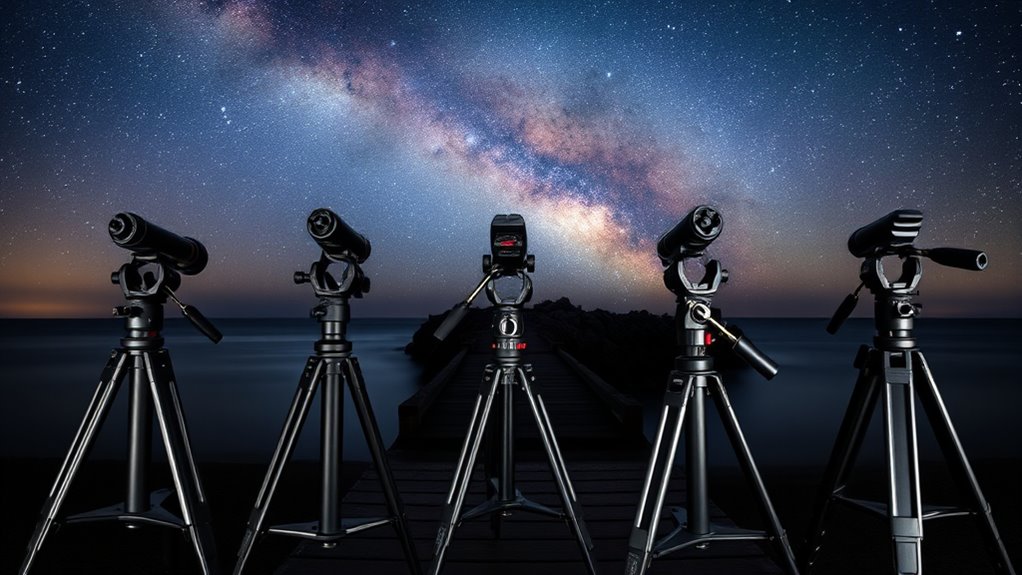
Choosing the right tripod or pier mount for astrophotography can drastically impact your imaging experience. The Sky-Watcher Star Adventurer GTI Mount Kit stands out for its full GoTo and wireless capabilities, ideal for portable setups. Meanwhile, the Sky-Watcher Wave Carbon Fiber Tripod offers lightweight strength perfect for outreach and mobile observing, but may lack height for taller users. The iEXOS-100-2 PMC-Eight provides advanced tracking with multi-CPU control for serious astrophotographers, though its complexity might challenge beginners. Here, I’ll highlight these options along with others, focusing on their strengths, tradeoffs, and who each best serves.

Get the latest gadgets delivered free — and shop member deals
- Fast, free delivery on millions of items
- Access to Prime Big Deal Days deals on October 6–7
- Prime Video, Amazon Music and more included
Complete the kit



Key Takeaways
- Lightweight tripods like the Wave Carbon Fiber excel in portability but may lack maximum height adjustment.
- Advanced systems like the iEXOS-100-2 combine precise control with complex setup, suited for experienced users.
- Heavy-duty steel tripods like the EQ6 provide exceptional stability for larger telescopes but are less portable.
- Mounts with integrated WiFi and GoTo functionality simplify control, especially for mobile astrophotographers.
- Each option balances weight, stability, complexity, and price differently, so matching to your needs is key.
| Sky-Watcher Star Adventurer GTI Mount Kit with Counterweight, Tripod, and Pier Extension |  | Best Overall Portable Mount with Full GoTo and Wireless Control | Mount Type: GoTo EQ tracking mount | Includes: Counterweight, CW bar, tripod, pier extension | Features: Built-in polar scope with illuminator, built-in WiFi | VIEW ON AMAZON | See Our Full Breakdown |
| Sky Watcher Star Adventurer GTI Mount Head Kit with Counterweight and CW Bar |  | Best for Compact, Lightweight Astrophotography Mounts | Mount Type: GoTo EQ tracking mount | Features: Built-in WiFi, Polar Scope with Illuminator | Compatibility: DSLR or mirrorless cameras (not included) | VIEW ON AMAZON | See Our Full Breakdown |
| Sky-Watcher Wave Carbon Fiber Tripod |  | Lightweight, High-Strength Tripod for Versatile Use | Maximum Extended Length: 29 inches (747mm) | Minimum Retracted Length: 19.7 inches (500mm) | Payload Capacity: 44 pounds (20kg) | VIEW ON AMAZON | See Our Full Breakdown |
| Sky-Watcher EQ6 Wave Steel Tripod |  | Heavy-Duty Stability for Larger Telescopes | Material: Steel | Leg Diameter: 2-inch | Color: Black | VIEW ON AMAZON | See Our Full Breakdown |
| iEXOS-100-2 PMC-Eight Equatorial Tracker System Tripod and Mount |  | Advanced Tracking System for Serious Astrophotographers | Processor: Eight CPUs (PMC-Eight system) | Connectivity: WiFi, Bluetooth | Mount Type: Equatorial tracker | VIEW ON AMAZON | See Our Full Breakdown |
| tripods and pier mounts for astrophotography | Mount Type |
|---|---|
| Sky-Watcher Star Adventurer GT | GoTo EQ tracking mount |
| Sky Watcher Star Adventurer GT | GoTo EQ tracking mount |
| Sky-Watcher Wave Carbon Fiber | — |
| Sky-Watcher EQ6 Wave Steel Tri | — |
| iEXOS-100-2 PMC-Eight Equatori | Equatorial tracker |
More Details on Our Top Picks
Sky-Watcher Star Adventurer GTI Mount Kit with Counterweight, Tripod, and Pier Extension
This kit combines portability with comprehensive features, including a lightweight design, full GoTo functionality, and built-in WiFi. It’s ideal for astrophotographers seeking an all-in-one solution for mobile setups, especially when precise tracking is essential. Compared to simpler mounts, its wireless control and polar scope with illuminator enhance ease of use. However, the setup process can be intricate, particularly for beginners, and it offers limited details on payload capacity. Overall, this kit balances versatility and convenience but might require some patience during initial calibration.
Pros:- Full GoTo functionality ensures accurate tracking
- Built-in WiFi allows wireless operation
- Includes comprehensive accessories (counterweight, pier extension)
Cons:- Setup and calibration can be complex
- Limited payload capacity details
- May be overkill for casual observers
Best for: Travelers, mobile astrophotographers, those needing precise tracking on the go
Not ideal for: Beginners unfamiliar with polar alignment, users with heavy payloads requiring maximum stability
- Mount Type:GoTo EQ tracking mount
- Includes:Counterweight, CW bar, tripod, pier extension
- Features:Built-in polar scope with illuminator, built-in WiFi
- Portability:Lightweight and portable
Our verdict“A versatile, portable mount ideal for astrophotographers who value wireless control and full tracking capabilities, despite a steeper learning curve.”
Sky Watcher Star Adventurer GTI Mount Head Kit with Counterweight and CW Bar
This mount head kit offers a portable, lightweight solution with full GoTo and WiFi, making it a favorite for those who need a compact setup. It’s especially suitable for DSLR or mirrorless camera astrophotography, thanks to its included counterweight bar. Compared to larger mounts, its size and weight make it easier to transport, but it lacks the integrated pier extension of the full kit. Camera compatibility requires additional purchase, which can add to the overall cost. It’s best suited for users who prioritize mobility and simplicity over maximum payload capacity.
Pros:- Lightweight and easily portable
- Full GoTo capabilities with WiFi
- Includes counterweight bar for balanced camera setups
Cons:- Camera not included, additional purchase needed
- Setup may require polar alignment time
- Limited to compatible camera types
Best for: Amateur astrophotographers using lightweight cameras, travelers
Not ideal for: Heavy telescope setups, users seeking built-in pier extensions
- Mount Type:GoTo EQ tracking mount
- Features:Built-in WiFi, Polar Scope with Illuminator
- Compatibility:DSLR or mirrorless cameras (not included)
- Includes:Counterweight bar
Our verdict“A compact, user-friendly mount for lightweight astrophotography setups, balancing portability with essential tracking features.”
Sky-Watcher Wave Carbon Fiber Tripod
The Wave Carbon Fiber Tripod shines in portability and strength, supporting a variety of mounts with up to 44 pounds of payload. Its carbon fiber construction offers durability without adding weight, making it suitable for outreach, observing, and imaging. Compared with heavier steel options, it’s easier to carry around, but its maximum height of just under 30 inches might be limiting for taller users or those needing more overhead clearance. Its higher cost reflects its premium materials, but for those prioritizing mobility and strength, this tripod is a smart choice.
Pros:- Lightweight and portable for travel
- High payload capacity of 44 pounds
- Durable carbon fiber construction
Cons:- Limited maximum height for taller users
- No adjustable leg angles
- Higher price point due to material
Best for: Mobile astronomers, outreach programs, lightweight imaging
Not ideal for: Tall users needing maximum height, heavy large telescopes requiring more stability
- Maximum Extended Length:29 inches (747mm)
- Minimum Retracted Length:19.7 inches (500mm)
- Payload Capacity:44 pounds (20kg)
- Weight:5.3 pounds (2.4kg)
Our verdict“A premium, lightweight tripod that offers excellent strength and portability for a variety of astrophotography and outreach needs.”
Sky-Watcher EQ6 Wave Steel Tripod
The EQ6 Wave Steel Tripod offers unmatched stability for larger optical tubes, with its sturdy 2-inch steel legs. It’s designed for serious setups where vibration damping and rigidity are critical, making it a staple for astrophotographers with heavier equipment. However, its weight makes transport cumbersome, and it may be overbuilt for smaller, lighter telescopes. If maximum stability is your priority and portability is less important, this tripod delivers excellent performance for fixed observatory or home setups.
Pros:- Durable steel construction ensures long-term stability
- Perfect for large telescopes and heavy loads
- Provides steady imaging performance
Cons:- Heavy and difficult to move around
- Overkill for small or lightweight setups
- Less suitable for portable use
- Material:Steel
- Leg Diameter:2-inch
- Color:Black
Our verdict“This steel tripod is best suited for permanent or large telescope installations where stability outweighs portability.”
iEXOS-100-2 PMC-Eight Equatorial Tracker System Tripod and Mount
The iEXOS-100-2 system combines cutting-edge technology with user-friendly controls, featuring eight CPUs that enhance responsiveness and reliability. Its dual-axis worm gears ensure smooth, precise movement, while the ExploreStars app simplifies alignment and star navigation. This setup is perfect for those who want professional-grade tracking but are prepared for a complex setup process. Its high cost makes it less suitable for casual users, but for dedicated astrophotographers seeking maximum control and precision, this system delivers.
Pros:- Multi-CPU system for reliable, fast operation
- Intuitive app for alignment and star navigation
- Precise dual-axis worm gears for smooth motion
Cons:- Complex setup requires learning
- Higher price point limits accessibility
- Overly advanced for casual users
Best for: Experienced astrophotographers, those seeking advanced control
Not ideal for: Beginners or casual observers who prefer simple setups
- Processor:Eight CPUs (PMC-Eight system)
- Connectivity:WiFi, Bluetooth
- Mount Type:Equatorial tracker
- Gears:Clutched dual-axis worm gears
- Control:ExploreStars app
- Alignment:Polar sight hole, altitude control
Our verdict“An excellent choice for experienced astrophotographers demanding high precision and advanced control, despite its complexity and cost.”
How We Picked
Our choices are based on a combination of feature set, build quality, versatility, and user feedback. We prioritized products that excel in either portability, stability, or advanced control for astrophotography. Portability was key for lightweight tripods and mounts, while stability and load capacity were critical for heavier setups. We also considered how intuitive each system is to operate, especially their ease of setup and control options like WiFi or app integration. Finally, we balanced these factors against price and durability to recommend options suitable for a range of users from beginners to seasoned astrophotographers.
| tripods and pier mounts for astrophotography | Mount Type |
|---|---|
| Sky-Watcher Star Adventurer GT | GoTo EQ tracking mount |
| Sky Watcher Star Adventurer GT | GoTo EQ tracking mount |
| Sky-Watcher Wave Carbon Fiber | — |
| Sky-Watcher EQ6 Wave Steel Tri | — |
| iEXOS-100-2 PMC-Eight Equatori | Equatorial tracker |
Factors to Consider When Choosing Tripods And Pier Mounts For Astrophotography
Selecting the right tripod or pier mount for astrophotography hinges on understanding your specific needs—whether portability, stability, or advanced control matter most. This guide walks through key considerations to help you make an informed decision tailored to your experience level and equipment requirements.Portability vs. Stability
If you frequently shoot in the field or travel, lightweight options like the Wave Carbon Fiber tripod or the Star Adventurer GTI mount kit provide excellent portability, but may compromise on maximum height or load capacity. Conversely, steel tripods like the EQ6 deliver unmatched stability for larger telescopes, though they’re less practical for transport. Balance your need for mobility against the stability required for sharp, vibration-free images.
Control and Automation
Wireless GoTo mounts with integrated WiFi, such as the Sky-Watcher models, simplify alignment and tracking, especially when operating remotely. For those seeking advanced features and precision, the iEXOS-100-2 offers multi-CPU responsiveness and app-based star navigation, but comes with a steeper learning curve. Think about your comfort with technology and whether ease of use or maximum control takes priority.
Payload and Compatibility
Ensure your chosen mount or tripod can handle your equipment’s weight and size. Lightweight mounts are suited for cameras and small telescopes, while larger setups require heavy-duty tripods like the EQ6 or specialized systems like the iEXOS-100-2. Compatibility with your camera or telescope is essential—check mounting points, weight limits, and whether additional accessories are needed.
Frequently Asked Questions
What is the main difference between a tripod and a pier mount?
A tripod is a portable, adjustable support structure that can be easily moved and adapted to different heights, making it ideal for fieldwork and outreach. A pier mount, on the other hand, is typically a fixed or semi-permanent structure designed for maximum stability, often used in observatories or dedicated setups. The choice depends on your need for mobility versus stability.
How do I choose the right weight capacity for my astrophotography setup?
Start by summing the weight of your telescope, mount, camera, and accessories. Add a buffer—around 25-50%—to account for dynamic forces and future upgrades. Ensuring your tripod or mount can comfortably support this total helps prevent vibrations and equipment damage, leading to sharper images and longer equipment lifespan.
Is portability more important than stability?
This depends on your typical shooting environment. If you often shoot in the field or travel, portability may outweigh some stability compromises. For permanent observatories or fixed setups, stability becomes more critical to achieve high-quality images, making heavier, more robust tripods the better choice.
Can I upgrade my existing tripod for astrophotography?
In many cases, yes. Upgrading with a better tripod, head, or mount adapter can improve stability and tracking. However, ensure your current tripod’s load capacity and compatibility match your equipment. Sometimes, investing in a purpose-built astrophotography mount or pier provides a more significant performance boost than just upgrading legs or heads.
What additional accessories should I consider?
Depending on your setup, consider counterweights for balanced mounts, polar scopes for precise alignment, and remote control accessories like WiFi modules or apps. These additions can significantly streamline your workflow, improve tracking accuracy, and reduce vibrations, leading to better astrophotos.
Conclusion
For those new to astrophotography or primarily shooting with lightweight cameras, the Sky-Watcher Star Adventurer GTI Mount Kit offers a balanced combination of portability, features, and ease of use. Enthusiasts requiring maximum stability for large telescopes should look toward the EQ6 Steel Tripod. Advanced users demanding precise control and automation will find the iEXOS-100-2 system worth the investment, despite its complexity. Ultimately, matching the equipment’s weight, your mobility needs, and your technical comfort will guide the best choice for your astrophotography journey.
Fall Picks
fall essentials
As an affiliate, we earn on qualifying purchases.