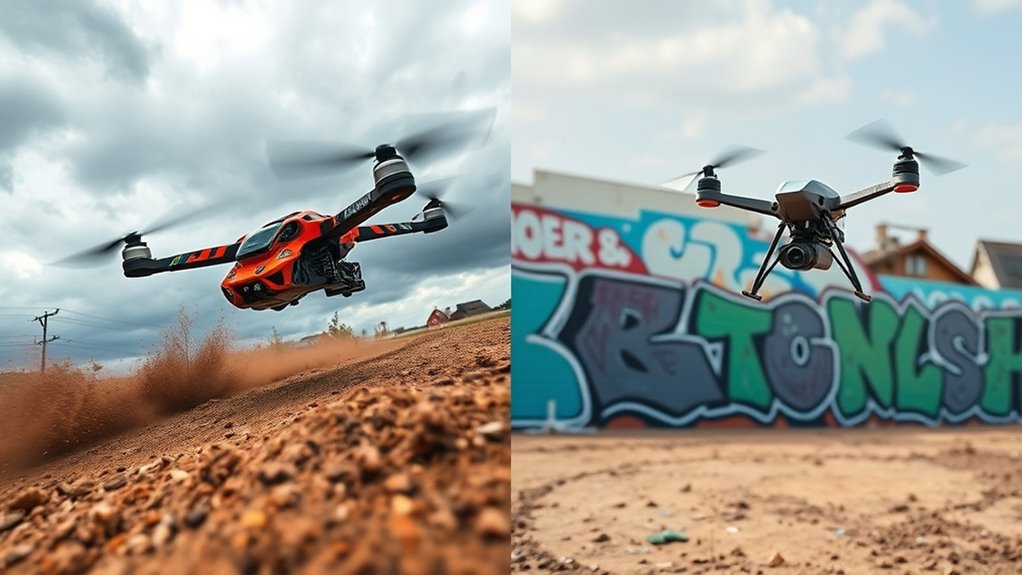
FPV racing and freestyle are two distinct drone flying styles. Racing focuses on speed, quick turns, and precision, while freestyle emphasizes smooth, creative tricks like flips and rolls. Your choice depends on whether you want competitive racing or artistic flying, each requiring different skills, equipment, and handling. Racing drones tend to be lightweight and responsive, while freestyle models prioritize durability and stability. To better understand which style suits you, explore the differences further.
Key Takeaways
- FPV racing emphasizes speed, agility, and precise maneuvers for competitive lap times, while freestyle prioritizes creative tricks and smooth, expressive flying.
- Racing drones are lightweight and built for quick acceleration and sharp turns; freestyle drones are more durable with larger batteries for extended, artistic flights.
- Racing focuses on tight course navigation and quick reactions; freestyle involves performing flips, spins, and artistic routines to showcase style.
- Skill development differs: racing requires rapid reflexes and precision control; freestyle emphasizes artistic expression and complex trick execution.
- Your choice depends on whether you aim for competitive speed and agility or creative, freestyle aerial performance.
Purpose and Flying Styles
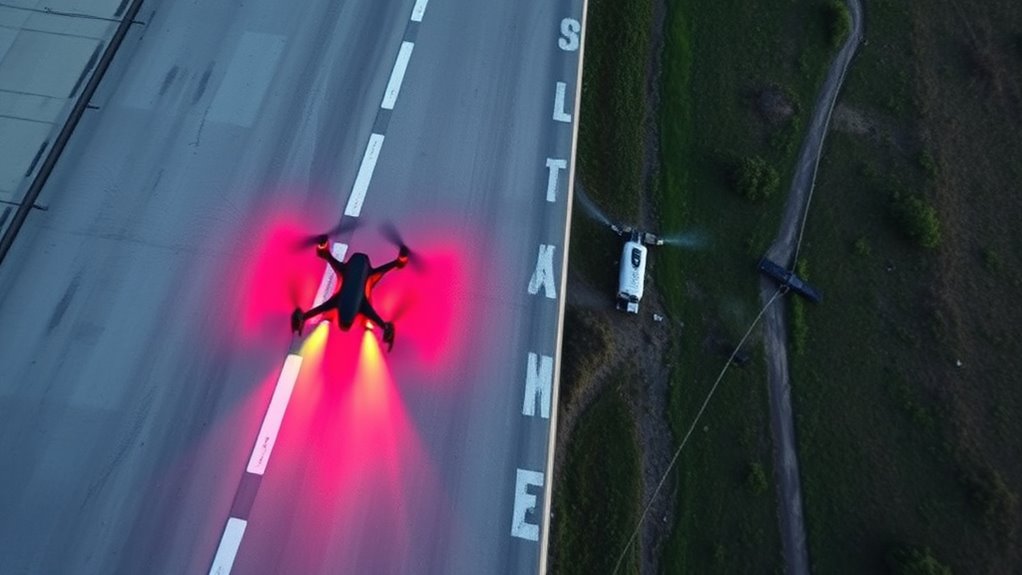
The main difference between FPV racing and freestyle drones lies in their purpose and the flying styles they prioritize. FPV racing drones are built for speed and precision, designed to navigate race tracks as fast as possible. You focus on tight turns, quick reactions, and minimizing lap times. Freestyle drones, on the other hand, emphasize creative flying and acrobatics. Your goal is to perform tricks like flips, rolls, and dives around obstacles, showcasing style and control. While racing pushes you to be fast and accurate, freestyle encourages expressive and smooth maneuvers. Both require skill, but each discipline demands different approaches: one for speed, the other for artistry. Your choice depends on whether you want to compete in races or perform stunning aerial stunts. Additionally, understanding the flying styles helps pilots optimize their techniques and equipment for either racing or freestyle pursuits. Recognizing the distinct equipment needs is crucial for success in either discipline. For example, specialized gear can significantly enhance performance tailored to each style.
Handling and Flight Performance
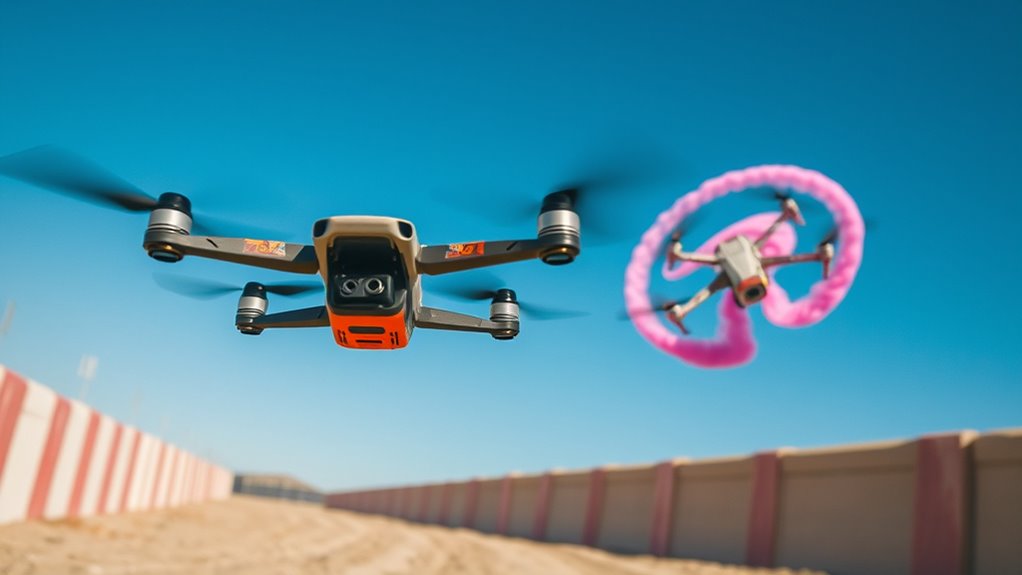
Handling and flight performance vary markedly between FPV racing and freestyle drones, aligning with their distinct goals. Racing drones respond quickly to control inputs, with sharp, precise movements ideal for tight turns and high-speed navigation. They prioritize low latency and agility, sacrificing some stability for rapid responsiveness. In contrast, freestyle drones offer smoother, more stable flight, allowing you to perform complex tricks like flips and rolls confidently. They excel at mid-air control, giving you the ability to execute precise maneuvers without sacrificing smoothness. While racing quads favor rapid acceleration and quick directional changes, freestyle drones provide better overall stability and control during acrobatic stunts. Your choice depends on whether you seek raw speed or expressive, controlled flight. Additionally, handling characteristics can be optimized through advanced flight controllers and tuning to suit specific piloting styles.
Frame Design and Components
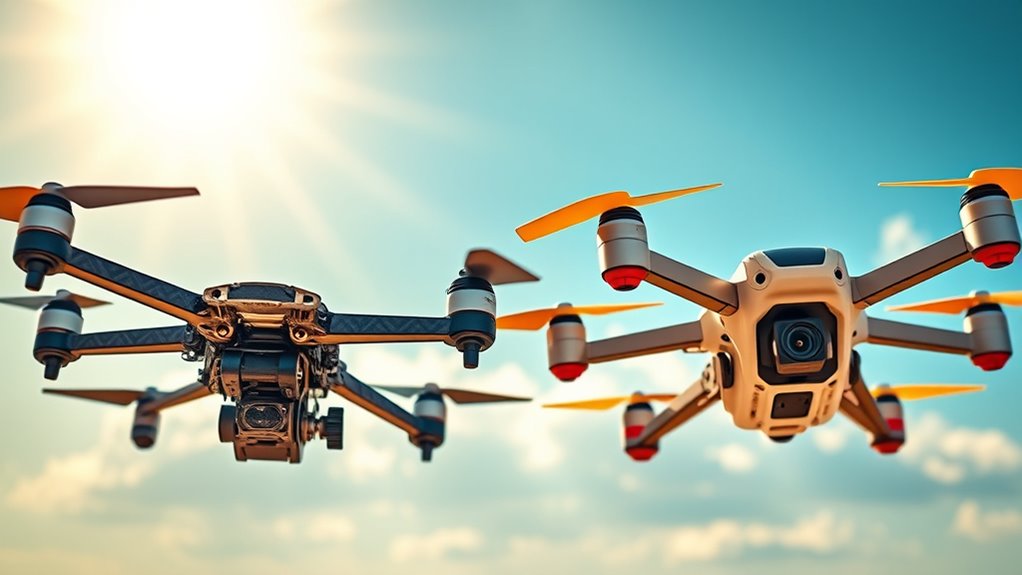
Frame design and components are tailored to meet the specific demands of FPV racing and freestyle flying. For racing, you’ll want a lightweight, streamlined frame that minimizes weight and maximizes speed and agility. Racing frames are often made from carbon fiber to guarantee strength without adding bulk, with a focus on rigidity and minimal surface area. Components are high-performance, with low-latency ESCs and motors optimized for quick acceleration. In contrast, freestyle frames are thicker and more durable, built from reinforced carbon fiber to withstand crashes and crashes. They often feature extra space for larger batteries and mounted cameras like GoPros. Battery placement varies—bottom for racing for a lower center of gravity, top for freestyle to balance weight and allow easy access. Additionally, choosing the right battery options can significantly influence flight time and performance. The choice of frame materials also impacts durability and weight, which are crucial for different flying styles. Selecting durable materials is essential for freestyle pilots to prevent damage during frequent crashes. Incorporating specialized construction techniques can further enhance the resilience of freestyle frames against impacts.
Common Tricks and Maneuvers

When exploring common tricks and maneuvers, you’ll notice that freestyle pilots focus on flip techniques like multi-flips and knife-edge spins to showcase style and control. In contrast, racing pilots prioritize precision maneuvers such as tight turns and quick shifts to maximize speed on course. Understanding these differences helps you appreciate the distinct skills required for each flying style. Additionally, mastering free floating techniques can enhance stability and maneuverability in both disciplines. Practicing proper flight control strategies can also improve your overall performance and safety during flights. Developing a strong foundation in creative storytelling can inspire innovative tricks and elevate your flying style to stand out.
Freestyle Flip Techniques
Freestyle flip techniques are fundamental tricks that showcase your control and style during flight. With practice, you’ll master basic flips like front, back, and side flips, which form the foundation for more advanced maneuvers. As you gain confidence, you can add complexity by executing multi-flips or combining flips with rolls and dives to create fluid, dynamic sequences. Precision is key—maintaining your orientation and spatial awareness guarantees clean, controlled flips near obstacles or in open space. Smooth throttle and stick inputs help you achieve crisp rotations and perfect landings. Incorporating flips into your freestyle routine not only demonstrates technical skill but also adds a personal flair to your flying style. Focus on consistency and control to elevate your tricks from simple spins to artistic expressions.
Racing Precision Maneuvers
In racing, precision maneuvers are essential for maintaining speed and steering through tight courses efficiently. You need quick, accurate inputs to navigate gates and avoid obstacles without losing momentum. Common tricks include sharp turns, controlled slides, and quick throttle adjustments. Mastering these helps shave seconds off your lap time. Here’s a quick overview:
| Maneuver | Purpose | Key Technique |
|---|---|---|
| Tight Cornering | Maintain speed through turns | Precise throttle, smooth stick input |
| Dirt Slides | Controlled drifts around corners | Low throttle, counter-steering |
| Gate Transitions | Fast, accurate gate passes | Rapid yaw, minimal altitude change |
| Speed Thrusts | Accelerate between obstacles | Full throttle, quick pitch-up |
These maneuvers keep your drone fast and precise, indispensable for competitive racing.
Skills and Experience Needed
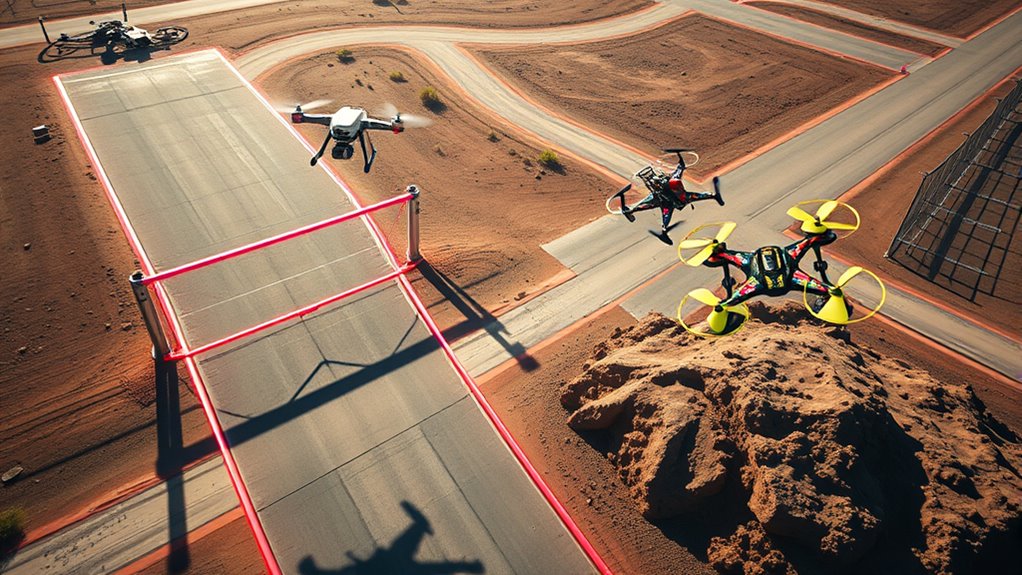
To excel in either FPV racing or freestyle, you need quick reflexes and sharp reactions to respond to fast-paced flying demands. You’ll also require technical flying skills, like precise throttle control and maneuver execution, especially during complex tricks or tight turns. Additionally, artistic and creative ability plays a big role in freestyle, where smooth, expressive flying makes a difference.
Reflex and Reaction Time
Having quick reflexes and sharp reaction times is essential for FPV drone pilots, especially in racing where split-second decisions can mean the difference between winning and crashing. In racing, you need to process fast-moving obstacles, tight corners, and sudden course changes. Your reflexes determine how quickly you respond to unexpected situations, like a near-miss or a missed turn. Reaction time influences your ability to adjust throttle, yaw, or pitch instantly, maintaining ideal speed and control. In freestyle flying, quick reactions help you execute precise tricks and recover from miscalculations smoothly. Both disciplines demand constant situational awareness and rapid decision-making. Developing your reflexes through practice enhances your overall responsiveness, making you a more confident and competitive pilot whether you’re racing or performing tricks. Reaction speed is a critical factor that can be improved with targeted training, ultimately boosting your piloting skills.
Technical Flying Skills
Mastering technical flying skills requires both practice and a solid understanding of your drone’s controls. You need quick reflexes and precise throttle, pitch, roll, and yaw inputs to navigate complex courses or perform tricks. For racing, focus on tight, fast turns, smooth throttle management, and rapid shifts between gates. Freestyle demands steady control during flips, rolls, and maneuvers, requiring excellent spatial awareness and timing. Developing these skills involves consistent drills, tuning your drone for responsiveness, and understanding flight dynamics. Both disciplines require you to anticipate your drone’s behavior and react swiftly. Building confidence through proper setup and maintenance ensures consistent performance and safety. Experience builds confidence and fluidity, allowing you to perform efficiently under pressure. Whether racing or freestyle, honing your technical flying skills is essential for mastering your craft and pushing your limits.
Artistic and Creative Ability
Developing artistic and creative ability in FPV flying requires more than just technical skills; it involves cultivating a sense of style, timing, and visual storytelling. You’ll need a keen eye for composition and the ability to choreograph your moves smoothly. To enhance your creative flair, focus on:
- Mastering complex tricks like flips, rolls, and knife-edge flips to add flair.
- Timing maneuvers perfectly to sync with music or visual cues.
- Choosing flight paths that showcase your style and tell a story.
- Incorporating smooth progressions and controlled movements to create a flowing performance.
Battery Choices and Flight Duration
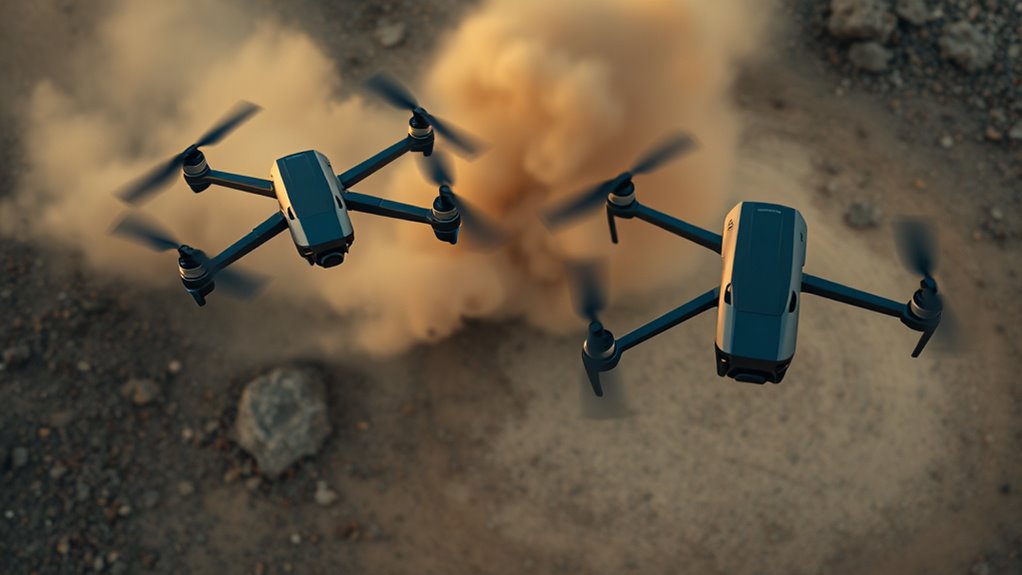
Battery choices play a crucial role in shaping the flight duration and performance of FPV drones, with different designs prioritizing specific power needs. Racing drones use smaller, lightweight batteries to keep weight low, enabling quick bursts of speed and agile maneuvers, but they usually have shorter flight times—around 3 to 5 minutes. Freestyle drones, on the other hand, favor larger-capacity batteries to extend flight sessions and allow for more complex tricks and filming. These batteries add weight but provide longer endurance—often 5 to 10 minutes or more. Power consumption varies: racing drones burn energy fast due to high speeds, while freestyle drones use more during sustained hovering and tricks. Battery placement also influences balance, affecting handling in both styles.
Choosing the Right Drone for Your Goals

Choosing the right drone depends on your specific goals and flying style. To help you decide, consider these key factors:
- If you want to race for speed and precision on dedicated tracks, opt for a lightweight racing drone with responsive controls.
- For creative flying and performing tricks, choose a durable freestyle drone that can handle crashes and offers stable mid-air control.
- If capturing cinematic footage is your goal, select a drone designed for smooth, stable flight with space for an HD camera.
- Think about your experience level—beginners may prefer versatile models suitable for both styles, while advanced pilots might pick specialized builds for each discipline.
- To maintain optimal performance, understanding the basics of drone maintenance can extend your drone’s lifespan and ensure consistent flight performance. Additionally, familiarity with automotive repair techniques can help you troubleshoot and keep your drone in top condition.
- Selecting a drone with features tailored to your intended use will help you maximize your flying enjoyment and growth. Being aware of drone technology trends can also inform your choices and enhance your flying experience.
Frequently Asked Questions
Can I Switch Between Racing and Freestyle Drones Easily?
Yes, you can switch between racing and freestyle drones easily if you have the right setup. Many pilots use the same frame or similar configurations, just tuning the flight controllers for different styles. Keep in mind, racing drones prioritize speed and responsiveness, while freestyle drones focus on stability and tricks. Adjusting your settings and practicing with each drone helps you smoothly shift between racing and freestyle flying.
What Are the Main Tuning Differences for Each Flying Style?
You can switch between tuning for racing and freestyle, but expect some adjustments. For racing, focus on low latency, quick throttle response, and high-speed stability. For freestyle, tune for smoothness, precise control, and better maneuverability by adjusting PID settings and control rates. Keep in mind, switching styles may require recalibrating your ESCs, motors, and filters to optimize performance for each flying style.
Do Different Drones Require Unique Maintenance Routines?
Yes, different drones need unique maintenance routines. Racing drones, built for speed, require frequent motor checks, quick prop replacements, and tight tuning to keep them responsive. Freestyle drones, designed for acrobatic tricks, need regular frame inspections, reinforcement checks, and battery maintenance to guarantee durability during crashes. You should also clean camera lenses and check wiring consistently, regardless of style, to keep your drone performing efficiently and safely.
How Does Weather Impact Racing Versus Freestyle Flying?
Weather substantially impacts both racing and freestyle flying. Rain and high humidity can damage your drone’s electronics, so you should avoid flying in wet conditions. Wind affects control; strong gusts make racing tricky and freestyle unpredictable. Bright sunlight enhances visibility, but glare can hinder your view. Cold temperatures can reduce battery life, so plan shorter sessions. Always check weather conditions before flying to guarantee safety and ideal performance in either style.
Is One Style Better for Beginners Than the Other?
If you’re a beginner, freestyle flying might be better for you because it emphasizes smooth control, creativity, and practicing tricks at moderate speeds. It helps build fundamental piloting skills and confidence without the pressure of racing tight courses. Racing requires sharp reflexes and precise navigation, which can be overwhelming initially. Starting with freestyle allows you to learn basic flight techniques and develop your style before trying more intense racing challenges.
Conclusion
Whether you’re drawn to high-speed racing or creative freestyle flying, understanding the key differences helps you choose the right drone and style. Did you know that over 60% of pilots switch between FPV racing and freestyle? Mastering both can boost your skills and enjoyment. So, explore your options, practice your tricks, and find what excites you most—your perfect flight experience is just a drone away. Happy flying!