Getting started with FPV drones means understanding the key components like cameras, video transmitters, and flight controllers that create an immersive flying experience. You’ll also need essential gear such as a transmitter, FPV goggles, and batteries. Before flying, check for safety, proper maintenance, and follow local regulations like altitude limits and privacy rules. Practice with simulators, choose beginner-friendly drones, and join community groups to improve your skills. Keep exploring these tips to become confident flyer.
Key Takeaways
- Understand essential FPV drone components and equipment, including cameras, transmitters, and power sources, for immersive flying.
- Perform pre-flight safety checks and follow night flying rules to ensure responsible operation and avoid accidents.
- Learn legal regulations like registration and altitude limits, and engage with the FPV community for tips and support.
- Practice with flight simulators and start with beginner-friendly drones to build skills and confidence gradually.
- Maintain responsible flying habits, respect privacy, and contribute to the FPV community for safe and enjoyable drone experiences.

CADDXFPV Walksnail Avatar HD FPV Goggles X – 1080P/100FPS, 50° FOV, OLED
- Display Resolution: 1080P dual HD displays
- Field of View: 50° immersive FOV
- Visual Quality: Vivid colors and sharp details
As an affiliate, we earn on qualifying purchases.
As an affiliate, we earn on qualifying purchases.
Understanding the Basics of FPV Drones

To understand FPV drones, you need to know that they are designed to give pilots a first-person view from the drone’s perspective using a live video feed. This setup allows you to see exactly what the drone sees in real-time, giving you an immersive flying experience. Most FPV drones are small, lightweight, and built for agility, making them ideal for racing or freestyle flying. They typically use a camera mounted on the drone that transmits video to your goggles or monitor, so you can navigate as if you’re onboard. The flight controller, motors, and video transmitter work together to ensure smooth flight and clear video transmission. Learning how each component interacts is key to mastering FPV flying and improving your skills. Understanding the components involved helps pilots troubleshoot and optimize their drone’s performance, especially considering the importance of video transmission quality in achieving a seamless flight experience.

APEX FPV Drone Kit,FPV Goggles,First-person view drone,FPV Racing Drone for Beginners,Low-Latency 5.8G Transmission, easy control,Drop-Resistant,VR70-2.0
- 5.8G Analog FPV Goggles: Near-zero latency for responsive control
- Ready to Fly & Pre-Tuned: No setup or soldering needed
- Immersive 120° FPV Experience: Real-time, smooth flight view
As an affiliate, we earn on qualifying purchases.
As an affiliate, we earn on qualifying purchases.
Essential Equipment for FPV Flying

Having the right equipment is essential for successful FPV flying, as each component plays a crucial role in your drone’s performance and your overall experience. You’ll need a transmitter, or radio controller, to send your flight commands, and FPV goggles or a monitor to see the live video feed from your drone’s camera. The drone itself must have a camera and video transmitter (VTX) for real-time visuals. Powering everything are LiPo batteries, typically 1000mAh to 2200mAh for mini quads. A flight controller manages stability and integrates inputs from your transmitter, motors, and sensors. High-quality equipment guarantees smooth control, clear video, and reliable power, which are all vital as you learn to navigate and master FPV flying.
FPV drone transmitter and receiver
As an affiliate, we earn on qualifying purchases.
As an affiliate, we earn on qualifying purchases.
Pre-Flight Safety and Maintenance Checks
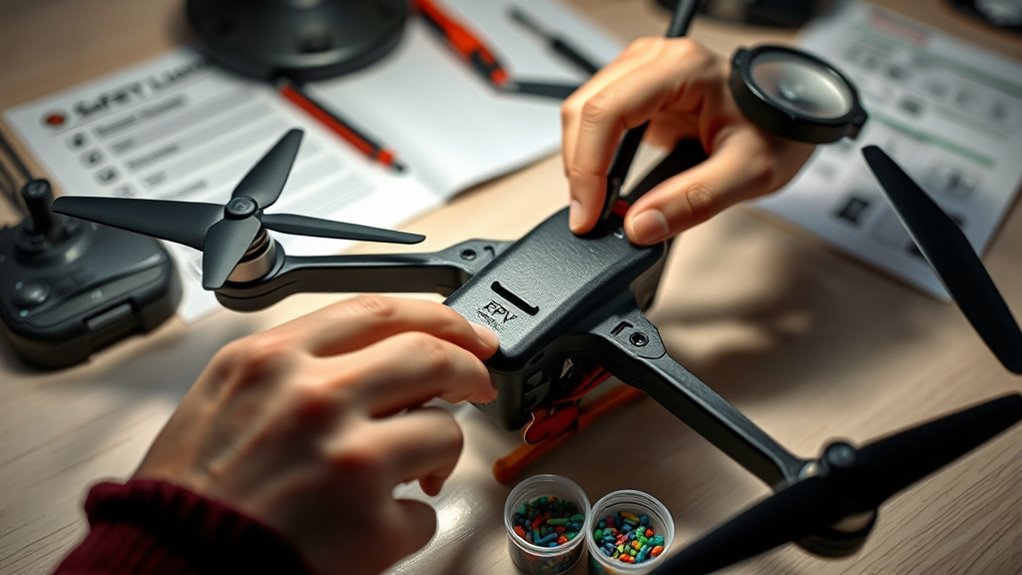
Before each flight, you should perform thorough safety and maintenance checks to guarantee your drone is in prime condition. Start by inspecting the propellers for cracks, chips, or bends, replacing any damaged ones. Check that the motors spin smoothly without resistance or grinding. Ensure all battery connectors are secure and free of corrosion. Tighten all screws and examine the frame for cracks or loose parts. Test control surfaces and motors to confirm they respond correctly before arming. Verify that the video and control links are functioning properly. Also, make sure your batteries are fully charged and in good condition. Taking these steps helps prevent malfunctions, reduces crash risks, and guarantees a safe, enjoyable flying experience.
As an affiliate, we earn on qualifying purchases.
Navigating Legal and Regulatory Guidelines

Before flying, you need to understand the legal rules that apply to your drone. Depending on its weight, you might have to register it with the authorities, and there are specific flight restrictions to follow. If you plan to fly at night, make sure you use proper lighting and understand the rules for nighttime flying. Additionally, familiarize yourself with Free Floating principles to ensure your drone operates safely within natural environments.
Registration Requirements
Are you aware of the registration requirements for flying FPV drones? If your drone weighs over 250 grams, you’ll need to register it with the appropriate authority, like the FAA in the U.S. Failing to do so can lead to fines or penalties. Here’s what you should know:
- Determine if your drone needs registration—most drones over 250 grams require it.
- Complete the registration process online—it’s quick and simple, often taking just a few minutes.
- Label your drone with the registration number—make sure it’s visible and easily readable.
Staying compliant helps you avoid legal issues and keeps your flying experience smooth. Always check local regulations before flying to ensure you meet all requirements.
Flight Restrictions
Traversing legal and regulatory guidelines is essential to guarantee you fly safely and avoid penalties. You must register drones over 250 grams with authorities like the FAA in the U.S. before flying. Always follow the maximum altitude limit of 400 feet (120 meters) to stay clear of manned aircraft. Avoid flying near airports, helipads, or restricted zones without explicit permission to prevent interference with aircraft operations. Respect privacy and private property rights by not flying over private land or people without consent. Keep your drone within your visual line of sight at all times, and don’t fly in crowded or sensitive areas. Staying compliant not only keeps you legal but also ensures responsible flying, safeguarding yourself, others, and the airspace. Incorporating proper safety measures is crucial for minimizing risks during your flights. Additionally, familiarizing yourself with local drone regulations can help prevent unintentional violations that might lead to fines or legal issues. Understanding how flight restrictions are enforced can further help you maintain compliance and avoid penalties. Being aware of enforcement practices can help you better understand the consequences of violations and ensure you stay within legal boundaries. Awareness of additional restrictions, such as no-fly zones around certain infrastructure, can further support safe and legal drone operation.
Night Flying Rules
Flying at night introduces additional regulations you need to follow to stay safe and legal. To do this effectively, keep these rules in mind:
- Make sure your drone has anti-collision lighting visible for at least three miles, making it easier for others to see you.
- Avoid flying near airports, helipads, or restricted airspace unless you have proper authorization.
- Stick to the maximum altitude of 400 feet (120 meters) and stay within your visual line of sight, even when flying FPV.
Night flying can be fun, but it requires extra precautions. Always check local regulations, use proper lighting, and be aware of your surroundings to keep yourself and others safe.
Safe Flying Practices and Tips
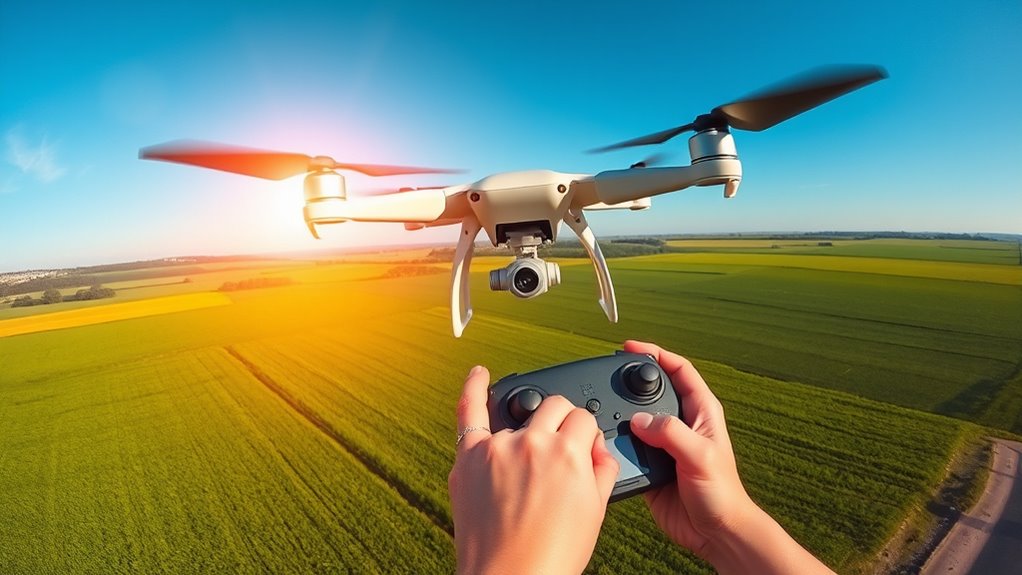
Safe flying practices are essential to prevent accidents and guarantee an enjoyable FPV experience. Always keep your drone within your visual line of sight, even when flying FPV, and use a spotter if possible. Avoid flying over people, animals, or private property without permission. Maintain a safe distance from buildings, vehicles,, and obstacles to reduce collision risks. Regularly check your battery level and signal strength; land before your battery drops below 20% to prevent crashes. Practice emergency maneuvers like Return to Home (RTH) and manual landing in open areas. Keep your drone’s firmware updated and conduct pre-flight safety checks, including inspecting propellers and motors. Additionally, consider your outdoor environment and your surroundings when planning flights to ensure safety. Familiarize yourself with Glycolic Acid benefits and its effects on skin health for post-flight skincare if needed. Staying informed about reliable cable and hardware information can help you choose safe and quality equipment for your drone setup. Being aware of Best Hot Rollers for Long Hair can also inspire ways to keep your hair protected from heat damage during long flights or after the activity. Regularly reviewing your cookie consent preferences ensures your privacy settings are aligned with your comfort. Following these practices helps ensure safe, responsible flying and keeps your FPV experience fun and accident-free.
Building Skills With Flight Simulators and Practice

Practicing with flight simulators is one of the most effective ways to develop your FPV flying skills before taking your drone into real-world environments. It allows you to build confidence, improve control, and learn essential maneuvers without risking damage. To maximize your practice, focus on these key areas:
- Start with basic maneuvers like hovering, yawing, and gentle turns to build a solid foundation.
- Gradually challenge yourself with obstacle courses or tight spaces to simulate real flying conditions.
- Consistently practice at least 10 hours, alternating between different skills to develop muscle memory and quick reflexes.
Using simulators helps you understand drone behavior and stick inputs, giving you a safe environment to experiment and improve. This preparation makes real flights more confident and enjoyable.
Choosing the Right FPV Drone for Beginners

Choosing the right FPV drone is a vital step as you move from simulator practice to real-world flying. For beginners, start with a ready-to-fly kit that’s durable and easy to control, typically in the $200–$500 range. Look for models with lightweight frames, stable flight characteristics, and beginner-friendly features like beginner modes or GPS assist. Consider a drone with a 5.8GHz analog video system for reliable live feed. Make sure it has a decent camera, manageable size, and straightforward setup. Avoid complex racing drones until you gain confidence. Focus on a drone that’s designed for learning, allowing you to master basic maneuvers before progressing to more advanced flying. Picking the right drone helps build skills safely and keeps your first flights enjoyable. Incorporating connected technology into your FPV setup can also enhance your learning experience and provide valuable feedback during flight.
Joining the FPV Community and Finding Resources

Are you enthusiastic to accelerate your FPV flying skills? Joining the FPV community is a great way to learn fast and stay motivated. First, find online forums and social media groups dedicated to FPV flying. These platforms connect you with experienced pilots who share tips, advice, and updates on gear. Second, attend local meetups, workshops, or flying events to network and observe different flying styles. These in-person connections boost your confidence and skills. Third, explore resources like YouTube channels, tutorials, and manufacturer websites for gear reviews and tutorials. Engaging with the community keeps you informed, inspired, and connected. Embrace the shared passion, ask questions, and keep practicing—you’ll see your skills grow faster than you thought possible.
Frequently Asked Questions
What Are the Best Beginner-Friendly FPV Drones on the Market?
You’ll find that the BetaFPV Beta85X, EMAX Tinyhawk II, and Happymodel Mobula6 are among the best beginner-friendly FPV drones. They’re affordable, lightweight, and easy to control, making them perfect for learning. These drones come as ready-to-fly kits, include beginner-friendly features, and have durable designs. With their small size and smooth handling, you can practice indoors or outdoors while building your skills confidently.
How Do I Troubleshoot Video Feed Issues During a Flight?
Imagine you’re in the cockpit of a spaceship, but your video feed suddenly drops or becomes fuzzy. First, check your VTX connection and confirm it’s secure. Then, verify your antenna is undamaged and properly aligned. Reduce interference by flying away from Wi-Fi or power lines. Finally, restart your goggles and drone’s transmitter. If issues persist, update firmware or replace damaged cables to restore a clear, real-time view.
What Accessories Enhance FPV Flying Experience and Safety?
You can enhance your FPV flying experience and safety by adding accessories like a GPS module for better navigation, a range extender to improve signal strength, and a high-quality antenna for clearer video transmission. Installing a propeller guard protects your drone and surroundings, while a flight data logger helps track performance. Using a spotter or an emergency kill switch adds safety, giving you peace of mind during flights.
How Can I Reduce Latency Between My Drone and Goggles?
Imagine your drone’s video feed as a lightning-fast arrow zipping through the air—reducing latency makes it hit its target instantly. To achieve this, choose a high-quality, low-latency video transmitter and compatible goggles. Keep firmware updated, minimize interference by flying in open areas, and use a 5.8GHz frequency. Opt for digital systems like DJI, known for ultra-low latency, ensuring your reactions are lightning quick and your flight smooth as silk.
What Are Common Mistakes New FPV Pilots Should Avoid?
You should avoid rushing your setup or skipping pre-flight checks, as these mistakes can lead to crashes. Don’t fly without understanding your controls or practicing in open, obstacle-free areas first. Avoid flying near people, animals, or restricted zones, and never overlook your battery or signal levels. Also, resist the temptation to push your limits too quickly; build skills gradually to ensure safe, confident flying.
Conclusion
Getting started with FPV drones is exciting and rewarding. Did you know that the FPV drone market is expected to grow at a compound annual rate of over 20% through 2027? With the right knowledge, equipment, and safety habits, you can confidently take to the skies and enjoy this thrilling hobby. So, jump in, explore, and connect with fellow enthusiasts—you’ll soon find yourself mastering the art of first-person view flying!