Switching from GPS camera drones to FPV can be exciting but challenging. To make it smooth, start with a good simulator to build your skills without risk. Practice in open areas, focusing on smooth, controlled movements. Learn your drone’s control system and experiment with beginner modes first. Develop your spatial awareness and muscle memory gradually. With patience, you’ll gain confidence and improve your flying. Keep exploring the tips ahead—there’s more to reveal in your FPV journey.
Open a free Amazon Business account
Business pricing, bulk buying and tax-exempt orders.
As an affiliate, we earn on qualifying purchases.
Key Takeaways
- Start with FPV simulators to build control skills before outdoor flying.
- Choose beginner-friendly FPV drones with stable flight modes for easier transition.
- Practice gentle, deliberate movements to develop smooth control and aerial stability.
- Gradually explore advanced settings while flying in open, obstacle-free areas.
- Focus on developing spatial awareness and quick reflexes essential for FPV flying.
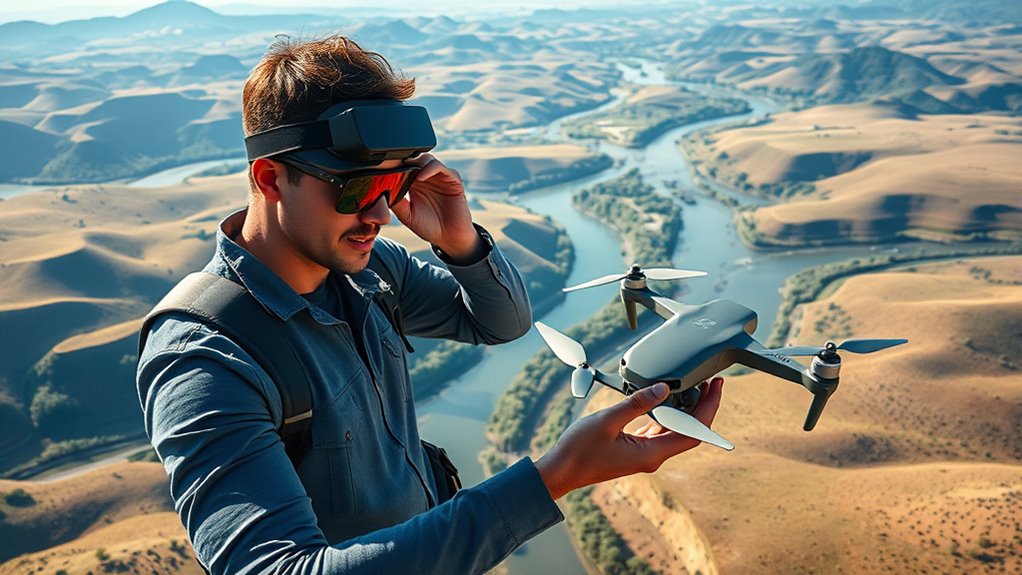
Switching from GPS camera drones to FPV (first-person view) flying opens up a whole new world of agility and immersive control. Instead of relying on GPS for stability and navigation, you’re now in the pilot’s seat, experiencing the flight firsthand through goggles or a monitor. This shift demands a different skill set, especially when it comes to maintaining aerial stability. Unlike GPS drones, which use multiple control systems to keep steady, FPV flying depends heavily on your ability to interpret real-time visuals and respond swiftly. You’ll need to develop a good sense of your drone’s orientation, as it can be disorienting at first. Practice flying in open areas with minimal obstacles, focusing on smooth, controlled movements to build confidence and muscle memory.
Transitioning to FPV flying enhances agility and immersion, requiring quick reflexes and excellent spatial awareness.
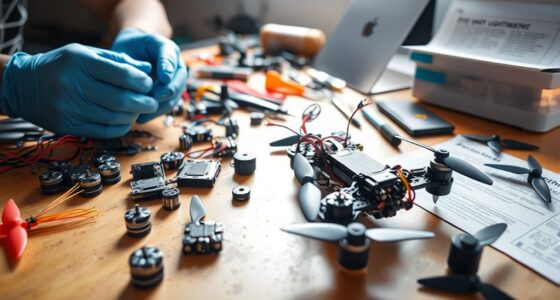
A key part of a seamless transition is understanding your drone’s control systems. Many FPV drones incorporate advanced flight controllers with features like gyro stabilization and adjustable flight modes, which can help you manage aerial stability as you learn. Start with beginner modes to get familiar with basic controls, then gradually experiment with more advanced settings as your skills improve. Remember, the more you understand your control systems, the better you’ll be able to fine-tune your drone’s response to your commands, making flights smoother and more predictable. This knowledge will also help you troubleshoot issues, such as unexpected drifting or oscillations that can throw you off during flight.
Another tip is to spend time practicing on a simulator before taking your drone out for real flights. Many FPV simulators replicate the experience closely, allowing you to hone your control systems and get used to maintaining aerial stability without risking damage. When you do fly outdoors, start with slow, deliberate movements, keeping your throttle and yaw gentle. This approach minimizes sudden shifts and helps you keep the drone steady, especially when you’re still mastering spatial awareness from the first-person perspective. Additionally, understanding the importance of energy efficiency can help you extend your flight times and make the most of each session.
As you gain experience, you’ll notice how your ability to control aerial stability improves. You’ll learn to anticipate how your drone responds to your inputs, which is vital for smooth maneuvers and precise shots. Remember, consistency is key; small adjustments in your control inputs can make a significant difference in flight quality. With patience and practice, you’ll develop an intuitive feel for your drone’s control systems, enabling you to push your flying skills further and truly enjoy the agility that FPV flying offers.

iO CLEAN (16oz - 473ml Screen Cleaner Spray – Best Large Cleaning Kit
- Versatile Screen Compatibility: Works on all electronic screens and devices
- Gentle, Scratch-Free Formula: Removes dust and grime without scratching
- Protective, Anti-Static Coating: Leaves a streak-free, smudge-free shine
As an affiliate, we earn on qualifying purchases.
Frequently Asked Questions
What Are the Main Safety Concerns When Switching to FPV?
Your main safety concerns when switching to FPV include liability concerns if your drone causes damage or injury. Signal interference can also disrupt your flight, leading to potential crashes or loss of control. To stay safe, always check local regulations, practice in open areas, and verify your equipment is well-maintained. Staying aware of these risks helps you fly responsibly and avoid accidents or legal issues.
How Does Battery Life Compare Between GPS and FPV Drones?
You’ll find that FPV drones often have shorter battery life compared to GPS camera drones due to differences in battery efficiency and power management. FPV setups tend to drain batteries faster because of high-performance motors and real-time video transmission. To maximize flight time, you should carry extra batteries, optimize power settings, and manage your drone’s energy consumption carefully. This way, you can enjoy longer flights while maintaining safe and reliable operation.
Are There Legal Restrictions for FPV Drone Flying?
Piloting the skies with FPV drones is like walking a tightrope—you must stay balanced. Yes, there are legal restrictions, including altitude limits and no-fly zones, that you need to follow. Privacy concerns also come into play, so always respect people’s privacy and avoid flying over private property. Check local regulations before flying to make sure of compliance, keeping your flights safe, legal, and enjoyable.
What Skills Are Essential for Piloting FPV Drones Effectively?
To pilot FPV drones effectively, you need strong manual control skills to handle the craft precisely. Focus on developing your aerial agility by practicing smooth, coordinated movements and quick reflexes. Understanding the drone’s mechanics helps you respond swiftly to unexpected situations. Practicing in a safe environment builds confidence, and staying updated on regulations guarantees responsible flying. Mastering these skills allows you to navigate complex environments with finesse and enjoy a seamless FPV experience.
How Do Maintenance Requirements Differ Between GPS and FPV Drones?
You’ll find that maintenance for FPV drones is more complex than GPS camera drones, mainly due to their intricate setups and rapid component wear. Spare parts availability can also be a concern, as FPV components are often specialized and less common. Regularly check your motors, propellers, and flight controllers, and keep a stock of essential parts to make certain of smooth flying sessions without unexpected downtime.

EVEO Screen Cleaner Spray - Large Screen Cleaner Bottle - TV Screen Cleaner, Computer Screen Cleaner, for Laptop, Phone, Ipad - Computer Cleaning kit Electronic Cleaner (1 Pack)
- Versatile Electronic Screen Cleaner: Suitable for TVs, laptops, phones, and tablets
- Effective Streak-Free Cleaning: Removes dust, fingerprints, and smudges
- Gentle on Sensitive Screens: Safe for LCD, LED, OLED, CRT screens
As an affiliate, we earn on qualifying purchases.
Conclusion
Switching from GPS camera drones to FPV might feel like stepping into a whole new world—more exhilarating, yet demanding. While GPS drones offer stability and ease, FPV delivers adrenaline and precision in rapid bursts. Embrace the challenge, and you’ll open a level of control and excitement you never knew existed. The shift isn’t just a change in gear; it’s a leap into a more immersive flying experience. Are you ready to take the plunge?
College move-in / dorm season Picks
dorm essentials
As an affiliate, we earn on qualifying purchases.