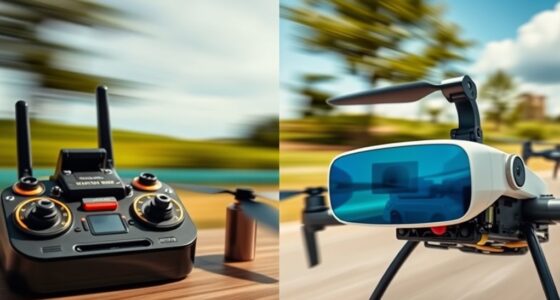

If your FPV drone goes down without GPS, stay calm and act fast. Focus on the last known location and move slowly to scan the area visually, using bright lights or contrasting colors on the drone for easier spotting. Adjust your transmitter to boost signals and monitor telemetry to estimate its position. Listen carefully for sounds or use added beepers. Remaining patient and systematic increases your recovery chances—keep going, and you’ll find more tips to help you locate your drone.
Key Takeaways
- Act quickly by visually tracking the last known location and systematically scanning the area for signs of the drone.
- Use environmental cues, terrain features, and movement to narrow down potential hiding spots.
- Adjust transmitter antenna orientation and remove obstacles to improve signal strength and regain control.
- Listen for sounds like beepers or buzzers, and consider deploying tracking devices for auditory cues.
- Stay calm, move carefully, and leverage telemetry data to estimate the drone’s approximate position when visual or signal cues are limited.
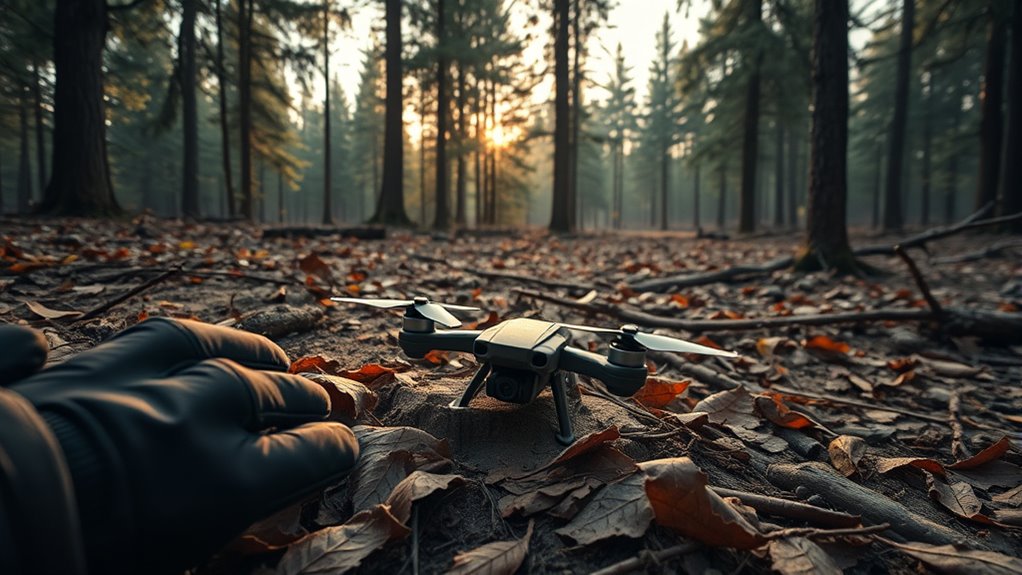
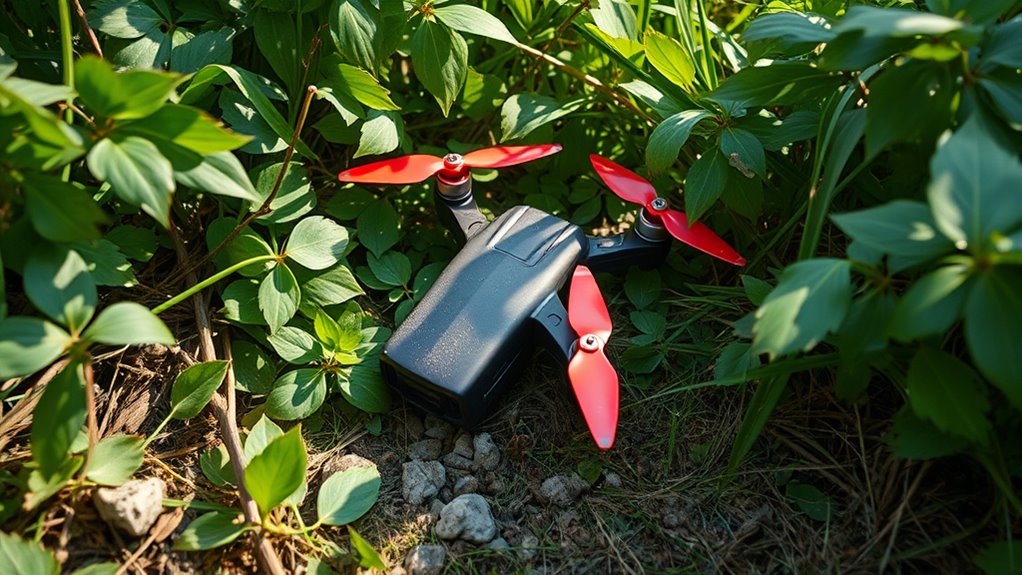
Losing your FPV drone can be frustrating, but with the right approach, you can substantially increase your chances of recovery. When your drone suddenly disappears from view or loses connection, it’s essential to stay calm and act quickly. One of the most effective methods is to employ visual tracking. Keep your eyes on the last known location, scan the area systematically, and look for any movement or signs of the drone’s position. Using a bright or contrasting color on your drone can help it stand out against the environment, making visual tracking easier. If your drone is equipped with lights, turn them on to improve visibility, especially in low-light conditions. Remember, the key is to narrow down the search area, so move slowly and carefully, paying attention to any terrain features or objects that could hide your quad.
While visual tracking is a crucial first step, sometimes the signal from your drone may be weak or lost altogether. This is where signal boosting comes into play. If you’re still within a reasonable range, try to improve your connection by adjusting your transmitter’s antenna orientation and ensuring there are no obstacles blocking the signal path. In some cases, you can use a signal booster or range extender if you have one available. These devices amplify the signal, increasing your chances of regaining control or at least pinpointing the drone’s location on your FPV screen. Keep in mind that even if your FPV feed cuts out, many drones still transmit telemetry data, which can help you estimate the drone’s approximate position. Signal strength can fluctuate due to environmental conditions, so understanding how to interpret telemetry data can be vital for recovery.
Another tip is to listen carefully for any sounds your drone might make if it’s nearby, especially if it has a buzzer or beeper feature. Sometimes, visual or signal-based methods aren’t enough, and auditory cues can lead you right to the drone’s hiding spot. If you’re unable to locate it visually or through signal, consider deploying a tracking device or beeper if you have one installed beforehand. These tools can drastically improve the chances of recovery by alerting you to the drone’s location when it’s out of sight.
Frequently Asked Questions
How Can I Prevent Losing My Drone in the First Place?
To prevent losing your drone, always perform thorough pre-flight checks, ensuring your batteries are fully charged and your controls work smoothly. Pay close attention to antenna placement, positioning antennas upright and clear of obstructions to maintain a strong signal. Keep an eye on your drone’s battery level and avoid flying in cluttered or risky areas. These steps help you stay in control and reduce the risk of losing your drone mid-flight.
What Should I Do Immediately After Losing GPS Signal?
When your GPS signal vanishes like a shadow in the night, act quickly. Initiate emergency procedures such as switching to manual mode, if available, and stabilize your drone’s flight. Perform signal troubleshooting—check your transmitter and receiver connections, and try to regain control. Keep calm and methodically work through these steps, like a detective solving a mystery, to increase your chances of recovering your drone before it drifts too far.
Are There Specific Tools to Help Locate a Downed FPV Drone?
Yes, there are specific tools to help locate a downed FPV drone. RF scanners can detect the radio frequency signals your drone transmits, making it easier to track its location. Signal amplifiers boost these signals, extending your search range. Use an RF scanner to pick up the strongest signal, then employ a signal amplifier if needed to pinpoint your drone’s position more accurately.
How Effective Are Visual Search Techniques for Recovery?
Visual search techniques can be highly effective when recovering a downed quad. You should look for visual cues like disturbed grass, broken branches, or debris that indicate the drone’s crash site. Use systematic search patterns, such as grid or spiral sweeps, to cover the area thoroughly. Staying patient and observant increases your chances of spotting the drone quickly, especially when it’s hidden by terrain or foliage.
Can I Recover My Drone if It Crashes Into Water?
Imagine your drone plunges into water unexpectedly; you might still have a chance to recover it. Act quickly to minimize water damage and check for signal interference caused by water’s conductive properties. Remove the drone from water immediately, dry it thoroughly, and avoid powering it on until you’re sure it’s dry. If you act fast, you might save the electronics and get your drone back, despite the water mishap.
Conclusion
Losing your FPV drone can feel like searching for a needle in a haystack, but with patience and the right tips, you can bring it back home. I once chased my drone through dense trees, thinking it was gone forever—only to spot its blinking lights just in time. Remember, persistence is key. Even if the drone seems lost, don’t give up; many pilots have turned a “lost cause” into a victorious recovery.