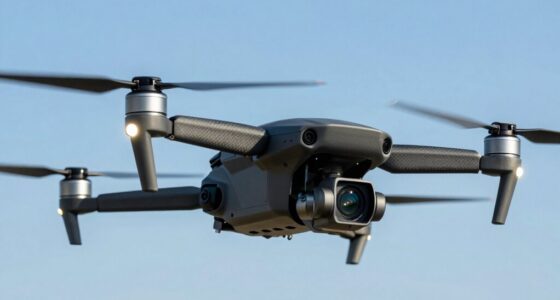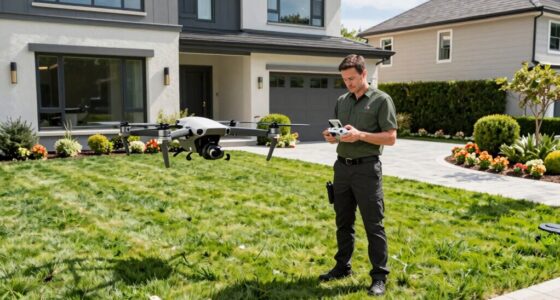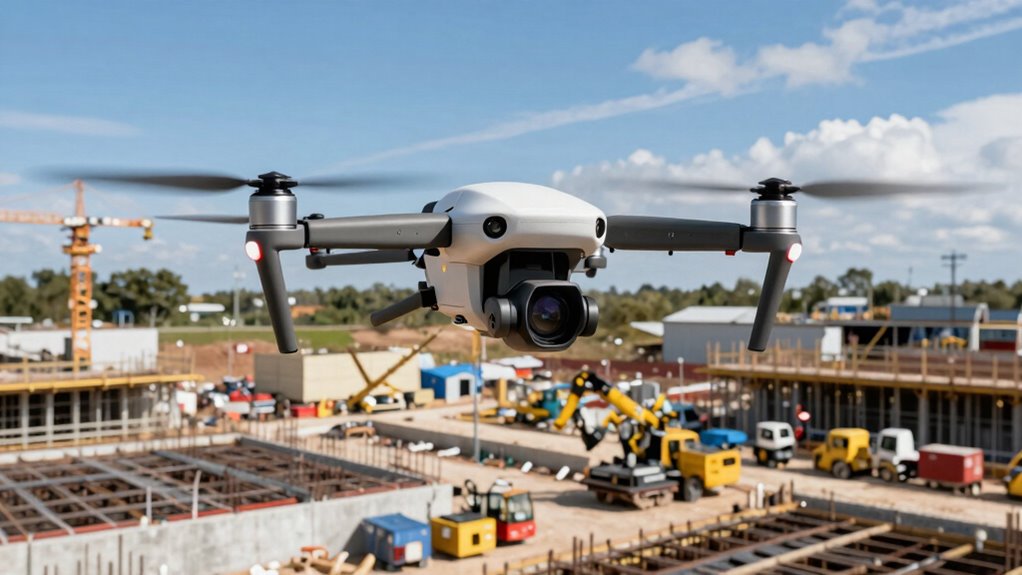

To think about hybrid photo-and-inspection drone workflows, focus on integrating advanced sensors like high-res cameras, thermal imaging, and LiDAR seamlessly. Coordinate hardware and software to guarantee smooth data exchange and real-time processing. Plan workflows that align with your operational schedules and automate data handling for efficiency. Verify compatibility of your systems for scalability and future upgrades. Keeping these elements in check helps you create streamlined, accurate workflows—if you keep exploring, you’ll discover more ways to optimize your drone operations.

Get the latest gadgets delivered free — and shop member deals
- Fast, free delivery on millions of items
- Access to Prime Big Deal Days deals on October 6–7
- Prime Video, Amazon Music and more included
Key Takeaways
- Prioritize seamless sensor integration to ensure synchronized data collection for both high-resolution imagery and detailed inspections.
- Automate data processing and management to enable real-time insights and reduce manual handling errors.
- Plan workflows that coordinate drone schedules with operational teams to optimize efficiency and minimize downtime.
- Verify hardware and software compatibility upfront to prevent system bottlenecks and ensure future scalability.
- Incorporate flexible, cloud-based data solutions for easy access, collaboration, and adaptation to evolving inspection needs.
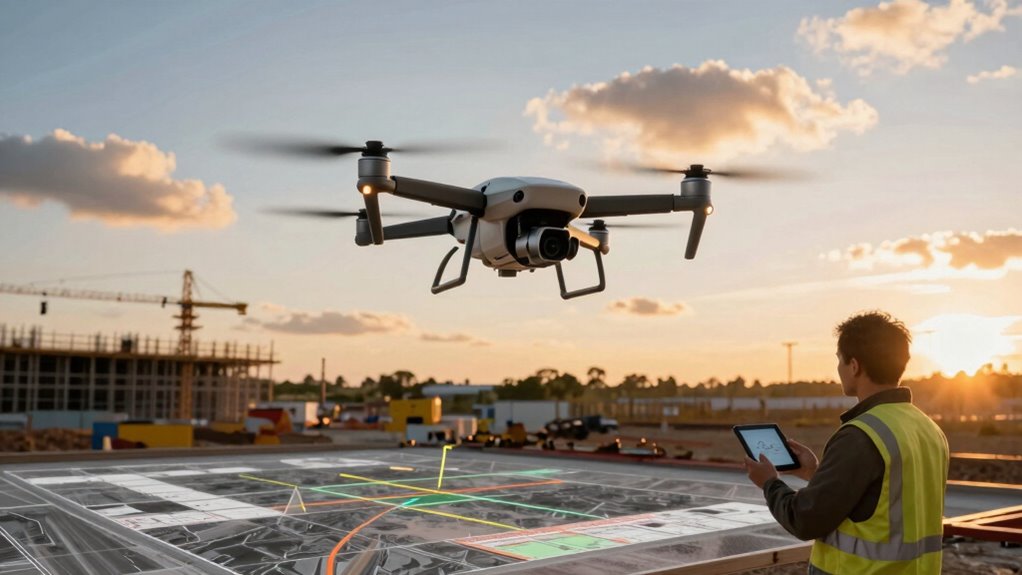
Have you ever wondered how to effectively integrate drone technology into your existing workflows? When considering hybrid photo-and-inspection drone workflows, it’s vital to think about how sensor integration can streamline your operations and improve data collection. Modern drones equipped with advanced sensors—such as high-resolution cameras, thermal imaging, or LiDAR—allow you to gather diverse data types in a single flight. To maximize efficiency, you need to guarantee that these sensors work seamlessly together, providing accurate, synchronized information that supports your specific objectives. Proper sensor integration not only boosts data quality but also simplifies post-flight analysis, saving you time and reducing errors.
Data management plays a key role in hybrid workflows. As you accumulate large volumes of images, videos, and sensor data, organizing and storing this information becomes a priority. You should implement a data management system designed for easy access, scalability, and security. This system enables you to categorize data by project, date, or sensor type, making retrieval straightforward and enabling quick decision-making. When you automate parts of your data handling, you minimize manual errors and free up resources for more vital tasks. Cloud-based storage solutions also facilitate collaboration, especially if your team operates across different locations. Additionally, understanding how sensor integration with data management systems can enhance your workflow is essential for maintaining efficiency and accuracy. Incorporating interoperable hardware and software ensures your systems communicate effectively, preventing bottlenecks and data silos.
Thinking about how your drone operations fit into existing workflows means planning for seamless integration. For example, if you’re using drone data for infrastructure inspections, you’ll want to coordinate flight schedules with your maintenance teams to ensure timely updates. Incorporate automation tools that can process sensor inputs immediately after flights, providing real-time insights and alerts if anomalies are detected. This approach helps you move from data collection to actionable intelligence faster.
Another key consideration is compatibility. Your drone hardware, sensors, and data management platforms should work harmoniously. Before investing, verify that your chosen equipment supports the necessary integrations and that software solutions can handle the data formats you’ll be working with. This proactive approach prevents bottlenecks and guarantees your hybrid workflows are both efficient and scalable.
Ultimately, effective integration of sensor technology and robust data management are the backbone of successful hybrid drone workflows. By focusing on these aspects, you’ll create a streamlined process that enhances your operational capabilities, reduces turnaround times, and improves the quality of your insights. As drone technology continues to evolve, maintaining flexibility and staying informed about new sensor options and data handling techniques will help you stay ahead in your field.
As an affiliate, we earn on qualifying purchases.
Frequently Asked Questions
What Are the Best Drone Models for Hybrid Workflows?
You should consider drones like DJI Matrice 300 RTK or Autel EVO II Dual, which excel in hybrid workflows. These models feature advanced sensor integration, allowing seamless switching between high-quality photography and inspection sensors. Their flight automation capabilities enable you to execute complex survey and inspection tasks efficiently. By choosing drones with these features, you guarantee versatile performance, making them ideal for your hybrid photo-and-inspection needs.
How Do I Train Operators for Hybrid Photo-And-Inspection Tasks?
You should focus on thorough operator training that emphasizes both technical skills and safety protocols. Incorporate hands-on practice to boost confidence and skill development for hybrid photo-and-inspection tasks. Use real-world scenarios to enhance decision-making and adaptability. Regularly update training materials to include new drone features and workflows, ensuring operators stay proficient. Encouraging continuous learning and feedback helps maintain high performance and safety standards for your hybrid drone operations.
What Safety Protocols Are Essential for Hybrid Drone Operations?
You should guarantee your team always wears appropriate safety gear, like helmets and protective eyewear, to prevent injuries during hybrid drone operations. Establish clear emergency procedures, including quick shutdown protocols and communication plans, so everyone knows how to respond swiftly if something goes wrong. Regularly review safety protocols with your operators, and conduct drills to reinforce their understanding, reducing risks during complex photo and inspection tasks.
How Do I Manage Data Storage and Processing Efficiently?
Think of your data as a flowing river—without proper management, it can flood or dry up. To manage data storage and processing efficiently, prioritize data synchronization for real-time updates and use cloud integration for scalable storage. Automate uploads and backups to avoid bottlenecks, ensuring your drone data is accessible and secure. These strategies help you stay in control, turning chaos into clarity and making your workflows seamless.
What Are the Legal Considerations for Hybrid Drone Use?
You need to prioritize regulatory compliance and address privacy concerns when using hybrid drones. Guarantee you understand local laws about airspace and drone operations, and obtain necessary permits. Respect privacy by notifying individuals and avoiding sensitive areas. Regularly review regulations, document your compliance efforts, and implement security measures to protect data. Staying informed and transparent helps you operate legally and ethically, preventing legal issues and safeguarding public trust.
As an affiliate, we earn on qualifying purchases.
Conclusion
Embracing hybrid photo-and-inspection drone workflows isn’t just a technical choice; it’s a strategic dance on the edge of innovation. By seamlessly integrating both tasks, you reveal efficiency and precision, transforming each flight into a symphony of data. Remember, the future belongs to those who dare to blend perspectives—seeing the big picture while capturing every detail. So, take the leap, orchestrate your workflow, and turn your drone missions into a masterpiece of modern efficiency.
As an affiliate, we earn on qualifying purchases.
As an affiliate, we earn on qualifying purchases.
Evergreen bestsellers Picks
bestsellers
As an affiliate, we earn on qualifying purchases.