
📊 Full opportunity report: Acoustic Dampening, Placement, and the “Rig in the Closet” Setup on ThorstenMeyerAI.com — validation score, market gap, and execution plan.

Get the latest gadgets delivered free — and shop member deals
- Fast, free delivery on millions of items
- Access to Prime Big Deal Days deals on October 6–7
- Prime Video, Amazon Music and more included
TL;DR
Placing high-power AI workstations in separate rooms or closets significantly reduces noise. Proper ventilation is essential to prevent overheating. Acoustic foam alone is less effective than strategic placement.
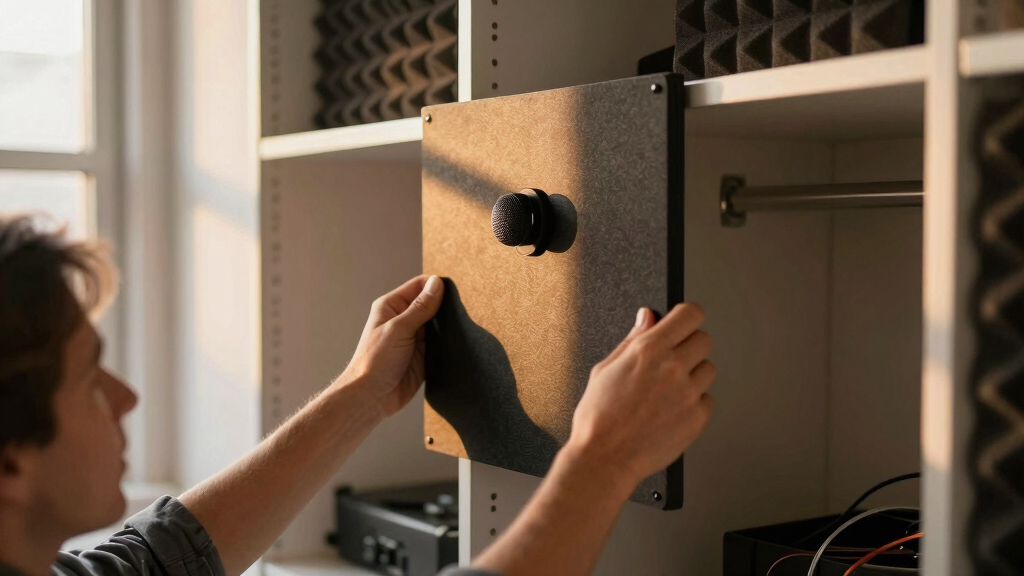
Placing AI workstations in separate rooms or enclosed cabinets is the most effective way to reduce noise, according to recent expert guidance. This approach, often called the ‘rig in the closet’ setup, leverages distance and ventilation to minimize sound without relying solely on acoustic treatment. The strategy is increasingly relevant as high-power GPU rigs generate significant heat and noise.
Experts from ThorstenMeyerAI.com emphasize that the most effective noise reduction method is to physically move the high-power workstation away from the user, such as into another room or closet. This eliminates the need for extensive acoustic treatment, which only softens sound but does not block it. When placing a rig in an enclosed space, adequate ventilation is crucial to prevent heat buildup, which can cause thermal throttling and increased fan noise. Active ventilation, including exhaust fans and ducting, is recommended to dissipate heat effectively. The ‘rig in the closet’ setup is viable but requires careful airflow management to avoid damaging the hardware. Acoustic foam, while popular, is considered a last resort for soundproofing, as it only absorbs airborne noise and does little to reduce structure-borne vibrations. Proper placement and ventilation are the primary tools for quiet, high-performance AI workstations.Acoustic dampening
& the rig in the closet.
The most powerful noise fix isn’t a material — it’s a floor plan. A rig you can’t hear because it’s in another room beats any amount of foam. Tap the approaches in Part 1 to see what actually works.
(another room)
(levers 1–4)
(door / barrier)
(acoustic foam)
Contain the noise, not the heat
Impact of Placement and Ventilation on Noise Reduction
Effective placement and ventilation strategies dramatically improve noise levels and hardware longevity. Moving a rig into another room or closet minimizes sound exposure and enhances workspace comfort. Proper airflow prevents overheating, ensuring consistent performance and reducing the need for noisy fan operation. These methods are especially relevant for remote or headless AI setups, where physical separation is practical and highly effective.AI workstation soundproof enclosure
As an affiliate, we earn on qualifying purchases.
As an affiliate, we earn on qualifying purchases.
High-Power AI Rigs and Noise Challenges
High-performance AI workstations often generate over 600W of heat and produce loud fan noise, which can be disruptive in shared or office environments. Traditionally, users rely on acoustic foam or soundproof cases, but these are less effective than strategic placement. Recent guidance highlights that the most significant noise reduction comes from physically distancing the rig, such as placing it in a closet or separate room. This approach aligns with the shift toward network-based workflows, where users interact with remote servers via SSH or APIs, reducing the need for the workstation to be in the same space."The most effective way to reduce noise from a high-power AI rig is to move it into another room or closet. Acoustic foam alone won’t stop sound, but distance and proper ventilation will."
— Thorsten Meyer, AI hardware expert
ventilated closet for high-performance GPU rig
As an affiliate, we earn on qualifying purchases.
As an affiliate, we earn on qualifying purchases.
Remaining Questions on Practical Implementation
While the benefits of placing AI workstations in separate rooms are clear, specific guidelines on optimal ventilation solutions and cost-effective soundproof enclosures are still evolving. The effectiveness of DIY solutions varies depending on room size, noise levels, and hardware configuration. Additionally, the long-term impact of heat buildup in sealed spaces requires further study, especially for continuous operation.
quiet exhaust fan for computer cooling
As an affiliate, we earn on qualifying purchases.
As an affiliate, we earn on qualifying purchases.
Next Steps for Implementing Quiet AI Workstations
Users should evaluate their workspace to identify suitable locations for placing high-power rigs away from main work areas. Investing in proper ventilation, such as ducted exhaust fans or purpose-built soundproof cabinets, is recommended. Future developments may include more affordable, integrated solutions that combine noise suppression with thermal management, making the 'rig in the closet' setup more accessible and reliable.
acoustic foam panels for server room
As an affiliate, we earn on qualifying purchases.
As an affiliate, we earn on qualifying purchases.
Key Questions
Is placing my AI rig in a closet safe?
Yes, provided you implement proper ventilation and airflow management. Sealed spaces without airflow can cause overheating and damage hardware.
Can acoustic foam alone significantly reduce noise?
No, acoustic foam primarily absorbs airborne sound within a room but does not block noise transmission or reduce structure-borne vibrations. Placement and barriers are more effective for noise reduction.
What are the best ventilation solutions for a closet setup?
Active ventilation with quiet exhaust fans and ducting is recommended. Thermostat-controlled airflow systems can help maintain safe temperatures and prevent overheating.
How does network setup influence the need for physical separation?
If your workflow supports remote access, such as SSH or API calls, physical separation becomes more practical because you don't need to be physically near the rig during operation.
Are there commercial options for noiseproof and cooled enclosures?
Yes, purpose-built soundproof cabinets with integrated cooling and airflow management exist, though they can be expensive. DIY solutions with proper ventilation are also viable.
Source: ThorstenMeyerAI.com
Fall Picks
fall essentials
As an affiliate, we earn on qualifying purchases.