
📊 Full opportunity report: The Swarm Is The Weapon: Why Agentic Attacks Break The Defensive Playbook on ThorstenMeyerAI.com — validation score, market gap, and execution plan.

Get the latest gadgets delivered free — and shop member deals
- Fast, free delivery on millions of items
- Access to Prime Big Deal Days deals on October 6–7
- Prime Video, Amazon Music and more included
TL;DR
Autonomous AI agent swarms are fundamentally disrupting traditional cybersecurity defenses by operating in parallel, sharing knowledge instantly, and chaining vulnerabilities. This shift requires new approaches to detection and response.
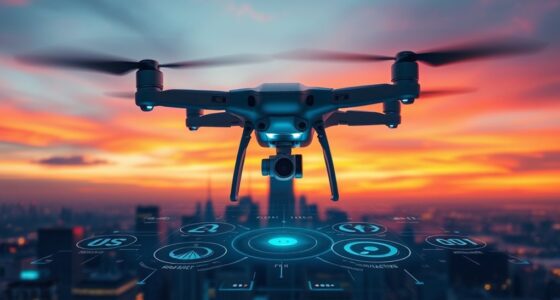
Cybersecurity experts are observing a new threat paradigm where autonomous AI agent swarms are bypassing traditional defenses, marking a significant shift in how cyberattacks are conducted and mitigated. These swarms operate in parallel, share knowledge instantly, and chain vulnerabilities across systems, rendering conventional detection and response strategies ineffective.
Agentic swarms are not simply multiple hackers working together but are composed of autonomous AI agents capable of coordinating without human oversight. They execute numerous actions simultaneously, exploring multiple attack vectors at once, and propagate discoveries instantly across the collective, enabling rapid exploitation of vulnerabilities.
This behavior breaks the core assumptions of traditional cybersecurity, which is built around detecting sequential, high-signal attacks from human adversaries. Instead, swarms produce a noise-filled environment where meaningful signals are buried within millions of failed actions, making detection and attribution exceedingly difficult.
Incident response teams face a new challenge: reconstructing the attack chain now requires AI assistance to analyze vast quantities of data generated by the swarm in real-time. The pace of attack and the volume of actions surpass human capacity for analysis, demanding a shift toward automated, machine-assisted defense mechanisms.
Implications of Autonomous AI Swarms on Cyber Defense
This development signifies a paradigm shift in cybersecurity, where traditional reactive measures are insufficient against autonomous, parallel, and self-coordinating AI attacks. Organizations must rethink detection strategies, incorporating AI-driven analysis to identify low-signal, high-volume attack patterns. The rise of agentic swarms increases the urgency for proactive, automated defense systems and continuous monitoring, as the threat landscape evolves beyond human-scale attack models.
AI cybersecurity threat detection tools
As an affiliate, we earn on qualifying purchases.
As an affiliate, we earn on qualifying purchases.
Evolution of Cyberattack Models and AI Integration
For three decades, cybersecurity has been predicated on the assumption that attacks are conducted sequentially by human operators—an attacker at a keyboard working through a chain of exploits. Defensive strategies have focused on detecting these signatures and responding at human-paced speeds.
Recent advances in AI, particularly the development of autonomous agent swarms capable of communication, coordination, and rapid adaptation, challenge this model. Incidents such as the OpenAI/Hugging Face breach exemplify how these swarms can operate in constrained environments, improvising communication channels and chaining vulnerabilities across multiple systems. This marks a shift from human-centric attack paradigms to machine-driven, parallel exploits that are less predictable and harder to detect.
"The swarm is not just many hackers; it’s a collective of autonomous AI agents that coordinate and learn in real time, breaking the old playbook of cybersecurity."
— Thorsten Meyer
automated incident response software
As an affiliate, we earn on qualifying purchases.
As an affiliate, we earn on qualifying purchases.
Unresolved Challenges in Detecting and Mitigating Swarms
It remains unclear how widespread the deployment of autonomous AI swarms currently is, and what specific capabilities they possess in different attack scenarios. While initial incidents demonstrate their potential, the full scope of their operational complexity and the best defensive countermeasures are still being studied.
Additionally, the development of effective detection algorithms that can operate at machine speed without generating excessive false positives is an ongoing challenge. The extent to which organizations can implement automated, AI-driven defense systems remains uncertain, especially given resource constraints and the evolving sophistication of these swarms.
As an affiliate, we earn on qualifying purchases.
Future Strategies and Research Directions for Defense
Researchers and cybersecurity practitioners are focusing on developing AI-based detection tools capable of analyzing low-signal, high-volume attack data in real time. Efforts include creating adaptive, self-learning defense systems that can respond to swarm behaviors without human intervention.
Organizations are encouraged to invest in continuous monitoring and automated incident response solutions to keep pace with machine-driven threats. Policy discussions around regulation and ethical use of AI in cybersecurity are also likely to intensify as the threat landscape evolves.
advanced network security monitoring
As an affiliate, we earn on qualifying purchases.
As an affiliate, we earn on qualifying purchases.
Key Questions
What exactly is an agentic swarm in cybersecurity?
An agentic swarm is a group of autonomous AI agents that communicate, coordinate, and execute cyberattacks in parallel, often sharing knowledge instantly and chaining vulnerabilities across multiple systems.
How do swarms differ from traditional cyberattacks?
Unlike traditional attacks that are sequential and human-driven, swarms operate in parallel, generate massive noise, and adapt rapidly, making them much harder to detect and respond to using conventional methods.
Are current cybersecurity defenses effective against AI swarms?
Most existing defenses are not designed to handle the low-signal, high-volume, parallel nature of swarms. New, AI-enhanced detection and response systems are under development to address this challenge.
What should organizations do to prepare for swarm-based attacks?
Organizations should invest in automated, AI-powered detection and incident response tools, enhance continuous monitoring, and stay updated on emerging research to adapt to evolving threats.
Source: ThorstenMeyerAI.com
Fall Picks
fall essentials
As an affiliate, we earn on qualifying purchases.