
📊 Full opportunity report: Mac vs GPU Tower for Local LLMs: The Heat-and-Noise Tradeoff on ThorstenMeyerAI.com — validation score, market gap, and execution plan.

Get the latest gadgets delivered free — and shop member deals
- Fast, free delivery on millions of items
- Access to Prime Big Deal Days deals on October 6–7
- Prime Video, Amazon Music and more included
TL;DR
This article compares Mac Studio with Apple Silicon and GPU towers for local large language model inference, focusing on heat, noise, capacity, and performance tradeoffs. The choice depends on model size, throughput needs, and noise tolerance.
Apple Silicon-based Mac Studio offers near-silent operation and low power consumption, while GPU towers deliver higher throughput but generate significant heat and noise. The choice between them hinges on model size, performance needs, and noise tolerance, marking a fundamental hardware decision for local AI deployment.
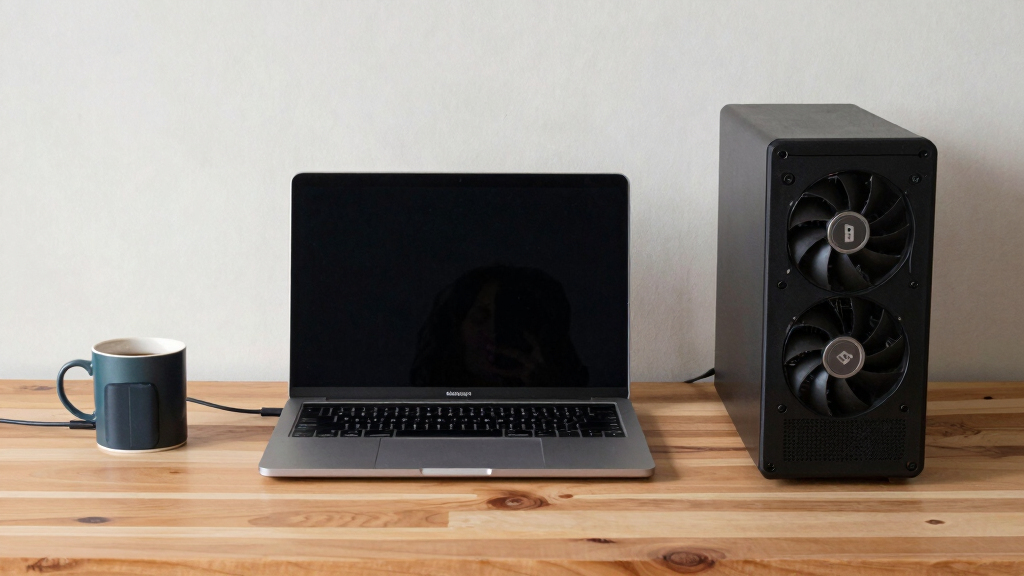
The core difference lies in architectural focus: GPUs prioritize memory bandwidth, enabling faster inference on models that fit within their VRAM, typically 24–32GB per card. NVIDIA RTX 5090 GPUs provide roughly 1,792 GB/s bandwidth, resulting in several times higher tokens per second for models within VRAM limits. Conversely, Apple Silicon chips like the M3 Ultra optimize memory capacity through a unified architecture, allowing up to 512GB of shared memory. This enables Mac Studio to run larger models, such as 70B parameter models, that cannot fit in a single GPU’s VRAM, albeit at slower speeds. Heat and noise are the most stark contrasts: GPU towers, especially multi-GPU setups, produce hundreds of watts of heat, requiring elaborate cooling solutions and ongoing thermal management. The RTX 5090 alone draws 575W, with dual setups exceeding 800W, creating a space heater effect. Fans and cooling systems must be tuned continuously to manage noise levels. In contrast, Apple Silicon chips operate with minimal heat output and are near-silent during inference. The Mac Studio consumes a fraction of the power of GPU towers, making it ideal for always-on, quiet operation in a desk environment. The tradeoff is slower inference speeds and a fixed hardware configuration, with no upgrade path for GPU expansion or multi-card scaling. The choice depends on whether the user prioritizes maximum throughput or model size capacity and silent operation.Mac vs GPU tower
for local LLMs.
What if you sidestep the heat entirely with a different kind of machine? A tower is a high-bandwidth furnace you spend five levers quieting. Apple Silicon is near-silent by design — but asks for different tradeoffs. Match your priority in Part 2.
Put the loud, hot machine where its noise doesn’t matter, and the quiet one where you do. SSH into the tower when you need raw power; let the Mac handle everything else, silently.
Implications for Local AI Hardware Choices
This comparison highlights a fundamental hardware decision for AI practitioners: whether to prioritize raw inference speed and upgradeability with GPU towers or to opt for silent, power-efficient operation with Apple Silicon. For tasks requiring models that fit within VRAM, GPU towers offer superior performance. However, for running larger models that exceed GPU capacity, Mac Studio provides a practical, quiet solution, especially for continuous, on-desk use. Understanding these tradeoffs helps users select hardware aligned with their workload and environment constraints.
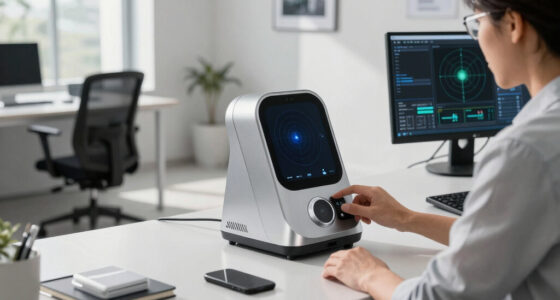
Apple Mac Studio with M3 Ultra for AI
As an affiliate, we earn on qualifying purchases.
As an affiliate, we earn on qualifying purchases.
Hardware Architectures and Their Tradeoffs
GPU towers with NVIDIA RTX 5090 cards focus on maximizing memory bandwidth, enabling rapid inference on models that fit within their VRAM (24–32GB per GPU). They support multi-GPU scaling, CUDA ecosystem, and hardware upgradeability, making them suitable for training and fine-tuning large models. However, their high power consumption and heat output require elaborate cooling and thermal management.
Apple Silicon chips like the M3 Ultra leverage a unified memory architecture, sharing up to 512GB across CPU, GPU, and Neural Engine. This design allows running larger models that cannot fit in GPU VRAM but results in slower inference speeds. Their low power draw and minimal heat output make them ideal for quiet, always-on operation, but they lack multi-GPU scaling and native CUDA support.
NVIDIA RTX 5090 GPU tower for machine learning
As an affiliate, we earn on qualifying purchases.
As an affiliate, we earn on qualifying purchases.
Unresolved Questions About Future Hardware Developments
It remains unclear how upcoming GPU architectures or Apple Silicon updates will shift these tradeoffs, especially regarding increased memory capacity, bandwidth, and thermal efficiency. The evolving software ecosystem, including support for multi-GPU scaling and native AI frameworks, may also influence hardware choices.
high performance GPU workstation for AI inference
As an affiliate, we earn on qualifying purchases.
As an affiliate, we earn on qualifying purchases.
Next Steps for Hardware Selection and Development
Users should monitor upcoming GPU releases and Apple Silicon updates, as improvements in memory capacity, bandwidth, and thermal design could alter the current balance. Additionally, software advancements in model optimization and inference speed may influence hardware preferences. For now, the decision remains a matter of workload size, performance needs, and noise tolerance.
quiet AI workstation with GPU cooling
As an affiliate, we earn on qualifying purchases.
As an affiliate, we earn on qualifying purchases.
Key Questions
Can a Mac Studio run large models faster with software updates?
While software improvements can enhance inference efficiency, the fundamental hardware limitations—mainly memory bandwidth and capacity—remain. Larger models exceeding VRAM will still run slower on Macs than on GPU towers.
Is it possible to upgrade GPU towers for better performance?
Yes, GPU towers support adding or replacing GPUs, allowing for hardware upgrades and scaling, unlike fixed Apple Silicon machines.
How much noise does a GPU tower produce under load?
It varies, but high-performance GPU towers can produce enough heat and noise to require active cooling and noise management, often audible and sometimes disruptive in quiet environments.
Which hardware is better for continuous, small-scale AI inference?
For always-on, low-noise operation, Apple Silicon Macs are preferable due to their near-silent operation and low power consumption, despite slower inference speeds.
Will future Apple Silicon chips support multi-GPU or increased capacity?
Currently, Apple Silicon does not support multi-GPU configurations, and capacity is limited by the chip's architecture. Future updates may improve capacity but are not confirmed.
Source: ThorstenMeyerAI.com
Fall Picks
fall essentials
As an affiliate, we earn on qualifying purchases.