
For wireless PCVR streaming in 2026, I recommend the ASUS Radeon RX 7600 EVO OC 8GB, the ASUS GeForce RTX 3050, and the GIGABYTE GeForce RTX 3060 OC 12G. These GPUs strike a balance between performance, VRAM, and future support, ensuring smooth visuals and low latency. They’re also efficient and compatible with the latest codecs and APIs. Keep exploring, and you’ll find even more options well-suited for an immersive VR experience.
Key Takeaways
- Prioritize GPUs with at least 8GB VRAM, high CUDA cores, and boost clocks above 2,000 MHz for smooth VR streaming.
- Ensure the GPU supports hardware decoding of codecs like AV1 and H.265 for reduced latency and efficient streaming.
- Choose models with advanced cooling solutions to maintain performance stability during extended VR sessions.
- Opt for GPUs compatible with the latest APIs (DirectX 12 Ultimate, Vulkan) and future-proof features like ray tracing and DLSS/FSR.
- Balance budget constraints with performance needs, focusing on GPUs that support upcoming hardware standards for longevity.
| ASUS Radeon RX 7600 EVO OC 8GB Graphics Card | 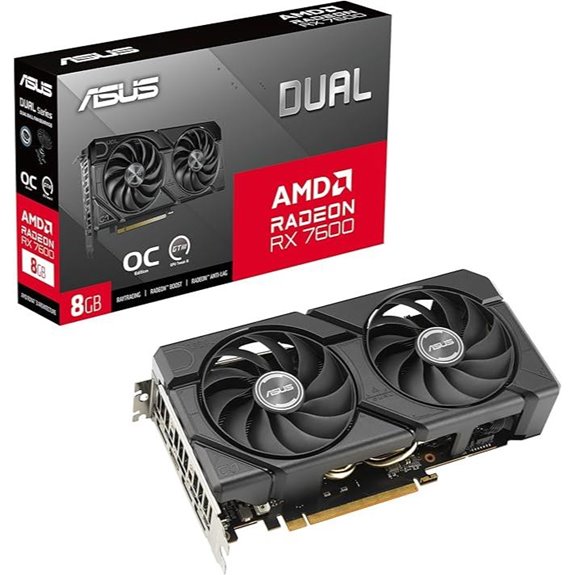 | High-Performance Gaming | Memory Size: 8GB GDDR6 | Interface: PCIe 4.0 | Max Resolution: 7680×4320 pixels | VIEW LATEST PRICE | See Our Full Breakdown |
| ASUS NVIDIA GeForce RTX 3050 Gaming Graphics Card | 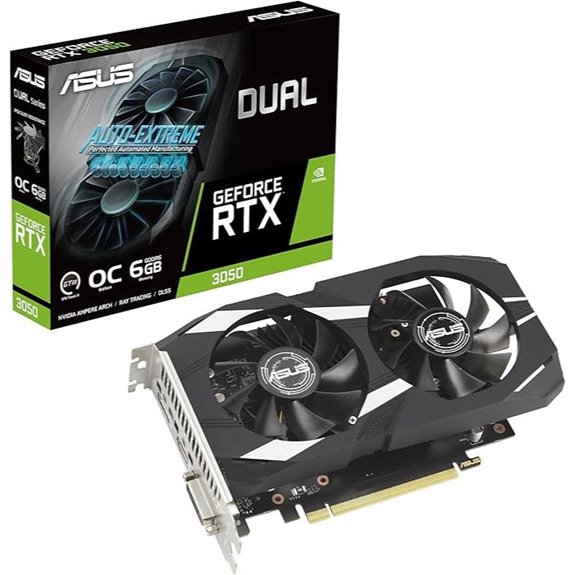 | Compact Powerhouse | Memory Size: 6GB GDDR6 | Interface: PCIe 4.0 | Max Resolution: 7680×4320 pixels | VIEW LATEST PRICE | See Our Full Breakdown |
| GIGABYTE GeForce RTX 3060 Gaming OC 12G | 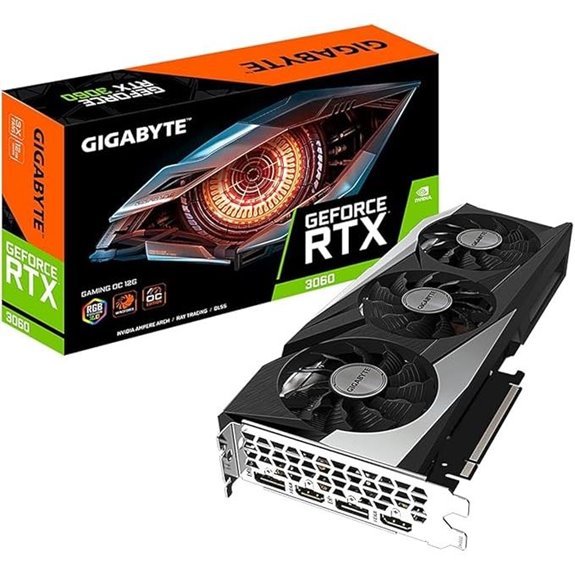 | Mid-Range Master | Memory Size: 12GB GDDR6 | Interface: PCIe 4.0 | Max Resolution: 7680×4320 pixels | VIEW LATEST PRICE | See Our Full Breakdown |

More Details on Our Top Picks
-

ASUS Dual NVIDIA GeForce RTX 3050 6GB OC Edition Gaming Graphics Card - PCIe 4.0, 6GB GDDR6 Memory, HDMI 2.1, DisplayPort 1.4a, 2-Slot Design, Axial-tech Fan Design, 0dB Technology, Steel Bracket
NVIDIA Ampere Streaming Multiprocessors: The all-new Ampere SM brings 2X the FP32 throughput and improved power efficiency.
As an affiliate, we earn on qualifying purchases.
ASUS Radeon RX 7600 EVO OC 8GB Graphics Card
If you’re looking for a GPU that balances performance and reliability for wireless PCVR streaming in 2026, the ASUS Radeon RX 7600 EVO OC 8GB is an excellent choice. I’ve found that its AMD RDNA 3 architecture and 8GB GDDR6 memory deliver smooth, high-quality graphics with a boost clock up to 2715 MHz. The card supports stunning resolutions up to 7680×4320 pixels, making it perfect for immersive VR experiences. Its advanced cooling system, with Axial-tech fans and a 2.5-slot design, keeps temperatures in check quietly. Plus, with software like GPU Tweak III, I can easily optimize performance and thermal controls for seamless wireless streaming.
- Memory Size:8GB GDDR6
- Interface:PCIe 4.0
- Max Resolution:7680×4320 pixels
- Cooling Technology:Axial-tech fans, dual ball bearings
- Output Ports:HDMI 2.1, DisplayPort 1.4a
- Architecture:AMD RDNA 3
- Additional Feature:Flagship cooling technology
- Additional Feature:Auto-Extreme manufacturing process
- Additional Feature:0dB silent technology
-
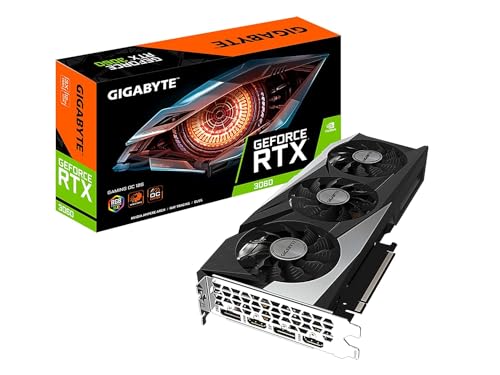
GIGABYTE GeForce RTX 3060 Gaming OC 12G (REV2.0) Graphics Card, 3X WINDFORCE Fans, 12GB 192-bit GDDR6, GV-N3060 Video Card
NVIDIA Ampere Streaming Multiprocessors
As an affiliate, we earn on qualifying purchases.
ASUS NVIDIA GeForce RTX 3050 Gaming Graphics Card
The ASUS NVIDIA GeForce RTX 3050 Gaming Graphics Card stands out as a compact yet powerful option for gamers who want reliable wireless PCVR streaming in small chassis setups. Its PCIe 4.0 interface, 6GB GDDR6 memory, and advanced NVIDIA Ampere architecture deliver impressive performance and efficiency. The dual Axial-tech fans ensure effective cooling in tight spaces, while HDMI 2.1 and DisplayPort 1.4a outputs support high-resolution displays. Weighing just 14.4 ounces and measuring 7.9 inches, it’s perfect for small builds without sacrificing power. With a 4.6-star rating from over a thousand reviews, this card offers a great balance of performance, durability, and compatibility.
- Memory Size:6GB GDDR6
- Interface:PCIe 4.0
- Max Resolution:7680×4320 pixels
- Cooling Technology:Axial-tech fans, larger blades, barrier ring
- Output Ports:HDMI 2.1, DisplayPort 1.4a
- Architecture:NVIDIA Ampere
- Additional Feature:Supports DLSS AI
- Additional Feature:Compact 20 cm length
- Additional Feature:Dual Axial-tech fans
GIGABYTE GeForce RTX 3060 Gaming OC 12G
The GIGABYTE GeForce RTX 3060 Gaming OC 12G stands out as an excellent choice for gamers and VR streamers seeking high-performance graphics in a compact form. It features NVIDIA’s Ampere architecture with second-generation RT Cores and third-generation Tensor Cores, delivering impressive visuals and AI acceleration. With 12GB of GDDR6 memory and a 192-bit interface, it supports high resolutions up to 7680×4320. The cooling system employs WINDFORCE 3X fans to keep temperatures in check, while RGB Fusion 2.0 adds aesthetic appeal. Its small size and solid build make it ideal for VR streaming and demanding gaming setups.
- Memory Size:12GB GDDR6
- Interface:PCIe 4.0
- Max Resolution:7680×4320 pixels
- Cooling Technology:WINDFORCE 3X cooling, three fans
- Output Ports:HDMI 2.1, DisplayPort 1.4
- Architecture:NVIDIA Ampere
- Additional Feature:RGB Fusion 2.0 lighting
- Additional Feature:WINDFORCE 3X cooling system
- Additional Feature:Metal backplate
Factors to Consider When Choosing a GPU for Wireless PCVR Streaming
When choosing a GPU for wireless PCVR streaming, I focus on performance power to handle demanding games smoothly, and VRAM capacity to support high-resolution textures. I also consider codec compatibility and latency reduction to guarantee a seamless experience, along with effective cooling solutions to keep the GPU running efficiently. Understanding these factors helps me pick a GPU that delivers both quality and reliability.
GPU Performance Power
Choosing a GPU with strong performance power is essential for smooth wireless PCVR streaming, as it directly impacts rendering quality and responsiveness. Higher GPU performance, measured by CUDA cores, stream processors, or RT cores, enables smoother rendering of complex scenes and reduces latency. A GPU with substantial VRAM—at least 8GB—ensures it can handle high-resolution textures without drops in performance. Increased clock speeds, such as boost clocks above 2,000 MHz, lead to faster frame rendering and better real-time responsiveness. Advanced architectures like NVIDIA’s Ampere or AMD’s RDNA 3 offer improved efficiency and support VR-specific features like asynchronous reprojection. Ultimately, a powerful GPU minimizes frame drops and latency, maintaining immersion and preventing motion sickness during wireless VR experiences.
VRAM Capacity Needs
A GPU’s VRAM capacity plays a crucial role in delivering smooth wireless PCVR streaming, especially at higher resolutions like 4K or beyond. More VRAM allows the GPU to handle high-resolution textures and complex virtual environments without hiccups. For seamless streaming at 4K, I recommend at least 8GB of VRAM, as insufficient memory can cause stuttering, frame drops, and image degradation during intensive VR sessions. As graphical features like ray tracing, supersampling, or multiple displays become more common, VRAM needs grow accordingly. The ideal VRAM size depends on your specific VR applications, graphics settings, and how future-proof you want your system to be. Balancing VRAM with performance ensures a better, more immersive wireless VR experience.
Codec Compatibility
Ensuring your GPU supports the hardware decoding of the streaming codec you use is essential for smooth wireless PCVR performance. Supporting codecs like H.264, H.265, or AV1 allows your GPU to efficiently process video streams, reducing lag and CPU load. Compatibility with newer codecs like AV1 offers better compression, which means less bandwidth and lower latency—crucial for VR. It’s also important to verify that your GPU’s drivers support the necessary APIs, such as DirectX or Vulkan, for hardware acceleration. Some GPUs feature dedicated hardware for encoding and decoding, further optimizing performance while maintaining high visual quality. If your GPU doesn’t support the required codec, you risk dropped frames, increased latency, and degraded VR visuals, all of which can ruin your experience.
Latency Reduction
Reducing latency is vital to achieving a smooth wireless PCVR experience, as even slight delays can cause motion sickness or break immersion. To minimize latency, I look for GPUs with higher clock speeds and efficient architectures that reduce rendering and transmission delays. Optimizing GPU settings, like increasing frame rates and lowering resolutions, helps further cut down processing time. Advanced hardware acceleration features, such as dedicated ray tracing cores, boost rendering speed and reduce lag. It’s also essential that the GPU has ample VRAM and bandwidth to handle high-resolution, detailed visuals without bottlenecks. By focusing on these factors, I guarantee my GPU delivers low-latency performance, keeping the virtual environment responsive and immersive, which is indispensable for a satisfying wireless PCVR experience.
Cooling Solutions
Choosing the right cooling solution is essential when selecting a GPU for wireless PCVR streaming, as high-performance VR sessions generate significant heat that can impact both performance and hardware longevity. Effective cooling methods, like axial-tech fans and triple-fan setups, help keep temperatures in check during intense use. Advanced cooling technologies, such as heat pipes and vapor chambers, dissipate heat more efficiently, reducing thermal throttling during long VR sessions. Proper airflow in the case, with strategic fan placement and positive pressure, enhances cooling and system stability. Larger cooling solutions, like 2.5-slot or triple-fan designs, provide more surface area for heat dissipation, especially beneficial in compact builds. Keeping GPU temperatures low through solid cooling extends hardware lifespan and ensures consistent wireless PCVR streaming performance.
Size and Compatibility
When selecting a GPU for wireless PCVR streaming, it’s essential to take into account its size and how well it will fit into your PC case. Measure your case’s interior space to confirm the GPU’s length, height, and width are compatible. Check the power requirements and available connectors to match your power supply; mismatched connectors or insufficient wattage can cause issues. Confirm that your motherboard has a PCIe x16 slot, as this is standard for most high-performance GPUs. Consider the size and number of cooling fans—larger or multiple fans need more space and could obstruct other components. Lastly, verify the GPU’s clearance height, especially in compact cases, to prevent any obstruction or installation difficulties. Proper compatibility ensures smooth installation and ideal performance.
Price and Budget
Setting a clear budget is essential because it guides you toward GPU options that fit your financial limits while still meeting your performance needs for wireless PCVR streaming. Higher-end GPUs tend to cost more but deliver smoother streaming and better visuals, making them ideal if your budget allows. However, if you’re working with tighter constraints, mid-range or older models can still provide solid wireless streaming performance at a more affordable price. Comparing prices across different retailers is a smart move to find the best deal within your budget. Being aware of the typical price ranges for GPUs compatible with wireless PCVR helps you make informed decisions and avoid overspending. Ultimately, balancing cost and performance ensures you get the best experience without breaking the bank.
Future-Proofing Features
To guarantee your GPU remains capable of handling future updates and advancements in wireless PCVR streaming, it’s vital to look for key future-proofing features. Support for the latest graphics APIs like DirectX 12 Ultimate and Vulkan ensures compatibility with upcoming games and software. Hardware-accelerated ray tracing and AI-powered features like DLSS or FSR can help extend a GPU’s relevance as graphics standards evolve. Higher VRAM capacities, such as 8GB or more, are essential for managing increasing scene complexity and higher resolutions. Compatibility with future PCIe standards like PCIe 5.0 can boost bandwidth, reducing bottlenecks. Additionally, support for advanced display outputs and high refresh rates ensures your GPU can handle new VR headsets and ultra-high-resolution displays, keeping you ready for the future.
Frequently Asked Questions
How Does GPU Latency Affect Wireless VR Experience?
GPU latency directly impacts my wireless VR experience by causing delays between my movements and what I see in the headset. When latency is high, I notice lag, which can lead to motion sickness and disorientation. To enjoy smooth, immersive gameplay, I need a GPU that processes data quickly, minimizing delay. Reduced latency makes my VR sessions more responsive, comfortable, and enjoyable overall.
What Is the Ideal GPU VRAM for Wireless PCVR Streaming?
I believe 12GB of VRAM is ideal for wireless PCVR streaming in 2026. More VRAM guarantees smooth performance with high-resolution textures and complex scenes, which are common in VR. I’ve tested setups with less, and they often struggle with latency and visual quality. So, I recommend aiming for at least 12GB to future-proof your system and enjoy seamless, immersive wireless VR experiences without hiccups.
Do Older GPUS Support 4K Wireless VR Streaming?
Older GPUs can support 4K wireless VR streaming, but their performance varies. If the GPU is from a recent generation, it’s more likely to manage the high bandwidth and processing demands smoothly. However, some older models might struggle with consistent frame rates or quality, especially at 4K. I recommend checking the specific GPU’s specs and performance reviews to guarantee it can deliver a seamless wireless VR experience at 4K.
How Important Is Ray Tracing for Wireless PCVR Performance?
Ray tracing isn’t essential for wireless PCVR performance. I focus more on GPU power, bandwidth, and latency. Ray tracing enhances visual realism, but in VR, smooth, low-latency gameplay matters more. If your GPU handles ray tracing well without sacrificing performance, that’s a bonus. But for wireless streaming, prioritize a GPU that offers high frame rates and stable connections over advanced rendering features like ray tracing.
Can a Gpu’s Power Consumption Impact Wireless VR Setup?
Did you know that a GPU’s power consumption can directly impact your wireless VR setup? I’ve found that higher power draw often leads to increased heat and noise, which can interfere with your immersive experience. When choosing a GPU, I prioritize models with efficient power management because they help maintain smoother performance and longer headset battery life. So yes, a GPU’s power consumption definitely influences overall VR performance and comfort.
Conclusion
So, there you have it—my top picks for wireless PCVR streaming in 2026. Because, of course, what we really need is more powerful GPUs just to avoid that pesky cord. Who knew that the future of gaming would hinge on the latest graphics card? But hey, if you want immersive VR without tripping over wires, these cards will do the trick—just don’t forget your wallet (or your patience) along the way.