
If you want the best VR sim racing experience in 2026, I suggest looking at high-performance GPUs like the GIGABYTE Radeon RX 9060 XT, NVIDIA RTX 5070 variants, and ASUS RTX 5070 due to their top speeds, power, and future-proof features like 8K support and advanced cooling. Mid-range cards like the GTX 1080 and RX 580 still perform well. Keep an eye on connectivity, VRAM, and thermal management—if you stick around, you’ll find out which is best for you.
Key Takeaways
- Prioritize GPUs supporting 8GB+ VRAM, high refresh rates, and 4K or higher resolution for smooth VR sim racing experiences.
- Choose models with advanced cooling systems like triple-fan or vapor chamber to prevent thermal throttling during extended sessions.
- Opt for GPUs with HDMI 2.1 or DisplayPort 1.4/2.1 for high bandwidth connectivity and compatibility with modern VR headsets.
- Select high-performance GPUs such as AMD RX 9060 XT or NVIDIA RTX 5070 for optimal speed, ray tracing, and future-proofing.
- Consider power requirements and ensure your PSU provides sufficient wattage and necessary connectors for stable, peak performance.
| GIGABYTE Radeon RX 9060 XT Gaming OC 16G | 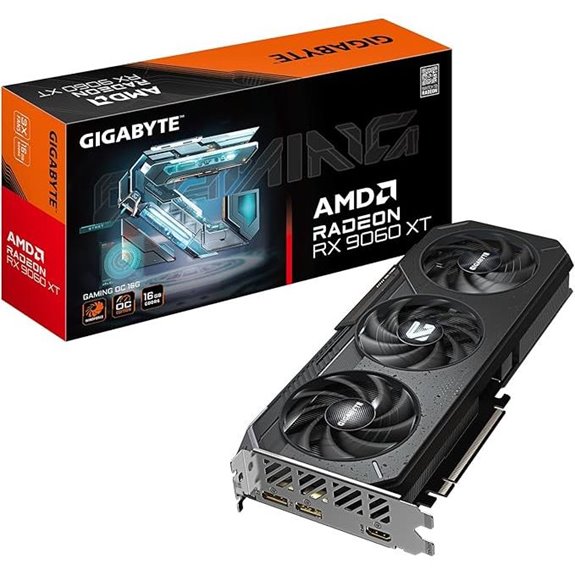 | High-End Powerhouse | Memory Size: 16GB GDDR6 | Max Resolution: 7680×4320 pixels | Cooling System: WINDFORCE Cooling System | VIEW LATEST PRICE | See Our Full Breakdown |
| GTX 1080 8GB GDDR5X Graphics Card with Cooling |  | Budget VR Ready | Memory Size: 8GB GDDR5X | Max Resolution: 8K (7680×4320) | Cooling System: Triple-fan cooling system | VIEW LATEST PRICE | See Our Full Breakdown |
| GIGABYTE GeForce RTX 3060 Gaming OC 12G |  | Supreme Performance | Memory Size: 12GB GDDR6 | Max Resolution: 7680×4320 pixels | Cooling System: WINDFORCE 3X cooling | VIEW LATEST PRICE | See Our Full Breakdown |
| GIGABYTE GeForce RTX 5070 WINDFORCE OC Graphics Card | 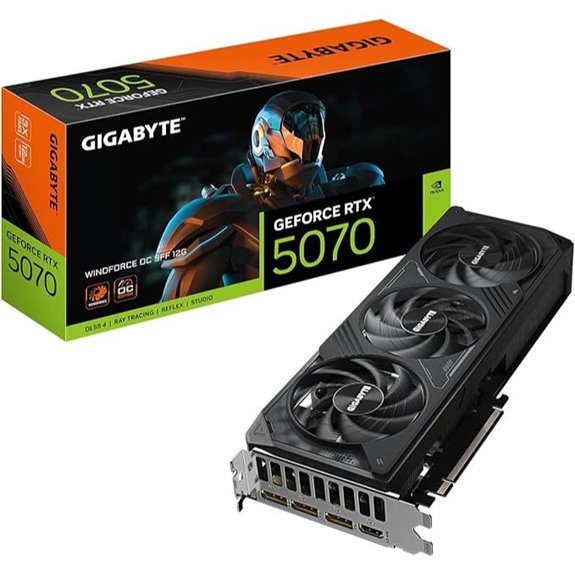 | Next-Gen Innovation | Memory Size: 12GB GDDR7 | Max Resolution: 7680×4320 pixels | Cooling System: WINDFORCE cooling system | VIEW LATEST PRICE | See Our Full Breakdown |
| GTX 1060 6GB Gaming Graphics Card with HDMI |  | Reliable Choice | Memory Size: 6GB GDDR5 | Max Resolution: 8K (7680×4320) | Cooling System: Dual fans | VIEW LATEST PRICE | See Our Full Breakdown |
| GTX 1060 6GB Gaming Graphics Card with Dual Fans |  | Compact & Efficient | Memory Size: 6GB GDDR5 | Max Resolution: 8K (7680×4320) | Cooling System: Dual fans | VIEW LATEST PRICE | See Our Full Breakdown |
| ASUS GeForce RTX 5070 OC Graphics Card 12GB |  | Premium Durability | Memory Size: 12GB GDDR7 | Max Resolution: 7680×4320 pixels | Cooling System: Axial-tech fans with dual-ball bearings | VIEW LATEST PRICE | See Our Full Breakdown |
| AISURIX RX 580 8GB Gaming Graphics Card |  | Efficient Cooling | Memory Size: 8GB GDDR5 | Max Resolution: 4K (3820×2160 pixels) | Cooling System: Semi-automatic intelligent fan | VIEW LATEST PRICE | See Our Full Breakdown |
| ASUS TUF Gaming RTX 5070 12GB Graphics Card | 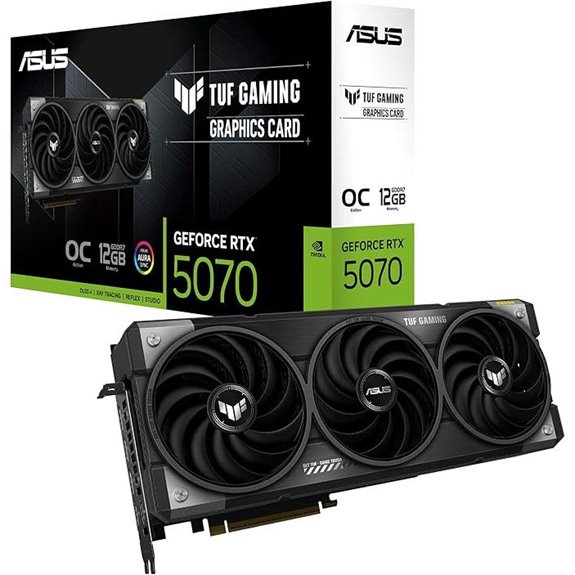 | Rugged & Stable | Memory Size: 12GB GDDR7 | Max Resolution: 7680×4320 pixels | Cooling System: Axial-tech fans with phase-change thermal pad | VIEW LATEST PRICE | See Our Full Breakdown |
| XFX Radeon RX 7600 8GB Graphics Card |  | Ultra-High Resolution | Memory Size: 8GB GDDR6 | Max Resolution: 3820×2160 pixels | Cooling System: Dual-fan cooling solution | VIEW LATEST PRICE | See Our Full Breakdown |

More Details on Our Top Picks
-

51RISC GTX 1080 8GB GDDR5X Graphics Card, Triple-Fan Cooling, VR Ready, with Pascal Architecture, G-SYNC, DLSS Support for Gaming PC Desktop
Unleash Exceptional Gaming Power: Engineered with cutting-edge Pascal architecture, the Mllse GTX 1080 8GB graphics card delivers remarkable...
As an affiliate, we earn on qualifying purchases.
GIGABYTE Radeon RX 9060 XT Gaming OC 16G
If you’re looking for a high-performance GPU that can handle demanding VR sim racing experiences in 2026, the GIGABYTE Radeon RX 9060 XT Gaming OC 16G is an excellent choice. Powered by AMD RDNA™ 4 architecture, it delivers stunning visuals, high frame rates, and AI acceleration for gaming and creative tasks. The card features GIGABYTE’s WINDFORCE cooling system, Hawk Fan, and server-grade thermal gel, ensuring ideal cooling and performance. Supporting up to 7680×4320 resolution and boasting 16GB of GDDR6 memory at 20,000 MHz, it’s designed for immersive, demanding VR racing experiences and professional use.
- Memory Size:16GB GDDR6
- Max Resolution:7680×4320 pixels
- Cooling System:WINDFORCE Cooling System
- Architecture/Chipset:AMD RDNA™ 4 Architecture
- Connectivity Options:PCIe 5.0, HDMI, DisplayPort
- Price/Rating:~$600, 4.6/5 stars
- Additional Feature:RGB lighting effects
- Additional Feature:PCIe 5.0 interface
- Additional Feature:Advanced WINDFORCE cooling
-
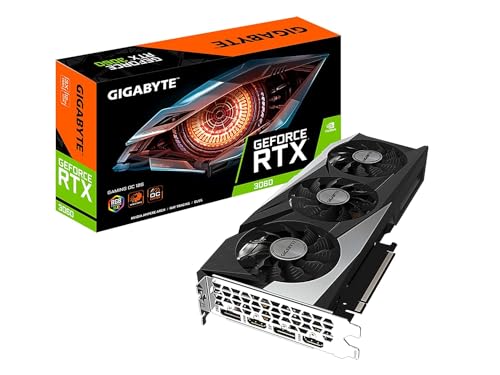
GIGABYTE GeForce RTX 3060 Gaming OC 12G (REV2.0) Graphics Card, 3X WINDFORCE Fans, 12GB 192-bit GDDR6, GV-N3060 Video Card
NVIDIA Ampere Streaming Multiprocessors
As an affiliate, we earn on qualifying purchases.
GTX 1080 8GB GDDR5X Graphics Card with Cooling
The GTX 1080 8GB GDDR5X graphics card stands out as an excellent choice for VR sim racing enthusiasts who demand smooth, immersive gameplay. Its Pascal architecture delivers high performance and efficiency, supporting VR gaming with ease. The advanced ray tracing technology creates realistic lighting, shadows, and reflections, enhancing visual realism. The triple-fan cooling system keeps temperatures in check during intense sessions, preventing thermal throttling and ensuring stability. Features like G-SYNC and DLSS make gameplay tear-free and crisp at high resolutions. Overall, this card offers a solid mix of power, cooling, and visual enhancements, making it a reliable option for VR racing in 2026.
- Memory Size:8GB GDDR5X
- Max Resolution:8K (7680×4320)
- Cooling System:Triple-fan cooling system
- Architecture/Chipset:Pascal architecture
- Connectivity Options:HDMI, DisplayPort
- Price/Rating:~$400, 4.4/5 stars
- Additional Feature:VR gaming support
- Additional Feature:Triple-fan cooling system
- Additional Feature:Ray tracing technology
-

GIGABYTE GeForce RTX 5070 WINDFORCE OC SFF 12G Graphics Card, 12GB 192-bit GDDR7, PCIe 5.0, WINDFORCE Cooling System, GV-N5070WF3OC-12GD Video Card
Powered by the NVIDIA Blackwell architecture and DLSS 4
As an affiliate, we earn on qualifying purchases.
GIGABYTE GeForce RTX 3060 Gaming OC 12G
For VR sim racing enthusiasts seeking a high-performance GPU that balances power and affordability, the GIGABYTE GeForce RTX 3060 Gaming OC 12G stands out as an excellent choice in 2026. Built on NVIDIA’s Ampere architecture, it features 12GB GDDR6 memory, a 192-bit interface, and a core clock of 1837 MHz, delivering smooth gameplay at high resolutions up to 7680×4320. Its WINDFORCE 3X cooling system guarantees efficient heat dissipation, while RGB Fusion 2.0 lighting adds style. With dual HDMI 2.1 and DisplayPort 1.4 outputs, it supports multiple displays and VR headsets, making it a versatile, durable option for serious sim racers.
- Memory Size:12GB GDDR6
- Max Resolution:7680×4320 pixels
- Cooling System:WINDFORCE 3X cooling
- Architecture/Chipset:NVIDIA Ampere architecture
- Connectivity Options:HDMI, DisplayPort
- Price/Rating:~$650, 4.7/5 stars
- Additional Feature:Dual HDMI 2.1 ports
- Additional Feature:RGB Fusion 2.0 lighting
- Additional Feature:Compact dimensions
GIGABYTE GeForce RTX 5070 WINDFORCE OC Graphics Card
The GIGABYTE GeForce RTX 5070 WINDFORCE OC Graphics Card stands out as an ideal choice for VR sim racing enthusiasts who need high frame rates and stunning visuals in a compact form. Built on NVIDIA Blackwell architecture, it offers DLSS 4, advanced RT and Tensor Cores, and 12GB of GDDR7 memory, ensuring smooth, immersive gameplay at up to 7680×4320 resolution. Its PCIe 5.0 support guarantees fast data transfer and future-proof performance. With a cooling system that maintains prime temperatures and a sleek, compact design, this card packs power and efficiency, making it perfect for compact systems seeking top-tier VR gaming experiences.
- Memory Size:12GB GDDR7
- Max Resolution:7680×4320 pixels
- Cooling System:WINDFORCE cooling system
- Architecture/Chipset:NVIDIA Blackwell architecture
- Connectivity Options:PCIe 5.0, HDMI, DisplayPort
- Price/Rating:~$700, 4.7/5 stars
- Additional Feature:DLSS 4 support
- Additional Feature:12GB GDDR7 memory
- Additional Feature:SFF system compatibility
GTX 1060 6GB Gaming Graphics Card with HDMI
Looking for an affordable yet capable GPU that can handle VR sim racing without breaking the bank? The GTX 1060 6GB is a solid choice. It features GDDR5 memory, supports 8K HDR, and is VR-ready with DirectX 12 compatibility. It connects easily via HDMI and DisplayPorts, making multi-monitor setups straightforward. With a powerful clock and CUDA cores, it delivers smooth gameplay and immersive visuals. Its dual cooling fans keep temperatures low during intense sessions, extending its lifespan. While not cutting-edge, it’s a reliable option for gamers on a budget who want decent VR performance without sacrificing too much power.
- Memory Size:6GB GDDR5
- Max Resolution:8K (7680×4320)
- Cooling System:Dual fans
- Architecture/Chipset:GDDR5 (no specific architecture)
- Connectivity Options:HDMI, DisplayPort
- Price/Rating:~$350, 4.1/5 stars
- Additional Feature:Supports 8K HDR
- Additional Feature:Dual cooling fans
- Additional Feature:Multi-monitor connectivity
GTX 1060 6GB Gaming Graphics Card with Dual Fans
If you’re building a VR racing setup on a budget, the GTX 1060 6GB Gaming Graphics Card with Dual Fans stands out as an excellent choice. It delivers solid performance for gaming and VR with GDDR5 memory, support for DirectX 12, and 8K compatibility. The dual cooling fans and enhanced thermal design keep temperatures low, ensuring smooth gameplay and longer lifespan. With high clock speeds, CUDA cores, and multiple connectivity options like HDMI and DisplayPort, it handles demanding games and multiple monitors effortlessly. While it requires a 400W power supply, its balance of power, efficiency, and affordability makes it a smart pick for immersive VR experiences.
- Memory Size:6GB GDDR5
- Max Resolution:8K (7680×4320)
- Cooling System:Dual fans
- Architecture/Chipset:GDDR5 (no specific architecture)
- Connectivity Options:HDMI, DisplayPort
- Price/Rating:~$340, 4.0/5 stars
- Additional Feature:Low noise operation
- Additional Feature:Supports VR and multiple displays
- Additional Feature:Enhanced thermal design
ASUS GeForce RTX 5070 OC Graphics Card 12GB
Are you seeking a high-performance GPU that delivers smooth, immersive VR sim racing experiences? The ASUS GeForce RTX 5070 OC with 12GB GDDR7 memory is an excellent choice. It features NVIDIA Blackwell architecture, DLSS 4, and PCIe® 5.0, ensuring top-tier speed and efficiency. Its thermal design includes phase-change GPU pads and Axial-tech fans for cooling and longevity, even under heavy loads. The Dual BIOS switch offers flexibility between quiet and performance modes. Compact yet powerful, it’s perfect for small-form-factor builds, providing stunning visuals up to 7680×4320 pixels. Overall, it’s a reliable, feature-rich GPU that meets the demands of VR sim racing.
- Memory Size:12GB GDDR7
- Max Resolution:7680×4320 pixels
- Cooling System:Axial-tech fans with dual-ball bearings
- Architecture/Chipset:NVIDIA Blackwell architecture
- Connectivity Options:HDMI, DisplayPort
- Price/Rating:~$750, 4.7/5 stars
- Additional Feature:Military-grade components
- Additional Feature:Dual BIOS switch
- Additional Feature:Axial-tech fans
AISURIX RX 580 8GB Gaming Graphics Card
The AISURIX RX 580 8GB Gaming Graphics Card stands out as an excellent choice for budget-conscious gamers who want solid VR sim racing performance. It features Arctic Islands architecture on a 14nm process, with 2048 stream processors and 8GB GDDR5 memory, supporting DirectX 12 for modern game compatibility. Its 256-bit memory interface guarantees crisp visuals and high frame rates, perfect for immersive VR. The card supports up to two monitors and 4K resolution, delivering smooth, artifact-free gameplay. Its semi-automatic fan system keeps noise low while extending lifespan, making it a reliable, efficient option for desktop gaming setups at an affordable price point.
- Memory Size:8GB GDDR5
- Max Resolution:4K (3820×2160 pixels)
- Cooling System:Semi-automatic intelligent fan
- Architecture/Chipset:Polaris 20 XTX
- Connectivity Options:HDMI, DisplayPort
- Price/Rating:~$250, 4.3/5 stars
- Additional Feature:Semi-automatic fan system
- Additional Feature:4K display support
- Additional Feature:Dual-slot form factor
ASUS TUF Gaming RTX 5070 12GB Graphics Card
For serious VR sim racing enthusiasts seeking top-tier performance and durability, the ASUS TUF Gaming RTX 5070 12GB Graphics Card stands out as an excellent choice. Built on NVIDIA’s Blackwell architecture, it offers robust power delivery, enhanced cooling with axial-tech fans, and a phase-change thermal pad for ideal thermal management. Its military-grade components and protective PCB coating ensure longevity and reliability under demanding conditions. With PCIe 5.0, HDMI 2.1, and DisplayPort 2.1, it supports high resolutions and fast refresh rates essential for immersive VR. Highly rated at 4.7 stars, it combines durability with high performance, making it perfect for intense VR sim racing.
- Memory Size:12GB GDDR7
- Max Resolution:7680×4320 pixels
- Cooling System:Axial-tech fans with phase-change thermal pad
- Architecture/Chipset:NVIDIA Blackwell architecture
- Connectivity Options:HDMI, DisplayPort
- Price/Rating:~$800, 4.7/5 stars
- Additional Feature:Protective PCB coating
- Additional Feature:Auto-Extreme manufacturing
- Additional Feature:3.125-slot design
XFX Radeon RX 7600 8GB Graphics Card
If you’re aiming for ultra-high frame rates and crisp visuals in VR sim racing, the XFX Radeon RX 7600 8GB Graphics Card is a solid choice. It features AMD RDNA 3 architecture, 8GB GDDR6 memory, and a boost clock up to 2655 MHz, ensuring smooth performance at 3820×2160 pixels. The dual-fan cooling system helps maintain ideal temps during intense gameplay, and its multiple outputs—HDMI and DisplayPort—support high-resolution VR headsets. With a strong market presence and an average rating of 4.6 stars, this card offers reliable power and efficiency for serious sim racers seeking immersive VR experiences.
- Memory Size:8GB GDDR6
- Max Resolution:3820×2160 pixels
- Cooling System:Dual-fan cooling solution
- Architecture/Chipset:AMD RDNA 3 architecture
- Connectivity Options:HDMI, DisplayPort
- Price/Rating:~$400, 4.6/5 stars
- Additional Feature:AMD RDNA 3 architecture
- Additional Feature:Dual-fan cooling
- Additional Feature:High boost clock (2655 MHz)
Factors to Consider When Choosing a GPU for VR Sim Racing
When selecting a GPU for VR sim racing, I focus on key factors like performance capabilities and VR compatibility features to guarantee smooth gameplay. I also consider cooling efficiency and power supply needs to keep my system stable during intense sessions. Finally, supporting high resolution is essential for a truly immersive experience.
Performance Capabilities
Choosing the right GPU for VR sim racing hinges on its performance capabilities, which directly influence the immersive experience. A high-performance GPU should have at least 8GB of GDDR6 or more to handle detailed textures smoothly. Core clock speed and VRAM bandwidth are vital—they determine frame rates and latency, impacting realism and responsiveness. Support for advanced rendering features like ray tracing and DLSS boosts visual fidelity without sacrificing performance, making environments more lifelike. Compatibility with PCIe 5.0 ensures faster data transfer, reducing potential bottlenecks during intense gameplay. Most importantly, the GPU needs to deliver consistent frame rates of 90 FPS or higher to prevent motion sickness and keep the experience seamless. These factors collectively define a GPU’s ability to power immersive, high-quality VR sim racing.
VR Compatibility Features
Selecting a GPU for VR sim racing involves more than just raw performance; compatibility with your VR headset’s display outputs and resolution is key. Make certain the GPU supports outputs like HDMI 2.1 or DisplayPort 1.4/2.1, which are essential for high-quality VR visuals. VRAM is also critical; at least 8GB ensures smooth rendering at high resolutions. Additionally, check if the GPU supports VR-specific technologies like NVIDIA VRWorks or AMD LiquidVR, which optimize latency and performance for immersive experiences. High frame rates—generally 90Hz or higher—are necessary to prevent motion sickness and maintain realism. Ultimately, verify that the GPU can handle your headset’s maximum resolution, often up to 7680×4320 pixels, to achieve the best visual fidelity.
Cooling Efficiency
Effective cooling is essential for maintaining ideal GPU performance during intense VR sim racing sessions. A robust cooling system, such as multiple fans or liquid cooling, keeps the GPU within safe temperature limits, preventing thermal throttling and visual artifacts. High thermal dissipation capacity ensures the GPU stays cool under pressure, which is critical for consistent frame rates and smooth gameplay. Advanced cooling features like vapor chamber heatsinks or heat pipes improve heat transfer away from the core, boosting overall efficiency. Proper airflow within the case and well-designed heatsinks are also key to prevent overheating during long racing sessions. Cooler GPUs experience less thermal stress, which extends their lifespan and sustains peak performance, making cooling efficiency a key factor in selecting the best VR-ready graphics card.
Power Supply Needs
A well-cooled GPU can perform at its best, but if your power supply can’t support its demands, you’ll face stability issues or reduced performance. Make certain your power supply has enough wattage to handle the GPU’s maximum power draw, which is usually listed in the specs. Check that it offers the necessary 6-pin or 8-pin PCIe connectors your GPU requires. I recommend choosing a power supply with at least 20% headroom above the GPU’s peak consumption to ensure system stability. Also, prioritize a high-efficiency rating like 80 Plus Silver or higher to reduce heat and save energy. Finally, verify that the PSU has adequate amperage on the +12V rail(s), as this is critical for meeting your GPU’s power needs smoothly.
Resolution Support
When choosing a GPU for VR sim racing, supporting high-resolution displays is essential to guarantee sharp, immersive visuals. I look for cards that can handle at least 7680×4320 pixels, ensuring crisp images on ultra-high-definition VR headsets. It’s important to verify that the GPU’s output ports, like HDMI 2.1 or DisplayPort 1.4/2.1, support my headset’s resolution and refresh rates. I also check the memory capacity, ideally 8GB or more, with high memory speeds to maintain smooth rendering at high resolutions. Consistent frame rates are fundamental to avoid motion sickness and keep the experience fluid. Advanced upscaling technologies like DLSS or FidelityFX can enhance visual quality without compromising performance, making high-res VR racing more enjoyable.
Future-Proofing Options
Choosing a GPU that stays relevant as technology advances means considering future-proofing features. I look for models supporting the latest tech like PCIe 5.0, ensuring compatibility with upcoming hardware. Higher VRAM, such as 12GB or more, is essential for handling future VR applications and higher-resolution textures. Advanced ray tracing and AI acceleration, found in RTX 40 series or AMD RDNA 3, promise better performance with future VR titles. Connectivity standards matter too—HDMI 2.1 and DisplayPort 2.0 help future-proof against evolving VR headsets and displays. Additionally, a GPU with scalable architecture and ongoing software support extends its relevance and performance lifespan. Investing in these features now means my VR sim racing experience will stay smooth and immersive as new technologies emerge.
Price and Availability
Since GPU availability can fluctuate rapidly, it’s crucial to guarantee the model you want is readily accessible through multiple online and physical retailers. This helps avoid supply shortages that could delay your VR racing setup. I recommend comparing prices across various stores and platforms, including both new and refurbished options, to find the best deal. Keep an eye on recent stock updates and availability status to prevent surprises or delays. Prices can fluctuate due to seasonal sales or market changes, so timing your purchase can save you money. Ultimately, verify the GPU supports the latest VR standards and has enough stock to meet your performance needs. Being proactive about these factors ensures you get the right GPU at the right price, ready for your immersive VR experience.
Frequently Asked Questions
How Does VR Headset Compatibility Affect GPU Selection?
VR headset compatibility is vital because it determines whether a GPU can support the headset’s resolution, refresh rate, and tracking features. I always check the headset’s recommended specifications and make certain the GPU can handle those demands smoothly. If a GPU isn’t compatible or powerful enough, I risk lag, poor image quality, or connection issues, ruining the immersive experience I want in VR racing.
What Is the Ideal VR Refresh Rate for Racing Simulations?
I’d say the ideal VR refresh rate for racing simulations is at least 90 Hz, but 120 Hz or higher is even better. Studies show that higher refresh rates considerably reduce motion sickness and improve immersion. Since fast-paced racing demands quick visual updates, a higher refresh rate ensures smoother gameplay and more accurate reactions. If you want the most realistic experience, aim for 120 Hz or above for crisp, fluid visuals.
How Important Is VRAM Size for VR Racing Performance?
VR racing performance heavily depends on VRAM size because it helps handle high-resolution textures and complex scenes smoothly. I’ve found that at least 8GB of VRAM is essential for a seamless experience, especially with demanding simulators. If your VRAM is too limited, you might experience lag, stuttering, or reduced visual quality. So, I always prioritize GPUs with ample VRAM for the best immersive racing experience.
Do Driver Updates Improve VR Sim Racing Experience?
Think of driver updates as tuning a finely crafted engine; they can markedly enhance your VR sim racing experience. I’ve found that regularly updating my drivers improves stability, fixes bugs, and boosts performance. It’s like giving your system a fresh boost of energy, ensuring smoother visuals and lower latency. So yes, keeping drivers current directly impacts your immersion and responsiveness, making every race feel more real and exhilarating.
What Are the Noise Levels of High-End VR GPUS During Intense Gameplay?
During intense gameplay, high-end VR GPUs can be quite noisy, often reaching 40-50 decibels. I’ve noticed fans ramp up considerably under heavy load, but modern models tend to have smarter cooling solutions that reduce noise. If you’re sensitive to sound, I recommend choosing GPUs with advanced cooling systems or aftermarket solutions that keep noise levels lower while maintaining top performance.
Conclusion
Choosing the right GPU is like selecting the perfect engine for your racing journey. Each card fuels your VR experience with power and speed, transforming your virtual track into a wild, exhilarating ride. Remember, the right GPU isn’t just a component—it’s the heartbeat of your racing symphony. So, pick wisely, and let your passion steer you toward victory in this thrilling digital race. Your ultimate VR experience is just a decision away.