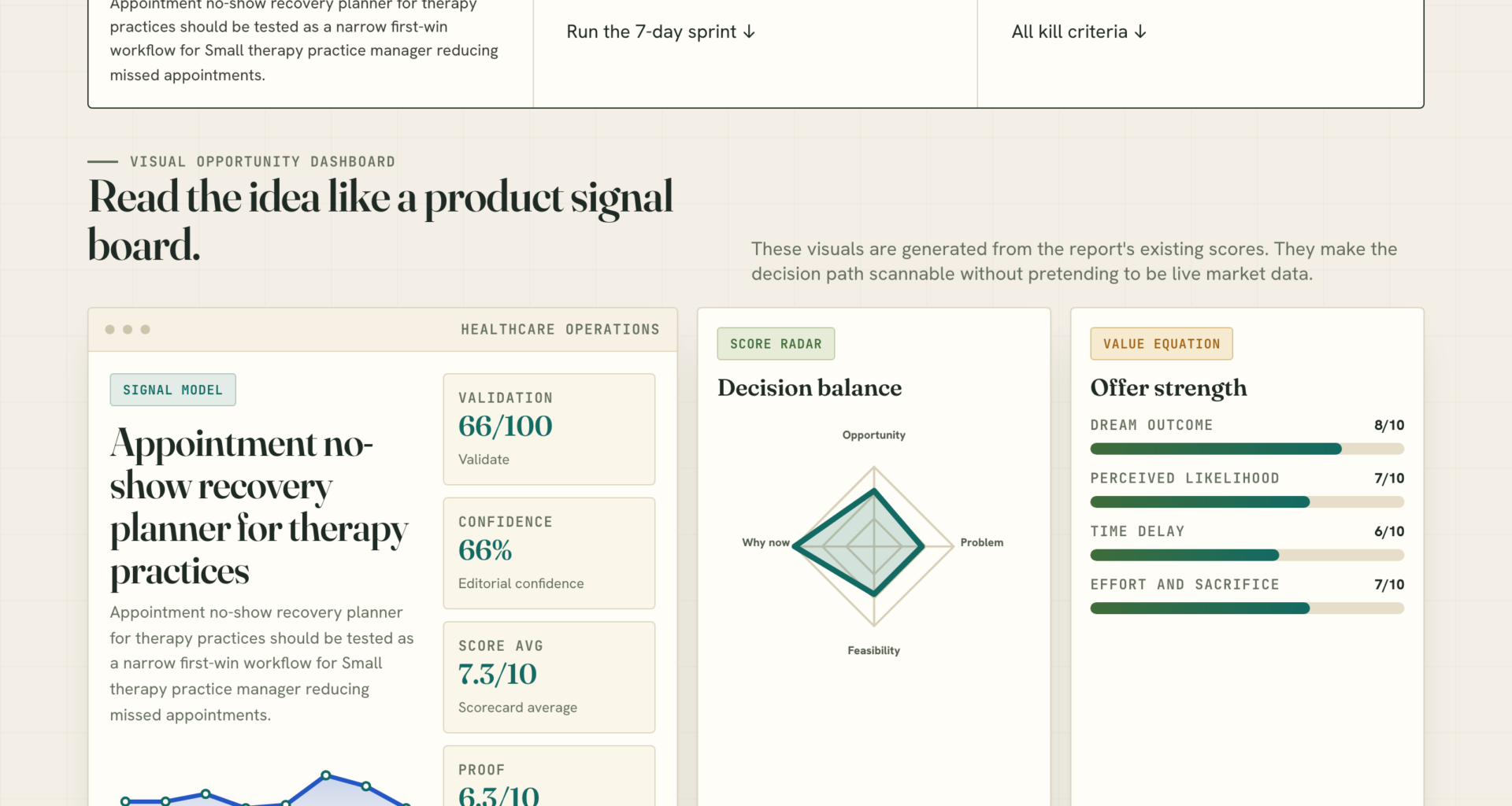

📊 Full opportunity report: Appointment no-show recovery planner for therapy practices on IdeaNavigator AI — validation score, market gap, and execution plan.

Get the latest gadgets delivered free — and shop member deals
- Fast, free delivery on millions of items
- Access to Prime Big Deal Days deals on October 6–7
- Prime Video, Amazon Music and more included
TL;DR
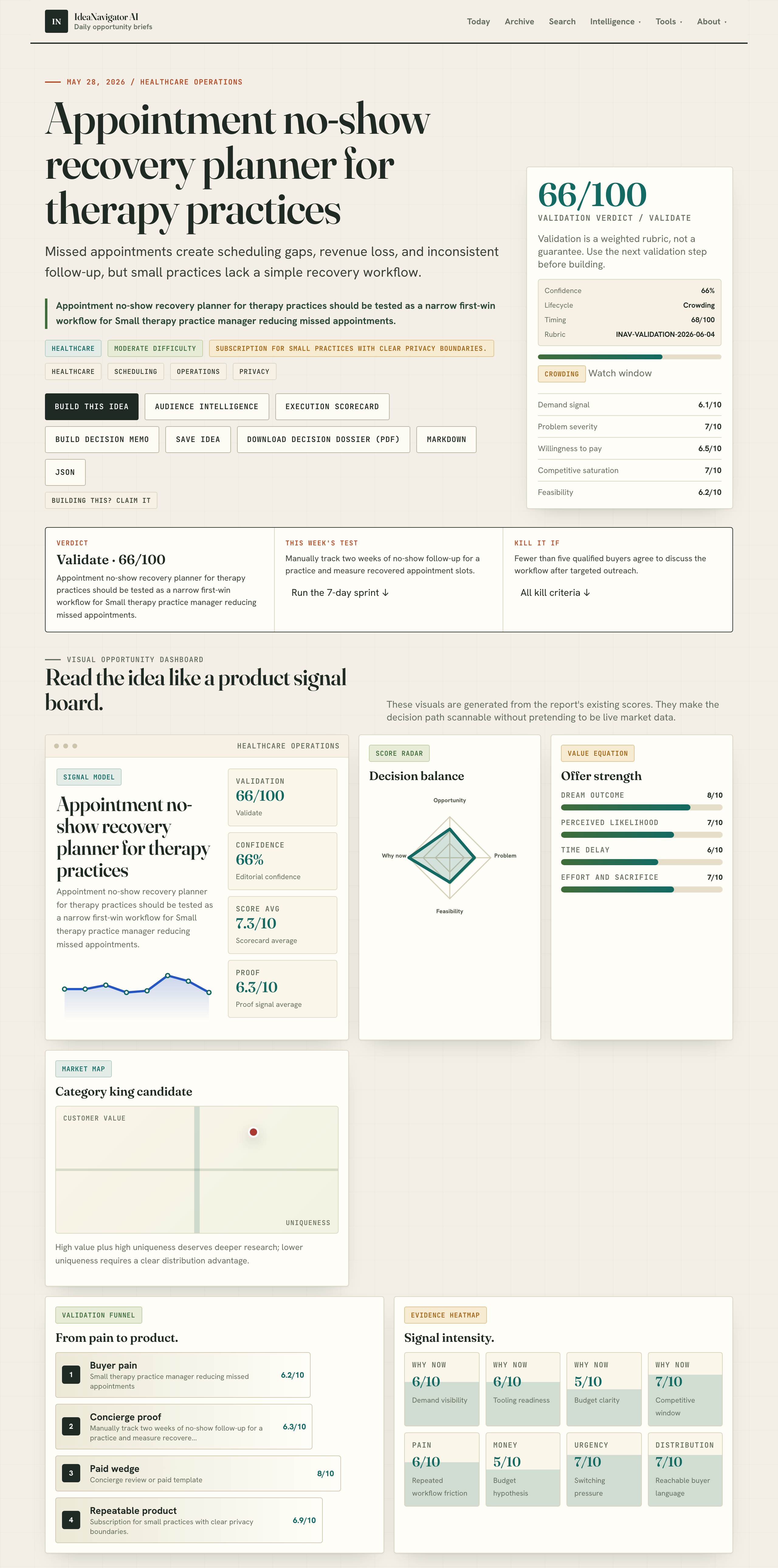
A new workflow tool designed to help small therapy practices recover missed appointments is in testing. It tracks no-shows, sends reminders, and logs follow-ups to boost appointment retention.
A new appointment no-show recovery planner tailored for small therapy practices is being tested as a workflow tool to reduce missed appointments and improve scheduling efficiency. The tool aims to help care teams manage no-shows without relying on complex clinical interventions, addressing a common operational challenge.
The proposed no-show recovery planner is a non-clinical, lightweight system that logs missed visits, tracks reminder attempts, records reschedule status, and provides outreach templates for follow-up. It is designed specifically for small therapy practices that lack dedicated operational tools for managing appointment gaps.
According to an anonymous researcher, the initial implementation involves manually tracking no-shows and follow-up efforts over a two-week period to measure the number of appointment slots recovered. The goal is to validate whether such a simple workflow can effectively reduce scheduling gaps and revenue loss caused by missed appointments.
The tool is intended to operate within privacy boundaries suitable for healthcare settings, with a subscription model targeting small practices seeking affordable operational support. It does not make clinical claims but focuses solely on appointment management and follow-up.
Operational Efficiency Gains for Small Therapy Practices
This development matters because missed appointments are a significant source of revenue loss and scheduling inefficiency for small therapy practices. By providing a straightforward, easy-to-implement recovery workflow, the tool could improve appointment adherence, optimize practice schedules, and reduce administrative burdens.
If successful, this approach could serve as a model for other healthcare providers seeking low-cost, non-clinical solutions to operational challenges, especially in settings with limited administrative resources.
appointment reminder system for therapy practices
As an affiliate, we earn on qualifying purchases.
As an affiliate, we earn on qualifying purchases.
Addressing a Common Practice Management Challenge
Missed appointments are a widespread issue in healthcare, leading to revenue loss and scheduling gaps. Small therapy practices often lack dedicated tools for managing no-shows, relying instead on manual follow-up, which is time-consuming and inconsistent.
Recent market interest has grown in operational tools that improve reminders and outreach without making clinical claims, especially as healthcare providers seek cost-effective solutions that respect patient privacy and workflow simplicity. The proposed no-show recovery planner responds directly to this need, with initial testing aimed at validating its effectiveness in real-world settings.
“The idea is to create a simple, non-clinical workflow that helps practices log no-shows and follow up efficiently. Early testing will show if this can recover missed appointments and improve overall scheduling.”
— an anonymous researcher
As an affiliate, we earn on qualifying purchases.
Effectiveness of the No-Show Recovery Workflow
It is not yet confirmed how effective the proposed workflow will be in practice. The validation process involves manual tracking over two weeks, but results are still pending. It remains unclear whether this simple approach will significantly reduce missed appointments or improve revenue recovery.
practice management software for small clinics
As an affiliate, we earn on qualifying purchases.
As an affiliate, we earn on qualifying purchases.
Next Steps in Validation and Potential Deployment
The next step is to complete the two-week manual tracking period, analyze the data on recovered appointment slots, and assess the workflow’s practicality. If results are positive, developers plan to refine the tool and consider broader deployment, possibly integrating it with existing practice management systems.
patient appointment follow-up templates
As an affiliate, we earn on qualifying purchases.
As an affiliate, we earn on qualifying purchases.
Key Questions
How does the no-show recovery planner work?
The tool logs missed appointments, tracks reminder attempts, notes rescheduling status, and provides outreach templates for follow-up, all designed to streamline recovery efforts.
Is this solution suitable for large practices?
Currently, the focus is on small practices. Larger practices may require more integrated or automated solutions, but this workflow could inform future developments.
Will patient privacy be protected?
Yes, the tool is designed with privacy boundaries suitable for healthcare settings, focusing solely on operational data without clinical details.
When will the tool be available for wider use?
If validation proves successful, developers plan to refine and potentially launch a subscription-based version within the next few months.
Source: IdeaNavigator AI
Fall Picks
fall essentials
As an affiliate, we earn on qualifying purchases.