If you’re looking for the best 130mm triplet APO refractors for astrophotography, I recommend models like the Explore Scientific FCD100 102mm, the SVBONY SV550 80mm F6 Triplet, and the Celestron Omni XLT 120. These offer exceptional optical quality, minimal aberrations, and portability for capturing stunning stellar images. Each excels in sharpness and contrast, perfect for lunar, planetary, and deep-sky shots. Keep exploring to discover which one suits your imaging needs best.
Listen free for 30 days with Audible
Thousands of audiobooks and originals — cancel anytime.
As an affiliate, we earn on qualifying purchases.
Key Takeaways
- High-quality 130mm triplet APO refractors feature ED glass and multi-layer coatings for sharp, color-accurate images ideal for astrophotography.
- Their apochromatic design minimizes chromatic aberration, delivering crisp stellar and planetary detail across the entire field.
- Portable construction with lightweight materials ensures easy transport and quick setup for spontaneous astrophotography sessions.
- Compatibility with field flatteners, focal reducers, and precise collimation systems enhances edge-to-edge sharpness and image quality.
- Top picks balance optical performance, build quality, and user-friendly features for both amateur and intermediate astrophotographers.
SVBONY SV550 80mm F6 APO Triplet Refractor Telescope Bundle
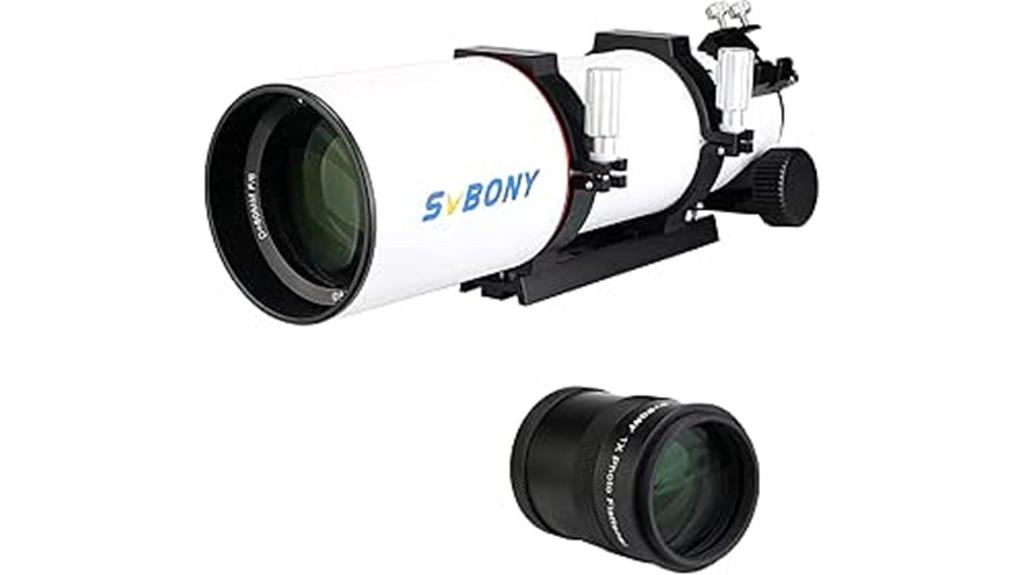
If you’re looking for a versatile and portable option for deep sky astrophotography, the SVBONY SV550 80mm F6 APO Triplet Refractor Telescope Bundle is an excellent choice. Its 80mm aperture and F6 focal ratio deliver sharp, high-contrast images across a large 45mm target surface, ideal for capturing deep sky objects. The bundle includes a field flattener supporting both half-frame and full-frame cameras, ensuring crisp images across the entire frame. Lightweight magnesium alloy focusing and a hollow dovetail plate make setup and transport easier. With advanced light barriers to minimize stray light and excellent optical performance, this telescope is a reliable tool for astrophotographers seeking quality and portability.
Best For: astrophotographers seeking a portable, high-quality telescope capable of capturing detailed deep sky images with full-frame compatibility.
Pros:
- Exceptional optical performance with high contrast and sharpness across the entire frame.
- Lightweight magnesium alloy focusing seat and hollow dovetail plate enhance portability and ease of setup.
- Supports both half-frame and full-frame cameras thanks to the included field flattener and adapters.
Cons:
- Slightly heavier at 8.8 pounds, which may be less ideal for extended field use without proper support.
- Requires additional mounting accessories, such as a sturdy mount or tripod, for optimal use.
- Limited information on specific warranty details and customer support responsiveness.
Celestron Omni XLT 120 Refractor Telescope
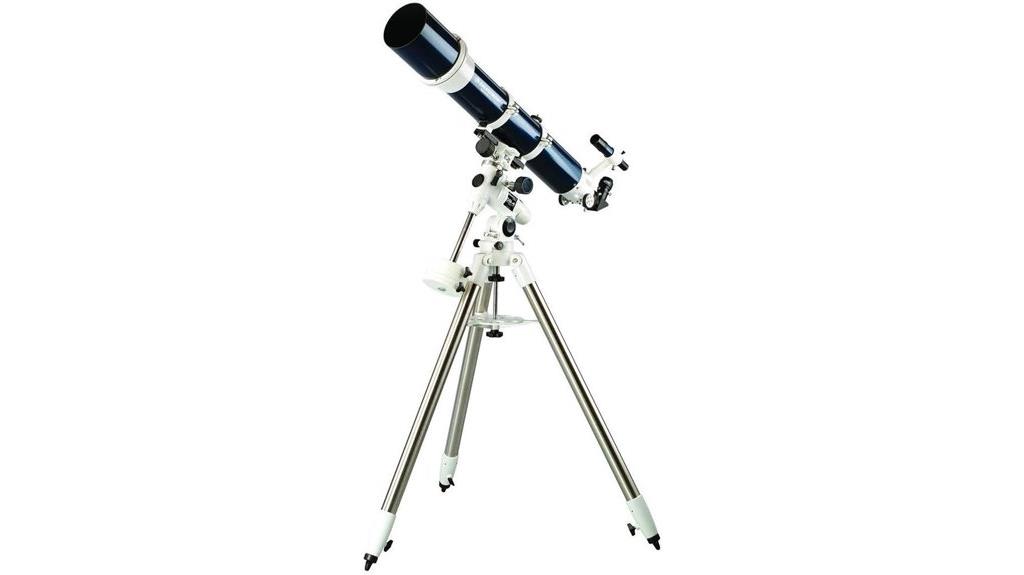
The Celestron Omni XLT 120 Refractor Telescope stands out as an excellent choice for amateur astronomers who want sharp, bright images with reliable tracking right out of the box. It features hand-selected optical glass with fully multi-coated StarBright XLT coatings, maximizing light transmission and image clarity. The optical tube is a high-performance, hand-figured refractor, mounted on a precise Celestron CG-4 German equatorial mount with setting circles, worm gear slow-motion controls, and ball bearings for smooth tracking. It comes with a 6×30 finderscope, sturdy steel tripod, 1.25-inch star diagonal, and a 25mm multicoated eyepiece, plus free Starry Night software for sky exploration.
Best For: amateur astronomers seeking high-quality optics, reliable tracking, and a comprehensive starter package for celestial observation.
Pros:
- Hand-selected optical glass with fully multi-coated StarBright XLT coatings for maximum light transmission and image clarity
- High-performance optical tube mounted on a precise German equatorial mount with smooth tracking controls
- Includes essential accessories like a finderscope, sturdy tripod, star diagonal, and educational software for an immediate observing experience
Cons:
- Manual mount may require some skill for precise tracking during extended observations
- Slightly heavier and bulkier due to the steel tripod and high-quality components
- Limited to visual observation; not designed for astrophotography without additional equipment
Explore Scientific FCD100 102mm f/7 ED Refractor Telescope
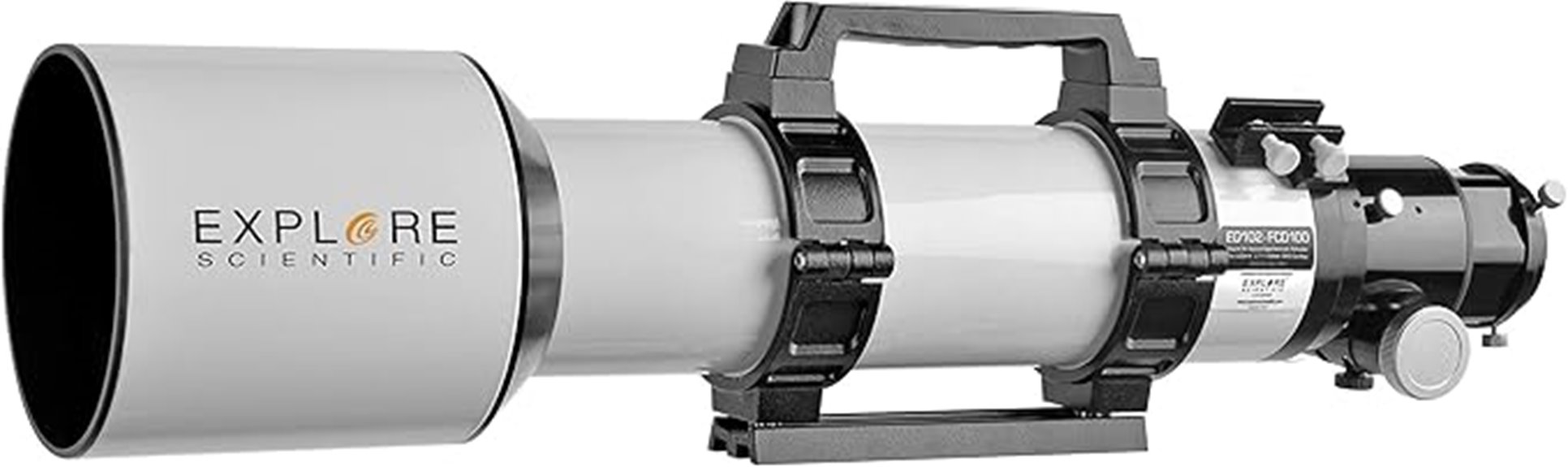
For astrophotographers seeking a portable yet highly capable refractor, the Explore Scientific FCD100 102mm f/7 ED Refractor stands out thanks to its advanced optical design and lightweight build. Its air-spaced aluminum apochromatic triplet uses genuine HOYA FCD100 ED glass, delivering excellent chromatic aberration correction and sharp star images. With a 714mm focal length and 1.14 arcsecond resolution, it’s perfect for detailed astrophotography. Weighing just 10.9 pounds, it’s easy to transport and set up. The proprietary multi-layer coatings enhance contrast and clarity, making this telescope a versatile choice for capturing stunning stellar shots in a portable package.
Best For: astrophotographers seeking a lightweight, high-precision refractor for detailed stellar imaging and portable use.
Pros:
- Advanced air-spaced aluminum apochromatic triplet with genuine HOYA FCD100 ED glass for superior chromatic aberration correction
- Compact and lightweight at just 10.9 lbs., ideal for transport and quick setup
- Proprietary multi-layer coatings enhance contrast, clarity, and image sharpness
Cons:
- Focal length of 714mm may limit wide-field viewing without additional accessories
- OTA only, requiring separate mounting and accessories for complete setup
- Higher cost compared to simpler refractors with basic optical designs
SVBONY SV105 Telescope Camera for Astrophotography

Designed with beginners in mind, the SVBONY SV105 Telescope Camera offers a straightforward way to capture lunar, planetary, and terrestrial images. Its 1/2.8-inch IMX307 CMOS sensor records up to 30 fps at 1080p, providing clear, detailed videos of bright objects. The camera’s dark light compensation enhances image quality in low-light conditions, making it ideal for lunar and planetary imaging. It connects easily via a standard 1.25-inch threaded interface and supports plug-and-play operation on Windows, Linux, and Android systems. With no need for driver installation, this camera simplifies astrophotography, enabling amateurs to quickly start capturing stunning celestial and terrestrial shots.
Best For: beginner amateur astronomers seeking an easy-to-use, high-quality camera for lunar, planetary, and terrestrial astrophotography.
Pros:
- User-friendly plug-and-play setup compatible with Windows, Linux, and Android systems.
- High-resolution 1080p video recording at 30 fps, capturing detailed images of bright objects.
- Compact, threaded design allows easy integration with telescopes and filters.
Cons:
- Not compatible with iOS devices such as phones or tablets.
- Limited to bright objects; not suitable for deep-sky or faint object astrophotography.
- Requires specific software (Sharpcap or AstroDMx Capture) for full functionality on certain systems.
SVBONY SV550 Triplet APO Telescope (122mm F7 ED)

If you’re looking for a portable yet high-performance telescope for astrophotography, the SVBONY SV550 Triplet APO offers an excellent balance of quality and convenience. Its 122mm aperture and F7 focal ratio gather ample light, producing sharp, detailed images of deep-sky objects. The FPL-51 triplet apochromatic lens with ED glass corrects aberrations, ensuring high image clarity. Weighing just 6.44kg, it’s easy to transport and set up, especially with its compact design and included carrying case. The dual-speed 2.5-inch focuser with gear ratio 1:10 allows precise focusing, making it ideal for capturing faint celestial details with accuracy and ease.
Best For: amateur astronomers and astrophotographers seeking a portable, high-quality telescope capable of detailed deep-sky imaging.
Pros:
- Compact and lightweight design for easy transport and setup
- High-quality FPL-51 triplet apochromatic lens with ED glass for superior image clarity
- Precise dual-speed 2.5-inch focuser ensures accurate focusing for astrophotography
Cons:
- Slightly higher price point compared to entry-level telescopes
- Requires compatible mount for optimal stability and tracking
- Limited aperture size for extremely faint or very deep-sky objects compared to larger telescopes
Explore Scientific ED102 Refractor Telescope for Astronomy
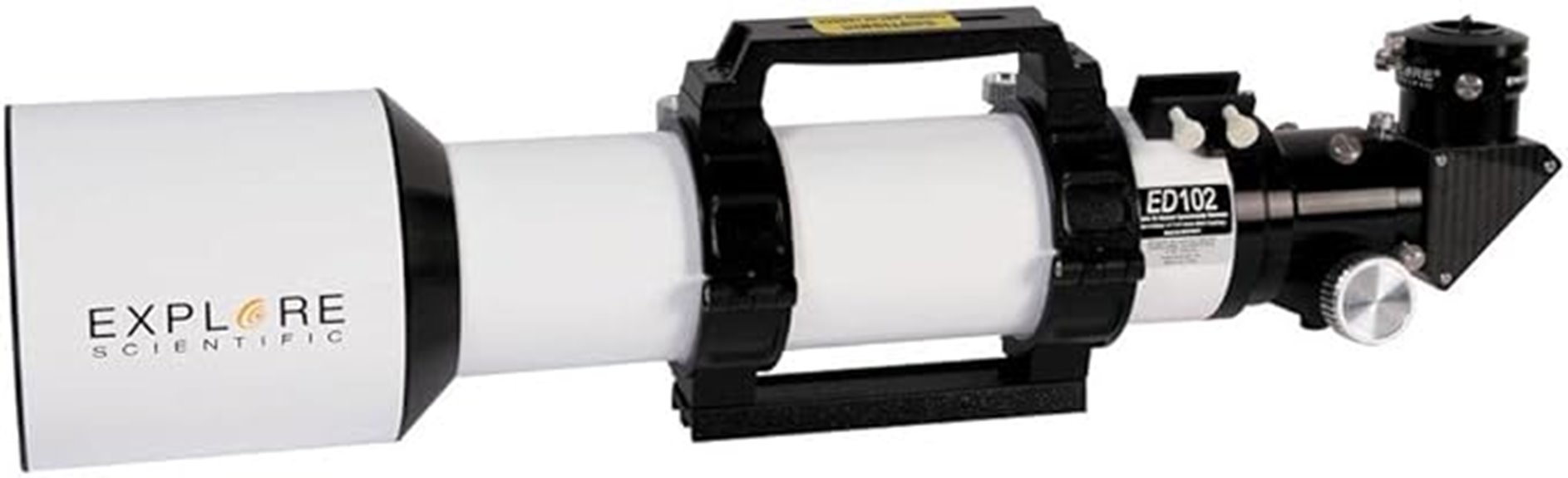
The Explore Scientific ED102 Refractor Telescope stands out as an excellent choice for astrophotographers seeking high-contrast, detailed images. It features genuine FCD1 HOYA ED glass paired with multi-layer coatings for exceptional clarity, while its air-spaced triplet design minimizes chromatic aberration. With a 102mm aperture, f/7 focal ratio, and 714mm focal length, it captures sharp, vibrant images of the Moon, planets, nebulae, and star clusters. Its compact build includes a retractable dew shield and a sturdy cradle ring with a handle, making setup and transport straightforward. Precise collimation ensures ideal performance, backed by reliable customer support from its U.S. manufacturer.
Best For: astrophotographers and amateur astronomers seeking high-contrast, detailed images of celestial objects with a portable and reliable refractor telescope.
Pros:
- Combines genuine FCD1 HOYA ED glass with multi-layer coatings for exceptional image clarity and contrast
- Air-spaced triplet design effectively eliminates chromatic aberrations, ideal for astrophotography
- Compact, lightweight build with retractable dew shield and sturdy cradle ring for easy setup and transport
Cons:
- Higher price point compared to simpler refractors may be a barrier for beginners
- Requires precise collimation adjustments for optimal performance, which may be challenging for novices
- Limited aperture size may restrict deep-sky object visibility compared to larger telescopes
Explore Scientific FCD100 Series 80mm Refractor Telescope
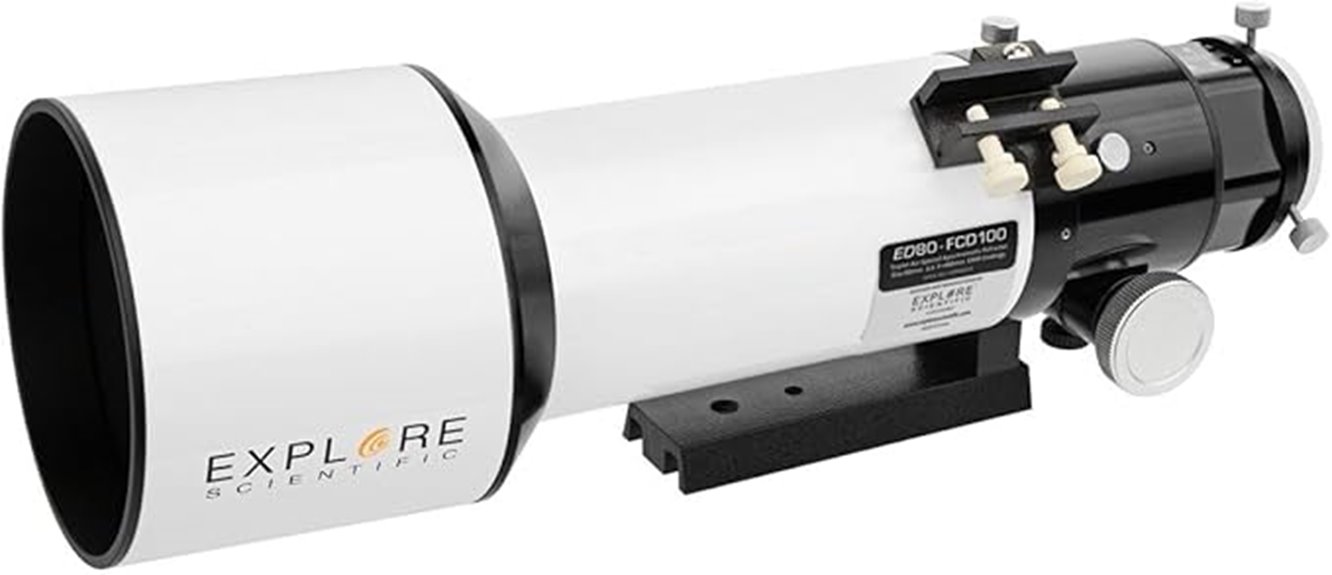
For amateur astronomers seeking a portable yet powerful astrophotography telescope, the Explore Scientific FCD100 Series 80mm Refractor stands out with its high-quality optical design. It features genuine Hoya FCD100 ED glass and multi-layer coatings, delivering high-contrast, sharp images of the Moon, planets, nebulae, and galaxies. The air-spaced triplet minimizes chromatic aberrations, ensuring detailed views. With an 80mm aperture and 480mm focal length, it balances light-gathering power with portability. Its lightweight build, integrated dew shield, and precise focuser make setup easy, making it an excellent choice for capturing stunning celestial images on the go.
Best For: amateur astronomers looking for a portable, high-quality astrophotography telescope capable of capturing detailed images of the Moon, planets, nebulae, and galaxies.
Pros:
- High-contrast, sharp images thanks to genuine Hoya FCD100 ED glass and proprietary multi-layer coatings
- Air-spaced triplet design virtually eliminates chromatic aberration for clear, detailed views
- Lightweight and compact, making it easy to transport and set up for spontaneous stargazing or astrophotography
Cons:
- Slightly more expensive compared to entry-level refractors with similar apertures
- Requires precise handling and setup for optimal astrophotography results
- May have limited accessories compatibility without additional adapters or mounts
Celestron StarSense Explorer DX 130AZ Telescope with Smartphone Dock
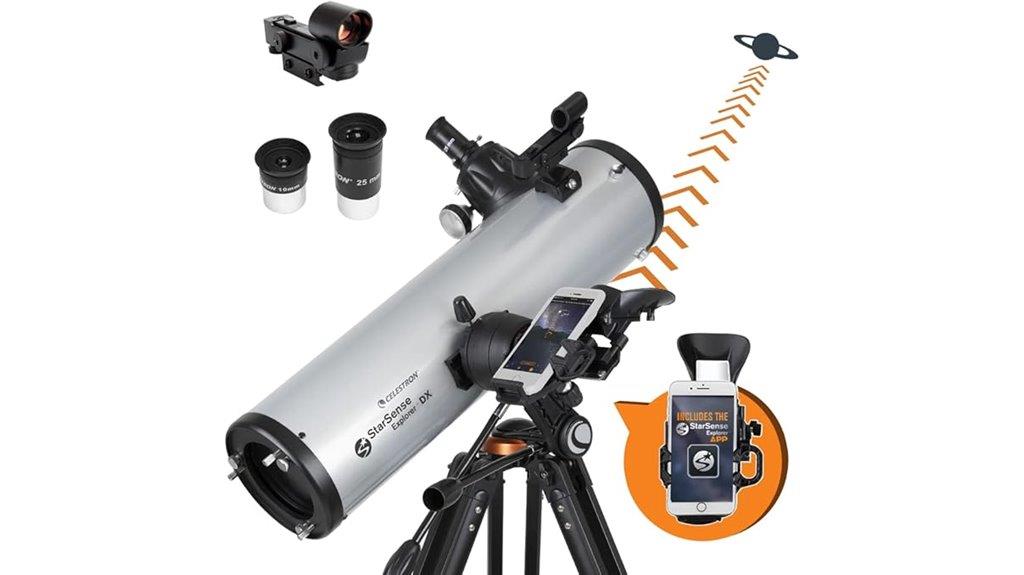
Designed with beginners in mind, the Celestron StarSense Explorer DX 130AZ Telescope simplifies the process of finding and viewing celestial objects through its innovative smartphone integration. It features a 130mm Newtonian reflector with high-reflectivity coatings for clear, bright images of the Moon, planets, and deep-sky objects. The manual altazimuth mount with dual-axis slow-motion controls makes setup quick and easy, while the StarSense technology analyzes star patterns to automatically determine the telescope’s position. Using the StarSense Explorer app, I follow on-screen arrows to locate objects, making star-hopping straightforward. Plus, it comes with a 2-year warranty and US-based support for added confidence.
Best For: Beginners and amateur astronomers seeking an easy-to-use, smartphone-integrated telescope for exploring the night sky.
Pros:
- User-friendly setup with manual altazimuth mount and dual-axis slow-motion controls.
- Smartphone compatibility with StarSense technology for automated object location.
- High-quality 130mm aperture providing bright, detailed views of planets, Moon, and deep-sky objects.
Cons:
- Limited to manual tracking, which may require occasional adjustments during prolonged viewing.
- Newtonian reflector design can require occasional collimation for optimal images.
- Smartphone reliance may limit use in low-light conditions or if the device has low battery.
Explore Scientific ED80 Triplet Refractor Telescope
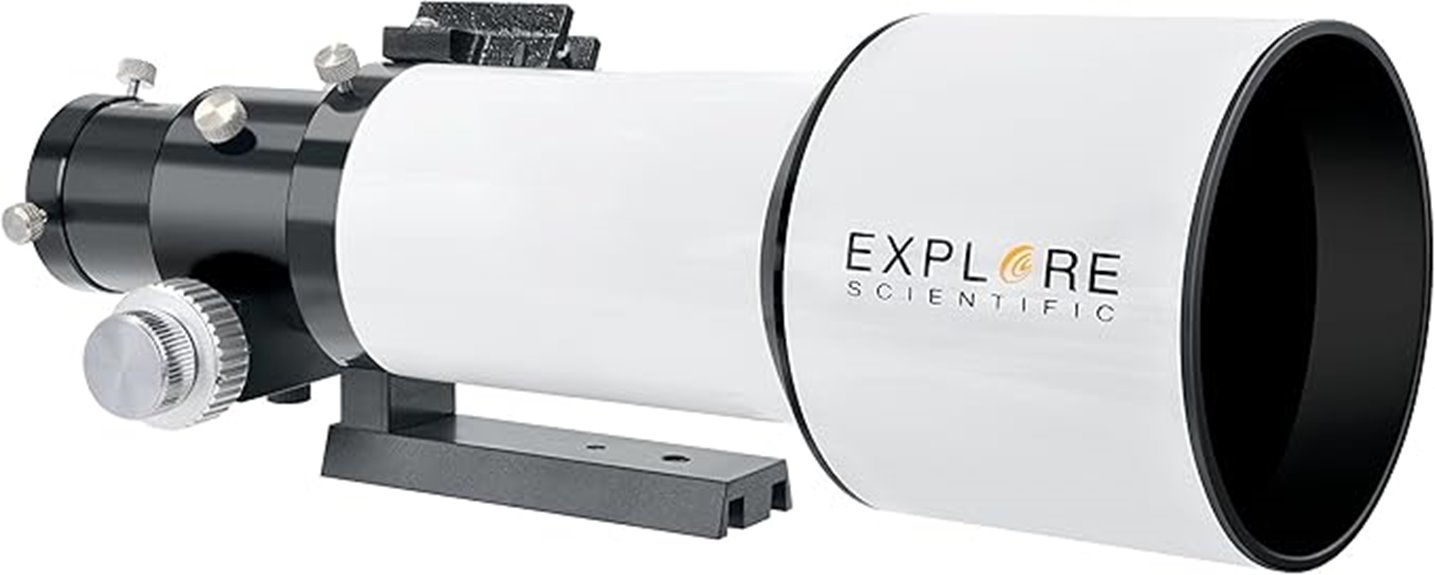
If you’re seeking a portable yet high-performance telescope for astrophotography, the Explore Scientific ED80 Triplet Refractor stands out as an excellent choice. Its high-contrast views come from genuine FCD1 HOYA ED glass and multi-layer coatings, virtually eliminating chromatic aberrations. With an 80mm aperture and f/6 focal ratio, it captures bright, detailed images of the Moon, planets, nebulae, and star clusters. Its compact design, lightweight build, and retractable dew shield make it perfect for spontaneous outings. Plus, the front cell’s push-pull collimation system guarantees precise alignment. Based in the USA, Explore Scientific provides dependable customer support, making this telescope a reliable tool for astrophotographers.
Best For: astrophotographers and amateur astronomers seeking a portable, high-quality refractor telescope for detailed lunar, planetary, and deep-sky imaging.
Pros:
- High-contrast, brilliant views thanks to genuine FCD1 HOYA ED glass and multi-layer coatings
- Virtually eliminates chromatic aberrations with air-spaced triplet design, ideal for astrophotography
- Compact, lightweight, and portable with a retractable dew shield for spontaneous stargazing
Cons:
- Limited aperture size may restrict deep-sky object brightness for some users
- Requires compatible mount and accessories for optimal imaging performance
- Front collimation adjustments may need careful handling for precise alignment
Factors to Consider When Choosing 130MM Triplet APO Refractors for Astrophotography

When selecting a 130mm triplet APO refractor for astrophotography, I consider several key factors to guarantee ideal performance. These include the optical quality of the glass, the focal length and ratio, and how portable the setup is for my needs. Additionally, I pay close attention to the focusing mechanism and how well the mount supports stability and compatibility.
Optical Quality and Glass
Optical quality and the choice of glass are essential factors that directly impact the performance of a 130mm triplet APO refractor for astrophotography. High-quality models use FPL-51 or FCD100 ED glass, which minimizes chromatic aberration and sharpens image details. The air-spaced optical design further corrects color fringing across both visual and photographic spectra, ensuring cleaner images. Multi-layer coatings on all optical surfaces boost light transmission, resulting in brighter, more detailed celestial views. Apochromatic triplet lenses provide superior color correction compared to doublets or single-element refractors, reducing distortions. Precise manufacturing and polishing ensure tight tolerances, delivering consistently high-contrast, high-resolution images. Together, these factors guarantee that the optical system delivers the clarity and color fidelity needed for stunning astrophotography.
Focal Length and Ratio
Focal length and ratio are key factors shaping how a 130mm triplet APO refractor performs in astrophotography. Typically spanning from 714mm to 854mm, these focal lengths influence the image scale and field of view. A longer focal length, like 854mm, offers higher magnification, making it ideal for planetary or lunar detail. Conversely, shorter focal lengths provide wider fields, perfect for capturing deep-sky objects. The focal ratio, usually around f/6 to f/7, impacts brightness and exposure times. Faster ratios (closer to f/6) allow shorter exposures, reducing tracking errors and handling brighter objects better. The combination of focal length and ratio also affects compatibility with cameras and accessories, shaping your overall imaging experience and framing options.
Portability and Weight
Portability is a crucial factor to contemplate because it directly affects how easily I can take my 130mm triplet APO refractor into the field for astrophotography sessions. Lighter models, weighing between 6 to 14 pounds, are much easier to transport and set up, saving time and effort. Compact designs with shorter focal lengths and smaller tubes enhance portability without sacrificing image quality. Using lightweight materials like magnesium alloy for the focuser and aluminum for the tube helps reduce weight while maintaining durability. Many travel-friendly models come with carrying cases or compact packaging, making transportation more convenient. However, I also need a sturdy mount that supports the refractor’s weight without adding unnecessary bulk, ensuring both portability and stability during my imaging sessions.
Focusing Mechanism Precision
A precise focusing mechanism is essential for capturing sharp astrophotography images with a 130mm triplet APO refractor. A high-quality focuser with a 1:10 gear ratio allows for smooth, accurate adjustments, vital for fine-tuning focus during long exposures. Dual-speed focusers let me quickly make coarse changes and then refine focus with high precision, reducing star elongation and blurring. Co-axial or linear focus knobs minimize backlash, providing consistent, controlled movements necessary for detailed imaging. Integrated collimation adjustments help keep the optical elements perfectly aligned, maintaining focus accuracy over multiple sessions. Additionally, a well-designed focuser minimizes vibrations and shifting during exposures, ensuring my star images stay pinpoint sharp. Overall, focusing mechanism precision directly impacts image clarity and quality in astrophotography.
Mount Compatibility and Stability
Choosing the right mount for a 130mm triplet APO refractor is vital because it directly affects the stability and accuracy of my astrophotography sessions. I always guarantee the mount’s load capacity is at least 50% greater than my telescope and accessories to prevent strain during long exposures. Precise tracking capabilities, like worm gear drives and motorized systems, are indispensable to minimize star trailing. Compatibility with the telescope’s dovetail and focal length guarantees accurate alignment. I also consider stability on various terrains, checking for adjustable tripod legs and vibration suppression pads. Finally, smooth slewing and easy balancing adjustments make setup quicker and tracking more reliable. A well-chosen mount ensures my images are sharp and my sessions are hassle-free.
Image Correction Features
When selecting a 130mm triplet APO refractor for astrophotography, paying close attention to its image correction features is essential for capturing sharp, high-contrast images. Internal light barriers and multi-layer coatings help reduce stray light, boosting contrast and clarity. Advanced designs like air-spaced triplets and ED glass minimize chromatic aberration, ensuring images are sharp and color-accurate across the entire frame. Field flatteners and focal reducers are often included or compatible, correcting field curvature for edge-to-edge sharpness. Precise collimation adjustments and high-quality lens elements keep optical alignment ideal, enhancing image correction throughout the field of view. Additionally, multi-layer anti-reflective coatings maximize light transmission and suppress ghosting, resulting in clearer, more detailed astrophotos.
Ease of Use and Setup
Ease of setup and use are vital factors when selecting a 130mm triplet APO refractor for astrophotography, especially if you want to spend more time imaging and less time fiddling with equipment. A user-friendly design includes quick, straightforward collimation adjustments, like push-pull mechanisms, to guarantee precise optical alignment with minimal effort. Lightweight construction and ergonomic focusers, such as dual-speed models, make focusing easier and help achieve sharp images efficiently. Pre-installed or easily attachable accessories, like finderscopes and dovetail plates, streamline setup and reduce assembly time. Clear instruction manuals and compatibility with common mounting systems are also vital, allowing quick configuration. Additional features like integrated dew shields and accessible focusing controls further enhance convenience during field observations and imaging sessions.
Price and Warranty
Price and warranty considerations can considerably influence your decision when selecting a 130mm triplet APO refractor for astrophotography. Higher-priced models often include extended warranties that cover optical and mechanical components for several years, offering peace of mind and protecting your investment. Budget options may have shorter or limited warranty coverage, which could be a concern for long-term use. Refractors with premium optics and build quality typically come with more extensive warranties, sometimes even transferable or lifetime guarantees, adding extra assurance. It’s essential to review the warranty details carefully—know what’s covered and for how long—especially when making a significant purchase. Ultimately, balancing cost with warranty coverage helps ensure you get a reliable instrument that supports your astrophotography goals.
Frequently Asked Questions
How Does Aperture Size Affect Astrophotography Quality?
Aperture size directly impacts astrophotography quality by determining how much light the telescope gathers. Larger apertures capture more light, revealing fainter objects and providing sharper, more detailed images. I’ve found that a bigger aperture helps me see subtle features and reduces the need for long exposures. However, it also means a heavier, more expensive setup. Balancing aperture size with your goals and equipment is key to capturing stunning celestial shots.
What Are the Best Accessories for 130MM Triplet APOS?
Coincidentally, the right accessories can elevate your 130mm triplet APO’s performance. I recommend a high-quality equatorial mount for stability, a robust field flattener to guarantee crisp images across the frame, and a good guide scope for accurate tracking. Additionally, investing in a reliable filter set helps reduce light pollution. These tools work together, making astrophotography more enjoyable and your shots truly stellar.
How Important Is Mount Compatibility for These Telescopes?
Mount compatibility is essential when choosing a 130mm triplet APO for astrophotography. I always make certain my mount can handle the weight and provide steady, smooth tracking. A compatible mount minimizes vibrations and helps capture sharp images. If your mount isn’t up to the task, even the best telescope won’t deliver stellar shots. So, I recommend matching your telescope with a sturdy, precise mount to get the best results.
Can These Scopes Be Used for Planetary Imaging?
Yes, these scopes are great for planetary imaging. Their high-quality optics and 130mm aperture deliver sharp, detailed views of planets, making them ideal for capturing stunning images. I’ve used similar refractors for planetary work, and the triplet design minimizes chromatic aberration, ensuring clearer, more accurate shots. Just make sure you pair them with a good mount and a suitable camera to get the best results!
What Maintenance Is Required for Optimal Performance?
Many people overlook regular maintenance, but it’s key for ideal performance. I check my scope’s collimation monthly, clean the lenses gently with a microfiber cloth, and keep the focuser lubricated. I also cover it after use to prevent dust buildup and store it in a dry place to avoid moisture. These simple steps keep my 130mm triplet sharp and ready for those perfect astrophotography captures.
Conclusion
If you’re serious about capturing stunning stellar images, these 130mm triplet apo refractors are game-changers. Each offers unique features that could elevate your astrophotography to new heights. But which one will truly reveal your universe’s secrets? The choice isn’t easy, and the right one might surprise you. Dive deeper, explore your options, and get ready—because the night sky is waiting, and your perfect telescope could be just a decision away.
Fall Picks
fall essentials
As an affiliate, we earn on qualifying purchases.