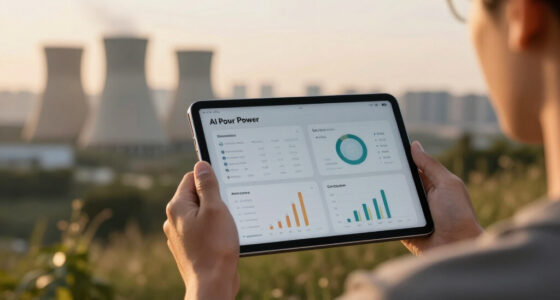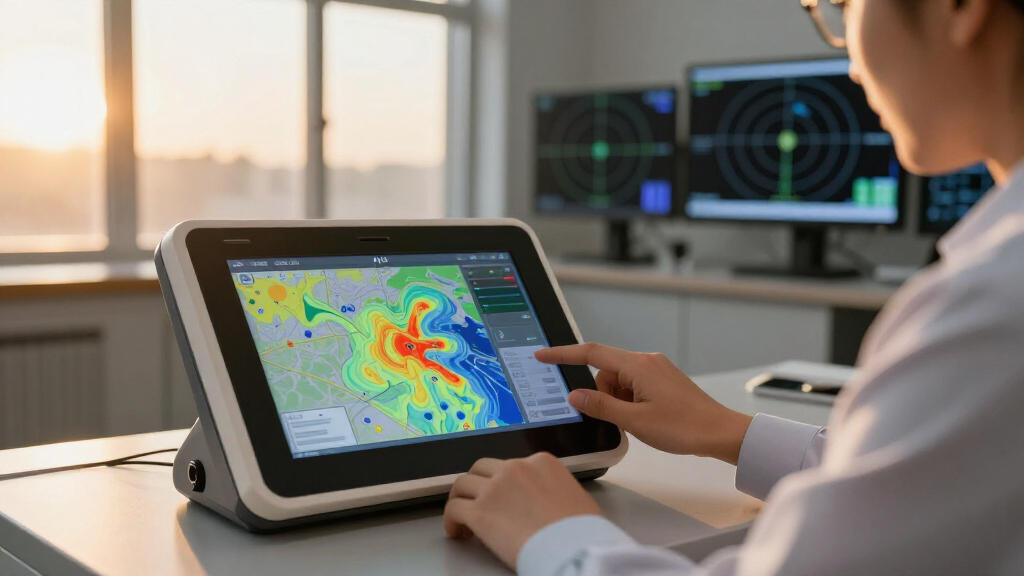

📊 Full opportunity report: Revolutionizing Weather Predictions With AI: Preparing For More Severe Storms on ThorstenMeyerAI.com — validation score, market gap, and execution plan.

Get the latest gadgets delivered free — and shop member deals
- Fast, free delivery on millions of items
- Access to Prime Big Deal Days deals on October 6–7
- Prime Video, Amazon Music and more included
TL;DR
A report attributed to Huawei Pangu suggests AI is significantly changing weather forecasting by providing faster predictions. However, the report lacks technical details and independent validation, leaving the true impact uncertain. Recent severe weather events, such as tornadoes in the Midwest, highlight the importance of accurate forecasting. This development could improve early warnings for severe weather events, but further evidence is needed.
A report attributed to Huawei Pangu states that AI-based weather forecasting is reshaping predictions, emphasizing the potential for faster warnings amid increasing extreme-weather risks. For more details, see the original analysis. While the claim highlights a major shift, it does not include published technical details or independent validation, leaving the scope and accuracy of the advancements unconfirmed.
The report suggests that AI systems could enable meteorological agencies to identify developing weather conditions more quickly than traditional models, potentially providing more time to issue warnings for dangerous storms and other extreme events. Travel advisories are often issued in conjunction with such forecasts. However, it does not specify the AI model version, training datasets, geographic coverage, or benchmark results. No performance metrics—such as accuracy scores for temperature, precipitation, or wind forecasts—are provided, making it impossible to verify the claimed improvements.
Currently, weather forecasting relies on physics-based models supported by extensive observational data. AI approaches, which learn patterns from historical atmospheric data, are often used alongside these models but are not yet confirmed to outperform them in operational settings. The report does not clarify whether the AI system is in testing, pilot deployment, or fully operational use.
Potential Impact of AI-Driven Weather Predictions
If validated, faster AI-based forecasts could significantly enhance early warning systems for severe storms, floods, and other extreme weather events. This could provide emergency services, utilities, and communities with more lead time to prepare and respond, potentially reducing damage and saving lives. However, the benefit depends on the reliability and accuracy of these predictions, especially when communicating uncertainty to the public. Without confirmed performance data, the real-world impact remains uncertain.
As an affiliate, we earn on qualifying purchases.
Current State of Weather Forecasting Technologies
Traditional weather prediction relies on complex physical models that simulate atmospheric processes, supported by satellite, radar, and observational data. These models require significant computational resources and are subject to limitations in predicting rare or extreme events. Recently, AI has been integrated into forecasting workflows to complement existing systems, primarily for pattern recognition and data assimilation. The Huawei Pangu report claims that AI is now capable of producing faster forecasts, but it does not specify whether this is a new system, an extension of existing models, or a commercial product.
“The report suggests that AI could enable faster weather predictions, but without technical validation, these claims need cautious interpretation.”
— an anonymous researcher
As an affiliate, we earn on qualifying purchases.
Unverified Nature of Reported AI Forecast Improvements
The report does not include technical documentation, benchmark results, or independent evaluations. It remains unclear whether the AI system has been tested against established models or whether it has demonstrated improved accuracy in predicting severe weather events. The absence of specific datasets, geographic focus, and operational deployment details leaves the claims unverified and uncertain.
As an affiliate, we earn on qualifying purchases.
Next Steps for Confirming AI Weather Forecasting Advances
To validate the claims, detailed technical documentation, benchmark results, and independent evaluations are needed. Meteorological agencies and researchers will likely conduct testing across different regions and weather scenarios, including extreme events, to assess the AI system’s performance. Publication of these results and potential deployment plans will clarify whether AI is truly revolutionizing weather prediction for severe storms.
As an affiliate, we earn on qualifying purchases.
Key Questions
Does the report prove AI is more accurate than current weather models?
No. The report does not include accuracy metrics or comparative studies, so the claim of improved accuracy remains unconfirmed.
How could faster weather predictions benefit communities?
Faster predictions could give emergency services and the public more time to prepare for severe weather, potentially reducing damage and saving lives. However, this depends on the reliability of the forecasts.
What technical details are missing from the report?
The report lacks information on the specific AI model version, training datasets, geographic coverage, benchmark results, and independent validation studies.
Is this AI system already in use operationally?
It is not yet clear whether the AI system is in testing, pilot deployment, or fully operational use. The report does not specify deployment status.
What are the risks of relying on AI for weather forecasting?
Potential risks include reliance on unvalidated models, false alarms, missed extreme events, and communication challenges regarding forecast uncertainty.
Source: ThorstenMeyerAI.com
Fall Picks
fall essentials
As an affiliate, we earn on qualifying purchases.