
🔍 Read the full analysis: What A Math Rebuild Tells Us About Claude Fable 5.2’S AI Progress on ThorstenMeyerAI.com

Get the latest gadgets delivered free with Prime
- Fast, free delivery on millions of items
- Prime Video, Amazon Music and more included
- Member-only deals all year
TL;DR
A November 12 analysis of benchmark data places Anthropic’s Claude Fable 5.2 above projected trendlines on three measures, but the strength of the result varies. The clearest lead is on freelance-style work; the Epoch index gap is within its uncertainty range, while the robotics figure comes from an Anthropic-reported run and is sensitive to the trend method.
A reconstruction of three benchmark trendlines published November 12 puts Anthropic’s Claude Fable 5.2 above the expected pace of earlier top-scoring models on freelance work, a broad capabilities index and simulated robotics. The strongest result is on freelance-style projects; the index lead falls within the published uncertainty range, and the robotics score is Anthropic-reported rather than independently verified on the leaderboard.
The analysis, published by ThorstenMeyerAI.com, says it rebuilt trendlines using raw leaderboard data and Anthropic’s launch material after Fable 5.2 was released on November 9. It compared each model’s score with a fitted trend through earlier record-setters, excluding Fable 5.2 from the fit. For percentage-based results it used a logistic curve; for the Epoch index it used a straight line. The authors also tested alternative fitting choices.
On the Remote Labor Index, Fable 5.2 passed 41.3% of 240 projects, or 99 projects, at a standard described as work a reasonable client would accept. The analysis’ trend projection for November 9 was 27.2%, leaving a 14.1-percentage-point gap. It estimates the earlier trend would take about 90 days to reach Fable 5.2’s score. The index was built by Scale AI and the Center for AI Safety; its tasks came from real freelance projects across 23 job categories.
On Epoch AI’s Capabilities Index, Fable 5.2 scored 173.4, compared with a trend estimate of 171.1, a difference of 2.4 points, or about 1.7 months at the fitted pace. Epoch’s stated uncertainty range for the model, 169.9 to 177.5, extends below the trend estimate. On RoboDojo, the reported success rate was 64.9%, 8.8 points above the analysis’ trend fit. But the analysis says Anthropic measured that result internally; the leaderboard includes a higher 68.9% entry for Q0-Preview.
What a Math Rebuild Tells Us About Claude Fable 5.2’s AI Progress
A November 12 analysis places Claude Fable 5.2 above reconstructed trends on three benchmarks, but the strength of the evidence varies.
Freelance Work Shows the Clearest Jump
The model passed the acceptance standard on 99 of 240 real freelance projects.
A clear lead over trend
The 41.3% pass rate was 14.1 points above the reconstructed projection.
Task results are not job readiness
The score does not show that the model can do whole jobs safely, profitably, or without oversight.
Three Benchmarks, Different Confidence
Each comparison measures a different capability and carries different limits.
| Benchmark | Finding | Evidence caveat |
|---|---|---|
| Remote Labor Index | 41.3%, above trend | 240-project sample; no leaderboard confidence interval |
| Epoch Capabilities Index | 173.4 vs. 171.1 trend | Published uncertainty range extends below trend |
| RoboDojo | 64.9%, above trend fit | Anthropic-reported run; fitting choices change the gap |
How the Trend Comparison Works
The analysis fitted earlier record-setters without Fable 5.2, then compared its result with the projection for its release date.
Use raw leaderboard data and launch material to place earlier top scores over time.
Measure Fable 5.2 against the fitted estimate for November 9.
It estimates how long the past trend would take to reach the score; it is not a release schedule.
What Evidence Would Clarify
Independent, comparable results could show whether the smaller leads hold up.
- Verified RoboDojo leaderboard results
- More Remote Labor Index evaluations across task samples
- Additional Epoch index results to track the trend gap
Freelance Work Shows the Clearest Jump
The results suggest that Fable 5.2’s benchmark progress is not uniform across tasks. Its freelance-project score is substantially higher than the earlier trend projection and more than twice Claude Fable 5.1’s listed rate of 17.92%. That matters because the test uses paid work completed by professionals and evaluates whether a client would accept the AI’s output, rather than measuring performance on a narrow set of academic questions.
The score still has a clear limit: 58.7% of projects did not pass. Passing a benchmark also does not establish that a model can independently carry out all work in a job category, or that a business can deploy it safely and profitably. The index measures task outcomes under its test conditions, not the wider costs, reliability or oversight involved in real workplaces.
The other two findings call for more restraint. A small lead on the Epoch index may be consistent with ordinary measurement uncertainty, while the robotics comparison depends on a company-reported result and choices about how to fit the trend. The analysis therefore supports a strong claim about one benchmark, not a general conclusion that the model is ahead by the same amount across AI capabilities.
Products Worth Considering
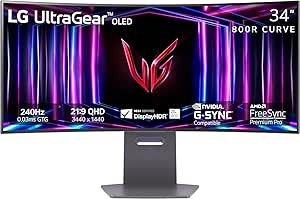
LG UltraGear 34-inch Curved OLED Gaming Monitor, WQHD 1440p, 240Hz, 0.03ms, 800R

Logitech MX Mechanical Wireless Illuminated Keyboard, Tactile Quiet, Graphite

Apple Watch Series 12 GPS 42mm
As an affiliate, we earn on qualifying purchases.
How the Three Comparisons Were Built
A trendline comparison asks whether a new model scored higher than a projection based on past record-setters. The analysis placed those models at their release dates, fitted a curve without Fable 5.2, then compared the new score with the curve’s estimate for its release day. Its “months ahead” figure is the time the fitted trend would need to reach the new score; it is a projection, not a measured release schedule.
The three tests measure different things. Scale AI and the Center for AI Safety’s Remote Labor Index evaluates deliverables on 240 Upwork projects, with trained reviewers comparing AI work with professional work. Epoch AI’s index combines results from more than 50 benchmarks to support comparisons across time; Epoch cautions that its absolute scores do not have meaning on their own. RoboDojo evaluates simulated robot-arm control, but the 64.9% figure discussed here is not presented as a verified leaderboard entry.
The source analysis reports that its Remote Labor Index fit used 11 record-setters, from Gemini 2.5 Pro in June 2025 through Claude Opus 5.5 in September 2026. It excluded four leaderboard products without release dates in Epoch’s dataset. Its reconstructed projection, 27.2%, is close to a chart it reviewed that showed 27.1%; the authors say dating choices likely explain the difference.
The Index and Robotics Caveats
The analysis estimates a rough sampling margin of about plus or minus six percentage points for the Remote Labor Index’s 41.3% rate, based on 240 projects. It says this would not erase the 14.1-point difference from the trend projection, but the leaderboard itself provides no confidence interval. The result also reflects a particular task sample, review standard and evaluation setup.
For Epoch’s index, the published uncertainty range of 169.9 to 177.5 includes values below the 171.1 trend estimate. That means the 2.4-point difference should not be treated as a statistically clear departure from the trend based on the information given. The source analysis does not provide enough detail here to establish a formal significance test for that gap.
The RoboDojo conclusion is less settled. The 64.9% figure comes from Anthropic’s own internal run, according to the analysis, rather than a verified leaderboard result. Across other reasonable curve-fitting choices, the calculated lead ranges from 3.8 to 23.3 points. The analysis also does not establish why Q0-Preview’s listed score is higher, or whether the entries were tested under directly comparable conditions. The source article’s conflict-of-interest disclosure says it was drafted with AI assistance, including Claude, and was not reviewed or sponsored by Anthropic or the other named organizations.
Independent Results Will Matter
The next useful evidence would be independently verifiable, comparable benchmark results, especially for RoboDojo, along with further Remote Labor Index evaluations that clarify how stable the 41.3% rate is across task samples. More Epoch index results could also show whether the small lead over the fitted trend persists as additional models are assessed.
No later test, independent verification or follow-up release is identified in the source material. Until such evidence appears, the most defensible reading is limited: Fable 5.2 shows a large lead over the reconstructed trend on the tested freelance projects, a modest and uncertain edge on Epoch’s index, and a robotics result whose comparison remains sensitive to its source and fitting method.
Key Questions
What is the main finding about Claude Fable 5.2?
The analysis places the model above fitted trends on three benchmarks, but the strength of the evidence differs: the freelance-work gap is largest, the Epoch index gap is small, and the robotics result has verification and method limits.
What does the Remote Labor Index score of 41.3% mean?
Fable 5.2’s work met the test’s acceptance standard on 99 of 240 freelance projects. The measure does not mean that the model can perform 41.3% of all jobs or that it can do the work without human oversight.
Is Fable 5.2 clearly ahead on the Epoch Capabilities Index?
Not based on the comparison presented. Its 173.4 score is 2.4 points above the trend estimate, but Epoch’s stated range of 169.9 to 177.5 reaches below that estimate.
How reliable is the RoboDojo comparison?
The analysis says the 64.9% result was measured internally by Anthropic, not verified as a leaderboard entry. The estimated gap also changes substantially under alternative trend fits, so independent, comparable testing would help clarify it.
What happens next?
The source does not identify a scheduled follow-up. Further independent benchmark runs and additional results on the same tests would show whether the reported gains hold across evaluations.
Source: ThorstenMeyerAI.com