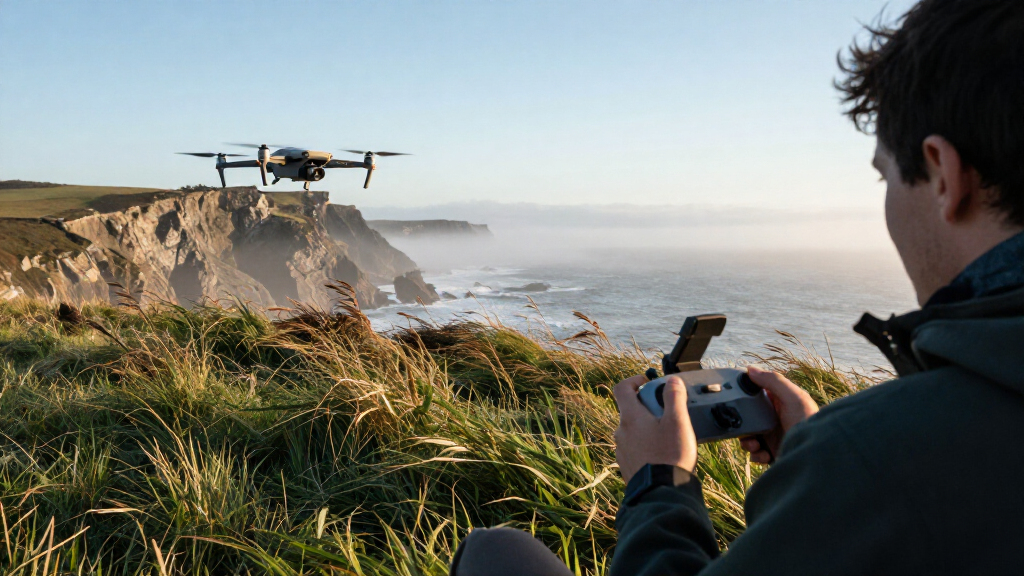

The best camera drone overall in this roundup is the DJI Air 3S Fly More Combo with RC 2: it pairs a capable imaging setup with a screen controller and a more complete flight kit. For a compact alternative, the DJI Mini 5 Pro suits creators who want advanced features in a smaller drone, while the DJI Mavic 4 Pro is the premium choice for a multi-camera system. The main tradeoffs are image control versus portability, and a ready-to-fly bundle versus a lower-cost entry point. Smaller drones can be easier to carry, while larger or more advanced models may better serve demanding shoots. Read on for the full comparison and guidance on choosing the right camera drone for your needs.

Get the latest gadgets delivered free with Prime
- Fast, free delivery on millions of items
- Prime Video, Amazon Music and more included
- Member-only deals all year
Complete the kit



Key Takeaways
- The DJI Air 3S Fly More Combo with RC 2 ranks first because its bundled screen controller and extra flight gear make it a balanced choice for capable imaging and practical field use.
- The DJI Air 3S versions are not interchangeable buying choices: the RC 2 has a built-in screen, while the RC-N3 setup depends on a compatible phone.
- The DJI Mavic 4 Pro is the premium specialist for buyers drawn to a triple-camera system; its larger, more involved setup is harder to justify for casual flying.
- Compact DJI models and budget-oriented options serve different priorities: Mini 5 Pro and Mini 3 emphasize portability, while Ruko and GPS-screen bundles foreground included flight time or controller convenience.
- Camera labels alone do not settle image quality. Stabilization, sensor and camera design, flight control, and the ability to frame consistently matter more than headline photo or video resolution.
| Ruko F11PRO 2 Plus Camera Drone with 48MP Camera and 3-Axis Gimbal |  | Best for High-Resolution Photos | Photo resolution: 48MP (8K photos) | Video resolution: 4K at 30fps | Sensor: 1/2-inch CMOS | VIEW LATEST PRICE | See Our Full Breakdown |
| DJI Mini 4K Camera Drone Combo with 2 Batteries |  | Best for Lightweight Beginner Flying | Weight: Under 249 g | Camera: 4K UHD | Stabilization: 3-axis gimbal | VIEW LATEST PRICE | See Our Full Breakdown |
| DJI Air 3S Drone with RC 2 Fly More Combo and 15-Piece Bundle |  | Best Premium Dual-Camera Bundle | Camera system: Dual camera | Video resolution: 4K | Video features: 10-bit video and HDR capture | VIEW LATEST PRICE | See Our Full Breakdown |
| Bwine F7MINI Mini Drone with 4K Video and 8K Photo Camera |  | Best for Long Multi-Battery Outings | Weight: 249 g | Video resolution: 4K at 30fps | Photo resolution: 48MP (8K photos) | VIEW LATEST PRICE | See Our Full Breakdown |
| Ruko F11PRO 2 Drone with 6K Camera | 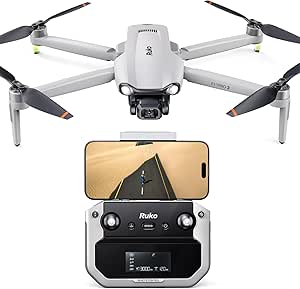 | Best for Straightforward GPS Flights | Photo resolution: 19MP | Video resolution: 4K at 30fps | Sensor: CMOS | VIEW LATEST PRICE | See Our Full Breakdown |
| DJI Mavic Air 2 Fly More Combo |  | Best for Subject Tracking | Camera sensor: 1/2-inch CMOS | Still resolution: 48 MP capture; listed effective still resolution is 12 MP | Video resolution: 4K at up to 60fps | VIEW LATEST PRICE | See Our Full Breakdown |
| DJI Mini 5 Pro Fly More Combo with DJI RC 2 |  | Best Compact Camera Drone | Weight: 249.9 g ± 4 g | Camera sensor: 1-inch CMOS | Still resolution: 50 MP | VIEW LATEST PRICE | See Our Full Breakdown |
| DJI Air 3S Fly More Combo with RC 2 Screen Remote Controller |  | Best Premium Camera Kit | Camera sensor: 1-inch CMOS | Video resolution: 4K/60fps HDR | Still resolution: 50 MP | VIEW LATEST PRICE | See Our Full Breakdown |
| DJI Air 3S Fly More Combo with RC-N3 Controller |  | Best for Extended Shoots | Camera sensor: 1-inch CMOS | Video resolution: 4K/60fps HDR | Maximum flight time: Up to 45 minutes | VIEW LATEST PRICE | See Our Full Breakdown |
| Ruko Drone with Camera for Adults, 4K Video and 8K Photo |  | Best Value for Multi-Battery Flight Time | Camera sensor: 1/2-inch 48MP CMOS | Video resolution: 4K at 30fps | Photo resolution: 8K (48 MP) | VIEW LATEST PRICE | See Our Full Breakdown |
| DJI Mavic 4 Pro Triple Camera Drone with DJI RC 2 Bundle |  | Best for Professional Image Quality | Weight: 958 g | Main camera: 100MP 4/3 CMOS Hasselblad | Video: 6K/60fps HDR; 4K/60fps | VIEW LATEST PRICE | See Our Full Breakdown |
| REDRIE HK33 Drone with 4K Camera, 2-Axis Gimbal, GPS, and 3 Batteries (Under 249g) |  | Best Beginner Bundle with Three Batteries | Weight: 249 g | Video resolution: 4K | Still resolution: 8 MP | VIEW LATEST PRICE | See Our Full Breakdown |
| DJI Mini 3 Drone with DJI RC and 3‑Axis Mechanical Gimbal |  | Best Compact Camera Drone for Travel | Weight: Under 249 g with standard configuration | Camera video: 4K HDR | Gimbal: 3-axis mechanical | VIEW LATEST PRICE | See Our Full Breakdown |
| GPS Drone with 4K Camera for Adults, Foldable Quadcopter with 4.5″ HD Screen Controller, Brushless Motor, GPS Auto Return, 60 Min Flight, 4GB SD Card, Beginner Gift, Under 249g |  | Best for Phone-Free Beginner Flying | Weight: 220 g | Camera resolution: 4K UHD | Controller display: 4.5 inches | VIEW LATEST PRICE | See Our Full Breakdown |
| SKYROVER X1 Drone with 4K Camera, Screen Controller, Obstacle Avoidance and 3 Batteries |  | Best Feature-Rich Compact Drone | Weight: 249 g | Image sensor: 1/1.32-inch CMOS | Photo resolution: 48 MP | VIEW LATEST PRICE | See Our Full Breakdown |
| camera drone | Video resolution | Weight | Transmission range |
|---|---|---|---|
| Ruko F11PRO 2 Plus Camera Dron | 4K at 30fps | 360 g | 20,000 ft listed |
| DJI Mini 4K Camera Drone Combo | — | Under 249 g | 10 km listed |
| DJI Air 3S Drone with RC 2 Fly | 4K | — | — |
| Bwine F7MINI Mini Drone with 4 | 4K at 30fps | 249 g | 20,000 ft listed (6 km) |
| Ruko F11PRO 2 Drone with 6K Ca | 4K at 30fps | — | 10,000 ft listed |
| DJI Mavic Air 2 Fly More Combo | 4K at up to 60fps | — | — |
| DJI Mini 5 Pro Fly More Combo | 4K/60fps HDR | 249.9 g ± 4 g | — |
| DJI Air 3S Fly More Combo with | 4K/60fps HDR | — | Up to 20 km |
| DJI Air 3S Fly More Combo with | 4K/60fps HDR | — | Up to 20 km |
| Ruko Drone with Camera for Adu | 4K at 30fps | Under 249 g | Up to 20,000 feet (6 km) |
| DJI Mavic 4 Pro Triple Camera | — | 958 g | 30 km (18.6 mi) |
| REDRIE HK33 Drone with 4K Came | 4K | 249 g | — |
| DJI Mini 3 Drone with DJI RC a | — | Under 249 g with standard configuration | 10 km HD video |
| GPS Drone with 4K Camera for A | — | 220 g | — |
| SKYROVER X1 Drone with 4K Came | — | 249 g | — |
More Details on Our Top Picks
Ruko F11PRO 2 Plus Camera Drone with 48MP Camera and 3-Axis Gimbal
The 48MP, 1/2-inch CMOS sensor gives the F11PRO 2 Plus a photo-focused advantage over the 19MP Ruko F11PRO 2, while its 3-axis mechanical gimbal steadies 4K video as well as stills. It suits beginners who want room to explore detailed landscape and property shots without moving to a more elaborate dual-camera system like the DJI Air 3S. Two batteries provide 74 minutes total flight time, though that time is split between flights and requires a battery swap. The listed 20,000-foot transmission range supports long-distance exploration, but should not be treated as a promise of usable range in every setting. At 360 g, it also lacks the under-249g portability advantage of the DJI Mini 4K. Choose it for high-resolution capture and gimbal stability, not for the lightest travel kit.
Pros:- 48MP sensor captures detailed still images.
- Three-axis mechanical gimbal stabilizes 4K video.
- Two batteries provide 74 minutes of stated combined flight time.
- GPS return-to-home adds a useful recovery feature for newer pilots.
Cons:- At 360 g, it is heavier than the under-249g DJI Mini 4K.
- Each battery provides up to 37 minutes, so extended sessions require a swap.
- The long listed transmission range does not guarantee that range in real-world conditions.
Best for: Beginner photographers and property owners who want high-resolution stills, stabilized 4K video, and two batteries for longer outings.
Not ideal for: Travelers prioritizing an under-249g drone, or pilots who need uninterrupted flight without swapping batteries.
- Photo resolution:48MP (8K photos)
- Video resolution:4K at 30fps
- Sensor:1/2-inch CMOS
- Stabilization:3-axis mechanical gimbal
- Total flight time:74 minutes (2 × 37-minute batteries)
- Transmission range:20,000 ft listed
- Weight:360 g
- Battery capacity:3200 mAh
Our verdict“Choose the F11PRO 2 Plus if high-resolution photos matter more than a sub-249g body or a dual-camera setup.”
DJI Mini 4K Camera Drone Combo with 2 Batteries
The under-249g weight is the Mini 4K’s defining advantage: it is easier to pack than the 360g Ruko F11PRO 2 Plus, and recreational flights in the U.S. generally avoid FAA registration for drones under 250g, subject to applicable rules. Its 3-axis gimbal and 4K video make it a more convincing camera choice than basic toy-style drones, while one-tap takeoff, GPS Return to Home, and QuickShots help newcomers get usable footage with less setup. The combo’s two batteries add flexibility, though the stated 62 minutes is combined flight time, not one continuous session. Compared with the Bwine F7MINI, the Mini 4K has a shorter listed total flight time and range, but its lightweight format and straightforward controls make it the clearer choice for travel and first flights. Android users should note that the DJI Fly app must be downloaded from DJI’s website.
Pros:- Under-249g weight makes it especially portable and can avoid recreational FAA registration in the U.S., subject to rules.
- Three-axis gimbal helps keep 4K footage steady.
- One-tap takeoff, Return to Home, and QuickShots lower the learning curve.
- Two included batteries provide up to 62 minutes of stated combined flight time.
Cons:- The 62-minute total is split across two batteries and requires swapping.
- The listed 10km transmission range and maximum flight time depend on ideal conditions.
- The DJI Fly app must be downloaded from DJI’s website rather than Google Play.
Best for: First-time pilots and travelers who want stabilized 4K video in a lightweight drone with beginner-oriented flight modes.
Not ideal for: Buyers who prioritize the longest listed flight time or range, or Android users who want to install the flight app directly from Google Play.
- Weight:Under 249 g
- Camera:4K UHD
- Stabilization:3-axis gimbal
- Total flight time:Up to 62 minutes with 2 batteries
- Transmission range:10 km listed
- Wind resistance:Level 5 (38 kph)
- Controller:DJI RC-N1C
- Included accessories:2 batteries, shoulder bag, spare propellers
Our verdict“Pick the Mini 4K for approachable, stabilized 4K flying in a highly portable body rather than maximum range or endurance.”
DJI Air 3S Drone with RC 2 Fly More Combo and 15-Piece Bundle
The dual-camera system is the Air 3S’s clearest distinction in this group: wide and telephoto perspectives give video makers more framing choices than the single-camera DJI Mini 4K or the photo-focused Ruko F11PRO 2 Plus. It also records 4K with 10-bit and HDR capture, giving editors more room to shape footage than a straightforward beginner setup. The included RC 2 controller has its own display, so framing does not depend on a phone; three batteries and a charging hub support longer shooting days. This is the most production-oriented pick here, but also the most involved kit to carry. Its listed item weight of 8 pounds should be checked against the actual aircraft weight before buying, since that figure may describe the bundle or listing rather than the drone alone. The added accessories bring options, along with more packing bulk.
Pros:- Dual cameras offer wide and telephoto framing options.
- 4K recording with 10-bit and HDR capture supports more flexible footage workflows.
- RC 2 controller includes a built-in display.
- Three batteries and a charging hub suit longer shooting sessions.
Cons:- The multi-piece bundle adds packing bulk.
- The listed item weight is 8 pounds, so buyers should verify the aircraft weight separately.
- Its advanced camera setup and accessory bundle may be more than casual flyers need.
Best for: Experienced travel filmmakers and aerial content creators who want wide and telephoto framing, HDR recording, and a screen-equipped controller.
Not ideal for: Beginners seeking a simple, lightweight first drone, or travelers who want a compact kit with few accessories.
- Camera system:Dual camera
- Video resolution:4K
- Video features:10-bit video and HDR capture
- Controller:DJI RC 2 with built-in display
- Included batteries:3 intelligent flight batteries
- Included filters:ND8, ND32, and ND128
- Memory card:64GB
- Listed item weight:8 pounds
Our verdict“Choose the Air 3S bundle if you need two camera perspectives and editing flexibility, and are willing to carry a larger, more involved kit.”
Bwine F7MINI Mini Drone with 4K Video and 8K Photo Camera
The F7MINI combines an under-249g body with a notably generous three-battery package: its stated 96 minutes of total flight time exceeds the DJI Mini 4K’s 62 minutes and the Ruko F11PRO 2 Plus’s 74 minutes. That makes it a strong fit for pilots planning several flights in one outing, rather than a single uninterrupted session. Its 3-axis brushless gimbal, 4K/30fps video, and 48MP photo mode give it a more complete camera setup than a basic lightweight drone, while GPS features include Follow Me and Auto Return. The tradeoff is operational simplicity: three separate batteries still need to be changed manually, and stable indoor flight depends on optical flow when GPS is unavailable. Its 20,000-foot listed range is ambitious, but like the other range figures here, it should not be read as a guaranteed working distance.
Pros:- Under-249g weight favors portability.
- Three batteries provide up to 96 minutes of stated combined flight time.
- Three-axis brushless gimbal supports steady 4K/30fps footage.
- 48MP photo mode and GPS Follow Me add flexibility for outdoor shooting.
Cons:- The total flight time is divided among three batteries that must be swapped manually.
- Indoor stability relies on optical flow when GPS is unavailable.
- The listed 20,000-foot transmission range may not reflect usable range in everyday conditions.
Best for: Travel photographers and recreational pilots who want a lightweight drone and several batteries for a full day of separate flights.
Not ideal for: Pilots who need a no-swap long flight, or people planning indoor flights without suitable optical-flow positioning.
- Weight:249 g
- Video resolution:4K at 30fps
- Photo resolution:48MP (8K photos)
- Stabilization:3-axis brushless gimbal
- Total flight time:Up to 96 minutes (3 × 32-minute batteries)
- Transmission range:20,000 ft listed (6 km)
- Maximum speed:31 mph
- Warranty:2 years
Our verdict“Choose the F7MINI if lightweight portability and long combined flight time across multiple batteries matter more than avoiding battery swaps.”
Ruko F11PRO 2 Drone with 6K Camera
The F11PRO 2 is a practical entry point for buyers who want 4K video, a 3-axis mechanical gimbal, and GPS return-to-home without stepping up to the dual-camera DJI Air 3S. Its two batteries provide a stated 70 minutes of combined flight time, making it suitable for several sorties during an outing, while one-key takeoff and landing reduce the number of controls beginners must learn at once. The 19MP photo resolution is more modest than the 48MP Ruko F11PRO 2 Plus and Bwine F7MINI, so those models are better fits for buyers who prioritize detailed still images. The 10,000-foot listed range supports open-area exploration, but the drone lacks obstacle-avoidance sensors, which limits its suitability around trees, buildings, and other clutter. The remote’s Type-C port is charging-only, so it is not a general data connection.
Pros:- Three-axis mechanical gimbal steadies 4K video.
- Two batteries provide up to 70 minutes of stated combined flight time.
- One-key takeoff and landing and GPS auto-return suit newer pilots.
- Listed 10,000-foot transmission range supports open-area exploration.
Cons:- No obstacle-avoidance sensors for cluttered flight areas.
- 19MP photos offer less resolution than the Ruko F11PRO 2 Plus and Bwine F7MINI.
- The remote’s Type-C port is charging-only, not a data connection.
Best for: Newer pilots who want a gimbal-stabilized 4K camera, GPS return-to-home, and a two-battery package for open-area flying.
Not ideal for: Pilots seeking obstacle avoidance, high-resolution still photos, or a drone for flying close to obstacles.
- Photo resolution:19MP
- Video resolution:4K at 30fps
- Sensor:CMOS
- Stabilization:3-axis mechanical gimbal
- Total battery life:Up to 70 minutes with 2 batteries
- Transmission range:10,000 ft listed
- Battery capacity:3200 mAh
- Supported formats:JPEG, MP4
Our verdict“Choose the F11PRO 2 for beginner-friendly GPS flying and stabilized 4K video in open spaces, not for obstacle-heavy routes or high-resolution stills.”
DJI Mavic Air 2 Fly More Combo
The Mavic Air 2 is the most compelling pick here for creators who want tracking tools and a well-equipped kit without stepping up to the newer Air 3S models. Its ActiveTrack 3.0, Spotlight, and Point of Interest modes help keep people or vehicles framed while you concentrate on flying. The 1/2-inch sensor records 4K at up to 60fps, and the included three batteries, ND filters, and charging hub make longer outings more practical than a bare drone package.
Compared with the DJI Mini 5 Pro, it is larger and less convenient to carry, and its camera sensor is smaller. The newer DJI Air 3S offers a 1-inch sensor and longer stated flight time, but the Mavic Air 2 remains a sensible choice for tracking-led shoots. Its drawbacks are its older camera platform and less portable body.
Pros:- ActiveTrack 3.0, Spotlight 2.0, and POI 3.0 offer several ways to keep moving subjects framed.
- 3-axis gimbal supports stabilized 4K/60fps video.
- Fly More kit includes three batteries, a charging hub, ND filters, and a shoulder bag.
- OcuSync 2.0 supports long-range video transmission.
Cons:- Its 1/2-inch sensor is smaller than the 1-inch sensors in the DJI Air 3S models.
- Larger and less travel-friendly than the under-250g DJI Mini 5 Pro.
- The listed 34-minute flight time is shorter than the Air 3S’s stated 45 minutes.
Best for: Travel and action-video creators who want automated subject tracking, 4K/60fps capture, and several batteries in one kit.
Not ideal for: Buyers prioritizing a sub-250g compact drone or stronger low-light image quality; the Mini 5 Pro is lighter, while the Air 3S has a larger sensor.
- Camera sensor:1/2-inch CMOS
- Still resolution:48 MP capture; listed effective still resolution is 12 MP
- Video resolution:4K at up to 60fps
- Gimbal:3-axis
- Maximum flight time:Up to 34 minutes
- Transmission system:OcuSync 2.0
- Included batteries:3
- Included filters:ND16, ND64, and ND256 set
Our verdict“Choose the Mavic Air 2 if subject-tracking tools and a complete multi-battery kit matter more than a newer sensor or pocketable size.”
DJI Mini 5 Pro Fly More Combo with DJI RC 2
The DJI Mini 5 Pro stands out for pairing a 1-inch CMOS sensor with a body listed at just under 250 g. That combination makes it the most travel-focused camera option in this group without forcing the same sensor compromise found in many small drones. It records 4K/60fps HDR and captures 50MP stills, while omnidirectional sensing with LiDAR adds assistance around obstacles, including during night flights. The RC 2 and three-battery Fly More kit also reduce the need to build a separate accessory setup.
Against the Mavic Air 2, the Mini 5 Pro is easier to pack and has a larger sensor, though the Mavic’s kit also supplies three batteries and tracking-focused modes. The DJI Air 3S offers a longer stated flight time, making it better for extended sessions. This Mini’s tradeoffs include its composite construction and the need to download the DJI Fly app outside Google Play on Android.
Pros:- Listed weight of 249.9 g ± 4 g supports a highly portable setup.
- 1-inch CMOS sensor combines with 4K/60fps HDR video and 50MP stills.
- Omnidirectional obstacle sensing with LiDAR adds assistance in complex flight paths.
- Fly More kit includes three batteries, a charging hub, and DJI RC 2.
Cons:- The DJI Fly app requires manual installation on Android rather than a Google Play download.
- Its stated 36-minute maximum flight time is shorter than the DJI Air 3S’s 45 minutes.
- Plastic and composite construction may feel less substantial than larger drone bodies.
Best for: Travel photographers and creators seeking a lightweight sub-250g drone with a large sensor, a screen controller, and multiple batteries.
Not ideal for: Pilots who prioritize longer single-flight sessions over portability, or Android users who only want to install apps through Google Play.
- Weight:249.9 g ± 4 g
- Camera sensor:1-inch CMOS
- Still resolution:50 MP
- Video resolution:4K/60fps HDR
- Maximum flight time:Up to 36 minutes
- Internal storage:42 GB
- Controller:DJI RC 2
- Included batteries:3
Our verdict“Pick the Mini 5 Pro if you want strong camera hardware in the most travel-friendly package represented here.”
DJI Air 3S Fly More Combo with RC 2 Screen Remote Controller
For creators who want a premium camera drone bundled with a screen controller, the DJI Air 3S Fly More Combo with RC 2 brings together a 1-inch sensor, 4K/60fps HDR video, and a stated 14 stops of dynamic range. Those camera capabilities are aimed at scenes with bright skies and darker foregrounds, while a 45-minute maximum flight time gives more room for scouting and repeated takes than the Mavic Air 2’s 34 minutes. The package also includes three batteries, a charging hub, and ND filters.
Compared with the DJI Air 3S with RC-N3, this version’s key convenience is the RC 2 screen controller, so a phone is not needed for the display. The Mini 5 Pro is the more portable pick, but this Air 3S is better suited to longer shoots. One package detail needs checking: the supplied information says a battery charger is not included, despite listing a charging hub.
Pros:- 1-inch CMOS sensor records 4K/60fps HDR with a stated 14 stops of dynamic range.
- Up to 45 minutes of stated flight time supports longer shooting windows.
- DJI RC 2 screen controller avoids relying on a phone for the display.
- Bundle includes three batteries, a charging hub, and an ND filter set.
Cons:- The supplied package details say a battery charger is not included.
- Larger and less portable than the under-250g DJI Mini 5 Pro.
- Device account unbinding is required before returns, according to the product information.
Best for: Aerial photographers who want a 1-inch camera, longer stated flight time, and a built-in-screen controller with extra batteries and ND filters.
Not ideal for: Travelers who want a sub-250g aircraft, or buyers who need a clearly specified wall charger included in the package.
- Camera sensor:1-inch CMOS
- Video resolution:4K/60fps HDR
- Still resolution:50 MP
- Dynamic range:14 stops stated
- Maximum flight time:Up to 45 minutes
- Transmission range:Up to 20 km
- Controller:DJI RC 2
- Included batteries:3
Our verdict“Choose this Air 3S bundle if camera capability, flight time, and a screen-equipped controller take priority over compact size.”
DJI Air 3S Fly More Combo with RC-N3 Controller
The Air 3S with RC-N3 is the bundle to favor when battery turnover matters: the listed package includes four batteries, a charging hub, ND filters, and a 128GB microSD card. Its 1-inch CMOS camera records 4K/60fps HDR, and the stated 45-minute flight time per battery gives this kit a strong basis for longer filming days. LiDAR-assisted obstacle sensing is also listed, adding help when flight paths get complicated.
Compared with the Air 3S bundle with RC 2, this version includes an extra battery and card, but its controller needs a phone for the display rather than providing a built-in screen. The DJI Mini 5 Pro is far easier to carry, while the Air 3S favors longer sessions and a larger aircraft. The supplied item weight of four pounds makes portability a clear compromise, and phone dependence may frustrate pilots who want a self-contained controller.
Pros:- Bundle lists four intelligent flight batteries, more than the RC 2 Air 3S kit.
- 1-inch CMOS camera supports 4K/60fps HDR capture.
- Includes a 128GB microSD card, ND filters, and a charging hub.
- Stated flight time reaches up to 45 minutes per battery.
Cons:- RC-N3 requires a smartphone for the controller display.
- Listed item weight of four pounds makes it less convenient to carry than the Mini 5 Pro.
- The supplied specifications do not identify a built-in controller screen.
Best for: Creators planning long shoot days who value four batteries and included storage more than a controller with its own screen.
Not ideal for: Travelers seeking a light carry kit or pilots who want to fly without tethering a smartphone to the controller.
- Camera sensor:1-inch CMOS
- Video resolution:4K/60fps HDR
- Maximum flight time:Up to 45 minutes
- Transmission range:Up to 20 km
- Controller:DJI RC-N3
- Included batteries:4
- Included storage:128GB microSD card
- Listed item weight:4 pounds
Our verdict“Choose this RC-N3 Air 3S bundle for extended shoots where four batteries and included storage outweigh phone-dependent control.”
Ruko Drone with Camera for Adults, 4K Video and 8K Photo
The Ruko’s main advantage is 96 minutes of advertised total flight time across three batteries, rather than a longer single flight. That makes it a practical option for beginners who want more time in the air before ending a session, and GPS Auto Return and altitude-hold features add a gentler learning curve. Its 1/2-inch 48MP sensor and 3-axis brushless gimbal with EIS offer a camera-focused feature set, while the under-249g weight and foldable design favor easy transport.
Compared with the DJI Mini 5 Pro, the Ruko emphasizes total battery time but lists 4K at 30fps rather than 4K/60fps HDR. It also does not match the DJI Air 3S bundles’ 1-inch sensors. The 96-minute figure requires battery swaps, so it is not continuous airtime; pilots seeking advanced camera controls may also find its beginner-oriented features limiting.
Pros:- Three batteries provide up to 96 minutes of advertised total flight time.
- 1/2-inch 48MP CMOS sensor captures 4K video and 8K photos.
- 3-axis brushless gimbal with EIS supports stabilized footage.
- Under-249g foldable design includes GPS Auto Return.
Cons:- The 96-minute total requires swapping batteries rather than providing one continuous flight.
- Video is listed at 4K/30fps, below the 4K/60fps options in the DJI Mini 5 Pro and Air 3S.
- Beginner-oriented features may limit appeal for pilots seeking advanced manual control.
Best for: Newer pilots and casual travel creators who want a lightweight drone, return-to-home assistance, and extended total session time from three batteries.
Not ideal for: Creators who need 4K/60fps HDR, stronger low-light performance, or more advanced manual camera control.
- Camera sensor:1/2-inch 48MP CMOS
- Video resolution:4K at 30fps
- Photo resolution:8K (48 MP)
- Total flight time:Up to 96 minutes across 3 batteries
- Transmission range:Up to 20,000 feet (6 km)
- Weight:Under 249 g
- Gimbal:3-axis brushless with EIS
- Flight assistance:GPS Auto Return, optical flow, TOF, and barometric altitude hold
Our verdict“Pick the Ruko if you want a lightweight camera drone with beginner aids and long combined airtime, not the strongest video specification in the group.”
DJI Mavic 4 Pro Triple Camera Drone with DJI RC 2 Bundle
For creators who prioritize image control over portability, the DJI Mavic 4 Pro has the most ambitious camera package in this group: a 100MP 4/3 CMOS Hasselblad main camera, additional cameras, and 6K/60fps HDR recording. Its 51-minute flight time and long transmission range also give crews more room to work than the compact DJI Mini 3. Forward LiDAR and omnidirectional sensing can help manage risk around obstacles, while the included RC 2, filters, memory card, and backpack make the bundle unusually ready for a production kit. The tradeoff is size and complexity: at 958 g, it is far less convenient to carry than sub-249 g alternatives, and its capabilities are more than casual flyers need. I’d choose it for demanding aerial work, not simple travel clips.
Pros:- 100MP 4/3 CMOS Hasselblad main camera supports high-resolution stills and detailed cropping.
- Records 6K/60fps HDR video for demanding production workflows.
- Up to 51 minutes of flight time gives more time for framing and repeat takes.
- Bundle includes DJI RC 2, ND filters, backpack, landing pad, and 128GB microSDXC card.
Cons:- At 958 g, it is substantially heavier and less travel-friendly than the sub-249 g models here.
- Its professional feature set is excessive for casual photography and beginner flying.
- Large airframe and advanced sensors require more care when packing and operating.
Best for: Professional creators and experienced pilots who need high-resolution stills, 6K HDR footage, and a ready-to-work accessory bundle.
Not ideal for: Casual travelers and first-time pilots who want a small, simple drone; its 958 g airframe and advanced camera system are a larger commitment than the DJI Mini 3.
- Weight:958 g
- Main camera:100MP 4/3 CMOS Hasselblad
- Video:6K/60fps HDR; 4K/60fps
- Maximum flight time:Up to 51 minutes
- Transmission range:30 km (18.6 mi)
- Onboard storage:64 GB
- Included accessories:DJI RC 2, ND filter kit, backpack, 128GB microSDXC, landing pad
Our verdict“Choose the Mavic 4 Pro if professional-grade camera flexibility matters more than compact size and beginner simplicity.”
REDRIE HK33 Drone with 4K Camera, 2-Axis Gimbal, GPS, and 3 Batteries (Under 249g)
The REDRIE HK33 is aimed at new pilots who want practice time and guided flight modes without moving to a larger, more involved drone. Its three included batteries add up to a stated 60–70 minutes of flying, while GPS return and modes such as Auto Follow and Tap Fly reduce some of the workload. A 2-axis gimbal should help smooth footage, though it does not stabilize as completely as the 3-axis system on the DJI Mini 3. The HK33 also keeps below 249 g and has a wide-angle 4K camera, but its video transmission range is listed at only 300 m, making it a better fit for nearby flights than expansive landscapes. I’d favor it for learning and short outings, not for pilots who need longer-range video links or the steadier camera movement of a 3-axis gimbal.
Pros:- Three batteries provide a stated 60–70 minutes of total flight time.
- GPS return and guided modes can make basic flying tasks easier for newcomers.
- Under-249 g weight is convenient for travel and recreational flying.
- Brushless motors and a 2-axis gimbal support quieter flight and steadier footage than a fixed-camera toy drone.
Cons:- Video transmission range is limited to up to 300 m.
- The 2-axis gimbal offers less stabilization than the DJI Mini 3’s 3-axis mechanical gimbal.
- Its 4K camera and 8MP still resolution are less suited to demanding image work than larger-sensor options.
Best for: First-time recreational pilots who want GPS-assisted modes, a lightweight airframe, and multiple batteries for extended practice sessions.
Not ideal for: Pilots seeking long-range framing or smooth footage in wind; its 300 m video transmission range and 2-axis gimbal trail the DJI Mini 3’s more capable camera stabilization.
- Weight:249 g
- Video resolution:4K
- Still resolution:8 MP
- Gimbal:2-axis
- Total flight time:60–70 minutes with three batteries
- Signal range:Up to 500 m
- Video transmission range:Up to 300 m
- Camera lens:F2.15 aperture; 110° ultra-wide angle
Our verdict“Pick the HK33 for beginner-friendly GPS modes and multi-battery practice, but choose the DJI Mini 3 for stronger gimbal stabilization.”
DJI Mini 3 Drone with DJI RC and 3‑Axis Mechanical Gimbal
The DJI Mini 3 is a strong fit for travelers who want stabilized 4K footage without carrying a larger drone. Its standard configuration weighs under 249 g, and the 3-axis mechanical gimbal gives it a stabilization advantage over the REDRIE HK33’s 2-axis setup. True vertical shooting also suits social clips without requiring a crop from horizontal footage. The included DJI RC has its own 5.5-inch display, so framing does not depend on a phone. Flight time reaches 38 minutes with the standard battery, with a longer option available separately; that is less total bundled airtime than the SKYROVER X1’s three-battery package. I’d pick the Mini 3 for straightforward travel filming, while noting that HDR is limited to 30fps and the Battery Plus pushes the drone beyond the sub-250 g weight threshold.
Pros:- Under-249 g standard configuration is easy to pack and carry.
- Three-axis mechanical gimbal steadies footage more fully than the REDRIE HK33’s 2-axis system.
- True vertical shooting suits portrait-oriented clips without a horizontal-video crop.
- DJI RC includes a 5.5-inch display, so a separate phone is not needed for control.
Cons:- HDR video is limited to 30fps, restricting high-frame-rate HDR capture.
- The optional Battery Plus increases flight time but takes the drone over the 249 g threshold.
- The standard battery’s maximum flight time is 38 minutes, below the SKYROVER X1’s combined three-battery total.
Best for: Travelers and casual creators who want a compact, sub-249 g drone with a dedicated-screen controller and stabilized 4K HDR video.
Not ideal for: Pilots who need high-frame-rate HDR or want multiple batteries included; the Mini 3’s HDR tops out at 30fps, and extended flight requires an optional Battery Plus.
- Weight:Under 249 g with standard configuration
- Camera video:4K HDR
- Gimbal:3-axis mechanical
- Maximum flight time:38 minutes standard; up to 51 minutes with optional Battery Plus
- Transmission range:10 km HD video
- Maximum speed:38 kph
- Wind resistance:Level 5
- Operating altitude limit:4,000 m
Our verdict“Choose the Mini 3 for portable, stabilized travel footage and a built-in controller screen, provided 30fps HDR meets your needs.”
GPS Drone with 4K Camera for Adults, Foldable Quadcopter with 4.5″ HD Screen Controller, Brushless Motor, GPS Auto Return, 60 Min Flight, 4GB SD Card, Beginner Gift, Under 249g
This foldable drone’s clearest distinction is its built-in 4.5-inch controller screen, which lets beginners view the live feed without setting up a phone. GPS auto-return and two swappable batteries add practical reassurance and longer outings, with up to 60 minutes stated across both batteries. At 220 g, it is lighter than the REDRIE HK33, while its adjustable 90° camera makes it possible to change the view angle from the controller. The tradeoff is camera support: the product data lists 4K UHD, but gives no gimbal specification, so I would not expect the same footage stability as the DJI Mini 3’s 3-axis mechanical gimbal. There is also no obstacle sensing, which makes close-quarters flying less forgiving. It suits basic outdoor practice more than polished or obstacle-heavy filming.
Pros:- Built-in 4.5-inch controller screen enables live viewing without a smartphone.
- 220 g weight makes it a lightweight option for travel and casual outdoor flights.
- Two batteries provide up to 60 minutes of combined flight time.
- GPS auto-return and brushless motors support more practical beginner flying.
Cons:- No gimbal is listed, unlike the DJI Mini 3’s 3-axis mechanical camera stabilization.
- No obstacle avoidance sensors are specified, limiting confidence around obstacles.
- The stated 60-minute flight time is combined across two batteries, not a single charge.
Best for: New recreational pilots who want a compact drone with a screen-equipped controller and GPS return, without relying on a smartphone.
Not ideal for: Creators who need stabilized footage or pilots planning to fly near trees and buildings; no gimbal or obstacle avoidance is listed.
- Weight:220 g
- Camera resolution:4K UHD
- Controller display:4.5 inches
- Camera adjustment:90° adjustable lens
- Flight time:Up to 60 minutes with two batteries
- Battery capacity:7.4 V, 1600 mAh per battery
- Motor type:Brushless
- Connectivity:Wi-Fi
Our verdict“Choose this model if a built-in screen and phone-free controls matter more than gimbal-stabilized footage or obstacle sensing.”
SKYROVER X1 Drone with 4K Camera, Screen Controller, Obstacle Avoidance and 3 Batteries
The SKYROVER X1 packs a broad set of camera and flight features into a 249 g airframe: a 1/1.32-inch CMOS sensor, 48MP stills, 4K/60fps HDR, and a 3-axis gimbal. Its 5.5-inch touchscreen controller is another practical advantage over the REDRIE HK33, whose listed controller setup does not include a screen. The X1 also adds 360° obstacle sensing and three batteries, with up to 96 minutes of total flight time across the set. Those figures make it a versatile choice for travel creators who want more recording options and fewer phone-dependent controls than the DJI Mini 3. The compromises are that 96 minutes requires all three batteries, and 249 g is not below that threshold. I’d choose it for feature density, while checking applicable flight rules for the exact configuration.
Pros:- 1/1.32-inch CMOS sensor, 48MP photos, and 4K/60fps HDR offer a versatile camera toolkit.
- Three-axis gimbal supports steadier footage than the REDRIE HK33’s 2-axis setup.
- 5.5-inch touchscreen controller provides live viewing without a separate phone.
- 360° obstacle sensing and three included batteries broaden its usefulness for travel filming.
Cons:- The stated 96-minute flight time is a combined total requiring all three batteries.
- At 249 g, it does not sit below the sub-249 g weight threshold.
- Its multiple camera and flight features may be more than a casual pilot needs.
Best for: Travel creators seeking a compact drone with a touchscreen controller, 4K/60fps HDR, obstacle sensing, and multiple batteries.
Not ideal for: Buyers who want a clearly sub-249 g setup or expect 96 minutes from one battery; its listed weight is 249 g and the flight total depends on three batteries.
- Weight:249 g
- Image sensor:1/1.32-inch CMOS
- Photo resolution:48 MP
- Video:4K/60fps HDR; 4K/100fps slow motion
- Gimbal:3-axis stabilization
- Controller display:5.5-inch HD touchscreen, 700 nits, 60 Hz
- Obstacle avoidance:360° sensing
- Maximum flight time:Up to 96 minutes with three batteries
- Maximum transmission range:9.32 miles
Our verdict“Pick the SKYROVER X1 for a compact, screen-equipped drone with strong camera specifications and obstacle sensing, if its 249 g weight and multi-battery runtime suit your plans.”
How We Picked
I ranked these 15 camera drones by how well their imaging capability, stabilization, flight usability, and included equipment fit real buyer needs. Camera resolution claims were not treated as a direct measure of image quality: a stabilized camera and dependable framing can matter more to usable footage than a larger number on the box. I also considered portability, controller design, battery bundles, and whether the product description offered enough detail to support the intended use.
The order favors versatility and a coherent ready-to-fly package, which puts the DJI Air 3S Fly More Combo with RC 2 first. I separated near-identical bundles when their controller changes the experience, and placed specialized premium, compact, beginner, and value picks according to who benefits from their tradeoffs. Models with sparse or broad claims rank below options whose camera system and controls are more clearly defined; buyers should verify current specifications, regional rules, and package contents before purchase.
Factors to Consider When Choosing Best Camera Drones
Choosing among camera drones is less about finding the biggest specification and more about matching the aircraft and kit to the footage you want to make. I would start with shooting conditions and how often you will fly, then weigh portability, controls, batteries, and the effort of learning the system.
Match the camera system to the footage
Think about the shots you will make before comparing resolution labels. A stabilized camera can produce steadier footage during movement, while different camera and lens arrangements can give you more framing options without repositioning the aircraft. For social clips and family travel, ease of framing and consistent results may matter more than advanced image controls. For client work or varied landscapes, a more capable camera system can give you extra creative flexibility. Check whether the listed resolution describes still photos, video, or both. A large photo number does not automatically mean sharper video or better performance in low light.
Decide how much portability matters
A compact drone is easier to pack and more likely to accompany you on hikes, trips, and everyday outings. That convenience can outweigh extra camera capability if the aircraft is often left at home. Larger or more feature-rich models may suit planned shoots where you can carry a dedicated case and have room to set up. Do not choose by weight alone: account for the controller, batteries, charging gear, and any required accessories. Check the aircraft’s current weight and local flight rules rather than assuming that a product label settles where it can be flown. If travel is the main use, prioritize the complete packed kit, not just the folded drone.
Choose a controller you will actually use
A controller with a built-in display can simplify setup and avoid reliance on your phone, but it may add bulk to the kit. A phone-based controller can make sense if you prefer carrying fewer dedicated devices, though you will need to check compatibility and account for battery life, glare, and connection setup. The two Air 3S bundles in this roundup make that tradeoff visible: the RC 2 includes a screen, while the RC-N3 uses a phone. Display preference is not a minor accessory choice if you plan to fly often. Consider where you will launch, how quickly you want to get airborne, and whether you need a controller that can serve more than one aircraft.
Plan for real flight time and battery handling
Advertised flight time is a reference point, not a promise of how long every outing will last. Wind, temperature, flight style, and the need to return with a safe reserve all affect usable time. Extra batteries can be more valuable than a small increase in a single flight’s stated duration, particularly when you travel to a location only once. Check what the bundle actually includes, whether a charging hub is present, and how long recharging takes. A package claiming many minutes may divide that time across several batteries, so compare the battery count and charging workflow as well as the headline figure. If you regularly shoot longer sessions, plan for charging access and storage too.
Evaluate safety features against your flying environment
Obstacle sensing can help reduce collision risk, but it does not make a drone safe to fly without attention. Sensor coverage and performance can vary around thin branches, wires, low light, and fast movement, so read the specific coverage details instead of relying on a general avoidance claim. GPS return features can help with recovery, but the return point, signal conditions, and available battery still matter. Beginners should favor controls and safety guidance they can understand, then practice in an open, permitted area. Do not treat automated modes as a substitute for checking the route and surroundings. A cautious pilot and a suitable flying location remain part of the safety setup.
Compare the whole kit, not just the aircraft
Bundles can change the day-to-day value of a drone more than an extra feature on the aircraft. Count batteries, controller type, charging equipment, spare propellers, storage, and any listed accessories before comparing packages. A large bundle is useful only if its included pieces match your shooting routine and are compatible with the aircraft. Older or less fully specified listings may also leave important details unclear, so confirm the exact model, camera capabilities, and included controller before ordering. Set aside room in your decision for replacement parts, memory storage, and transport protection. The right kit is the one that helps you fly and manage footage reliably, not the one with the longest accessory list.
Frequently Asked Questions
Is the DJI Air 3S with RC 2 worth choosing over the RC-N3 bundle?
The main difference is the controller experience: the RC 2 has a built-in screen, while the RC-N3 relies on a compatible phone. Choose RC 2 if you want a self-contained setup or prefer not to manage phone mounting, notifications, and battery during a flight. The RC-N3 may suit you if phone-based control fits your routine and you want a simpler controller package. Compare the exact bundle contents, since batteries and accessories can differ by listing. Your choice should reflect how you plan to fly, not just the aircraft name.
Should I choose a compact drone or a larger camera drone for travel?
Choose compactness when carrying the drone is the main barrier to using it; a smaller kit is more likely to make it into a day bag. Choose a larger or more capable model when planned shoots and image flexibility matter more than packing light. Compare the folded aircraft and the full kit, including batteries and controller, because those determine how much room it actually takes. Also check the drone’s current weight and the rules that apply at your destination. A portable drone is not automatically permitted in every location, and local restrictions can shape what is practical to bring.
Can a drone advertised with 8K photos or 6K video take better footage than a DJI Mini?
Not from the resolution label alone. Camera sensor design, lens quality, stabilization, exposure control, and how well the drone holds its position all affect the final image. Some advertised resolutions describe still photos rather than video, so check the exact video modes and recording details before comparing. For footage you plan to edit, also look for usable frame rates and storage options. If the seller gives limited camera information, treat headline resolution as a claim to verify rather than proof of a better camera.
Are the Ruko and GPS-screen drones good choices for a first camera drone?
They may appeal to beginners who value a screen controller, multiple batteries, or a lower-complexity feature set, but those details do not establish camera quality or ease of flight by themselves. Check that the controls, return features, camera stabilization, and replacement parts are clearly documented for the exact model. A screen can make setup more direct, while an unclear manual or limited support can make early flights harder. Start in a wide, open area and learn the controls before relying on automated modes. If image consistency is your priority, compare the camera and gimbal details carefully against the Mini models.
What should I verify before buying a drone bundle with several batteries?
Confirm the number and type of batteries in the exact package, and check whether a charger or charging hub is included. Look for battery availability and compatible replacements, since a bundle’s initial supply does not help much if spares are difficult to obtain later. Treat stated flight time as a controlled-condition estimate and leave reserve for a safe return. Check the controller, cables, storage accessories, and any regional or listing-specific substitutions. A bundle is most useful when its parts support your actual workflow and can be maintained over time.
Conclusion
For the strongest all-around fit in this lineup, I recommend the DJI Air 3S Fly More Combo with RC 2; its screen controller and fuller kit make it the clearest overall choice. The best premium pick is the DJI Mavic 4 Pro for buyers who specifically want a triple-camera system, while the best compact choice is the DJI Mini 5 Pro for creators who put portability high on the list. For a more approachable route into DJI’s lineup, look at the DJI Mini 3 with DJI RC, and compare the included controller and batteries before deciding. Buyers prioritizing a simpler bundled setup can investigate the Ruko or GPS-screen options, but should verify camera, gimbal, and support details closely. In short: choose Air 3S for versatility, Mavic 4 Pro for advanced multi-camera work, Mini models for travel, and a clearly documented bundle when ease of setup matters most.