
TL;DR

Get the latest gadgets delivered free with Prime
- Fast, free delivery on millions of items
- Prime Video, Amazon Music and more included
- Member-only deals all year
SuperMatics says it is using AI models and agents to predict superconductor properties, develop synthesis recipes and simulate potential wire or devices. The Berkeley company plans to present its approach Nov. 5 in Sunnyvale; commercial wire, performance data and the status of company discussions have not been disclosed.
Berkeley-based SuperMatics says it is applying AI models and agents to find superconducting materials that can be made into usable wire, addressing a gap between laboratory discoveries and commercial applications. The company plans to present its approach at the Plug and Play Silicon Valley November Summit in Sunnyvale on Nov. 5, 2026; it has not announced a commercial wire product or independently reported performance results.
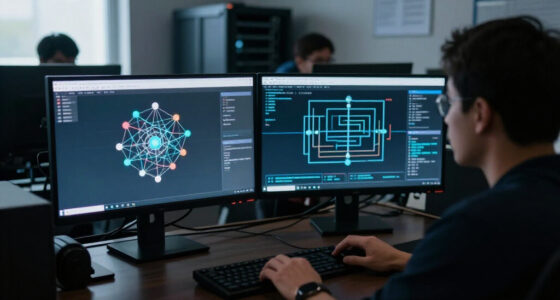
SuperMatics describes a workflow that uses models to predict material properties, generate synthesis recipes and simulate how a candidate might perform as a finished wire or device. The company says its systems draw on physics, including a framework it calls the Modulated Electron Lattice (MEL), and incorporate experimental outcomes into later model training.
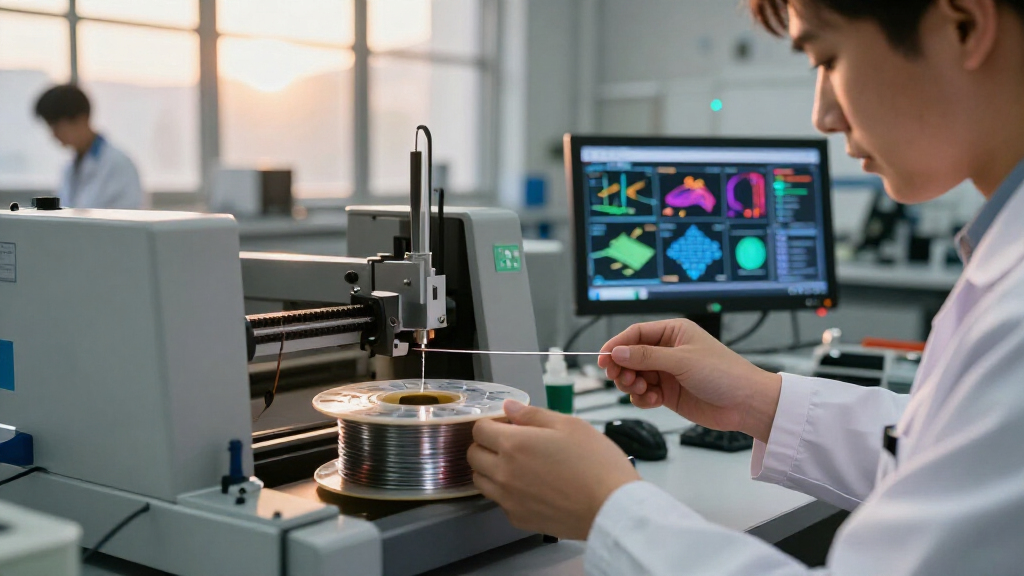
The candidates are made and tested with researchers at UC Berkeley and Georgia Tech, according to the company’s announcement. SuperMatics says the training process includes failed experiments as well as successful ones. It has not provided details in the source material about specific candidate compositions, test results, model accuracy or the amount of time the workflow has saved.
The company is also in discussions with global materials and technology companies about joint development programs involving existing high-temperature superconductors, while it builds a pipeline of its own proposed materials. Those talks are not described as signed partnerships. CEO Charlie Moon leads the company alongside co-founder Dr. Jaehwahn Kim, identified as Hyunsung T&C’s chief technology officer and a superconductivity veteran.
From Lab Results to Practical Wire
Superconductors can carry electricity with zero electrical resistance, but a discovery is not automatically useful for power systems or magnets. A material must also be reproducible and workable in a form such as wire or tape, and it must meet the requirements of its intended application. SuperMatics is making manufacturability the target of its AI process rather than focusing only on predicted material properties.
If the approach produces materials that can be made reliably and at lower cost, it could be relevant to data-center power delivery, quantum computing and fusion magnets. These are potential application areas cited by the company, not deployed products or demonstrated outcomes. The announcement provides no evidence yet that SuperMatics has reached the production, cost or performance thresholds needed in those markets.
Products Worth Considering

Jackery Explorer 300 Portable Power Station, 292Wh

EcoFlow Delta 3 Portable Power Station – 1024 Wh, 1800 W

LG UltraGear 27GX704A-B 27-inch QHD OLED Gaming Monitor
As an affiliate, we earn on qualifying purchases.
Why Superconductor Wire Is Scarce
The company’s press release says scientists have discovered thousands of superconductors since 1911, while only a handful have been made into commercial wire. It argues that standard simulations cannot reliably predict high-temperature superconductivity at everyday pressures, leaving many research teams reliant on trial and error. SuperMatics presents its combination of prediction, recipe development and experimental feedback as a response to that challenge.
The release also points to prospective demand. The International Energy Agency expects data-center electricity use to more than double by 2030, and the company says Microsoft is exploring superconducting power delivery for data centers. Fusion developers, meanwhile, use high-temperature superconducting tape in magnets, which the release describes as costly and scarce. These examples establish possible market interest, but they do not show that SuperMatics materials are being used in those systems.
In 2026, researchers at the University of Houston raised the ambient-pressure superconductivity record, according to the supplied report. SuperMatics argues that record-setting properties alone do not solve the engineering challenge of producing durable, affordable wire. Its Nov. 5 presentation is the next public occasion identified for the company to explain its approach.
“Records make headlines, but wires change industries.”
— Davis Rens, SuperMatics co-founder and former quantum engineer at Rigetti Computing
Performance and Commercial Status
The available material does not identify a SuperMatics-designed superconductor that has been independently validated, made into commercial wire or tested at industrial scale. It provides no measurements for operating temperature, current-carrying capacity, strength, production yield or cost. The claimed role of the MEL framework and AI agents in improving discovery is not accompanied by comparative benchmarks or published results in the supplied source.
The nature and progress of the company’s discussions with materials and technology firms are also unclear. No partner names, signed agreements, funding details or commercialization timetable are provided. The company’s planned presentation may offer more detail, but the source does not specify what data it will disclose.
Details Expected at Sunnyvale Summit
SuperMatics is scheduled to present its approach on Nov. 5 at the Plug and Play Silicon Valley November Summit in Sunnyvale. The next useful indicators will be whether the company shares candidate materials, reproducible experimental data, wire-manufacturing results or independent validation, and whether its industry discussions lead to announced development agreements.
Until such evidence is available, the development is best understood as a company’s description of an AI-led research and development program—not confirmation that affordable superconducting wire is ready for commercial use. Progress will depend on turning predicted candidates into materials that can be repeatedly synthesized, fabricated and tested against the needs of actual applications.
Key Questions
What is SuperMatics announcing?
The Berkeley company says it is using AI models and agents to predict superconductor properties, develop synthesis recipes and simulate possible wires or devices. It plans to present the approach in Sunnyvale on Nov. 5, 2026.
Has SuperMatics announced a commercial superconducting wire?
No commercial wire product is identified in the available material. The company describes a research and development process, but does not report that one of its materials is ready for commercial production.
How does the company say its AI system works?
SuperMatics says its system predicts material properties, proposes synthesis recipes and simulates finished wire or devices. It says experimental results, including failures, are fed back into model training, with candidates tested alongside researchers at UC Berkeley and Georgia Tech.
What applications could the work serve?
The company cites data-center power delivery, quantum computing and fusion magnets as possible application areas. The source does not say that SuperMatics materials are currently being used in any of them.
What evidence is still missing?
The source provides no detailed performance measurements, manufacturing yields, cost estimates or independent validation for SuperMatics-designed materials. It also does not name prospective industry partners or say that its discussions have resulted in signed agreements.
Source: thequantuminsider.com