
When traveling with a drone, check airline regulations about batteries and packing requirements. Use impact-resistant cases and secure all components, including propellers, for safe transit. Keep your drone registration and permits handy, especially for international trips, and be aware of no-fly zones at your destination. To avoid delays or issues, follow airline policies for carry-on versus checked luggage. Continue exploring for detailed tips to make your drone trip smooth and legal.
Key Takeaways
- Register your drone and carry proof of registration, especially for heavier models, to comply with airline and country regulations.
- Pack batteries separately in carry-on luggage using protective cases, and fully drain or follow airline guidelines for lithium batteries.
- Use a sturdy, padded case to protect your drone and accessories, securing all parts to prevent movement during transit.
- Research destination country’s drone laws, no-fly zones, and permit requirements to ensure legal compliance abroad.
- Familiarize yourself with airport security procedures, remove batteries, and be prepared to power on your drone if requested.

Lekufee Waterproof Hard Carrying Case for DJI Mini 5 Pro Drone, Fly More Combo, DJI RC 2/RC N3, Battery(6 pcs), Charging Hub, and other Accessories(Case Only)
- Custom Fit for Mini 5 Pro: Securely holds drone and accessories
- Ample Storage Capacity: Holds drone, batteries, remote, and more
- Durable High-Quality Material: Made of ABS plastic with EVA foam
As an affiliate, we earn on qualifying purchases.
As an affiliate, we earn on qualifying purchases.
Understanding Airline Regulations for Drone Travel
When traveling with a drone, it is vital to understand airline regulations to avoid surprises at check-in. Many airlines require you to register your drone beforehand, especially if it exceeds certain weight limits, so check their specific policies. You also need to be aware of airspace restrictions at your destination. Some areas, like airports, military zones, and national parks, have strict no-fly zones, and violating these can lead to fines or confiscation. Always carry your drone registration details and be prepared to show them if asked. Additionally, review airline rules about packing batteries and drone components. Staying informed about both drone registration requirements and airspace restrictions helps guarantee your travel goes smoothly and avoids legal issues. Proper preparation, including checking drone regulations before departure, can prevent potential legal complications during your trip. Understanding Vetted drone regulations is essential for safe and compliant travel with your device. Being aware of wave and wind conditions can also help in planning safe drone flights during your travels. Moreover, familiarizing yourself with flight altitude limits can help prevent accidental violations of local laws during your flight.

2 Pack Lipo Safe Bag Fireproof, lithium battery bag fireproof and Explosionproof, Lipo Battery Storage Guard Safe Pouch for Charge and Storage
- Safety Design: Double zipper for secure closure
- Fireproof Material: Triple-layer fireproof fabric withstands high heat
- Compact Size: 170x110x85mm, holds multiple batteries
As an affiliate, we earn on qualifying purchases.
As an affiliate, we earn on qualifying purchases.
Checking Country-Specific Drone Laws Before Your Trip
Before packing your drone, it’s essential to research the specific laws and regulations of the country you’re visiting, as rules can vary widely. Different countries have unique local drone laws and country specific regulations that govern where and how you can fly. Ignoring these can lead to fines, confiscation, or legal trouble. To understand these rules better, use the table below as a guide for common restrictions: Additionally, consulting official government or aviation authority websites can provide the most current information on drone regulations. Being aware of European cloud innovation and how it influences data security policies can also be beneficial when traveling with sensitive footage. Furthermore, understanding airspace classification in the destination country can help you avoid restricted or dangerous zones during your flight. It is also wise to familiarize yourself with privacy laws related to drone usage, which can differ significantly from one country to another. Awareness of Bank SWIFT/BIC codes can be important when managing international financial transactions related to your trip.

CANOPUS Car Registration and Insurance Holder, Car Document Holder, Vehicle Registration and Insurance Card Holder, Wallet for Auto, Trailer, Motorcycle, Truck, Vehicle Paperwork Organizer (2 Pack)
- Protects Documents from Wear: Keeps important papers safe and organized
- Easy Access and Visibility: Quickly find and present documents when needed
- Secure Snap Closure: Ensures documents stay securely in place
As an affiliate, we earn on qualifying purchases.
As an affiliate, we earn on qualifying purchases.
Preparing Your Drone for Airport Security Checks
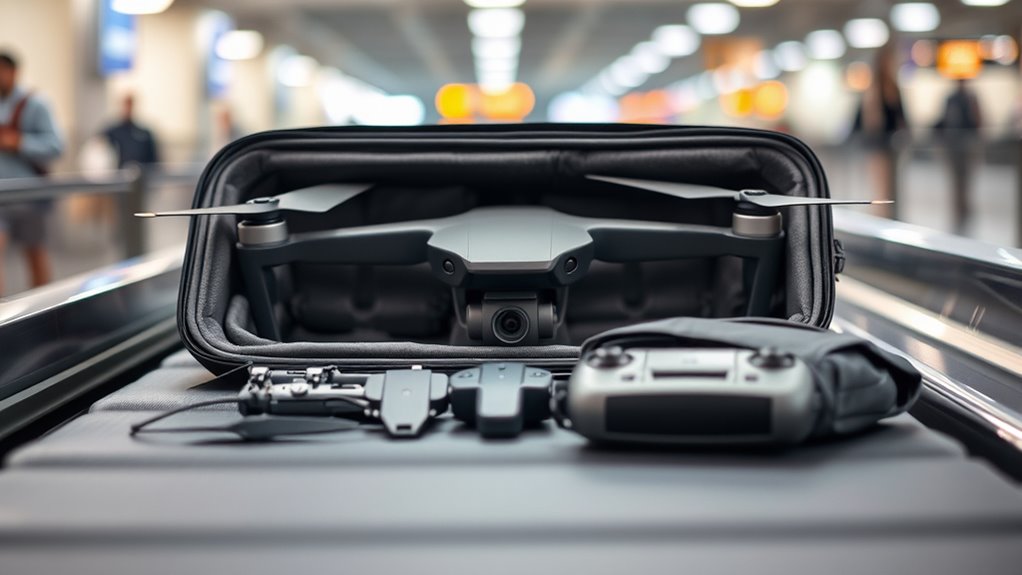
To guarantee a smooth security process at the airport, you need to prepare your drone carefully. Start by ensuring your drone identification details are clearly documented and easily accessible. Airport security may ask to see proof of ownership or registration, so keep any registration papers or receipts nearby. Remove batteries and store them separately if required by airline or security guidelines, as lithium batteries often need to be screened separately. Be ready to power on your drone if asked, since some security checks require verifying the device’s functionality. Clean your drone to avoid unnecessary delays, and pack it in a way that makes inspection quick and easy. Proper preparation minimizes the risk of delays and ensures your drone passes airport security smoothly. Additionally, understanding airline regulations related to flying with drones can help prevent last-minute surprises. Familiarizing yourself with security screening procedures can further streamline your experience at the checkpoint. Being aware of smart security technology used at airports can also help you anticipate what to expect during the screening process. Knowing how advanced screening tools are employed can help you better navigate the process and reduce potential hiccups. Also, researching dronespecific screening protocols can prepare you for any additional checks specific to drone devices.

Hard Case for DJI Mini 4K Drone: Waterproof Travel Box for DJI Mini 2/SE
- Custom Fit for DJI Mini Series: Designed for DJI Mini 4K and Mini 2
- Spacious Interior for Accessories: Holds drone, batteries, charger, cables, and more
- Durable Waterproof Construction: Impact-resistant PP with O-ring seal for water resistance
As an affiliate, we earn on qualifying purchases.
As an affiliate, we earn on qualifying purchases.
Packing Your Drone and Accessories for Safety and Compliance
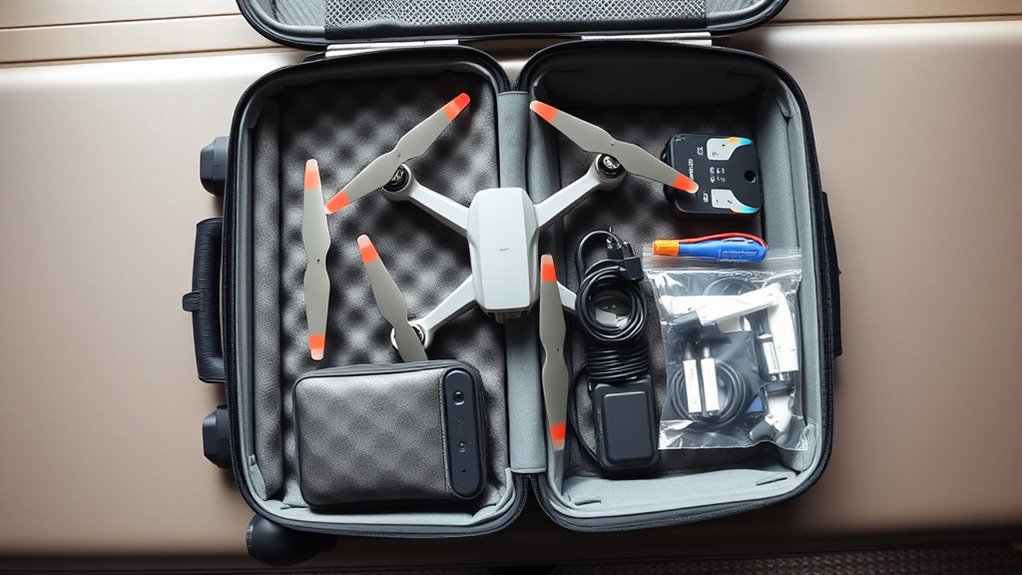
Packing your drone and accessories properly guarantees safety and compliance during your travels. To do this effectively, follow these key steps:
Properly packing your drone ensures safety, compliance, and protection during travel.
- Use a sturdy, padded case to protect your drone and accessories from damage.
- Ensure all drone parts, including propellers and cameras, are securely fastened and stored to prevent movement.
- Keep your drone’s maintenance records and user manual handy in case airline or security questions arise.
- Consider weather conditions at your destination; pack weather-resistant covers or protection if rain or humidity is expected.
- Familiarize yourself with airline regulations regarding drone transportation to avoid surprises during your trip. Proper packing not only safeguards your equipment but also helps you stay compliant with airline regulations. Taking weather considerations into account guarantees your gear remains safe and functional, no matter the climate. Additionally, understanding butter storage can help you keep your gear in optimal condition, especially if traveling to humid environments. Being aware of power management best practices can also prevent battery issues during your journey. Staying informed about technical standards ensures your drone complies with safety guidelines and reduces the risk of confiscation or delays.
- Remember to regularly check for component compatibility to ensure your accessories work seamlessly with your drone model, avoiding potential issues during transit.
Battery Safety and Airline Policies on Lithium Batteries
Lithium batteries are essential for powering drones, but they also pose safety risks if not handled properly during travel. To minimize hazards, follow airline policies on battery storage, such as keeping batteries in carry-on baggage and protecting terminals from short circuits. Most airlines limit the size and capacity of lithium batteries you can bring, often requiring batteries over 100Wh to be approved beforehand. Proper battery storage reduces the risk of fires and ensures safe handling. Keep in mind that airlines may have liability limits if batteries are damaged or improperly declared. Always check specific airline regulations before flying, and carry batteries in protective cases. Being diligent with battery safety not only protects your drone but also shields you from potential airline liability. Additionally, understanding free floating technology can help you better assess the risks associated with drone batteries and their handling. Being aware of vetted safety practices from reputable sources can further enhance your preparedness and compliance during travel. Properly managing lithium batteries is also crucial for fire safety, especially when transporting batteries in confined spaces such as aircraft cabins.
Tips for Carry-On vs. Checked Baggage When Traveling With a Drone
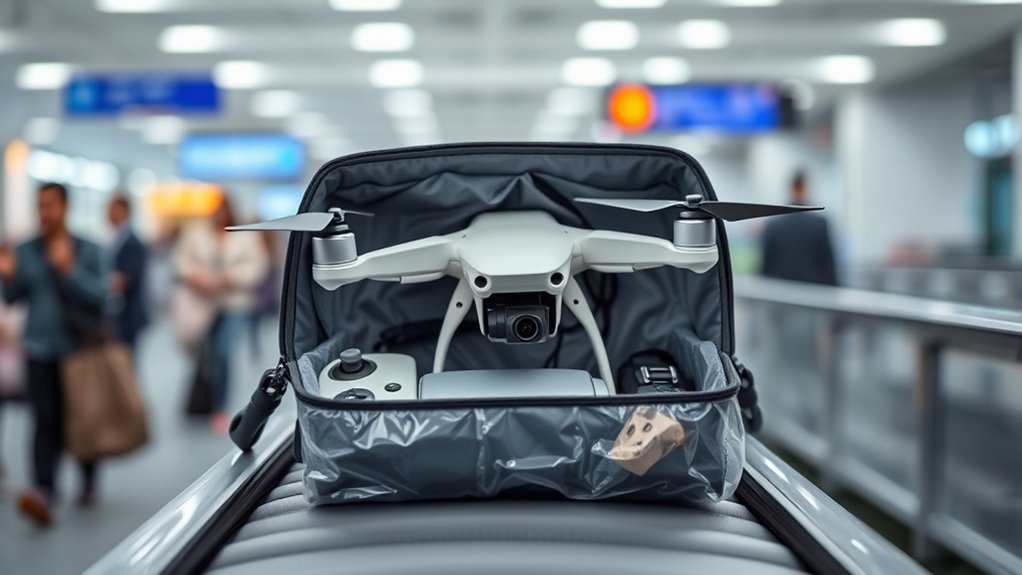
When deciding whether to pack your drone as carry-on or checked baggage, consider airline restrictions and safety rules. Carrying your drone onboard often makes it easier to protect delicate parts and comply with regulations. However, packing it in checked luggage might save space, but requires extra caution to prevent damage during transit.
Carry-On Restrictions
Ever wondered whether you should carry your drone in your hand luggage or check it in? When it comes to carry-on restrictions, your goal is to keep your drone safe and compliant. Here are four tips to contemplate:
- Check airline rules on lithium batteries, as most limit power capacity.
- Pack your drone in a protective case for drone maintenance and safety.
- Carry essential accessories, avoiding excess weight that might cause issues.
- Keep your drone insured and carry proof of insurance in case of mishaps.
Checked Baggage Tips
Deciding whether to pack your drone in checked baggage or carry it on can impact its safety and compliance with airline policies. If you choose checked baggage, ensure your drone is well-protected and complies with airline baggage policies. Remember, some airlines require drone registration and may have restrictions on lithium batteries in checked luggage. Carrying your drone onboard often offers better control and reduces damage risk. Check airline policies beforehand to confirm if batteries can be carried on. Use the table below to compare options:
| Carry-On | Checked Baggage |
|---|---|
| Easier to monitor during flight | Risk of damage during handling |
| Must adhere to carry-on size | Must follow checked baggage rules |
| Batteries allowed if compliant | Lithium batteries may be restricted |
| Less risk of theft | Greater protection in luggage |
| Requires careful packing | Ensure proper drone registration |
Registering Your Drone With Authorities When Traveling Internationally

Traveling internationally with your drone requires more than just packing it in your luggage; you also need to make sure it’s properly registered with the appropriate authorities. To do this, follow these steps:
- Verify if your destination country requires international drone registration before departure.
- Obtain any necessary cross border drone permits to legally transport your drone across borders.
- Keep proof of registration and permits handy during travel.
- Check airline policies on carrying registered drones to avoid surprises at check-in.
Tips for Protecting Your Drone During Transit

To keep your drone safe during travel, make sure to use a sturdy protective case that absorbs shocks and prevents damage. It’s also a good idea to remove sensitive components, like batteries or memory cards, to avoid accidental harm or loss. Taking these simple steps can help guarantee your drone arrives in perfect condition and ready to fly.
Use Protective Cases
Protective cases are essential for safeguarding your drone during transit, preventing damage from bumps, drops, or rough handling. A sturdy drone casing ensures your equipment stays intact throughout the journey. When choosing a protective case, consider these key features:
- Impact-resistant material to absorb shocks
- Foam padding tailored to your drone’s shape
- Secure latches to prevent accidental openings
- Waterproof or weather-resistant design for added protection
Using a durable drone casing minimizes the risk of damage and makes your travel experience stress-free. Always opt for high-quality protective cases that fit your drone perfectly. Proper packing keeps your drone safe from airline handling and rough transportation, so you can focus on capturing great footage once you arrive.
Remove Sensitive Components
Removing sensitive components from your drone before transit is a crucial step in preventing damage. Start by carefully removing the camera to avoid scratches or impact damage during handling. This also reduces weight and minimizes the risk of the camera breaking if the drone is jostled. Next, disconnect the GPS module to prevent static or electrical issues that could occur during travel. Confirm all batteries are fully drained or properly stored according to airline regulations. If your drone has other delicate parts, like antennas or sensors, consider removing or securing them separately. Wrapping these components in soft, protective materials keeps them safe. Taking these precautions minimizes the chance of internal damage and helps ensure your drone arrives in perfect condition for your next flight.
Best Practices for Flying Your Drone at Your Travel Destination
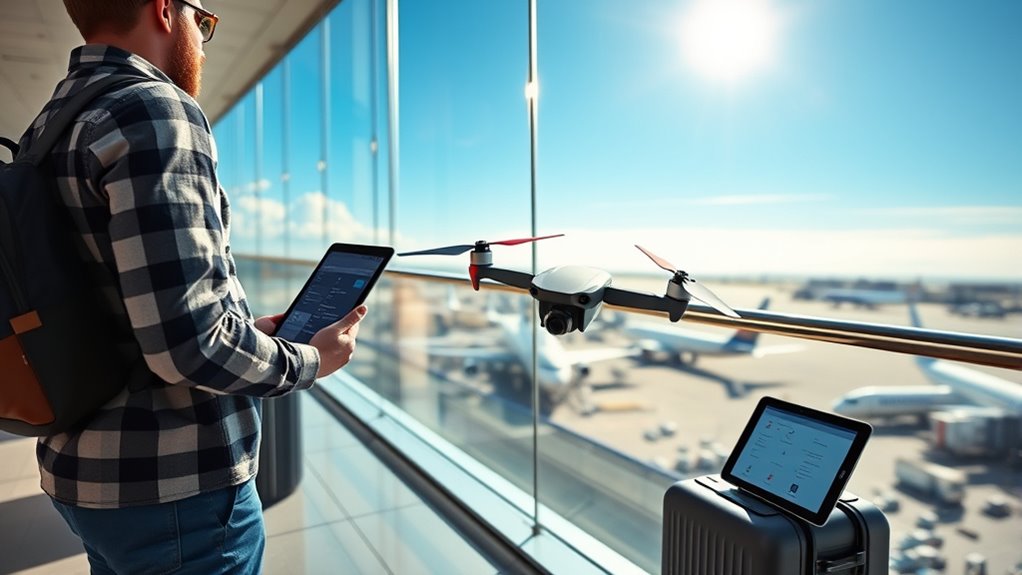
Flying your drone at your travel destination requires careful planning and awareness of local rules. To guarantee a smooth experience, consider these best practices:
- Research local regulations—know the no-fly zones and permit requirements.
- Conduct drone maintenance—check battery levels, propellers, and sensors before flying.
- Plan your flights—use detailed flight planning to identify ideal locations and times.
- Respect privacy and safety—avoid flying over crowds or private property without permission.
Frequently Asked Questions
Can I Fly My Drone in National Parks or Protected Areas?
You can’t fly your drone in most national parks or protected areas because it violates wildlife conservation efforts and drone photography guidelines. Many parks prohibit drone use to protect wildlife and preserve natural serenity. Always check specific regulations for each park before visiting, and respect local rules. If allowed, fly responsibly, stay at a safe distance from animals, and follow all guidelines to avoid disturbing wildlife or facing penalties.
Are There Specific Drone Weight Limits for Airline Carry-On or Checked Baggage?
You should verify your airline’s drone weight regulations and carry-on size limits before packing. Most airlines allow drones in carry-on baggage if they stay within the specified weight, usually around 2-5 pounds, and fit within the carry-on size limits. Avoid checked baggage for your drone, as weight restrictions can be stricter, and there’s a higher risk of damage. Always confirm airline policies to ensure smooth travel with your drone.
How Do I Handle Drone Documentation or Permits When Crossing Borders?
Think of crossing borders with your drone as steering a busy highway; you need the right permits to stay on the road. Always carry your drone documentation and permits, ready for customs declaration. Before crossing, check border permissions and regulations, as they vary by country. Being prepared helps smooth your passage, preventing delays or confiscation. Always research specific country rules to guarantee your drone travels legally across borders.
Can I Charge Drone Batteries at Airport Charging Stations?
Yes, you can usually charge drone batteries at airport charging stations, but always prioritize battery safety. Check if the station allows lithium battery charging and follow safety guidelines, such as using proper containers and avoiding overcharging. verify your batteries are in good condition and properly labeled. Be cautious, as some airports may have restrictions or specific rules, so it’s wise to confirm with the airline or airport staff beforehand.
What Insurance Coverage Do I Need for Flying My Drone Internationally?
While international drone policies vary, you’ll want extensive insurance coverage to protect against accidents and legal issues abroad. Check the insurance requirements for each country you visit, as some may demand specific liability coverage or drone insurance certificates. You should also verify if your policy covers theft, damage, or loss internationally, ensuring you’re protected regardless of where you fly. Always research local regulations to stay compliant and avoid costly complications.
Conclusion
Traveling with a drone demands diligence, discretion, and dedication. By understanding regulations, packing properly, and practicing precaution, you protect your gear and your trip. Stay savvy, stay safe, and soar smoothly through security and skies alike. Remember, responsible travel isn’t just about rules—it’s about respect, readiness, and rewarding adventures. So, seize the skies with confidence, and let your drone deliver dazzling destinations without disruption or doubt.