When flying your drone in windy conditions, check weather forecasts and avoid gusty or stormy days. Use a drone with high wind resistance and stable flight modes. Plan your route carefully, avoiding obstacles and no-fly zones, and stay alert to sudden gusts. Maintain smooth, controlled movements and keep your drone steady with GPS and sensors. Practicing emergency landings will also help you stay safe—learn more to master flying confidently in challenging winds.

Get the latest gadgets delivered free with Prime
- Fast, free delivery on millions of items
- Prime Video, Amazon Music and more included
- Member-only deals all year
Key Takeaways
- Check real-time weather forecasts and avoid flying if wind speeds exceed your drone’s limits.
- Use obstacle detection tools and plan routes to steer clear of hazards and reduce collision risks.
- Stabilize your drone with GPS, maintain steady altitude, and make small, controlled movements in gusty conditions.
- Prioritize safe landing procedures and rehearse emergency protocols to handle unexpected wind gusts effectively.
- Postpone flights during high wind predictions and choose sheltered locations to ensure safety and prevent disasters.
Assessing Wind Conditions Before Flight
How can you guarantee safe drone flights in windy conditions? The key is to assess wind conditions accurately before takeoff. Check the wind speed forecast from reliable sources, like weather apps or local weather stations. Pay attention to weather patterns that can influence wind strength, such as cold fronts or storms. If wind speeds are above your drone’s recommended limits, avoid flying, as turbulence can destabilize your drone and cause crashes. Note that steady weather patterns usually indicate calmer conditions, while gusty or changing patterns suggest higher wind risks. Always verify current conditions right before your flight, not just the forecast. Proper assessment helps you make smarter decisions, ensuring safer, more controlled drone flights even when wind is a concern. Additionally, understanding sound vibrations can help you recognize subtle atmospheric changes that may influence wind behavior. Recognizing wind shear is also critical, as sudden changes in wind speed or direction can unexpectedly impact drone stability. Monitoring meteorological phenomena like temperature gradients and pressure systems can further enhance your ability to predict wind fluctuations. Being aware of air pressure changes can also provide early indications of shifting wind conditions, helping you prepare accordingly. Staying informed about local weather alerts can give you an extra layer of safety and preparedness before flying.
Choosing the Right Drone for Windy Days
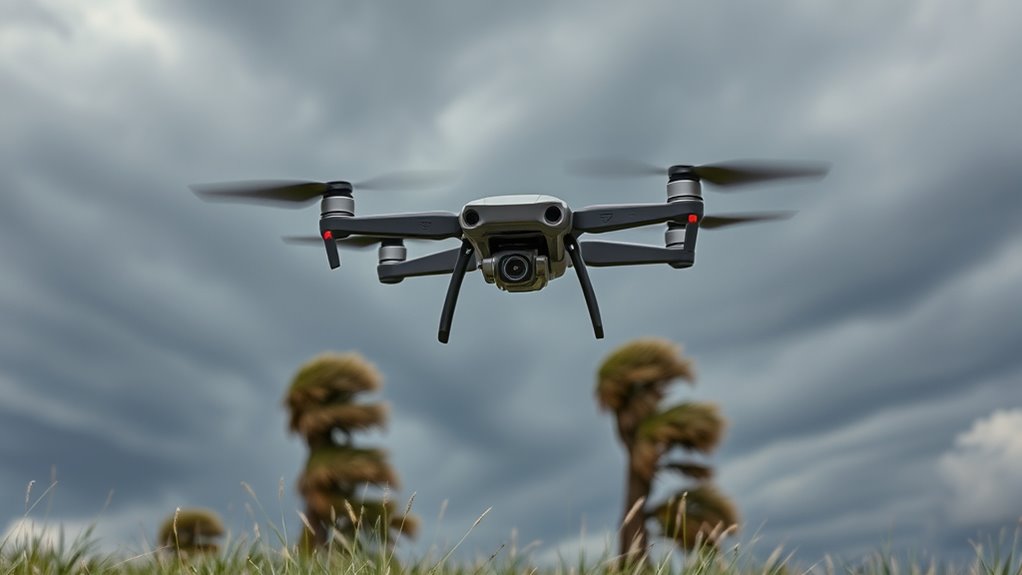
When flying in windy conditions, choosing the right drone is essential for maintaining stability and safety. You need a model with robust propeller durability to withstand gusts and prevent crashes. Look for drones with advanced camera stabilization to ensure clear footage even when the wind causes turbulence. Consider these key features:
- Heavy-duty propellers designed for windy environments
- Strong motor power for quick response to gusts
- High wind resistance ratings for better stability
- Gimbal stabilization systems for smooth video
- Robust build quality to endure harsh conditions
Additionally, selecting a drone with European cloud solutions can enhance data security and operational resilience in challenging weather. Selecting a drone with these features helps you stay in control and avoid accidents. Remember, a drone built for windy days isn’t just about power; it’s about resilience and steady footage, ensuring a safer flying experience. Incorporating Free Floating principles can help you better understand how to manage drone stability in challenging weather conditions. Understanding the aerodynamics involved can also improve your ability to predict how your drone will respond to gusts and turbulence. Being aware of industry standards can further guide you in choosing equipment that performs reliably under adverse conditions.
Planning Your Flight Path Carefully

Before you take off, map out safe zones where your drone can fly without risk. Check weather reports for wind forecasts to avoid surprises, and identify obstacles like trees or power lines along your route. Planning carefully guarantees you stay safe and maintain control in windy conditions. Incorporating smart sensors can further enhance your awareness of nearby objects and improve your flight safety. Additionally, understanding your drone’s wind resistance capabilities helps you anticipate how it will perform under different wind conditions. Being aware of environmental factors allows you to adjust your flying techniques accordingly to ensure a safe flight. Recognizing weather patterns can also help you choose optimal times for flying, reducing the likelihood of encountering hazardous conditions.
Map Safe Zones
Planning your flight path carefully is essential, especially in windy conditions, to make certain your drone stays within safe zones. Mapping out these areas helps you avoid no fly zones and adhere to legal restrictions. Use reliable apps or maps to identify restricted airspace, such as near airports or government buildings. Keep in mind that wind can push your drone into unsafe zones unexpectedly. Before flying, check for temporary restrictions like events or emergencies. Always plan a route that steers clear of:
- No fly zones and restricted airspace
- Crowded areas and gatherings
- Sensitive wildlife habitats
- Power lines and tall structures
- Areas with poor GPS signal
Mapping safe zones ensures your drone remains within legal limits and minimizes risks caused by wind gusts. Proper planning keeps your flight safe and compliant. Additionally, employing safe zone mapping strategies can help you stay prepared and avoid last-minute surprises during your flight. Being aware of legal restrictions can further enhance your safety and ensure you operate within the law. Regularly reviewing connected equipment updates can also help you adapt to changes in airspace regulations. Incorporating humorous quotes about unexpected challenges can also help keep a positive mindset during stressful moments.
Check Wind Forecasts
Checking wind forecasts before your flight is crucial to guarantee safe drone operation in windy conditions. By reviewing weather patterns, you can identify expected wind speeds and avoid flying during gusty or unpredictable periods. Pay attention to forecast updates, as wind speed can fluctuate rapidly, especially in changing weather conditions. Knowing the typical wind patterns in your area helps you plan a route that minimizes exposure to high winds. If forecasts predict strong or variable winds, consider postponing your flight or choosing a more sheltered location. Being aware of wind conditions ensures you’re prepared to handle your drone safely, reducing the risk of crashes or loss. Always double-check the weather to make informed decisions and keep your flight smooth and secure. Monitoring wind conditions is also essential for adjusting your flying techniques and ensuring safety during your drone operation. Additionally, understanding local weather patterns can improve your ability to predict sudden changes in wind, making your flights safer. Familiarity with weather variability can help you anticipate unexpected gusts and respond appropriately. Being mindful of wind gusts helps prevent sudden loss of control and potential accidents during flight. Staying vigilant about changing weather conditions allows you to adapt quickly and avoid hazardous situations.
Identify Obstacles Ahead
Since windy conditions can cause unpredictable drone movements, it’s essential to identify obstacles along your planned route. Effective obstacle detection helps you anticipate hazards and ensures safe obstacle avoidance. Before flying, scan the area for potential dangers like trees, power lines, buildings, poles, and wires. Use your drone’s camera or sensors to spot obstacles that might not be visible from the ground. Planning your flight path around these hazards reduces risk and improves control. Keep in mind that obstacles may shift or be harder to see in windy conditions, so stay alert. By proactively identifying obstacles ahead, you give yourself the best chance to maintain safe flight and avoid disasters caused by unseen hazards.
Adjusting Your Drone Settings for Stability

When flying your drone in windy conditions, adjusting your settings can considerably improve stability. Start by optimizing gimbal stabilization to keep your camera steady despite gusts. Ensure the gimbal’s sensitivity is calibrated properly, reducing unwanted movement. Next, tweak the propeller pitch to enhance lift and responsiveness, helping your drone resist wind drift. Increasing the pitch slightly can give you better control, but avoid overcompensating, which can cause instability. If your drone offers adjustable flight modes, switch to a wind-resistant mode designed for turbulent conditions. Lowering the camera’s exposure settings can also reduce vibrations and jitter. By fine-tuning these parameters, you’ll improve your drone’s stability and minimize the risk of crashes caused by gusty winds.
Maintaining Proper Altitude and Positioning

Maintaining proper altitude and positioning is crucial when flying your drone in windy conditions because gusts can easily push it off course or cause altitude fluctuations. To guarantee stability, focus on precise altitude control and maintaining positioning accuracy. Keep these tips in mind:
- Use GPS mode to lock your drone’s position
- Set a consistent altitude to prevent drift
- Monitor real-time feedback for altitude variations
- Avoid sudden movements that could overcorrect
- Maintain a steady throttle to stabilize altitude
Using Manual Control and Avoiding Overcorrection
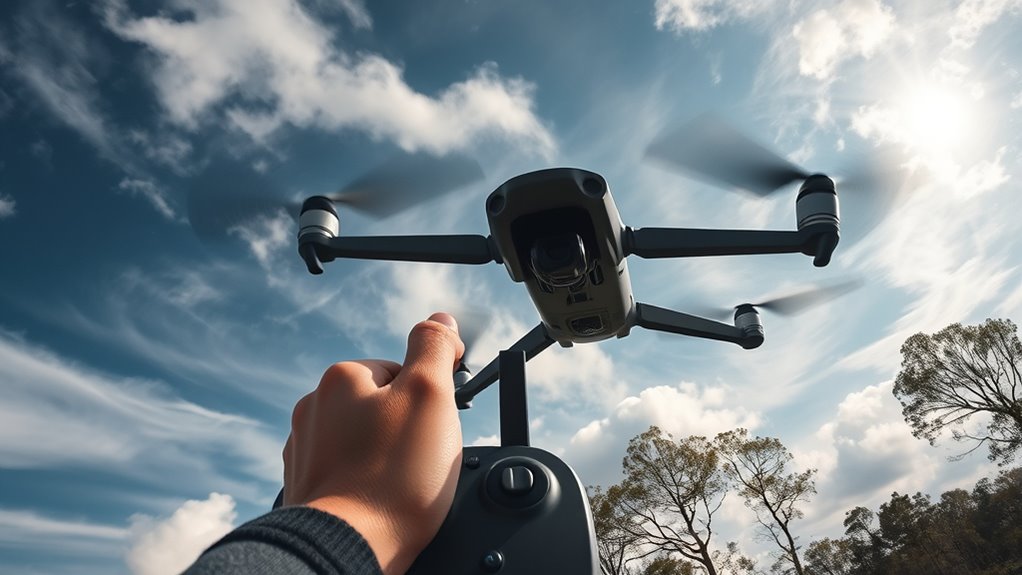
Trust your skills to keep control without overreacting to gusts. Make small, deliberate adjustments instead of large movements that could throw off your drone’s stability. Stay calm and maintain a balanced approach to avoid overcorrection and keep your flight smooth.
Trust Your Skills
In windy conditions, relying solely on automatic controls can lead to overcorrection and instability. Trust your instincts and confidence skills to maintain control. Remember, your experience and understanding of your drone are your best tools. When flying manually, focus on smooth, deliberate movements rather than reacting impulsively. Keep these tips in mind:
- Trust your instincts to gauge the drone’s response
- Use small, controlled adjustments instead of large corrections
- Stay calm and avoid overreacting to sudden gusts
- Keep your hands steady and avoid jerky movements
- Rely on your confidence skills to stay composed under pressure
Make Small Adjustments
When flying your drone in windy conditions, making small, deliberate adjustments is essential to maintain stability. Use fine tuning controls gently to correct drift without overreacting. Avoid jerky movements—small inputs can prevent overcorrection, which often worsens the situation. Regular stabilizer calibration helps ensure your drone responds accurately to control inputs, reducing the need for constant adjustments. If you notice your drone drifting, make subtle corrections rather than large adjustments. Keep your hands steady and focus on smooth, controlled movements. Overcorrecting can cause oscillations or loss of control, especially in gusty winds. Remember, patience and precision are key; gentle tweaks keep your drone stable and minimize the chances of losing control or crashing.
Maintain Calm Balance
Maintaining a calm balance while flying your drone in windy conditions requires steady manual control and a conscious effort to avoid overcorrecting. A calm mental attitude helps you stay focused, preventing reactions driven by stress or frustration. Keep your hand control steady, making gentle adjustments rather than sharp moves. Remember, overcorrection can destabilize your drone further, so small, deliberate inputs are best. To stay balanced:
- Breathe steadily to maintain composure
- Use smooth, gradual control movements
- Keep your gestures minimal and precise
- Stay aware of wind shifts without overreacting
- Take pauses if you feel overwhelmed
Practicing Emergency Procedures and Safe Landing Techniques
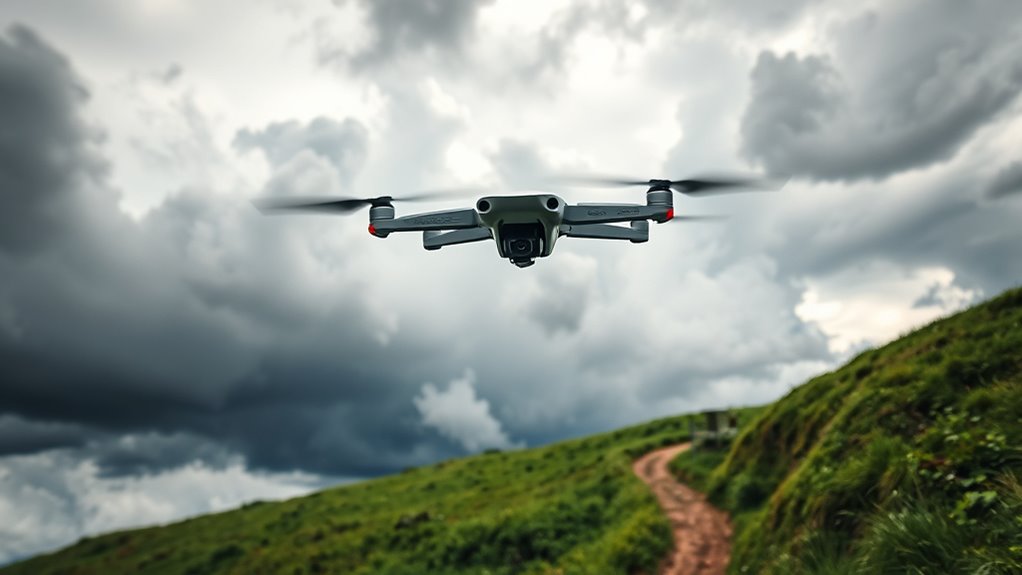
Practicing emergency procedures and safe landing techniques is essential for maintaining control during unexpected situations, especially in windy conditions. You should regularly simulate emergency landings, focusing on quick, smooth descents to prevent crashes. Always prioritize battery conservation during these drills, ensuring your drone has enough power to execute a safe landing if needed. Familiarize yourself with your drone’s emergency features, such as return-to-home or emergency stop functions, so you can activate them swiftly. Practice controlling your drone in various wind scenarios, honing your ability to stabilize it and bring it down safely. By rehearsing these procedures, you reduce panic and improve response times when real emergencies happen, ultimately safeguarding your drone and avoiding disaster.
Post-Flight Checks and Maintenance in Windy Weather
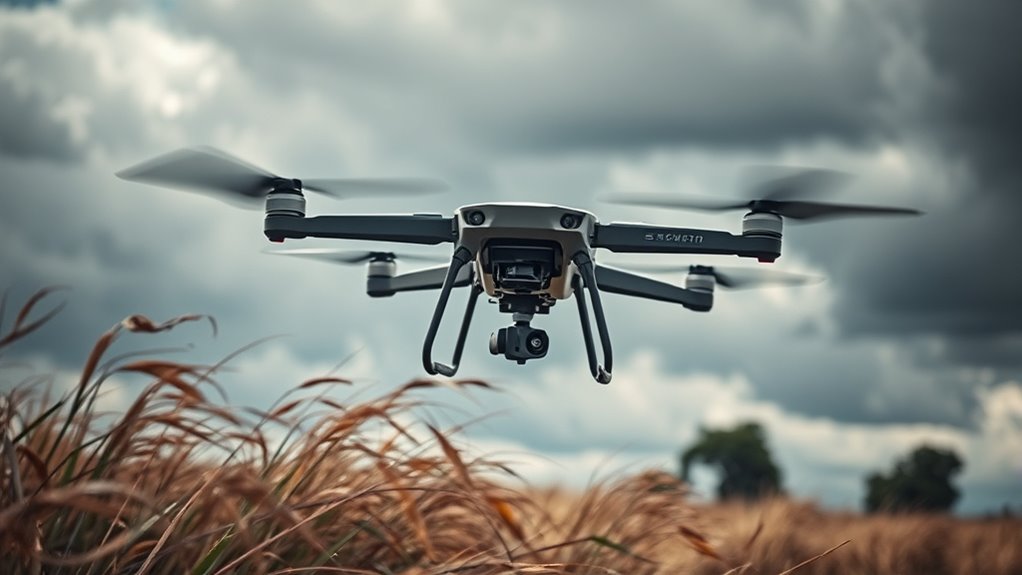
After flying your drone in windy conditions, it’s crucial to perform thorough post-flight checks to guarantee your equipment remains in peak condition. Wind can cause stress on your drone’s components, making inspection indispensable. Focus on battery health to ensure it hasn’t drained excessively or shown signs of damage. Carefully examine your propellers for cracks, chips, or warping, as damage can compromise flight safety. Also, check for loose screws, and ensure the motors are free of debris. Clean the drone’s body and sensors to prevent dust buildup. Finally, review flight logs for any anomalies during the flight. Regular maintenance after windy flights prolongs your drone’s lifespan and keeps your future flights safe.
Perform thorough post-flight checks after windy flights to ensure drone safety and longevity.
- Battery health assessment
- Propeller inspection for damage
- Tightening loose screws
- Cleaning drone surfaces and sensors
- Reviewing flight data for anomalies
Frequently Asked Questions
How Can I Tell if Wind Conditions Are Safe for Drone Flight?
You can tell if wind conditions are safe for drone flight by checking weather forecasting and wind speed indicators. Look for recent updates on wind speeds in your area and make certain they stay below your drone’s maximum tolerable limit. Use a an anemometer or wind speed indicator if available, and avoid flying if gusts or sustained winds are strong, as they can cause instability or crashes. Always prioritize safety before taking off.
What Signs Indicate My Drone Is Struggling Against the Wind?
When your drone fights against the wind, you’ll notice sluggish responsiveness and abnormal movements, showing it’s struggling with wind resistance. Sudden gust detection causes jerky shifts or instability, making control difficult. If your drone’s motors work harder than usual or it drifts unexpectedly, these signs signal the wind’s overpowering force. Stay alert—these clues help you gauge if it’s safe to continue or land immediately to prevent damage.
Are There Specific Drone Models Better Suited for Windy Environments?
Yes, some drone models are better suited for windy environments. Look for weather-resistant drones with wind-resistant features, like sturdy frames and powerful motors, which help them handle gusts more effectively. Brands like DJI and Autel offer models designed for challenging weather conditions. Choosing a drone with these features guarantees better stability and control, allowing you to fly confidently even when the wind picks up.
How Does Wind Affect Drone Battery Life and Flight Time?
Wind speed increases, leading to faster battery drain and reduced flight time. As you fly in windy conditions, your drone must work harder to maintain stability, which consumes more power. The stronger the wind, the quicker your battery depletes. To maximize flight time, keep wind speed low, avoid gusts, and monitor your drone’s battery closely. This way, you can prevent crashes and extend your flying session.
Can Wind Cause My Drone to Lose GPS Signal or Drift Uncontrollably?
Yes, wind speed and gust intensity can cause your drone to lose GPS signal or drift uncontrollably. As wind gets stronger, especially with sudden gusts, your drone may struggle to maintain its position, leading to signal loss or unexpected movement. To avoid this, fly in calmer conditions, keep an eye on wind reports, and use GPS mode for better stability. Always stay alert to changing wind patterns during your flight.
Conclusion
By following these tips, you’ll master flying your drone in windy conditions and avoid disaster. Think of yourself as a fearless captain steering a stormy sea—you’ll keep your drone safe and steady, even when the wind howls like a wild beast. With careful planning, proper settings, and quick reflexes, you’ll turn challenging weather into an opportunity to showcase your flying skills. Stay vigilant, stay confident, and let your drone soar through the gusts like a true aerial warrior.
Halloween Picks
halloween
As an affiliate, we earn on qualifying purchases.