
When dealing with police at the airport, stay calm and respectful. You’re not required to answer questions beyond showing your ID and boarding pass, and you can ask if you’re free to leave or are being detained. Police need proper legal authority, like a warrant or probable cause, to search your baggage or question you further. Knowing your rights helps prevent unnecessary stress—continue to explore how to confidently handle these situations.
Key Takeaways
- Remain calm, respectful, and cooperative when approached by police at airport security or during baggage checks.
- Know you can ask if you’re free to leave or are being detained, and request legal counsel if detained.
- You are not required to consent to searches without proper legal authority, such as a warrant or probable cause.
- Politely request police to show warrant or legal justification before opening your baggage or allowing searches.
- Document any rights violations and seek legal advice if you suspect misconduct or unlawful searches.
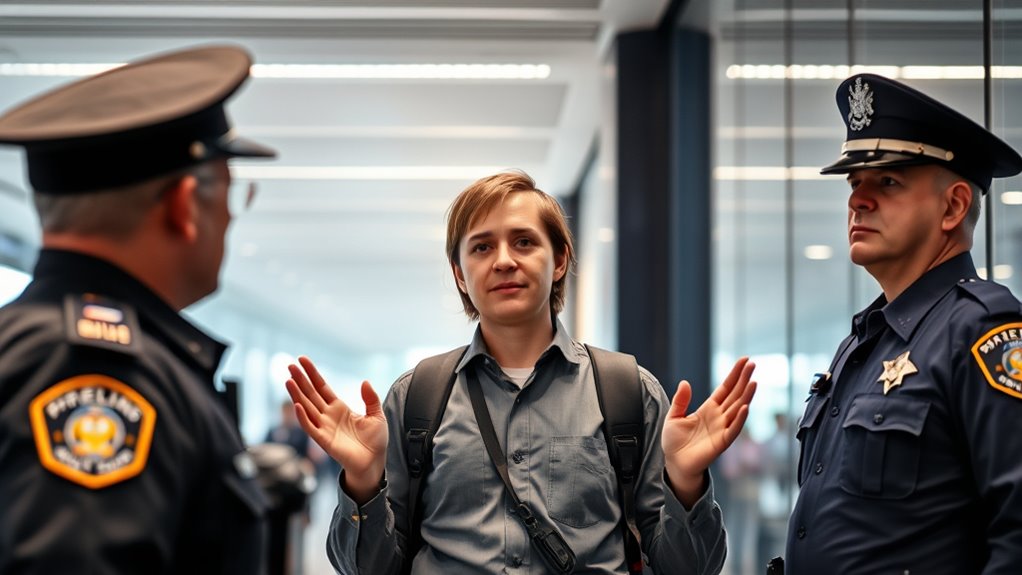
Flying can be stressful enough without the added worry of encountering police during your journey. When you arrive at the airport, your focus is usually on catching your flight and making your way through security efficiently. However, it’s important to understand what your rights are if you do come into contact with police while traveling. Police can appear at various points in your journey, including at airport security checkpoints or during baggage inspections. Knowing what to expect and how to conduct yourself can help guarantee your rights are protected and that the process remains smooth.
At airport security, officers are typically there to enforce safety regulations, not to investigate criminal activity unless suspicion arises. If police or security personnel approach you during the security screening, stay calm and be respectful. You are generally required to show your boarding pass and identification, but you’re not obligated to answer questions beyond basic identification unless law enforcement explicitly states they are conducting an investigation. If you’re approached by police outside the security area, such as during baggage inspections or in the terminal, they may ask questions or request to search your belongings. You have the right to ask whether you’re free to leave or if you’re being detained. If detained, ask for clarification on the reason and request legal counsel if needed.
During baggage inspections, police or security officers might conduct searches if they have probable cause or a warrant. If they do so, you should be informed of this and can choose to cooperate or ask for legal representation before consenting. Refusing a search can sometimes lead to complications, but you’re not required to consent to searches without proper legal authority. If you’re asked to open your baggage or if a customs officer or police request to inspect your luggage, remain polite but firm. You can ask if they have a warrant or legal justification for the search. Remember, you do not have to consent to a search if they lack proper authority, but resisting or obstructing can escalate the situation. Additionally, understanding the contrast ratio of security equipment can help you recognize the clarity of surveillance footage if needed.
Throughout any encounter with police or security personnel, your best approach is to stay calm, be respectful, and know your rights. You don’t have to volunteer information or consent to searches unless lawfully required. If you believe your rights have been violated, document the situation if possible, and seek legal advice afterward. Being informed and composed helps you navigate any police interaction during your flight confidently and securely.
Frequently Asked Questions
Can Police Search My Luggage Without My Consent at the Airport?
No, police generally can’t search your luggage without your consent or a valid search warrant. They need your permission unless they have a court-issued warrant or if there are exigent circumstances. You’re not required to give consent, and you can politely refuse a search. Remember, understanding your rights and the consent requirements helps you stay in control during airport interactions. Always ask if they have a warrant before cooperating.
What Should I Do if a Police Officer Asks to See My ID?
If a police officer asks to see your ID, you should calmly comply to avoid escalating the situation. Remember, passenger rights include the right to verify your identification, especially if law enforcement has a lawful reason. Politely provide your identification for verification, but you’re not obligated to answer other questions. Stay respectful, remain calm, and ask if you’re free to go if you feel uncomfortable.
Are There Specific Rights for Non-Citizens During Airport Police Interactions?
As a non-citizen, your immigration status and visa rights influence your airport police interactions. You have the right to remain silent and request a lawyer if detained, but your rights may vary based on your visa type. Always carry your travel documents, and know that police can ask about your immigration status. However, you’re not obligated to answer questions beyond providing identification unless required by law.
Can Police Detain Me Without Charging Me at the Airport?
Yes, airport security can detain you without charging you, but only for a reasonable amount of time to investigate suspicions. Your passenger rights include being informed about the reason for detention and any searches. It’s important to stay calm and cooperate while understanding that security and police must follow legal procedures. Remember, detention isn’t the same as arrest, and you have rights to challenge or ask for legal assistance if needed.
How Do I Handle Police Questioning if I Am in Transit?
When airport security questions you in transit, stay calm and polite. You have passenger rights that protect you from unnecessary searches or detention. Clearly state you wish to remain silent if unsure, and ask if you’re free to go before answering further. Remember, police or security can’t force you to answer questions without proper legal grounds. Always cooperate respectfully, and if needed, request to speak with a legal representative to protect your rights.
Conclusion
Remember, knowledge is power when dealing with police while flying. Stay calm, respectful, and aware of your rights, because an ounce of prevention is worth a pound of cure. If you know your responsibilities and stand firm in your rights, you can navigate these situations more confidently. Ultimately, being prepared and calm can make all the difference—because a wise traveler walks with confidence, not fear. Trust in what you know, and you’ll handle any encounter better.