Flying a drone above the clouds isn’t practical or legal in most places because of altitude restrictions, safety risks, and technical limits. Regulations usually cap drone altitude at around 400 feet or 120 meters, with flying higher requiring special permissions. Weather can also cause problems like turbulence, reduced visibility, and equipment failure. If you want to learn more about what it takes to fly safely and legally at high altitudes, keep exploring these important considerations.
Get ready for Prime Big Deal Days — try Prime free
Exclusive member deals on October 6–7, plus fast free delivery. Cancel anytime.
As an affiliate, we earn on qualifying purchases.
Key Takeaways
- Most countries limit drone altitude to around 400 feet; exceeding this requires special permissions.
- High-altitude flights above clouds face strict regulations and potential legal restrictions.
- Weather conditions such as wind, turbulence, and reduced visibility pose significant safety risks.
- Thinner air at high altitudes decreases drone lift, battery life, and can cause technical issues.
- Flying above clouds can lead to loss of control, increased crash risk, and safety hazards.
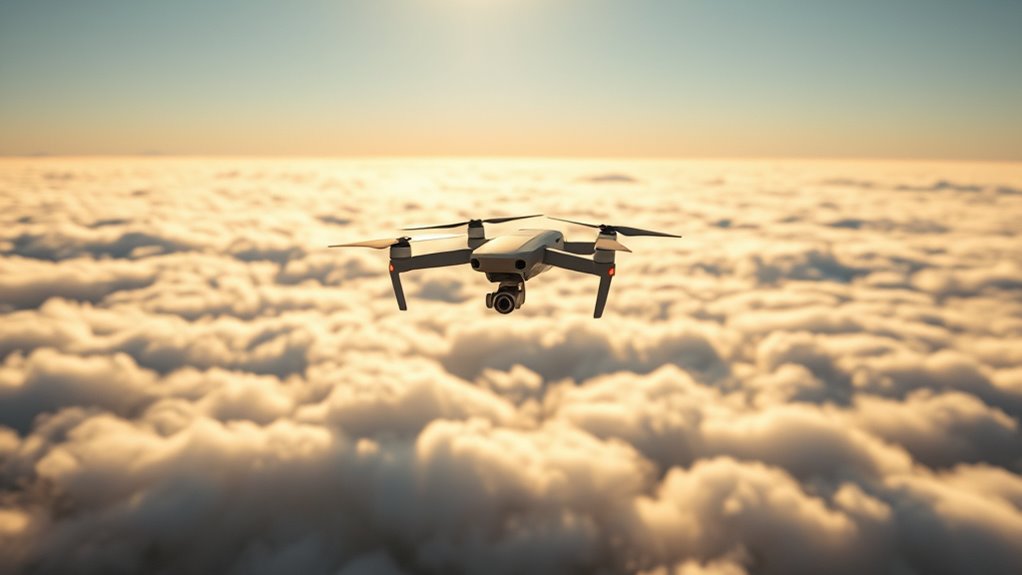
Flying a drone above the clouds might seem like an exciting idea, but it’s more complicated than simply reaching high altitudes. When you start thinking about flying that high, you must consider drone regulations that govern such actions. Most countries have strict rules about how high you can fly your drone, typically around 400 feet or 120 meters. Going beyond that generally requires special permissions or exemptions. These regulations are in place for safety reasons, to keep manned aircraft and other drones from colliding mid-air. Ignoring these rules could lead to hefty fines or even legal trouble, so always check your local laws before attempting to fly high. Furthermore, the European Union Aviation Safety Agency (EASA) enforces specific standards for high-altitude drone flights within European airspace. Weather impact is another major factor that limits your ability to fly above the clouds. High altitudes are subject to rapidly changing and often severe weather conditions. Wind speeds tend to increase as you go higher, making control more difficult. Plus, clouds themselves can obscure your drone’s visibility, increasing the risk of losing sight of it. Reduced visibility isn’t just a safety concern; it can also cause your drone’s sensors and GPS systems to malfunction. Thunderstorms, lightning, and turbulence are common at higher elevations, and these elements can damage your drone or cause unpredictable behavior. Even if you’re experienced, the weather above the clouds can be unpredictable and dangerous. Additionally, many drones are not designed to operate at such altitudes. As you ascend, the thinner air affects your drone’s lift and battery life. The motor performance drops, and your battery drains faster, which can lead to sudden power loss. This means that attempting to fly above the clouds isn’t just about legal and weather restrictions; your drone’s technical limitations also come into play. If you do manage to reach those heights, you’ll need specialized equipment and possibly a drone built for high-altitude flying, which are usually more expensive and harder to operate.
Frequently Asked Questions
Are There Specific Drones Capable of Flying Above Clouds?
Yes, there are high altitude drones equipped with cloud penetrating technology designed to operate above clouds. These drones can reach greater heights, thanks to powerful motors and specialized sensors. However, you should verify their specifications and local regulations before attempting to fly above clouds. Keep in mind that safety and legal restrictions still apply, so ensure you’re compliant and aware of weather conditions when flying at such altitudes.
How Does Weather Affect Drone Flight at High Altitudes?
Weather challenges markedly impact drone flight at high altitudes. As you ascend, altitude effects like thinner air reduce lift, making control harder. Wind speeds often increase, causing stability issues, while low temperatures can affect battery life and electronics. You must monitor weather conditions closely, as turbulence and storms can jeopardize your drone’s safety. Planning ahead and understanding these altitude effects help guarantee safe, successful flights at higher elevations.
What Are the Legal Restrictions for Flying Above Clouds?
Ever wondered if flying your drone above clouds is legal? Generally, you can’t do it without specific permissions. Regulatory compliance restricts drone altitude, especially near controlled airspace and airports. Flying above clouds may violate FAA rules or local laws, risking penalties. For aerial photography, stay within legal altitude limits to ensure safety and legality. Always check current regulations before attempting high-altitude flights to avoid fines or accidents.
Can Drone Cameras Operate Effectively in High-Altitude Conditions?
Your drone cameras can struggle in high-altitude conditions due to altitude limitations and camera performance issues. As you ascend, the thinner air can affect stabilization and image quality, making it harder to capture clear footage. You’ll need to verify your drone’s maximum altitude and make certain its camera system is designed for higher elevations. Be mindful of environmental factors like wind and temperature, which can further impact camera operation at high altitudes.
What Safety Measures Are Recommended for High-Altitude Drone Flights?
Did you know that drones can experience a 20% decrease in battery performance at high altitudes? To stay safe, you should verify your drone’s battery health before flying and carry spare batteries. Be mindful of signal interference from atmospheric conditions or obstacles, which can disrupt control. Maintain visual line of sight, avoid sudden maneuvers, and fly within the drone’s specified altitude limits to prevent accidents and ensure a safe high-altitude flight.
Conclusion
So, while the sky might seem endless, flying your drone above the clouds is like chasing a mirage—you can dream of it, but the reality is limited by laws, technology, and safety. Remember, pushing beyond these boundaries isn’t just risky; it’s like sailing into uncharted waters without a compass. Stay grounded, stay safe, and enjoy capturing the world within the limits. After all, sometimes the best view is right here beneath the clouds.
Fall Picks
fall essentials
As an affiliate, we earn on qualifying purchases.