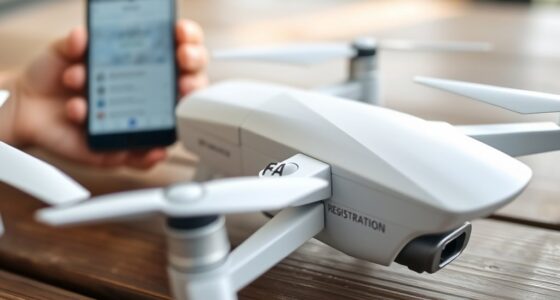
The Recreational Drone Flyer Test, known as the TRUST test, is a mandatory assessment to make certain you understand safe drone flying practices, legal rules, and privacy rights before flying for fun. To take it, you’ll need to create an account, pass the online quiz by answering questions about regulations and safety, and receive your certification. Completing this test helps you fly responsibly and legally. Keep going to learn more about how to prepare and succeed.
Open a free Amazon Business account
Business pricing, bulk buying and tax-exempt orders.
As an affiliate, we earn on qualifying purchases.
Key Takeaways
- The TRUST test is a voluntary knowledge assessment for recreational drone pilots to promote safe flying practices.
- It covers key safety habits, airspace rules, and privacy considerations essential for responsible drone operation.
- To take the TRUST test, visit the FAA safety website or authorized testing platforms online.
- Passing the test demonstrates your understanding of drone safety and can help avoid penalties or restrictions.
- The test is recommended for hobbyists to ensure adherence to regulations and enhance flying confidence.

Flying a recreational drone offers a fun and rewarding experience, but it also necessitates understanding the basics to guarantee safe and responsible operation. One vital aspect of drone piloting is knowing and adhering to drone safety practices. This means understanding how to prevent accidents, avoid damaging property or injuring people, and respecting the privacy of others. Drone safety involves maintaining a visual line of sight with your drone, avoiding flying over crowds, and being mindful of weather conditions. It’s important to keep your drone within your control at all times and be prepared to land immediately if something unexpected occurs. These habits help safeguard everyone around you and protect your drone from damage. Additionally, staying informed about airspace regulations is crucial for safe flying, as they dictate where and how you can operate your drone legally.
Top picks for "recreational drone flyer"
As an affiliate, we earn on qualifying purchases.
Frequently Asked Questions
How Often Should I Retake the TRUST Test?
You should retake the TRUST test every two years to stay current with recertification requirements. The retake guidelines suggest that if your certification expires, you’ll need to pass the test again before flying recreationally. Staying compliant means scheduling a retake before your certification lapses. Regularly updating your knowledge guarantees safe flying and adherence to regulations, so mark your calendar and retake the test as needed to maintain your recertification status.
Are There Any Prerequisites to Taking the TRUST Exam?
Think of the TRUST exam as your passport to safe skies. You don’t need a pilot certification or specific prerequisites to take it, but having a basic understanding of safety regulations helps. Focus on learning the rules, as they’re your guiding compass. You’re ready to fly responsibly once you pass, demonstrating your commitment to safety. No prior certifications required—just a willingness to learn and follow the regulations.
Can I Take the TRUST Test Online or in Person?
You can take the TRUST test both online and in person. Many testing providers offer online testing, allowing you to complete the exam from your home at your convenience. If you prefer in person options, you can visit designated testing centers to take the exam in a controlled environment. Check with your local drone authority or testing provider to find the most suitable option for you.
What Resources Are Available for Preparing for the TRUST Test?
You can prepare for the TRUST test using various resources like online practice tests and drone safety guides. These tools help you familiarize yourself with the test format and key safety concepts. You should regularly take practice tests to identify areas for improvement and reinforce your knowledge of drone safety rules. Utilizing these resources boosts your confidence and increases your chances of passing the TRUST test on your first attempt.
How Long Is the TRUST Certification Valid?
Your TRUST certification is valid for 24 months from the date you pass the test. To maintain your certification, you’ll need to complete the renewal process before it expires. The renewal involves retaking the test or fulfilling specific requirements, depending on FAA guidelines. Keep track of your certification’s validity period and start the renewal process early to guarantee uninterrupted recreational drone flying.
Conclusion
Once you’ve completed the recreational drone flyer test, you’re ready to take to the skies with confidence. Think of it as your flying wings, helping you navigate safely through the skies like a seasoned bird. Remember, mastering the test isn’t just about passing—it’s about embracing responsible flying and enjoying every moment of your aerial adventures. So, go ahead, spread your wings, and let your passion for flying soar to new heights!
Flea & tick season Picks
flea and tick prevention
As an affiliate, we earn on qualifying purchases.