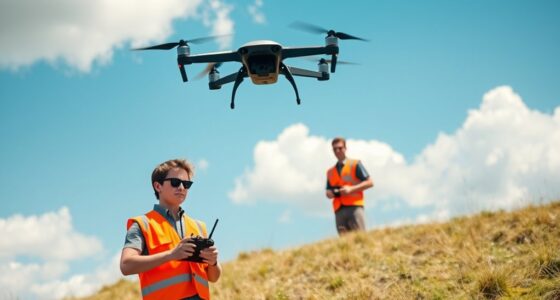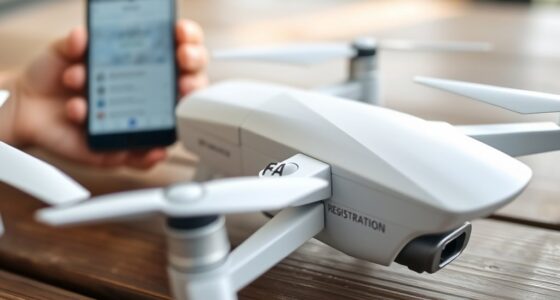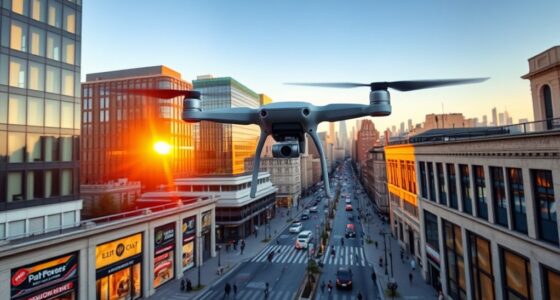

Flying a drone over people is regulated heavily by federal, state, and local laws to safeguard safety and privacy. You need to follow FAA rules, such as maintaining visual line of sight and obtaining waivers if flying over crowds or in controlled airspace. Local laws might restrict or prohibit such flights altogether. To stay compliant and avoid penalties, it’s essential to understand these regulations and plan carefully. Keep going to discover what you must do to fly legally over people safely.
Key Takeaways
- Flying over people without proper authorization generally violates FAA regulations unless a waiver is obtained.
- Recreational pilots must follow basic rules, but commercial operations require a Remote Pilot Certificate and adherence to specific guidelines.
- Local and state laws may impose additional restrictions or permits for overflight over populated areas.
- To legally fly over crowds, pilots often need to apply for FAA waivers or approvals through the DroneZone platform.
- Responsible operation includes maintaining visual line of sight, avoiding congested areas, and conducting pre-flight safety checks.
Understanding Federal Regulations on Drone Flights Over Crowds

Because federal regulations govern where and how you can fly a drone, understanding these rules is essential before flying over crowds. These regulations prioritize urban safety by limiting drone operations over populated areas to prevent accidents and injuries. You need to be aware of restrictions on flying over gatherings, as doing so can jeopardize public safety. Privacy concerns also play a vital role; flying over crowds might infringe on people’s rights and lead to legal issues if you capture personal images without consent. The FAA requires drone pilots to follow specific guidelines, such as maintaining visual line of sight and avoiding flying over people unless authorized. Knowing these federal rules helps you operate responsibly, ensuring safety and respecting privacy while avoiding legal trouble. Additionally, understanding the risks of Rhythm Failure can be useful if your drone captures or interacts with music-based environments. Being aware of European cloud regulations can also enhance compliance when using cloud services for drone data management or processing. Staying informed about local and international aviation laws is also crucial for comprehensive compliance. Moreover, pilots should be familiar with body piercing hygiene and safety best practices to ensure personal well-being when handling equipment in various environments.
Differences Between Recreational and Commercial Drone Operations
Understanding federal regulations on drone flights over crowds varies depending on whether you’re flying recreationally or commercially. Recreational pilots often follow simple rules, like passing the TRUST test and registering their drone. Commercial operators, however, need to obtain a Remote Pilot Certificate, complete drone maintenance checks, and adhere to stricter FAA rules. The key differences include:
- Required pilot licensing for commercial flights
- Specific drone maintenance standards
- Flight restrictions over crowds
- Record-keeping obligations
- Insurance requirements for commercial use
Additionally, airspace regulations play a significant role in determining where and how drones can operate safely and legally. Youngster Choice has highlighted that differing backgrounds and expertise among individuals can influence their approach to drone safety and regulation compliance, which is important to consider when planning drone operations. These distinctions impact your ability to fly over people safely and legally. Knowing whether your operation is recreational or commercial helps ensure compliance and safety, especially when considering drone maintenance and pilot licensing requirements. For example, understanding FAA drone rules is crucial for staying within legal boundaries and avoiding penalties.
State and Local Laws That Impact Drone Overflight Rules

State and local laws can substantially influence whether you can fly a drone over people, adding layers of regulation beyond federal rules. Many states require you to obtain specific permits before overflight, especially if you’re flying commercially or in populated areas. These state permits often come with conditions, such as altitude restrictions or mandatory safety measures. Local ordinances can further tighten or loosen rules, sometimes banning drone flights over certain neighborhoods, parks, or events. It’s your responsibility to research and adhere to these regulations before every flight. Ignoring state or local rules can lead to fines, confiscation, or legal trouble. Always check the local laws where you plan to fly, ensuring your drone operation remains compliant and safe. Additionally, understanding electric power generation options can help pilots plan more sustainable and compliant drone operations. Being aware of regional drone regulations can also help you avoid inadvertent violations and promote responsible flying, especially since state and local laws are frequently updated to address emerging concerns. Keeping informed about airspace restrictions can further protect you from accidental violations and ensure safe operation within permitted zones. Staying updated on local noise ordinances can prevent complaints and legal issues related to drone noise levels.
Navigating FAA Rules and Restrictions for Overhead Flights

Guiding FAA rules and restrictions for overhead flights is essential to guarantee your drone operations are legal and safe. To stay compliant, you need to understand altitude limits, airspace classifications, and the importance of proper drone maintenance. The FAA requires pilots to keep detailed flight documentation, including logs of flights over people. Additionally, flying over crowds may require waivers or special authorizations, especially in controlled airspace. Remember, following these regulations helps prevent violations and keeps everyone safe. Familiarize yourself with the rules to avoid penalties and ensure smooth operations. Regular drone maintenance ensures your equipment performs reliably during flights, and accurate flight documentation provides proof of compliance if needed. Staying informed and prepared is key to responsible drone flying over people. Understanding modern drone technology can also help you navigate new regulations more effectively.
Safety Risks and Best Practices When Flying Over People
When flying over people, you need to focus on preventing collisions and injuries by maintaining control and awareness. Implementing safety protocols like using protective measures and staying within legal limits can significantly reduce the risk of accidents. Following these best practices helps protect everyone and keeps your drone operation safe. Additionally, considering home safety & accessibility can help ensure your drone activities do not inadvertently create hazards in residential areas. Understanding drone safety regulations and adhering to them is essential for responsible flying and avoiding legal issues. Proper planning and understanding of airspace restrictions can further minimize potential hazards during your flights.
Preventing Collisions and Injuries
Flying a drone over people introduces significant safety risks, making it essential to prioritize collision prevention and injury avoidance. To minimize drone emergencies, you’ll want to focus on sharp pilot training and situational awareness. Proper planning reduces the chance of accidents and keeps everyone safe.
A thorough understanding of Free Floating principles can help pilots adapt to unpredictable conditions and enhance safety during operations over populated areas.
Key safety tips include:
- Conduct pre-flight checks to ensure drone integrity
- Maintain visual line of sight at all times
- Avoid flying in crowded or unpredictable environments
- Use obstacle detection and geofencing technology
- Practice emergency procedures regularly
Implementing Safety Protocols
Implementing safety protocols is vital to reduce the risks associated with flying a drone over people. To do this, prioritize thorough pre-flight checks, especially for aerial photography setups, making sure all components are secure. Customize your drone to enhance safety, such as adding protective covers or using lightweight materials to minimize injury if a failure occurs. Establish clear flight boundaries and maintain visual line of sight at all times. Consider implementing automated safety features like geofencing and obstacle detection. Regularly update your drone’s firmware and calibration to prevent malfunctions. Training is essential—know your drone’s capabilities and limitations. Additionally, understanding the scientific skepticism surrounding certain safety claims can help pilots make more informed decisions. Awareness of safety device effectiveness and potential limitations ensures that pilots choose appropriate safety measures. Staying informed about AI-powered safety tools can further enhance flight safety by providing real-time hazard detection. Incorporating standard safety procedures into your flight routine helps prevent accidents, protect bystanders, and guarantee your aerial photography sessions stay compliant with regulations.
How to Obtain Permissions or Waivers for Overflight

To legally fly a drone over people, you’ll need to obtain the necessary permissions or waivers from the Federal Aviation Administration (FAA). Start by verifying you have the proper pilot certification and drone insurance. Then, submit a request through the FAA’s DroneZone platform, detailing your flight plan and safety measures. You may need a Part 107 waiver if your operation involves flying over people. To strengthen your application, include evidence of risk mitigation, such as drone safety features and flight logs. Keep in mind, approval isn’t guaranteed, so thorough preparation is essential. Consider consulting FAA guidance and industry standards for compliance. Obtaining these permissions ensures your flight remains legal and safe for everyone involved.
- Verify pilot certification and drone insurance
- Prepare a detailed flight plan
- Submit a waiver application through FAA DroneZone
- Include risk mitigation measures
- Follow up on approval status
The Importance of Risk Assessments and Flight Planning
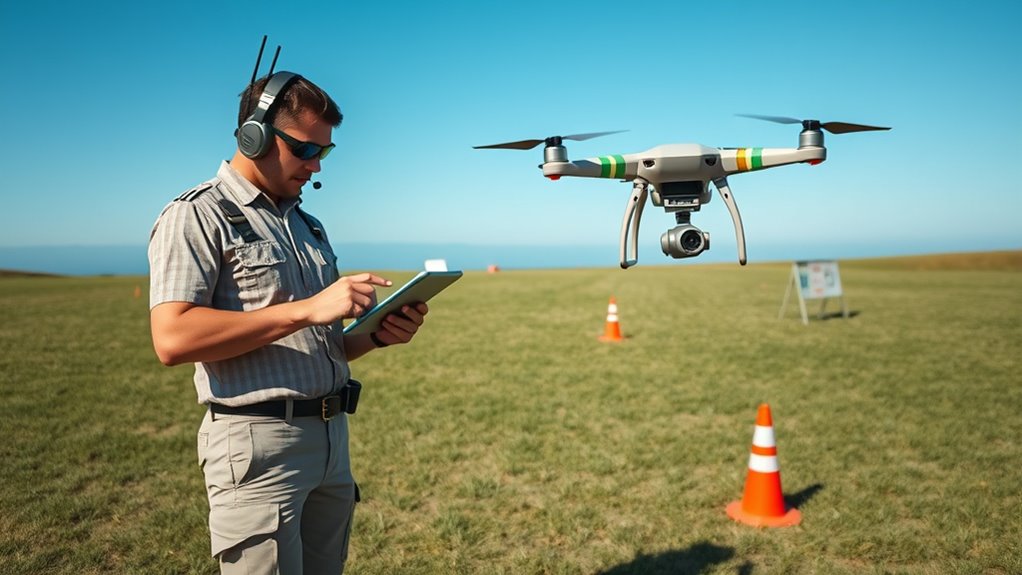
Because safety is paramount when flying a drone over people, thorough risk assessments and detailed flight planning are essential. You need to evaluate weather considerations, such as wind, rain, and visibility, as these factors can impact drone stability and control. Proper flight planning involves mapping your route, identifying potential hazards, and setting emergency procedures. Additionally, ensuring your drone is well-maintained reduces the risk of mechanical failures during flight. Regular drone maintenance checks, including battery health, motor function, and firmware updates, help prevent unexpected issues. Understanding heat distribution and how it affects your drone’s components can help prevent overheating during extended flights. Incorporating local automation to monitor environmental conditions can further enhance flight safety. By combining exhaustive risk assessments with meticulous planning, you lower the chances of accidents and legal complications, ultimately creating a safer environment for everyone involved.
Potential Penalties for Violating Overflight Regulations

Failing to follow overflight regulations can lead to serious legal consequences that vary depending on your location and the severity of the violation. Penalties enforcement is strict to deter reckless drone operations. You may face fines, license suspension, or even criminal charges if caught violating regulations. The legal consequences can escalate with repeated offenses or if your drone causes property damage or injury. It is vital to understand local laws to avoid penalties enforcement actions. Being unaware isn’t a defense. Violations might also lead to civil liabilities or confiscation of your drone. Staying informed and compliant helps you avoid costly repercussions. Remember, authorities prioritize safety and accountability, so respecting overflight rules is vital to prevent legal troubles.
- Fines and monetary penalties
- License suspension or revocation
- Civil liabilities or lawsuits
- Criminal charges or prosecution
- Drone confiscation or destruction
Tips for Staying Compliant and Responsible Drone Piloting

Staying compliant and responsible while flying your drone requires proactive measures and a clear understanding of regulations. Always stay updated on local laws, and consider obtaining drone insurance to protect yourself financially in case of accidents or damage. Before capturing aerial photography, plan your flight path carefully to avoid restricted areas and ensure safety. Keep your drone within visual line of sight and fly at altitudes permitted by law. Respect the privacy of others and avoid flying over crowds or private property without permission. Regularly check your drone’s maintenance to prevent malfunctions. By practicing responsible piloting, you not only avoid penalties but also promote the safe integration of drones into everyday airspace, making your aerial photography endeavors more secure and enjoyable.
Frequently Asked Questions
Can Drones Legally Fly Over Private Property Without Permission?
You can’t legally fly your drone over private property without permission, as doing so raises privacy concerns and infringes on property rights. It’s essential to respect homeowners’ boundaries and avoid flying over their land without consent. Even if the law doesn’t explicitly prohibit drone flights over private property in some cases, ignoring privacy and property rights can lead to legal trouble and disputes. Always seek permission before flying over private land.
Are There Specific Drone Models Approved for Flying Over Crowds?
Yes, some drone models are approved for flying over crowds, but you need to verify they have the proper drone certification and model approval. Manufacturers submit these models for regulatory approval to meet safety standards, making them suitable for such operations. Always verify that your drone’s certification and approval status align with local regulations before flying over people or crowds, ensuring you stay compliant and safe.
How Does Insurance Coverage Apply When Flying Over People?
In the age of the flying carpet, your liability coverage plays a vital role when flying over people. Insurance requirements vary, but most policies demand you have adequate liability coverage to protect against accidents. If your drone causes injury or property damage, insurance helps cover costs. Always review your policy carefully, ensuring it includes coverage for over-people flights, so you’re protected in case of mishaps.
What Are the Consequences of Unauthorized Drone Overflight in Urban Areas?
If you fly a drone over urban areas without authorization, you face serious consequences like fines, license suspension, or even criminal charges. Authorities may investigate privacy concerns and safety violations, which can lead to legal action. You could also damage your reputation and lose future flying privileges. Always verify you have proper permissions and follow regulations to avoid these risks and protect privacy and safety in city environments.
Are There International Regulations Regarding Drone Flights Over People?
International standards and cross border regulations influence drone flights over people, but they’re still evolving. You need to stay updated on rules set by organizations like ICAO and local authorities, as laws differ between countries. While some nations implement strict regulations, others are more permissive. Always check for specific country requirements before crossing borders or flying over crowds to avoid legal issues and guarantee safe, compliant drone operations.
Conclusion
Flying a drone over people is like walking a tightrope—you need to know the rules to avoid falling. By understanding federal, state, and local regulations, and always prioritizing safety, you can navigate the skies responsibly. Staying informed and obtaining necessary waivers keeps your flight smooth and legal. Remember, a well-planned flight is your safety net, helping you soar confidently without risking a crash into trouble. Fly smart, stay compliant, and enjoy the view!