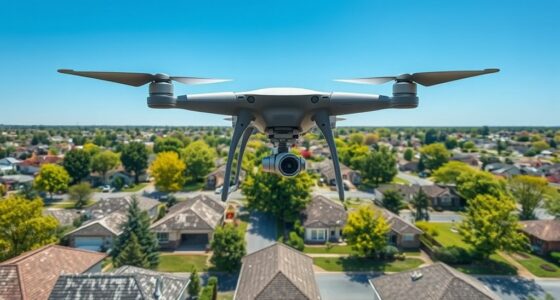
When launching a drone from a boat, make certain your drone is fully prepared—check batteries, calibrate sensors, and secure controls. Stay within visual line of sight, avoid flying near people or structures, and follow local regulations. Weather plays a big role, so monitor forecasts closely, especially over water, to avoid gusty winds or storms. Use a stable platform and be ready for quick emergency landings. For more expert tips, continue exploring how to optimize your boat drone operations safely.
Get ready for Prime Big Deal Days — try Prime free
Exclusive member deals on October 6–7, plus fast free delivery. Cancel anytime.
As an affiliate, we earn on qualifying purchases.
Key Takeaways
- Secure the drone and remote controls on a stable, level platform on the boat before takeoff.
- Check weather conditions carefully; avoid high winds, rain, or stormy skies over water.
- Maintain visual line of sight with the drone at all times during flight.
- Use a designated, stable launch pad to prevent tipping or accidental drops.
- Communicate clearly with crew to coordinate launch and recovery procedures safely.

Launching a drone from a boat can be an exciting way to capture unique aerial footage or conduct surveys over water. However, guaranteeing a safe and successful flight requires careful planning, especially when it comes to drone safety and weather considerations. Before you even lift off, double-check that your drone is in excellent condition, with fully charged batteries, calibrated sensors, and properly functioning propellers. Being proactive about drone safety helps prevent accidents that could damage your equipment or harm others nearby. Always keep your drone within visual line of sight and avoid flying too close to people, boats, or structures. Respect local regulations and no-fly zones, particularly over crowded areas or restricted waters, to avoid legal complications.
Weather considerations play a vital role in drone operations from a boat. Water environments can be unpredictable, with sudden changes in wind, rain, or humidity that could compromise your drone’s stability. Before launching, check the weather forecast thoroughly. Light wind conditions are preferable, as strong gusts can push your drone off course or make it difficult to control, especially when you’re on the water where gusts tend to be amplified. Rain or high humidity can damage your drone’s electronics or cause malfunctions, so avoid flying in wet conditions. If you notice darkening skies, increasing wind speeds, or an incoming storm, it’s best to postpone your flight. Keep in mind that even calm conditions can change rapidly over water. Calm weather in the morning can give way to gusty winds by afternoon, so stay alert and be ready to land your drone quickly if conditions deteriorate. Additionally, understanding the European cloud infrastructure can help you plan for reliable data connectivity and remote support if needed during your operation.
When preparing to launch your drone from a boat, ensure the deck or platform is stable and clear of obstructions. Secure your drone and remote controls to prevent accidental drops during takeoff or landing. Use a designated launch pad if possible, to provide a level surface that minimizes the risk of tipping or damaging equipment. Communicate with crew members or passengers to coordinate your launch and recovery operations, especially in busy or confined waters. Always have a plan for quick emergency landings, and keep a close eye on the weather throughout your flight. With proper attention to drone safety and weather considerations, you’ll maximize your chances of a smooth, safe operation that captures stunning footage or completes your survey objectives with confidence.
As an affiliate, we earn on qualifying purchases.
Frequently Asked Questions
How Do Weather Conditions Affect Drone Launches From Boats?
Weather conditions considerably impact your drone launches from a boat. Wind impact can cause instability during takeoff and landing, making control tricky. High humidity effects can lead to moisture accumulation, risking drone malfunctions or damage. Before launching, check weather forecasts carefully, avoid strong winds or high humidity days, and consider postponing your flight if conditions aren’t favorable. Staying aware of these factors ensures a safe and smooth drone operation on the water.
What Safety Precautions Should Be Taken During Drone Deployment at Sea?
You should prioritize marine safety and proper drone handling during deployment. Always check weather conditions beforehand, wear safety gear, and keep a clear communication plan with your crew. Secure the drone and equipment properly to prevent accidents. Maintain visual contact with the drone at all times, and avoid launching in rough seas or high winds. Following these precautions helps make certain of safe, smooth drone operations at sea.
Are There Legal Restrictions for Drone Use on Boats in Different Regions?
Sure, you can fly your drone anywhere you like—except, of course, where maritime drone laws or regional drone regulations say otherwise. Different regions have strict or lenient rules, so ignoring them isn’t just reckless; it’s asking for a fine or worse. Always check local laws before launching. Think of it as respecting the sea’s rules—after all, piracy is outlawed, even in the digital age.
How Can I Ensure Stable Drone Takeoff on a Moving Vessel?
To guarantee stable drone takeoff on a moving vessel, focus on stability techniques like securing the launch platform and choosing a calm, flat area. Use a sturdy, non-slip surface or a specialized drone launch pad to prevent movement. Keep the drone steady and level during lift-off, and consider launching when the boat is steady or anchored. These steps help maintain control and ensure a smooth, safe takeoff.
What Maintenance Is Required for Drones Used in Marine Environments?
Think of your drone as a ship sailing through stormy waters—you need to keep it in top shape. Regularly check for corrosion prevention, especially on exposed parts, and clean it after each marine adventure. Battery maintenance is vital: store batteries properly, avoid overcharging, and monitor their health. By staying vigilant, you guarantee your drone remains resilient against salt, moisture, and the harsh marine environment.
As an affiliate, we earn on qualifying purchases.
Conclusion
Now that you know the key tips for launching a drone from your boat, you’re ready to capture stunning aerial shots while sailing. Imagine cruising past a scenic coastline, launching your drone smoothly to get that perfect panoramic shot. With practice and caution, you’ll enjoy the thrill of aerial photography safely and confidently. So, next time you’re out on the water, take your drone along—you might just record your best adventure yet!
As an affiliate, we earn on qualifying purchases.
As an affiliate, we earn on qualifying purchases.
Fall Picks
fall essentials
As an affiliate, we earn on qualifying purchases.