Using drones for solar panel inspections helps you quickly spot issues like dirt, cracks, or shading that can reduce energy output. They provide detailed imagery and thermal scans, enabling you to identify hotspots and potential malfunctions early. This approach streamlines maintenance, reduces risks, and keeps your solar farm running at peak efficiency. By incorporating drone technology, you’ll save time and costs while ensuring reliable performance—discover more about how you can optimize your system.

Get the latest gadgets delivered free with Prime
- Fast, free delivery on millions of items
- Prime Video, Amazon Music and more included
- Member-only deals all year
Key Takeaways
- Drones enable rapid, high-resolution aerial inspections to identify dirt, cracks, and shading issues that reduce panel efficiency.
- Equipped with thermal sensors, drones detect hotspots indicating malfunctioning panels before energy output declines.
- Integration with robotic maintenance allows targeted, quick repairs, minimizing downtime and maintaining optimal panel performance.
- Regular drone-powered inspections facilitate proactive maintenance, extending panel lifespan and ensuring consistent energy production.
- Technological advancements improve inspection accuracy and cost-efficiency, making drone use essential for sustainable solar farm management.
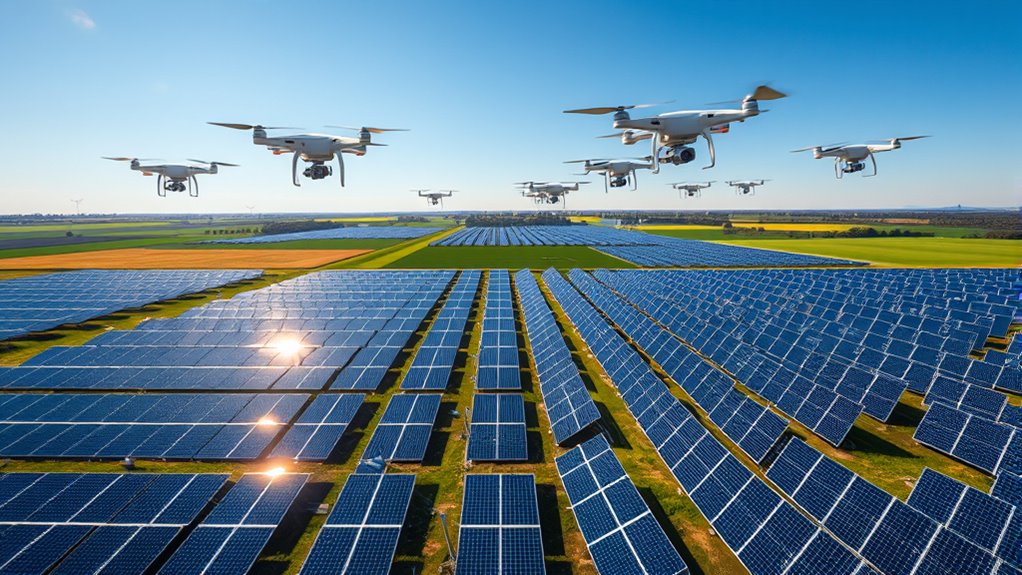
Drones are transforming the way solar panel inspections are conducted, offering a faster, safer, and more precise alternative to traditional methods. With aerial imaging capabilities, you can quickly survey large solar farms, capturing high-resolution images that reveal even the smallest issues. This technology streamlines maintenance workflows, allowing you to identify problems such as dirt buildup, cracks, or shading that could reduce energy output. By integrating robotic maintenance systems, drones can go beyond just inspection—they can sometimes perform minor adjustments or relay accurate data to support robotic repair tools, saving you time and reducing the need for manual labor.
Drones enhance solar inspections with high-resolution imaging and robotic support, increasing safety, speed, and accuracy.
When you utilize drones equipped with advanced cameras and sensors, you gain a thorough view of your solar array’s health from above. The aerial imaging provides detailed thermal scans that detect hotspots indicating malfunctioning cells or connections. This proactive approach helps prevent minor problems from escalating into costly repairs or energy losses. Because drones can quickly cover expansive areas, your inspections become more frequent and detailed, ensuring your panels operate at peak efficiency. This agility is particularly beneficial during peak seasons when downtime can greatly impact your energy production.
Robotic maintenance is a key component of this modern approach. Instead of waiting for issues to become apparent through performance drops, you can proactively address potential failures. Drones can pinpoint trouble spots with pinpoint accuracy, guiding robotic maintenance units or technicians directly to the affected panels. This synergy between aerial imaging and robotic systems dramatically reduces inspection times and minimizes the risk of human error. You don’t need to send personnel onto rooftops or into awkward positions—drones handle the risky, repetitive tasks, allowing your team to focus on repairs or system optimization.
Furthermore, drones make ongoing monitoring more feasible and cost-effective. Their ability to perform regular, scheduled inspections means you’re continuously aware of your solar farm’s condition. This consistent oversight helps you maintain peak energy production and extend the lifespan of your panels. You also benefit from the data collected over time, enabling trend analysis and predictive maintenance planning. As drone technology advances, expect even more integration with robotic systems that can perform real-time repairs or cleaning, keeping your solar panels in top shape with minimal manual intervention.
In addition, advancements in drone sensor technology enable more precise detection of issues, further enhancing inspection accuracy and reliability.
In essence, drones combined with aerial imaging and robotic maintenance are revolutionizing solar panel care. They make inspections faster, safer, and more accurate, empowering you to maximize energy output while reducing operational costs. This innovative approach ensures your solar investment remains efficient and dependable, now and into the future.
Products Worth Considering

Jackery Explorer 2000 v2 Portable Power Station with Two 200W Solar Panels

Jackery Solar Generator 1000 V2 with 200W Solar Panel

Samsung 27-inch Odyssey OLED G6 QD-OLED QHD Gaming Monitor
As an affiliate, we earn on qualifying purchases.
Frequently Asked Questions
What Is the Average Cost of Drone Inspections?
The average cost of drone inspections typically ranges from $200 to $500 per session, depending on the size of your solar farm and inspection frequency. When comparing costs, drones often prove more affordable than manual inspections, especially with frequent checks. They help you monitor panel efficiency and catch issues early, saving money long-term. Regular drone inspections can improve your system’s performance, making the cost comparison favorable over traditional methods.
How Long Does a Typical Drone Inspection Take?
A typical drone inspection takes about 30 to 60 minutes, depending on the size of your solar panel array. The inspection duration mainly hinges on the drone flight time, which usually ranges from 20 to 40 minutes per battery charge. You’ll want to plan for multiple flights if your site is large, ensuring thorough coverage without rushing, so your panels stay efficient and well-maintained.
Are Drones Safe to Operate Near Other Wildlife?
Drones are generally safe to operate near wildlife if you’re cautious, but they can cause wildlife disturbance and habitat disruption if not managed carefully. You act like a considerate guest, keeping a respectful distance and avoiding sudden movements. Always follow guidelines to minimize impact, and use quieter, lower-altitude flights to protect sensitive species. With responsible operation, you can reduce risks and ensure your drone activities don’t harm the environment.
What Training Is Required to Pilot Solar Inspection Drones?
To pilot solar inspection drones, you need drone certification and demonstrate pilot proficiency. Most regions require you to complete a training program covering drone operation, safety protocols, and regulations. You’ll also need to pass a certification exam to prove your knowledge. This guarantees you can operate the drone safely and effectively, minimizing risks and maintaining compliance with local laws. Proper training helps you conduct inspections efficiently and responsibly.
How Do Weather Conditions Affect Drone Inspection Reliability?
Weather variability can considerably affect your drone inspection reliability. Strong winds, rain, or fog reduce stability and visibility, leading to compromised inspection accuracy. You should monitor weather forecasts closely and avoid flying in adverse conditions. By choosing ideal weather, you guarantee more precise data collection, helping maintain the effectiveness of your solar panel inspections. Always prioritize safety and accuracy to keep your inspections reliable and your panels performing at their best.
Conclusion
Using drones for solar panel inspections gives you a clear edge in keeping your system running smoothly. They’re quick, accurate, and save you time and money—no need to chase after problems manually. When it comes to maintaining peak efficiency, it’s better to nip issues in the bud early rather than letting them snowball. Embrace drone technology now, and you’ll stay ahead of the game—because in this field, a stitch in time really does save nine.