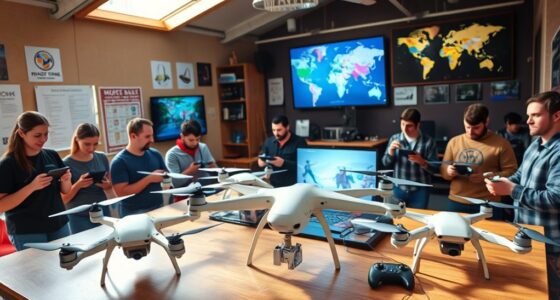
American drones focus on advanced sensors, high-quality manufacturing, and strict safety standards, making them ideal for military and intelligence work. Chinese drones emphasize affordability, rapid deployment, and innovative features, suited for broad commercial and surveillance uses. Each type reflects different strategic priorities—precision and reliability versus cost-effectiveness and versatility. Understanding these differences reveals the evolving tech rivalry, and if you keep exploring, you’ll uncover more about how these nations shape the future of drone technology.
Get ready for Prime Big Deal Days — try Prime free
Exclusive member deals on October 6–7, plus fast free delivery. Cancel anytime.
As an affiliate, we earn on qualifying purchases.
Key Takeaways
- American drones emphasize advanced sensors, AI, and strict safety standards, focusing on military and intelligence precision.
- Chinese drones prioritize affordability, rapid deployment, and versatility, often with lightweight designs for broad applications.
- American manufacturers maintain rigorous quality control, ensuring durability and longer lifespan; Chinese firms focus on high-volume, low-cost production.
- The U.S. emphasizes regulatory compliance and privacy protections, while China pushes rapid innovation sometimes at regulatory boundaries.
- The rivalry drives innovation, with American drones leading in data sophistication and Chinese drones excelling in speed and market reach.

When it comes to drone technology, American and Chinese companies lead the global market with distinct strengths and strategies. If you’re exploring the differences, you’ll notice that surveillance capabilities play a significant role in their competitive edge. American drones often emphasize advanced sensors, high-resolution cameras, and sophisticated data processing systems, making them ideal for military, security, and intelligence operations. These drones are designed to gather detailed imagery and real-time intelligence, giving users a strategic advantage. Chinese drones, on the other hand, excel in rapid deployment and mass production, allowing them to produce affordable units with impressive surveillance features. They integrate cutting-edge technology into compact, lightweight designs, making them versatile for various applications, from border patrol to commercial surveying.
American drones focus on advanced sensors and intelligence, while Chinese drones prioritize rapid deployment and affordability.
Manufacturing standards are another key area where these countries diverge. American drone manufacturers prioritize rigorous quality control and safety protocols, often adhering to strict regulatory standards set by authorities like the FAA. This focus guarantees their drones are reliable, durable, and safe to operate in sensitive environments. These high manufacturing standards also mean that American drones tend to have longer lifespans and better resistance to harsh conditions, which is essential for defense and government agencies. Conversely, Chinese companies emphasize high-volume production, which enables them to keep costs low while maintaining acceptable quality levels. They often adopt a more flexible approach to manufacturing, allowing for rapid innovation and quick turnaround times. While this can mean some trade-offs in durability or precision, it helps Chinese brands stay competitive in global markets by offering affordable, feature-rich drones.
You’ll also notice differences in how each country approaches innovation and regulation. American companies tend to focus on enhancing the sophistication of surveillance capabilities, integrating AI and machine learning for smarter data analysis. They also work closely with regulatory bodies to guarantee their products meet safety and privacy standards. Chinese firms, meanwhile, often prioritize expanding surveillance capabilities rapidly, sometimes pushing the boundaries of privacy regulations. Their manufacturing standards may be more lenient, but this allows for faster iterations and deployment of new features. Additionally, the emphasis on European cloud standards in manufacturing and data security is increasingly influencing global drone development practices, promoting higher levels of trust and compliance.
In essence, if you’re comparing American and Chinese drones, you’ll see that each has carved out a unique niche based on their strategic priorities. American drones bring precision, reliability, and strict compliance, especially in surveillance and manufacturing quality. Chinese drones excel in affordability, rapid innovation, and broad deployment. Understanding these fundamental differences helps you appreciate the evolving landscape of drone technology and the ongoing tech rivalry shaping its future.
American military surveillance drone
As an affiliate, we earn on qualifying purchases.
As an affiliate, we earn on qualifying purchases.
Frequently Asked Questions
How Do Drone Regulations Differ Between the US and China?
You’ll find that US drone regulations emphasize drone privacy, requiring operators to avoid infringing on individual rights and mandating registration for certain drone types. China’s regulations focus more on export restrictions and controlling drone technology to prevent misuse. Both countries aim to secure their borders and technology, but the US stresses privacy and safety, while China prioritizes national security and technological control, shaping their distinct regulatory approaches.
What Are the Future Technological Trends in Drone Development?
You’ll see future drone development focus on AI integration and autonomous navigation, making drones smarter and more capable. Expect enhanced obstacle avoidance, improved decision-making, and seamless flight control, allowing drones to operate independently in complex environments. These trends will drive wider adoption across industries like delivery, surveillance, and agriculture. By embracing these advancements, you’ll experience more efficient, reliable, and versatile drones transforming how you work and interact with technology.
How Do Cybersecurity Measures Compare in American and Chinese Drones?
You’ll find that American drones typically prioritize advanced encryption standards and robust cyber defense strategies to protect against hacking and data breaches. Chinese drones also focus on cybersecurity, but often emphasize integrated cyber defense systems and encryption tailored to their national security policies. While both nations aim to safeguard their drone technology, American measures tend to be more transparent and standardized, whereas Chinese approaches may be more centralized and state-controlled.
What Is the Economic Impact of Drone Manufacturing in Both Countries?
You’ll see that drone manufacturing boosts both countries’ economies through market dominance and strengthening their supply chains. In the US, the industry creates high-tech jobs and encourages innovation, while China’s large-scale production and exports expand its global influence. Both nations benefit from increased economic growth, but their focus on supply chain resilience and securing market dominance shapes their strategies, leading to significant impacts on their technological and industrial landscapes.
How Do Public Perceptions Influence Drone Policy in the US and China?
Think of public trust as the compass guiding drone policies in the US and China. Media influence shapes perceptions, framing drones either as tools of progress or threats to privacy and security. In the US, public concern often prompts stricter regulations, while in China, government narratives bolster acceptance. Your perception, shaped by media, directly affects how governments craft policies, balancing innovation with societal trust.
Chinese commercial drone with camera
As an affiliate, we earn on qualifying purchases.
As an affiliate, we earn on qualifying purchases.
Conclusion
As you compare American and Chinese drones, you’ll see a fierce tech rivalry driving innovation. notably, China’s drone market grew by over 30% last year, highlighting its rapid advancements. This competition pushes both nations to develop smarter, more capable drones that could redefine modern warfare and surveillance. Stay tuned, because as these technologies evolve, the global balance of power and the future of drone use might shift dramatically, shaping a new era of aerial innovation.
high-end drone with advanced sensors
As an affiliate, we earn on qualifying purchases.
As an affiliate, we earn on qualifying purchases.
affordable lightweight surveillance drone
As an affiliate, we earn on qualifying purchases.
As an affiliate, we earn on qualifying purchases.
Fall Picks
fall essentials
As an affiliate, we earn on qualifying purchases.