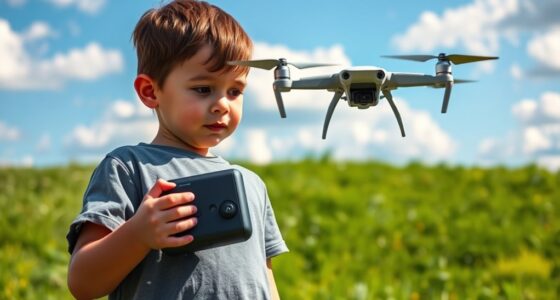
If you break FAA drone rules, you could face hefty fines, legal trouble, and even confiscation of your drone. Penalties for issues like flying without registration, violating airspace restrictions, or going over altitude limits can range from hundreds to tens of thousands of dollars. Severe violations may lead to criminal charges and jail time. Staying informed and following rules helps you avoid these consequences—continue now to understand how to keep your drone flying legally and safely.
Key Takeaways
- Violating FAA drone rules can result in hefty fines up to $27,500 for registration or airspace violations.
- Operating outside legal altitude or without visual line of sight may lead to civil or criminal penalties.
- Flying in restricted areas like airports or military bases can cause confiscation and legal charges.
- Reckless or negligent behavior can result in fines, jail time, or loss of drone privileges.
- Failure to stay informed and compliant increases the risk of legal action and penalties.

Understanding drone law penalties is essential because violations can result in significant legal consequences. If you’re flying a drone, you must adhere to FAA rules, including proper drone registration and respecting airspace restrictions. Failing to register your drone can lead to hefty fines and legal trouble. The FAA requires drone owners to register their aircraft if they weigh more than 0.55 pounds. This registration process is straightforward, but neglecting it can result in fines up to $27,500 for civil penalties or even criminal charges in severe cases. Not registering your drone not only risks fines but also makes it difficult to prove lawful ownership if your drone is involved in an incident or misuse.
Airspace restrictions are another critical area where violations can lead to serious penalties. The FAA designates specific zones where drone flight is either limited or prohibited, such as near airports, military bases, or national security areas. Ignoring these restrictions can result in hefty fines, confiscation of your drone, or even criminal charges in some cases. It’s your responsibility to check for temporary flight restrictions (TFRs) or no-fly zones before each flight. The FAA’s B4UFLY app can help you identify these restrictions in real time. If you violate these airspace rules, authorities may pursue civil penalties or criminal charges, especially if your actions endanger aircraft, property, or people.
Beyond registration and airspace violations, the FAA enforces strict rules about operating drone flights safely and responsibly. For example, flying above the maximum altitude of 400 feet or failing to keep your drone within visual line of sight can result in penalties. The FAA takes reckless or negligent behavior seriously, and violations can lead to fines ranging from hundreds to thousands of dollars, up to potential jail time for severe cases. If you’re caught flying in restricted areas or ignoring registration requirements, you may also lose your drone privileges temporarily or permanently.
Additionally, staying informed about drone operation best practices helps ensure you remain compliant and avoid penalties. The key point is that compliance isn’t just about avoiding fines; it’s about operating responsibly to ensure everyone’s safety. Staying informed about drone registration requirements and airspace restrictions helps you avoid costly mistakes. Always check for any temporary restrictions before each flight and register your drone if required. By following these rules, you protect yourself from legal consequences and contribute to a safe, lawful drone community. Violations aren’t taken lightly, and understanding the potential penalties encourages responsible drone operation that keeps you out of trouble and ensures your flying experience remains enjoyable.
Frequently Asked Questions
How Can I Contest a Drone Law Violation Penalty?
You can contest a drone law violation penalty by filing an appeal with the FAA, providing evidence related to drone registration or addressing privacy concerns. Make sure to gather any proof that supports your case, like registration records or communication about privacy issues. Clearly explain your situation and why you believe the penalty is unwarranted. Acting quickly and thoroughly increases your chances of successfully challenging the violation.
Are There Different Penalties for Commercial vs. Recreational Drone Use?
Breaking drone rules is like opening a Pandora’s box—you face different penalties depending on your use. For commercial drone operators, violations often carry heavier fines and stricter consequences due to stricter commercial regulations. Recreational flyers, on the other hand, face lighter penalties but must still follow recreational restrictions. Always stay within your designated boundaries to avoid penalties that could ground you or cost you dearly.
What Safety Equipment Is Required to Avoid Penalties?
To avoid penalties, you need to meet registration requirements and prioritize safety equipment like visual observers and GPS. Always verify your drone is registered if it weighs over 0.55 pounds, and follow privacy considerations by respecting others’ property and avoiding intrusive filming. Using proper safety gear helps prevent accidents and demonstrates responsible flying, which can keep you compliant with FAA rules and reduce the risk of penalties.
Can Penalties Be Reduced for First-Time Offenders?
Think of penalties as storm clouds—you might be able to clear them if you’re a first-time offender. The FAA often considers penalty reduction for first-time offenders who cooperate and demonstrate responsible flying. If you admit your mistake early and show a willingness to learn, they may lighten your penalty. So, your best move is to be honest, proactive, and show you’re committed to flying safely moving forward.
How Long Do Drone Law Violations Stay on My Record?
Your record history for drone law violations typically stays for several years, but the violation duration varies depending on the severity. Minor infractions might stay on your record for a few years, while more serious violations could have longer-lasting effects. You should regularly check with FAA or legal authorities to understand how long a specific violation remains on your record, as it can impact future drone activities or legal considerations.
Conclusion
Remember, breaking FAA drone rules is like ignoring the invisible thread that connects you to responsible flying. Just as a single misstep can unravel a delicate tapestry, so too can penalties unravel your freedom to soar. Stay within the lines, respect the laws, and you’ll keep your wings unbound. Your drone is more than a machine; it’s a symbol of trust—treat it with care, and it’ll carry you high without the weight of consequences.