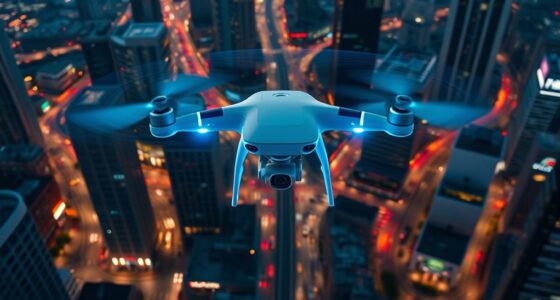
Drones are powerful tools for wildlife conservation, allowing you to monitor animals and habitats from above without disturbing them. With advanced cameras, thermal imaging, and multispectral sensors, you can capture detailed images and data even in hard-to-reach areas or at night. To guarantee effective use, you must follow local regulations and practice ethical flying by minimizing disturbance. Keep exploring to uncover how technology and regulation work together to protect our wildlife effectively.
Key Takeaways
- Drones enable efficient monitoring of endangered species and habitats with high-resolution imagery from inaccessible angles.
- Advanced camera tech like thermal imaging helps detect animals in low visibility or dense foliage.
- Regulatory compliance ensures responsible use, minimizing habitat disturbance and legal issues.
- Ethical drone practices involve flying at appropriate times and respecting protected areas.
- Combining technology and regulations enhances real-time data collection for effective conservation efforts.
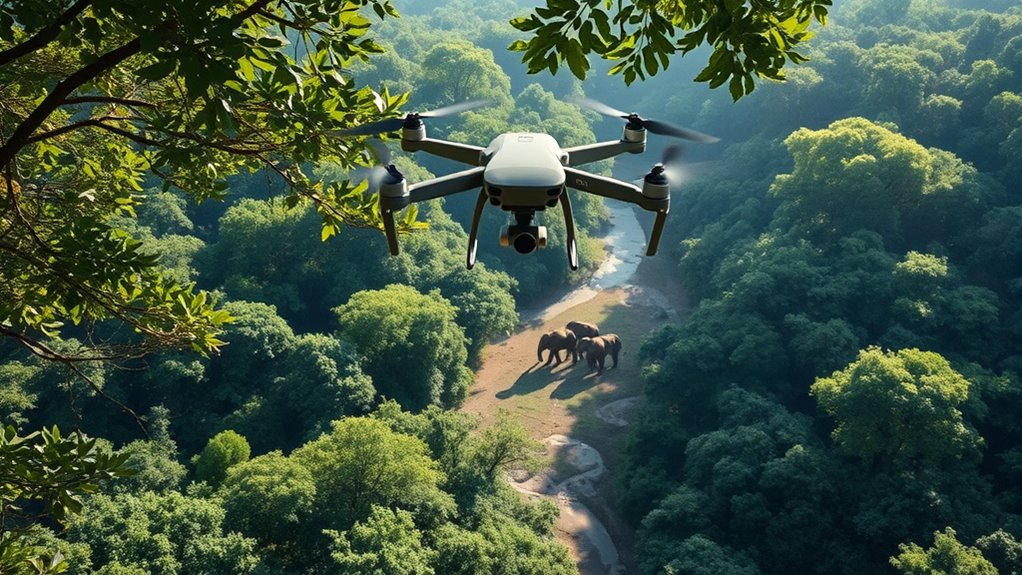
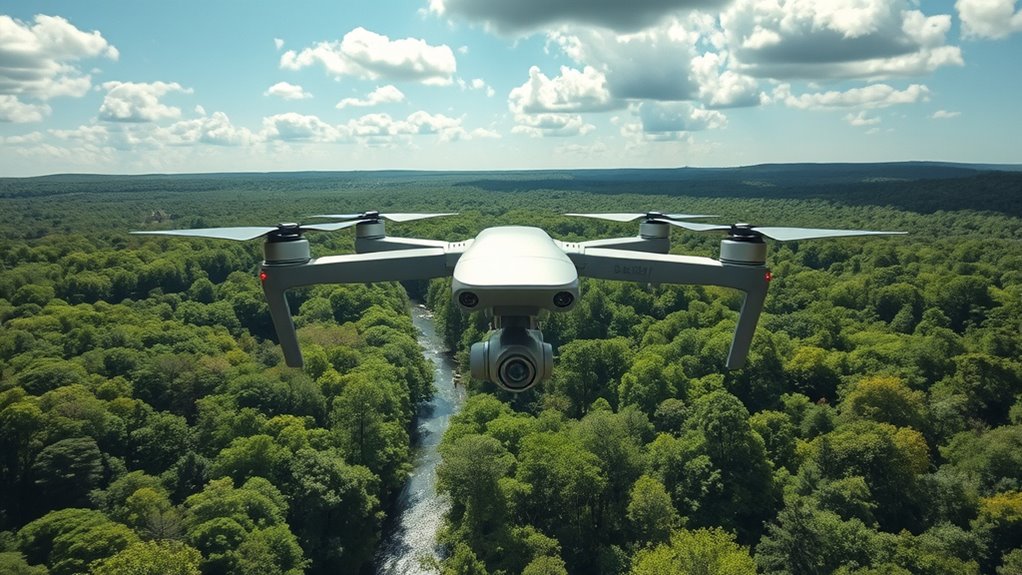
Drones are transforming wildlife conservation by providing a powerful, efficient way to monitor and protect endangered species. With advanced camera technology, drones can capture high-resolution images and videos from angles that are difficult or impossible for humans to access. This capability allows conservationists to track animal populations, identify threats, and gather critical data without disturbing wildlife. The use of sophisticated cameras—equipped with thermal imaging and multispectral sensors—enables you to detect animals hidden in dense foliage or at night, giving you a new perspective on ecosystems that were previously challenging to study. As a result, drones help you collect more accurate, real-time information, which is essential for making informed conservation decisions.
Drones with advanced cameras revolutionize wildlife monitoring by capturing detailed images and detecting hidden animals without disturbance.
However, deploying drones for wildlife monitoring requires you to understand and navigate drone regulation. Different countries and regions have specific rules governing drone flight, often designed to protect both wildlife and the privacy of local communities. Before you start flying, you need to familiarize yourself with local laws and obtain any necessary permits or licenses. These regulations may specify altitude limits, restricted zones, and flight times to minimize disturbance to animals and prevent accidents. By adhering to drone regulation, you ensure that your conservation efforts are both ethical and sustainable, avoiding legal issues that could compromise your project. Understanding these rules also helps you plan your missions effectively, choosing times and locations that align with legal guidelines and conservation goals.
Using drone regulation as a framework, you can maximize the benefits of camera technology while minimizing risks. For example, flying at certain times of day or altitude can reduce the chances of startling wildlife, while staying within permitted areas helps you avoid infringing on protected habitats. Properly regulated drone operations also foster trust among local communities and authorities, supporting your long-term conservation initiatives. When you combine cutting-edge camera tech with compliance to drone regulation, you create a responsible approach to wildlife monitoring that respects nature and legal boundaries. Additionally, understanding the importance of camera technology and its capabilities enhances your ability to gather meaningful data efficiently.
In essence, your success in using drones for conservation hinges on balancing technological advantages with regulatory requirements. The right camera technology empowers you to gather detailed, actionable data, while understanding drone regulation ensures your activities are legal and respectful. This synergy allows you to monitor endangered species more effectively, respond swiftly to threats, and contribute meaningfully to preserving our planet’s biodiversity. As drone technology continues to evolve, staying informed about regulation and leveraging advanced camera systems will be key to advancing wildlife conservation efforts from above.

EVEO Screen Cleaner Spray - Large Screen Cleaner Bottle - TV Screen Cleaner, Computer Screen Cleaner, for Laptop, Phone, Ipad - Computer Cleaning kit Electronic Cleaner (1 Pack)
- Versatile Electronic Screen Cleaner: Suitable for TVs, laptops, phones, and tablets
- Effective Streak-Free Cleaning: Removes dust, fingerprints, and smudges
- Gentle on Sensitive Screens: Safe for LCD, LED, OLED, CRT screens
As an affiliate, we earn on qualifying purchases.
Frequently Asked Questions
How Do Drones Impact Animal Behavior During Monitoring?
You might notice that drones can cause some animal stress and disturbance during monitoring, especially if they get too close or noisy. To minimize this, you should use disturbance mitigation techniques like flying at higher altitudes and avoiding sensitive areas. These steps help reduce stress on animals, ensuring your monitoring efforts are less intrusive, and promote better data collection without disrupting wildlife behavior.
What Are the Legal Regulations for Drone Use in Conservation Areas?
You must guarantee legal compliance when using drones in conservation areas by following local and national regulations. Check for specific policies on drone flight restrictions, altitude limits, and permitted areas. Policy enforcement is vital; authorities may require permits or licenses before operating. Respect wildlife and environment, and always stay informed about updates to drone laws to avoid penalties and support conservation efforts responsibly.
Can Drones Detect Specific Species Automatically?
Yes, drones can detect specific species automatically through advanced species identification technology. You program the drone’s AI to recognize unique features like size, color, and movement patterns, enabling automated detection of targeted animals. This capability helps conservationists monitor populations efficiently, reducing manual effort while increasing accuracy. As technology advances, these systems become more reliable, making drone-based species identification a crucial tool for effective wildlife conservation efforts.
How Cost-Effective Are Drone Programs Compared to Traditional Methods?
Drones cut through conservation costs like a sharp blade, making them more cost-effective than traditional methods. You’ll see a favorable cost comparison when factoring in equipment, labor, and time savings. Funding strategies become easier as they demonstrate quick returns on investment, attracting more support. By replacing costly fieldwork with aerial surveys, you streamline efforts and stretch your conservation dollar further, ultimately helping you protect more wildlife with less expense.
What Training Is Required for Operators of Conservation Drones?
You need to obtain a pilot certification to operate conservation drones safely and legally. Training covers drone controls, navigation, and data collection techniques. Additionally, you should learn about drone maintenance to guarantee your equipment functions correctly and lasts longer. Hands-on practice and understanding airspace regulations are essential for effective and responsible drone use. This extensive training helps you gather accurate data while protecting wildlife and your equipment.

NANUK 915 DJI™ Mini 5 Pro Fly More Combo Plus - Waterproof Hard Case with Drone Foam Insert, Crushproof, Portable Travel Case, Made in Canada – Orange (15.8" x 12.1" x 6.8")
- Impact and Drop Protection: Crushproof NK-7 resin shell with shock absorption
- Secure Locking System: PowerClaw latching with triple-action lock
- Weatherproof Design: IP67-rated waterproof and dustproof case
As an affiliate, we earn on qualifying purchases.
Conclusion
In the end, drones are proving to be a game-changer for wildlife conservation. They give you a new perspective, helping you see the big picture and act before problems escalate. With technology on your side, you can make a real difference and protect nature’s treasures. Remember, when it comes to saving wildlife, it’s better to be a few steps ahead than chasing your tail. Embrace drones and lead the charge for a healthier planet.

Lekufee Waterproof Hard Case Compatible with DJI Air 3S/3 Drone/Fly More Combo/RC 2/N3/N2 Remote Controller and Accessories (Case Only)
- Custom Foam Interior: Designed for DJI Air 3S accessories
- Ample Storage Space: Holds drone, batteries, chargers, and accessories
- Durable Construction: Made of hard ABS plastic for protection
As an affiliate, we earn on qualifying purchases.
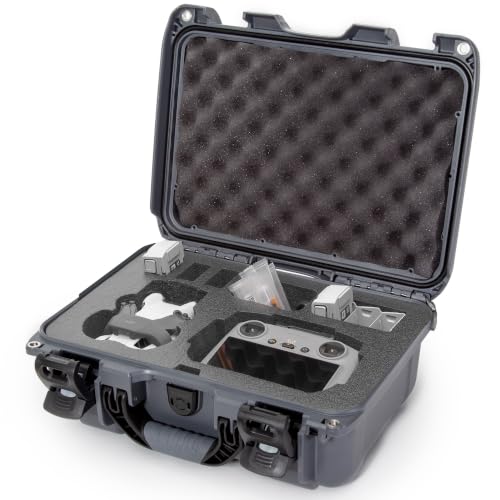
NANUK 915 DJI™ Mini 3 & 4 Pro - Waterproof Hard Case with Drone Foam Insert, Crushproof, Portable Travel Case, Made in Canada – Graphite (15.8" x 12.1" x 6.8")
- Custom Foam Insert: Fits DJI Mini 3 & 4 Pro precisely
- Waterproof & Dustproof: IP67-rated protection against elements
- Impact-Resistant Shell: Crushproof NK-7 resin construction
As an affiliate, we earn on qualifying purchases.