If you fly a drone, you should consider getting insurance to stay compliant with legal rules and protect yourself from liability. Drone insurance covers damages caused to others, your equipment, and injuries you might cause during flights. It’s especially important for commercial use or flying in controlled airspace. Understanding your coverage options, costs, and common pitfalls can save you money and hassle. Continue exploring to learn how you can choose the right policy for your needs.

Get the latest gadgets delivered free with Prime
- Fast, free delivery on millions of items
- Prime Video, Amazon Music and more included
- Member-only deals all year
Key Takeaways
- Drone insurance is often required for commercial flights and operating in regulated airspace to ensure legal compliance.
- It covers liability for property damage, injuries, and other risks associated with drone operations.
- Different policies may include coverage for drone damage, weather-related incidents, and personal injuries.
- Selecting appropriate coverage involves understanding limits, exclusions, and assessing your drone’s value and usage.
- Proper documentation and regular policy reviews help maintain effective protection and avoid coverage gaps.
Products Worth Considering

LG UltraGear 27-Inch QHD OLED Gaming Monitor, 240Hz, 0.03ms, G-SYNC Compatible, FreeSync Premium Pro, HDMI 2.1

Bose SoundLink Flex Bluetooth Speaker (2nd Gen), Portable Waterproof Speaker, Black

Bose QuietComfort True Wireless Earbuds with Active Noise Cancellation, Black
As an affiliate, we earn on qualifying purchases.
Understanding the Legal Requirements for Drone Insurance
Do you know what legal requirements you need to meet before flying your drone? First, you’ll need to complete drone registration with the appropriate authorities, especially if your drone exceeds certain weight limits. Registering your drone creates a record that you’re operating legally. Additionally, pilot certification might be necessary if you plan to fly commercially or in controlled airspace. This certification proves you understand the rules and safety protocols. Even for recreational flying, some regions require proof of knowledge or registration. Ensuring you meet these legal requirements helps you avoid fines and penalties. Keep in mind that regulations can vary by location, so always check your local laws before taking to the skies. Being compliant is the first step toward responsible drone operation. Understanding safety protocols is also essential to protect yourself and others while flying. Familiarizing yourself with drone insurance requirements can provide further protection in case of accidents or damages. Moreover, staying informed about the legal aspects of drone operation can help you navigate any changes in legislation effectively. Staying updated on regulatory developments can ensure your ongoing compliance and safe operation. Regularly reviewing your local drone laws can help you stay ahead of new regulations and avoid inadvertent violations.
When Is Drone Insurance Necessary?

Drone insurance becomes necessary when you’re operating your drone beyond casual hobbyist flying, especially if you’re engaging in commercial activities or flying in areas with strict regulations. If your drone requires drone registration, you’re likely required to have insurance coverage to comply with legal standards. Additionally, when you fly in zones with strict flight restrictions, the risk of accidents or property damage increases. Insurance helps protect you from liability if your drone causes injury or damages someone’s property. Even if registration isn’t mandatory, having coverage can save you from costly lawsuits or repair expenses. Furthermore, understanding the market trends and insights related to drone insurance providers can help you choose the best coverage options. Ultimately, whenever your drone activity involves commercial use, flight in regulated airspace, or potential legal exposure, securing drone insurance is a wise and often necessary step. Considering legal compliance can prevent potential fines or penalties associated with unauthorized drone operations. Moreover, adhering to safety guidelines not only minimizes risks but also demonstrates responsible flying practices. Incorporating environmentally responsible practices into your drone operations can further reduce environmental impact and promote sustainability.
Types of Coverage Available for Drones
When choosing drone insurance, you should consider different types of coverage to protect yourself and your equipment. Liability insurance can cover damages you cause to others, while property damage coverage protects your drone in case of accidents. Personal accident protection offers financial support if you get injured while operating your drone. Additionally, some policies include wind and wave coverage, which can be crucial for drones operating in challenging weather conditions. Understanding the essential oils for drone maintenance can also help in preserving your equipment and preventing malfunctions. Regular maintenance practices, such as using appropriate drone cleaning techniques, can extend the lifespan of your device. Familiarizing yourself with Floating on Water concepts can also be beneficial, especially if your drone is used in aquatic environments or near water bodies, helping you anticipate potential risks and safeguard your device. Being aware of the flat iron bike market can also inform you about the latest technological advancements that may influence drone durability and performance.
Liability Insurance Options
Liability insurance options for drones provide essential protection against potential damages or injuries caused by your aircraft. These policies typically include limits on how much coverage you can access, known as liability limits, which influence your financial protection. It’s also important to understand policy exclusions, which specify situations or damages that aren’t covered. Common options include:
- General liability coverage for bodily injury and property damage
- Product liability for damages caused by drone components
- Personal injury protection, covering libel or slander claims
- Additional coverage for legal defense costs
Choosing appropriate liability limits ensures you’re protected without overpaying. It’s also beneficial to consider risk management strategies that can help prevent claims before they occur. Implementing preventative measures can further reduce the likelihood of claims and enhance your coverage’s effectiveness. Properly understanding your policy’s coverage scope can prevent misunderstandings during claims. Being aware of policy exclusions helps you identify potential gaps in your coverage, so you’re prepared for various scenarios. This helps you avoid surprises if a claim arises. Vetted
Property Damage Coverage
Property damage coverage is a key aspect to contemplate when protecting your drone investment. If you’re involved in payload delivery, this coverage helps cover costs if your drone accidentally damages property during delivery. It’s essential for safeguarding against unexpected expenses caused by crashes or malfunctions. For drone racing enthusiasts, property damage coverage ensures that any damage your fast-paced drone inflicts on third-party property is covered, reducing financial risk. This type of coverage provides peace of mind whether you’re delivering packages or competing in races. It typically includes damage caused by crashes, collisions, or technical failures. Understanding the importance of comprehensive coverage can help you choose the right policy to suit your specific needs. Securing property damage coverage also minimizes the financial impact of drone accidents, which can be unpredictable and costly. By securing property damage coverage, you protect yourself from the financial burden of repairing or replacing damaged property, allowing you to focus on improving your skills or expanding your payload delivery operations. Trusted businesses and services near you can help you find the right coverage options for your needs.
Personal Accident Protection
Personal accident protection is vital for safeguarding you and your drone in case of injuries or mishaps during operation. It covers medical expenses, potential loss of income, and sometimes even compensation for physical injuries sustained while flying. To maximize safety, proper drone maintenance and pilot training are essential, reducing accident risks. When choosing coverage, consider options like:
- Medical expense reimbursement for injuries
- Disability benefits if injuries are severe
- Coverage for emergency medical evacuation
- Assistance with legal or liability claims
These protections help you manage unexpected costs and ensure peace of mind during flights. Remember, even experienced pilots benefit from personal accident protection, especially when unforeseen incidents happen during drone operation. It’s an important layer of security for both you and your equipment.
What Does Drone Insurance Typically Cover?
Understanding what drone insurance typically covers is essential before you fly. Generally, it protects you against damage to your drone, including costs related to drone maintenance or repairs after an accident. It also covers liability if your drone causes injury or property damage to others, helping you handle legal expenses and claims. Many policies include coverage for lost or stolen drones, which can save you money if your drone goes missing. Additionally, some plans assist with compliance with flying regulations, ensuring you’re protected if you’re fined or penalized for inadvertent violations. Keep in mind that coverage varies by policy, so it’s important to read the fine print to understand what’s included and what’s excluded. This way, you’ll be prepared before taking your drone into the skies.
Factors to Consider When Choosing a Policy
Choosing the right drone insurance policy requires careful consideration of several key factors. First, evaluate the coverage options to guarantee they meet your specific needs, whether for recreational flying or commercial use. Next, understand how premium calculations are determined, as they can vary based on factors like drone value, usage, and coverage limits. Consider the policy’s restrictions and exclusions to avoid surprises if you need to file a claim. Additionally, assess the provider’s reputation for customer service and claims support. You might also want to compare policies for flexibility, such as add-ons or customizable coverage. Paying attention to these factors helps you select a policy that offers appropriate protection while fitting your budget and flying activities.
Cost of Drone Insurance and Budgeting Tips
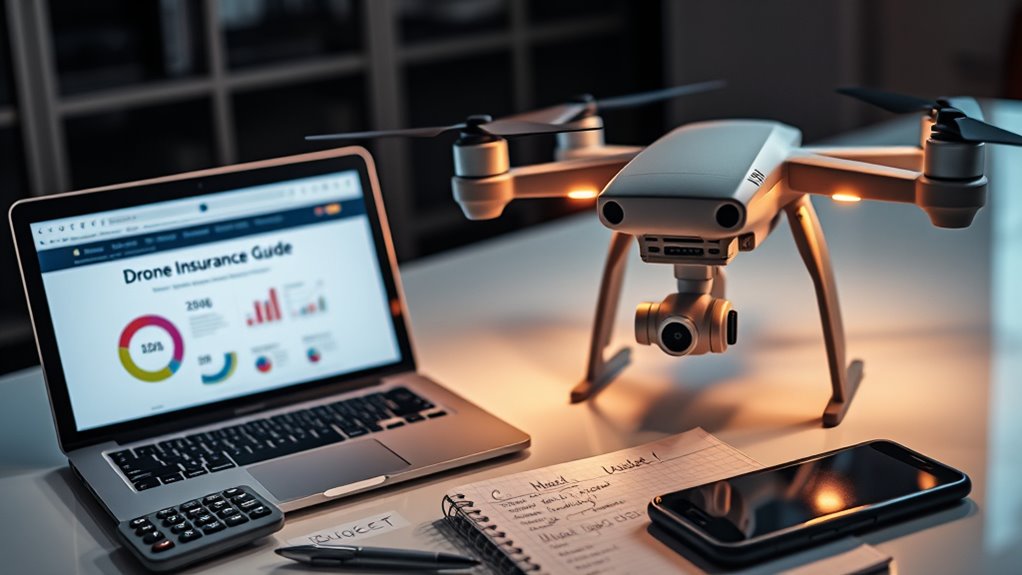
The cost of drone insurance varies widely depending on factors like drone value, coverage limits, and your intended use. Premium costs can range from a few hundred to several thousand dollars annually, so it’s essential to factor these into your budget planning. To keep expenses manageable, compare policies carefully and choose coverage that matches your risk level without overspending. Consider bundling insurance with other assets or opting for annual payments to potentially reduce premium costs. Setting a clear budget helps you avoid surprises and ensures you maintain adequate coverage without straining your finances. Remember, investing in the right drone insurance can save you money and stress if accidents or damage occur, so weigh costs against the protection you need.
How to Purchase and Maintain Your Drone Insurance
Purchasing drone insurance begins with researching reputable providers and comparing their policies to find the coverage you need. Confirm your drone is registered, and verify your pilot certification, as these are often prerequisites. When selecting a policy, consider factors like coverage limits, deductibles, and exclusions. To maintain your insurance, keep your drone registration up to date and stay current with pilot certification requirements. Regularly review your policy to adapt to any changes in your flying habits. Additionally, document any incidents or claims promptly to ensure smooth processing.
- Verify your drone registration and pilot certification are valid
- Keep records of flight logs and maintenance
- Update your insurance policy as your flying activities evolve
- Stay informed about changing regulations and coverage options
Common Mistakes to Avoid With Drone Insurance
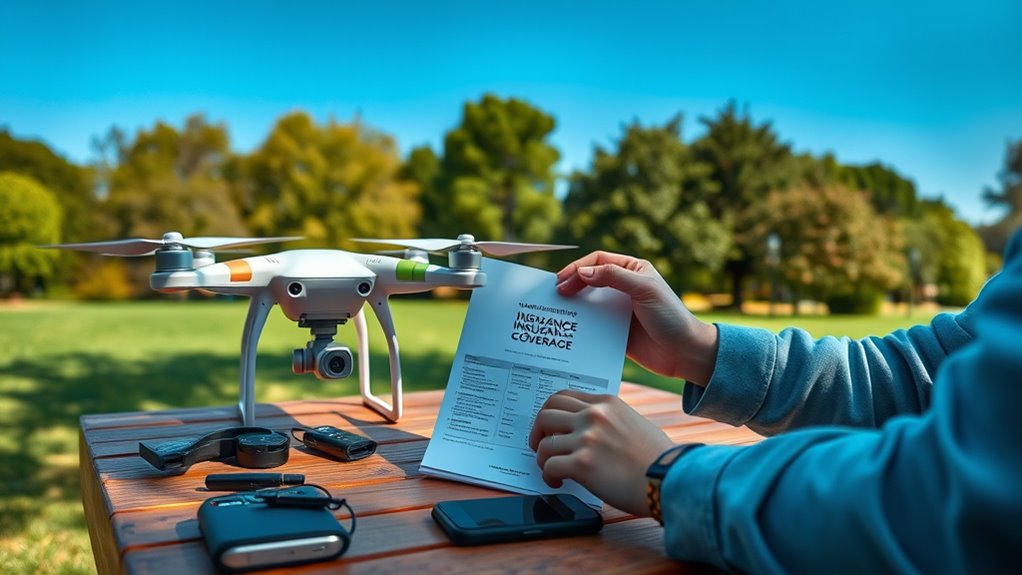
Even with a solid understanding of how to buy and maintain your drone insurance, it’s easy to stumble into common pitfalls that could leave you unprotected when you need it most. One key mistake is avoiding overlaps in your coverage, which can lead to confusion or paying for unnecessary policies. Equally important is preventing gaps in your coverage, especially during policy renewals or updates. Failing to double-check policy details or misinterpreting what’s included can leave blind spots. Additionally, not reviewing your coverage regularly might mean missing out on new risks or changes in your drone activities. To stay protected, make sure your policy aligns with your needs, avoid overlaps that cause redundancies, and prevent gaps that leave vulnerabilities. Staying proactive keeps your drone insurance effective when it matters most.
Frequently Asked Questions
Can Drone Insurance Be Customized for Specific Drone Types?
Yes, drone insurance can be customized for specific drone types. You can opt for drone customization options that match your drone’s size, purpose, and risk profile. Policy tailoring allows you to add or remove coverage, ensuring you’re protected against the unique risks of your drone operation. This way, you get a policy that fits your needs perfectly, whether you’re flying a hobby drone or a professional commercial UAV.
How Does Weather Impact Drone Insurance Claims?
Weather hazards can considerably impact your drone insurance claims. When you face weather-related incidents like storms, wind, or rain, it may lead to claim adjustments, depending on your policy coverage. You should document the weather conditions and damages thoroughly, as this evidence helps support your claim. Keep in mind that some policies exclude coverage for weather hazards, so review your policy details carefully to understand what’s covered during adverse weather conditions.
Are There Discounts for Multiple Drone Policies?
Yes, you can often get discounts for multiple drone policies. Insurance providers typically offer discount programs and savings through policy bundling, which means insuring several drones under one plan. By bundling policies, you not only simplify your coverage but also enjoy lower premiums. Check with your insurer to see what discount programs are available, as they can markedly reduce your overall costs when insuring multiple drones.
What Is the Claim Process for Drone Insurance?
Suppose your drone crashes into a property, causing damage. You’d start the claim process by reporting the incident to your insurer, providing detailed photos and documentation. They review your Liability Coverage and Policy Limits, then guide you through next steps. Expect to fill out forms and cooperate with adjusters. Once approved, your insurer covers damages up to your Policy Limits, helping you recover swiftly and minimize financial stress.
How Often Should I Review and Update My Drone Policy?
You should review and update your drone policy at least once a year during policy renewal. Regular coverage review guarantees your policy keeps pace with any changes in your drone activities or equipment. If you’ve had recent accidents, added new gear, or changed your flying locations, update your coverage more frequently. Staying proactive helps prevent gaps in protection and ensures you’re always covered against potential risks.
Conclusion
Think of drone insurance as your safety net in the sky—without it, a single misstep could send you tumbling. It’s essential to understand your legal obligations, choose the right coverage, and stay informed to keep your flying adventures smooth. Don’t let surprises crash your plans; instead, prepare ahead of time. With the right policy in place, you’ll soar confidently, knowing you’ve got a sturdy safety net beneath you whenever the winds shift.