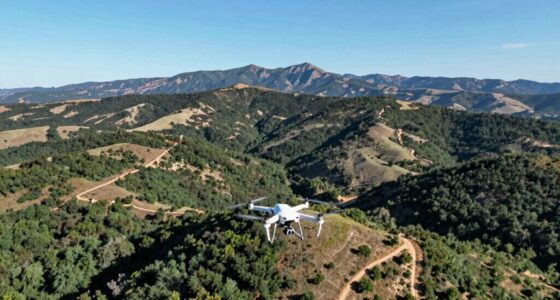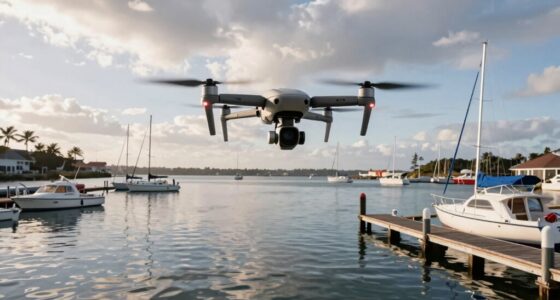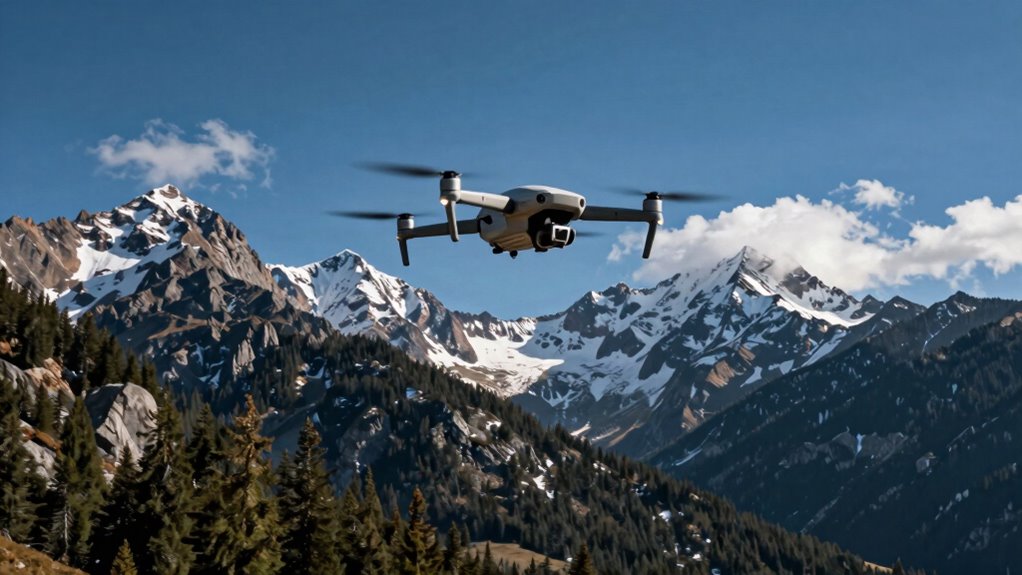
Flying drones in the mountains can give you breathtaking views and new insights, but you must be responsible. You need to respect wildlife and avoid disturbing animals or damaging habitats. It’s also essential to follow local laws and gain any necessary permissions to prevent legal issues. Keep privacy in mind and avoid capturing private property or people without consent. If you’re mindful of these rules, you can explore safely and ethically—there’s much more to learn about doing it right.
Key Takeaways
- Flying drones in mountains offers unique perspectives but risks disturbing wildlife and damaging fragile habitats if not managed responsibly.
- Regulatory laws often restrict drone use in protected mountain areas, requiring adherence to avoid legal issues.
- Drones can capture stunning images and videos, enhancing exploration but may inadvertently invade privacy or cause discomfort.
- Responsible drone flying involves respecting local regulations, wildlife, and local communities’ privacy and boundaries.
- Mindful operation and environmental awareness are essential to maximize benefits while minimizing ecological and social impacts.
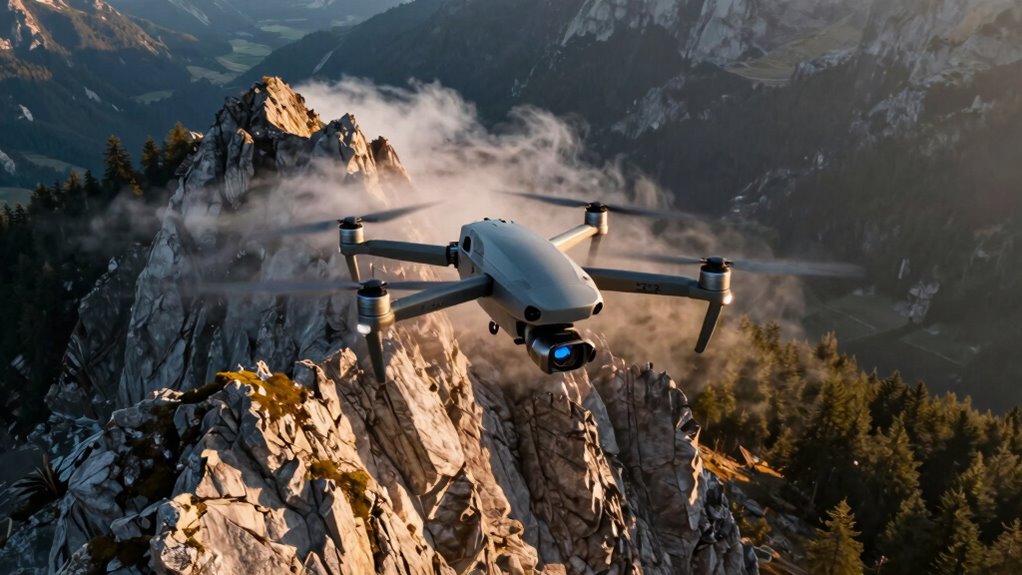
Drones are transforming how we explore and understand mountainous regions, offering new perspectives that were once impossible to achieve. With their ability to access rugged terrain and capture high-resolution images and videos from unique angles, drones are revolutionizing mountain exploration. However, as you take to the skies, it’s vital to contemplate the impact your drone might have on the environment and local communities. Wildlife disturbance is one of the primary concerns. Mountain ecosystems host delicate species that can be easily stressed or displaced by drone noise and presence. If you’re not careful, you could inadvertently scare away animals, disrupt their natural behaviors, or even cause long-term harm to their habitats. To minimize this, keep your drone at a respectful distance, avoid flying near nesting sites, and stay mindful of the wildlife’s reactions. By doing so, you help preserve the integrity of these ecosystems while still enjoying the benefits of aerial photography. Additionally, understanding the regulations governing drone use can help you stay compliant and avoid unintended violations that could harm the environment or lead to legal issues. Being aware of local environmental considerations can further guide responsible drone usage in these sensitive areas.
Furthermore, understanding the potential environmental impact of drone flights is crucial for maintaining the health of mountain ecosystems. Alongside wildlife disturbance, privacy concerns also come into play. When flying in popular mountain areas, especially those near inhabited regions or remote communities, you might unknowingly infringe on people’s privacy. Drones equipped with cameras can capture images and videos of private properties or individuals without their consent. This can lead to discomfort or even legal issues if you’re not aware of local regulations or boundaries. It’s your responsibility to respect others’ privacy by avoiding sensitive areas, obtaining necessary permissions, and adhering to guidelines governing drone use. Many national parks or protected mountain zones have strict rules about drone flights precisely to prevent intrusion and protect both wildlife and local residents. Additionally, understanding the environmental impact of drone flights can help you make more responsible choices while exploring these sensitive areas.
While flying your drone in mountainous regions offers incredible opportunities for capturing breathtaking landscapes, it’s vital to balance your enthusiasm with respect for the environment and privacy. Educate yourself about local laws, regulations, and best practices before launching your drone. Be especially attentive to wildlife and avoid disturbing animals, and always prioritize respecting the privacy of those living or working nearby. Remember, drones can be powerful tools for exploration and documentation, but they come with responsibilities. When used thoughtfully, they can enhance your experience without causing harm or discomfort. By being mindful of wildlife disturbance and privacy concerns, you guarantee that your drone flights contribute positively to mountain exploration, leaving a trail of respect and awareness in their wake.
mountain drone with high-resolution camera
As an affiliate, we earn on qualifying purchases.
As an affiliate, we earn on qualifying purchases.
Frequently Asked Questions
Are There Specific Drone Models Best Suited for Mountain Terrain?
Yes, certain mountain drone models are best suited for rugged terrain. Look for drones with terrain-specific features like obstacle avoidance, sturdy build, and GPS stabilization. Models such as DJI Air 2S or Autel Evo Lite+ excel in these conditions because they handle altitude changes and uneven surfaces well. These features help you navigate challenging mountain landscapes safely, ensuring smooth flights and capturing stunning footage without worrying about crashes or signal loss.
How Do Weather Changes Affect Drone Operation in Mountains?
Weather changes profoundly affect your drone operation in mountains. Cloud cover can reduce visibility, making it harder to navigate safely, while temperature fluctuations impact battery life and motor performance. Cold temperatures drain batteries faster, so keep spare batteries handy and warm them before use. Sudden fog or snow can obscure your view, so always check weather forecasts beforehand, adjusting your flight plans accordingly to guarantee safety and ideal drone performance.
What Legal Restrictions Exist for Flying Drones in Mountain Areas?
You need to register your drone with authorities before flying in mountain areas, as regulations often require drone registration for safety and accountability. Be aware of privacy concerns, since flying over private property can lead to legal issues if you capture images without permission. Always check local laws and restrictions, respect privacy, and fly responsibly to avoid fines or legal trouble while enjoying mountain adventures.
How Can I Protect My Drone From Mountain Wind Gusts?
To protect your drone from mountain wind gusts, you should enhance its wind resistance by adjusting flight settings and avoiding sharp maneuvers. Use obstacle navigation features to keep safe from sudden gusts, and fly at lower altitudes where wind is calmer. Keep an eye on weather updates, and stay cautious during gusty conditions to prevent crashes. Proper preparation helps guarantee your drone remains stable and safe during mountain flights.
What Safety Precautions Should I Take When Flying in Remote Mountain Locations?
Flying in remote mountain locations demands utmost caution—one mistake could cause a disaster! To stay safe, always check local regulations, avoid disturbing wildlife, and minimize environmental impact. Keep your drone within line of sight, be mindful of sudden wind gusts, and carry extra batteries. Respect nature’s fragile balance, and don’t fly near nests or protected areas. Prioritize safety to protect both your equipment and the pristine environment around you.
compact drone for mountain photography
As an affiliate, we earn on qualifying purchases.
As an affiliate, we earn on qualifying purchases.
Conclusion
So, as you venture into mountain skies with your drone, remember it’s more than just a machine—it’s a wild bird seeking to dance among the clouds. Respect the terrain and the quiet majesty it holds. With careful piloting, you’ll capture breathtaking views and preserve the mountain’s soul. Let your drone be a gentle whisper in the wind, revealing nature’s secrets without disturbing its peace, turning every flight into a story etched in the sky.
professional drone for wildlife photography
As an affiliate, we earn on qualifying purchases.
As an affiliate, we earn on qualifying purchases.
drone with obstacle avoidance for rugged terrain
As an affiliate, we earn on qualifying purchases.
As an affiliate, we earn on qualifying purchases.