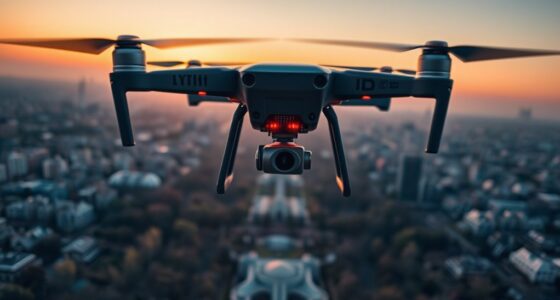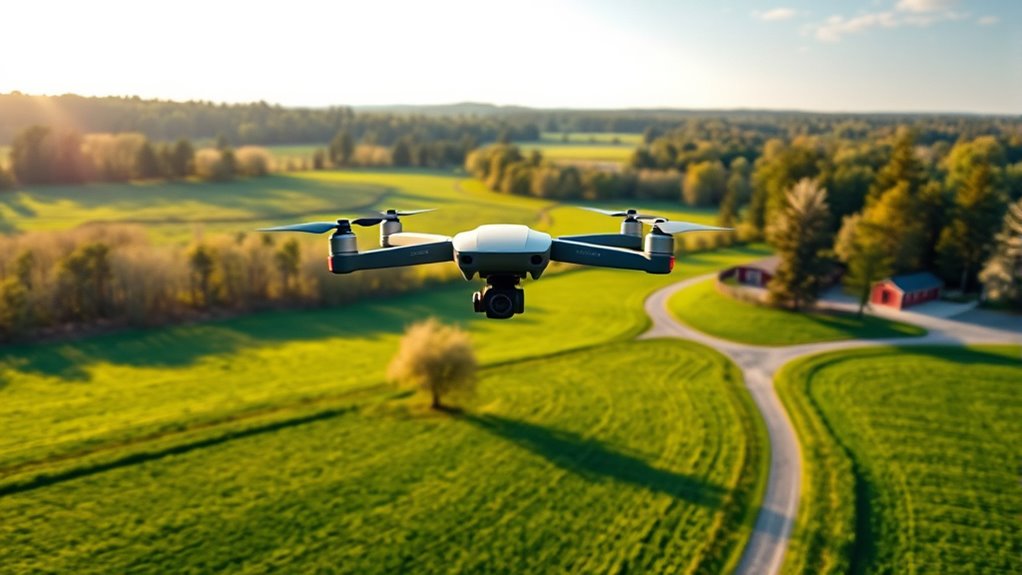

Flying over private property without landowner permission can cause legal and privacy issues, even if federal regulations allow drone flights below 400 feet. Property rights extend vertically over land, and invading these spaces may lead to disputes or lawsuits, especially if you capture private moments. It’s wise to seek permission and communicate with landowners beforehand. To understand the full scope of what’s involved and how to fly responsibly, keep exploring the details.
Key Takeaways
- Federal regulations allow flying below 400 feet over private land without landowner permission.
- Property owners generally control airspace extending vertically above their land, but rights vary by jurisdiction.
- Flying over private property can infringe on privacy rights, especially near homes or windows, leading to legal issues.
- Many states and local authorities have laws requiring landowner consent for drone flights over private property.
- To avoid disputes, it’s best to obtain permission and communicate with landowners before flying over private land.
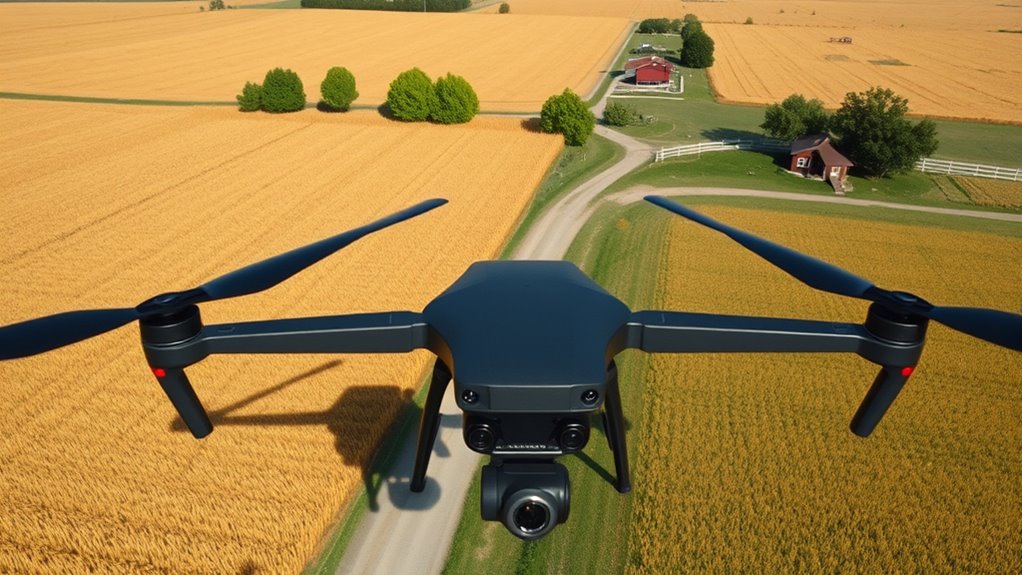
Have you ever wondered whether flying over private property is legal? The answer isn’t as straightforward as you might think. Drone regulations vary by location, and property rights play a significant role in determining what you can and can’t do in the airspace above someone else’s land. While drones are incredible tools for photography, videography, or simply exploring the skies, their use often sparks questions about privacy, safety, and legality. Understanding the balance between federal, state, and local laws is essential before taking your drone for a flight over private property.
Flying over private property involves legal considerations influenced by drone laws and property rights.
In the United States, the Federal Aviation Administration (FAA) governs drone regulations, setting rules for how and where you can fly. These regulations focus on safety and airspace management, not property rights per se. They allow drone operators to fly over private property without explicit permission, provided they follow rules such as flying below 400 feet, avoiding manned aircraft, and respecting no-fly zones. However, just because the FAA permits certain flights doesn’t mean property owners must accept drones crossing their airspace. Property rights extend vertically and horizontally, giving landowners control over the airspace immediately above their land, often up to a certain height.
This means that while you may be within legal bounds according to drone regulations, flying directly over private property can still lead to disputes. If your drone hovers too low or intrudes on someone’s privacy, the landowner might have grounds for legal action, especially if they feel their property rights or personal privacy are being violated. For example, flying over a backyard or window can be perceived as an invasion of privacy, even if it’s technically legal under federal rules. Some states and local jurisdictions have enacted laws that restrict drone flights over private property without permission, emphasizing the importance of knowing the specific laws in your area before launching. Additionally, local regulations may impose further restrictions that differ from federal rules, making it crucial to research the rules applicable in your location.
In practice, respecting property rights means obtaining permission from landowners if you plan to fly over or near their land. It’s wise to communicate beforehand or stay at a safe distance, especially if your drone cameras could capture private moments or sensitive information. Ignoring these boundaries can lead to civil lawsuits or criminal charges, even if your drone operation complies with FAA regulations. Ultimately, understanding both drone regulations and property rights helps you fly responsibly, keeping your activities legal and respecting others’ privacy. Being informed and considerate ensures that you enjoy your drone’s capabilities without causing unnecessary conflicts or legal issues.
Frequently Asked Questions
Can I Fly a Drone Over Private Property Without Permission?
You generally can’t fly a drone over private property without permission because it raises privacy concerns and may violate airspace regulations. Laws vary by location, but most jurisdictions require you to stay within legal altitude limits and avoid intruding on someone’s privacy. Always check local rules and consider asking landowners for permission to avoid legal issues and respect their privacy rights. This way, you stay safe and compliant while enjoying your drone flight.
Are There Legal Consequences for Flying Over Private Land?
Yes, there are legal consequences if you fly over private land without adhering to airspace regulations and trespassing laws. You could face fines, criminal charges, or civil lawsuits if your drone invasion is considered illegal. Always check local laws and regulations before flying, and avoid flying over private property without permission. Respect landowners’ rights, stay within legal airspace limits, and verify you’re not trespassing to prevent potential legal trouble.
How High Can I Legally Fly My Drone Over Private Property?
Think of airspace regulations as an invisible ceiling that keeps your drone from soaring too high. Legally, you usually can’t fly above 400 feet over private property without risking property rights infringement. This height respects federal rules and respects landowners’ rights, ensuring you stay within legal bounds. Keep your drone below this altitude to avoid trespassing into restricted airspace, and always stay aware of local laws to stay grounded in legality.
Does the Owner Have the Right to Shoot Down My Drone?
Yes, a landowner has the right to shoot down your drone if they believe it’s invading their privacy or trespassing on their land. They’re exercising their landowner rights to protect their property. To avoid issues, respect drone privacy laws, stay below legal altitude limits, and avoid flying over private property without permission. Always be mindful of landowner rights to prevent potential conflicts or legal trouble.
Are There Exceptions for Emergency or Rescue Flights?
When it comes to emergency flights and rescue operations, there are often exceptions that allow you to fly without landowner permission. Authorities and trained personnel can typically operate drones for rescue efforts, as saving lives takes precedence. It’s a case of needing to think on your feet; the rules bend when immediate help is required. Just remember, safety and legality should always go hand in hand during such critical situations.
Conclusion
Remember, flying over private property without permission can lead to legal trouble. For instance, a drone pilot once faced fines after repeatedly recording a neighbor’s backyard without consent. Always check local laws and seek landowner permission before taking off. Respecting property rights keeps you legal and avoids conflicts. So, next time you plan that scenic flight, think about the landowners’ privacy—it’s a small step that can prevent big headaches.