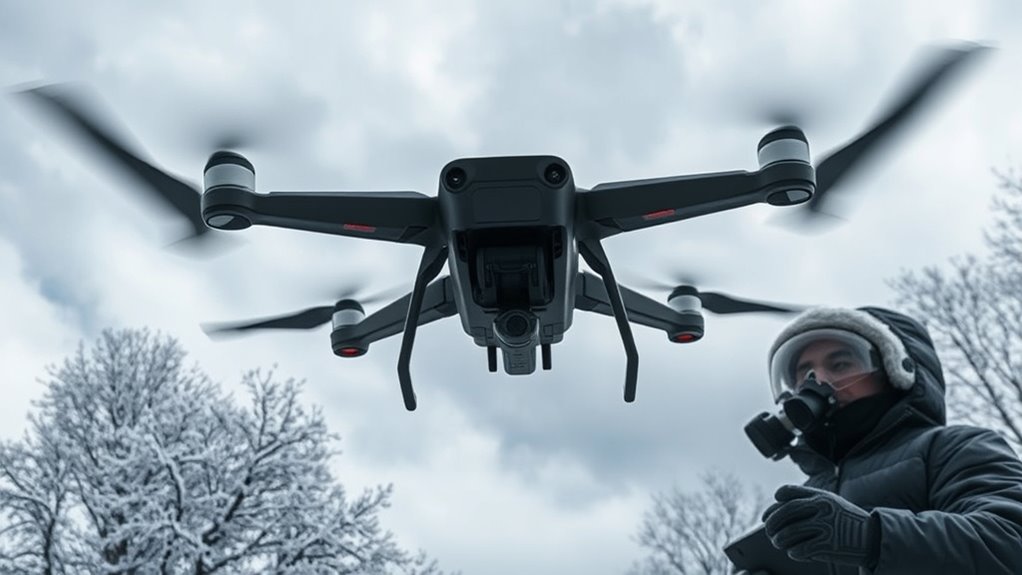

Flying drones in cold weather means you need to prioritize battery care and safety. Keep batteries warm by pre-warming them and avoid charging below freezing temperatures. Use insulated cases and monitor battery temperature during flights to prevent power drops or damage. Always check weather conditions and plan routes that avoid ice or snow hazards. If you stay vigilant and follow these tips, you’ll maximize performance and safety—more essential advice to help you succeed in cold conditions awaits.
Key Takeaways
- Pre-warm batteries in insulated pockets and avoid charging below freezing temperatures to prevent damage.
- Use insulated casings and keep batteries at 50-70% charge during storage to prolong lifespan.
- Monitor battery temperature and voltage during flight to prevent cold-related performance drops.
- Insulate batteries and drone components to maintain optimal thermal conditions in cold weather.
- Check weather conditions, avoid flying in snow or ice, and always fly within visual line of sight for safety.
Understanding How Cold Weather Affects Drone Batteries
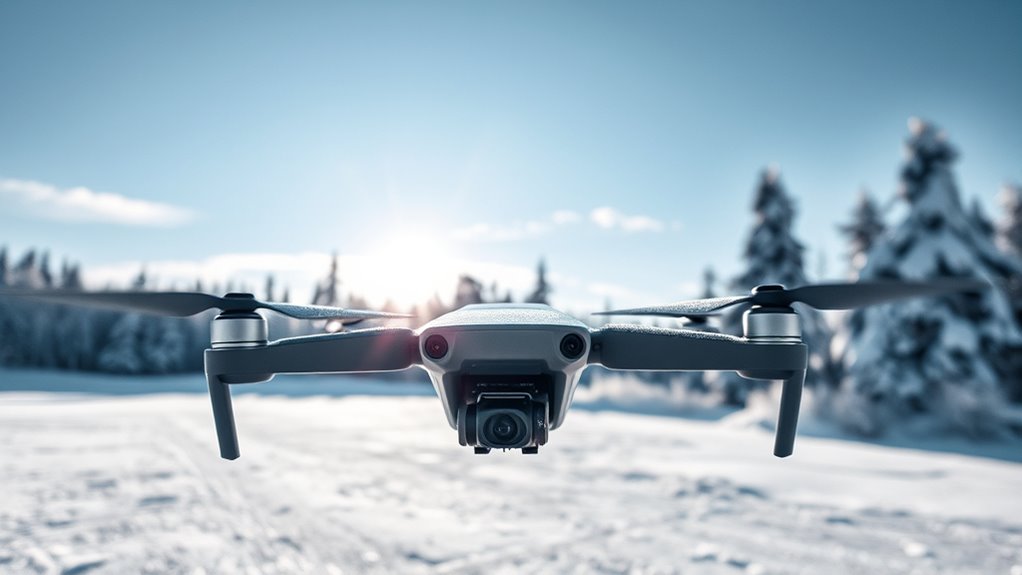
Cold weather can substantially impact your drone’s battery performance because batteries lose efficiency as temperatures drop. This is due to changes in battery chemistry, which slows chemical reactions inside the cells. When it’s cold, your battery’s ability to hold and deliver power diminishes, leading to shorter flight times and potential power drops mid-flight. Effective thermal management becomes essential to mitigate these effects. Keeping your batteries warm helps maintain ideal chemical activity, ensuring better performance. Without proper thermal management, cold temperatures can cause internal resistance to increase, further decreasing efficiency. Additionally, thermal conductivity of the battery materials influences how quickly heat is dissipated or retained, affecting overall performance. Understanding battery chemistry changes in cold can help you develop better strategies for winter drone flying and optimize battery care. So, understanding how cold impacts battery chemistry and actively managing temperature are key to maximizing your drone’s battery life and reliability in winter conditions.
Preparing Your Drone for Cold-Weather Flights
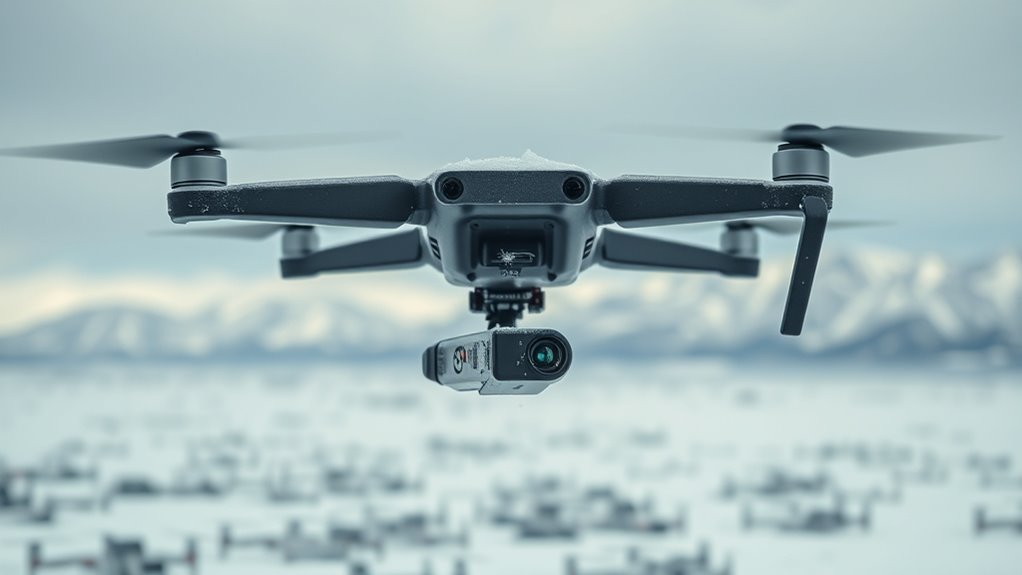
To guarantee your drone performs reliably in winter conditions, proper preparation is key. Start by choosing appropriate gear, such as insulated or weather-resistant casings, to protect your drone from cold temperatures and moisture. Confirm your propellers and sensors are clean and free of ice or snow. Before flight, adjust your flight plans to account for shorter daylight hours and unpredictable weather, avoiding high winds or snowstorms. Warm your drone and batteries gradually before takeoff, and keep spare batteries in warm pockets to prevent cold-related performance issues. Double-check all connections and firmware updates to ensure peak operation. Additionally, understanding the science behind battery performance can help you optimize battery life in cold weather. Cold temperatures can significantly decrease battery efficiency, so being aware of battery performance helps in planning for longer flights or necessary power management. To further mitigate cold-related issues, consider using thermal insulation around your batteries during prep. Being mindful of battery chemistry and its response to temperature changes can also improve your overall flight reliability. By selecting the right gear and adjusting your flight plans, you reduce risks and improve your chances of a safe, successful winter flight.
Best Practices for Battery Charging in Low Temperatures
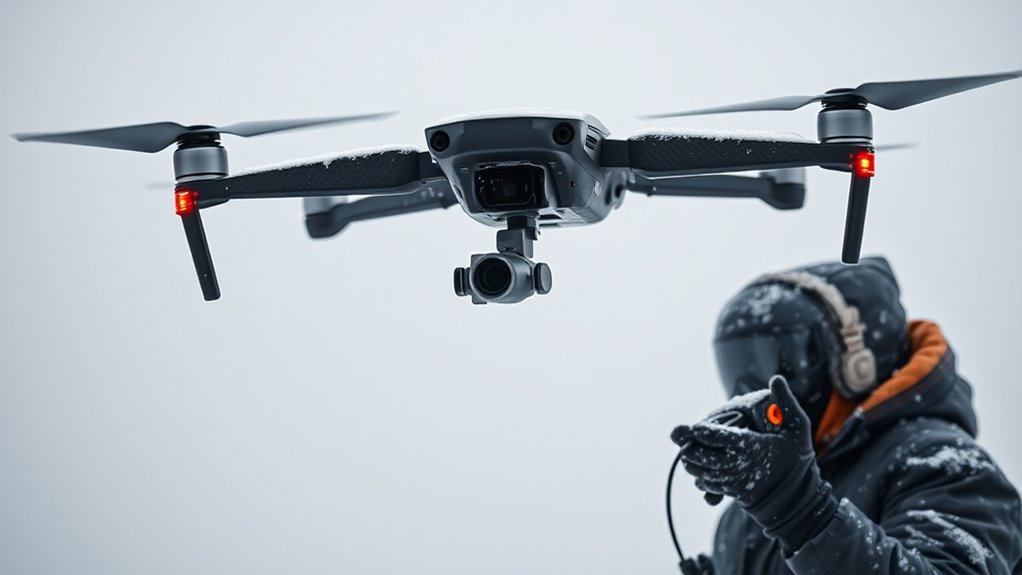
Charging your drone’s batteries in low temperatures requires careful attention to prevent capacity loss and guarantee safety. Proper battery thermal management ensures the cells stay within safe temperature ranges during charging. Follow specific charging protocols: avoid charging below freezing, and use a charger with temperature sensors. Keep batteries warm before charging by placing them in a pocket or insulated container. Avoid rapid charging in cold conditions, as it can damage the cells. Use the table below to understand ideal strategies:
| Strategy | Benefit |
|---|---|
| Pre-warm batteries | Maintains preferable chemical activity |
| Use temperature-sensitive chargers | Prevents overcooling during charging |
| Avoid charging below 0°C | Protects battery integrity |
| Monitor battery temperature | Ensures safe and effective charging |
| Follow manufacturer protocols | Extends battery lifespan |
Additionally, consulting battery safety guidelines can help prevent accidents and prolong battery life. Regularly checking the battery temperature during charging can further optimize safety and performance. Ensuring proper thermal management during cold weather charging is essential for preserving battery capacity and longevity. Employing proper storage techniques can also help maintain optimal battery conditions before use. Being aware of the wave and wind conditions can improve overall drone safety during cold weather operations.
Tips for Prolonging Battery Life During Cold Conditions
Prolonging your drone’s battery life in cold conditions requires deliberate strategies to minimize capacity loss and maintain performance. Start by insulating your battery with foam or specialized covers to protect it from direct cold exposure. Proper thermal management is essential; keep batteries warm before flight by placing them in a pocket close to your body. Avoid rapid temperature swings, as they can cause damage. When flying, consider using a heated battery pack or keeping your drone in a warm place when not in use. Regularly check for insulation integrity and ensure your batteries aren’t exposed to moisture. Additionally, understanding how temperature affects battery chemistry can help you make informed decisions to extend runtime and prevent early degradation caused by cold temperatures. Maintaining consistent thermal conditions helps preserve battery capacity and prolong its lifespan. Being aware of temperature fluctuations and how they impact chemical reactions within the battery can further help in optimizing performance and longevity. Implementing proper storage techniques can also prevent unnecessary capacity loss during periods of inactivity, especially in cold environments. Proper insulation and temperature management are crucial for maintaining battery health, which directly influences overall drone performance and safety. These practices help maintain ideal battery chemistry, extend runtime, and prevent early degradation caused by cold temperatures.
Monitoring Battery Health During Flight
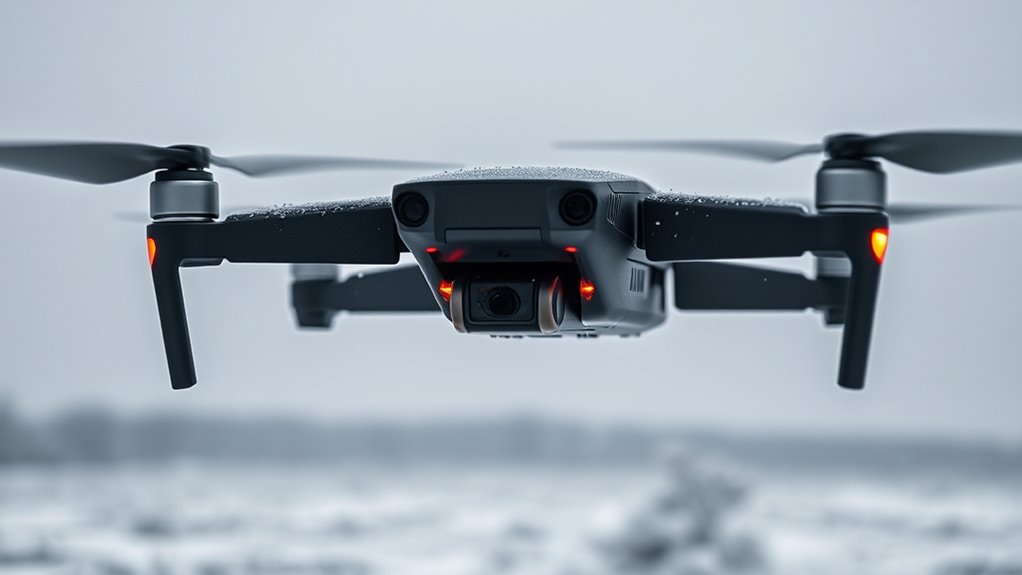
Keeping an eye on your drone’s battery health during flight helps prevent unexpected power loss, especially in cold weather where batteries can behave unpredictably. Monitor battery temperature constantly; cold temperatures can cause voltage fluctuations that impact performance. If you notice the battery temperature dropping below recommended levels, consider landing early to avoid damage. Watch for sudden drops or spikes in voltage, which indicate instability. Use your drone’s app or telemetry data to track these metrics in real time. Here’s a quick reference:
| Parameter | Indicator |
|---|---|
| Battery temperature | Too cold (<0°C) |
| Voltage fluctuations | Sudden drops/spikes |
| Voltage level | Below safe threshold |
| Overall health | Consistent and stable |
Regularly checking for battery health can help identify potential issues before they become serious. Being aware of battery chemistry and how it reacts to temperature changes can also help optimize your flying sessions. Additionally, understanding battery performance characteristics can assist in managing charging and discharging cycles more effectively. Properly maintaining your drone’s battery and understanding its performance characteristics can significantly extend its lifespan. Staying vigilant ensures safer flights and longer battery life in cold conditions, especially when taking advantage of cold weather flying opportunities.
Safety Measures to Follow When Flying in Cold Weather

Flying in cold weather requires careful attention to safety measures to prevent accidents or damage. First, always check the weather forecast before flying to avoid sudden snowstorms or icy conditions. Second, plan your flight path to stay clear of obstacles like ice-covered trees or power lines. Third, carry emergency preparedness gear, such as a first aid kit and a charged cellphone, in case of unexpected issues. Fourth, keep your drone within visual line of sight and fly at lower altitudes to maintain control. Remember, cold weather can affect your drone’s performance, so stay alert and be ready to abort if conditions worsen. Additionally, battery care is crucial in cold temperatures to prolong flight time and prevent power loss. Following these safety tips helps ensure a safe flight and protects your equipment.
Storing and Maintaining Batteries After Your Flight
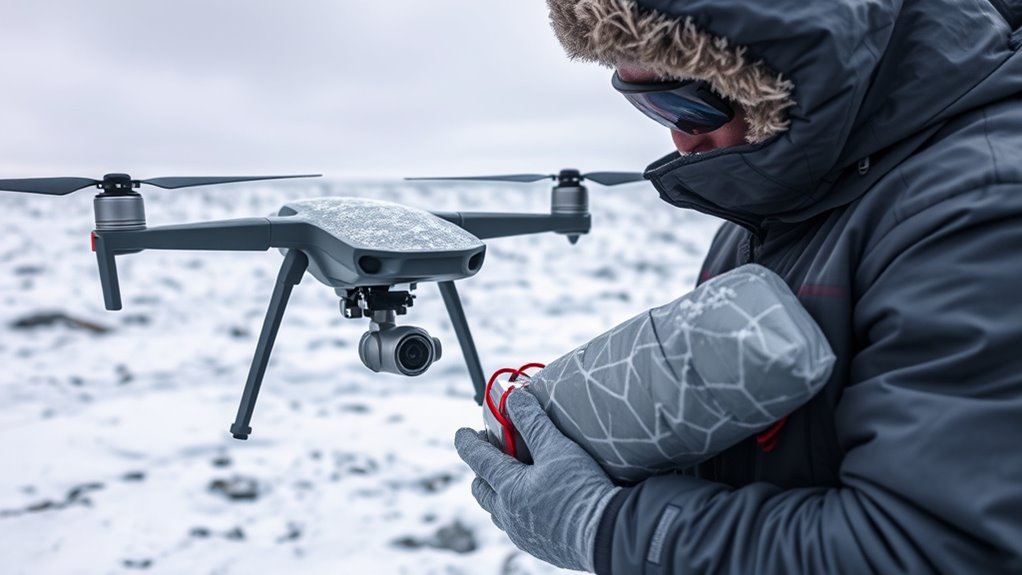
After your flight, it’s essential to store your batteries correctly and maintain them regularly to guarantee peak performance. Proper storage techniques prevent damage from cold temperatures and extend battery life. Taking these steps keeps your drone ready to fly whenever you need it.
Proper Battery Storage Techniques
Proper battery storage is essential to maintain your drone’s performance and extend its lifespan, especially in cold weather conditions. To do this effectively:
- Store batteries in a cool, dry place away from direct sunlight, using insulation like foam or cloth to prevent temperature fluctuations.
- Keep batteries at a partial charge, around 50-70%, to avoid stress from full or depleted states.
- Use battery insulation to shield against cold temperatures, reducing the risk of damage.
- Regulate temperature by storing batteries in a temperature-controlled environment, preventing extreme cold from affecting their chemistry.
These steps help maintain peak performance and prevent capacity loss caused by cold-related battery degradation. Proper storage ensures your drone’s batteries stay healthy and ready for flight.
Regular Battery Maintenance
Once you’ve finished your drone flight, taking the time to properly store and maintain your batteries helps guarantee they stay in good condition. Regular maintenance involves checking battery calibration to ensure accurate power readings and confirming charger compatibility to prevent overcharging or damage. Proper storage keeps batteries at ideal voltage levels, extending their lifespan. Avoid leaving batteries fully drained or fully charged for prolonged periods. Additionally, periodically calibrate your batteries to maintain reliable performance. Use chargers that are compatible with your drone’s batteries to ensure safe and efficient charging.
| Keep Batteries Properly Stored | Maintain Peak Performance |
|---|---|
| Prevents capacity loss | Ensures accurate readings |
| Avoids swelling or damage | Extends battery lifespan |
| Compatible chargers matter | Consistent flight times |
| Regular calibration helps | Safe, reliable operation |
Frequently Asked Questions
How Can I Tell if My Drone’s Battery Is Too Cold to Fly?
You can tell if your drone’s battery is too cold to fly by checking its temperature; if it’s below the manufacturer’s recommended range, it’s unsafe. Feel for frost buildup or condensation on the battery surface, which indicates cold conditions. If the battery feels cold to the touch or shows frost, wait for it to warm up indoors. Flying with a cold battery risks poor performance, damage, or failure mid-flight.
Are There Specific Drone Models Better Suited for Cold-Weather Flying?
Think of winter drone models as your trusty snowshoes—designed to perform where others struggle. Some drones come with cold weather features like insulated batteries and heated motors, making them better suited for winter flying. Brands like DJI and Skydio offer models specifically built for cold conditions, ensuring your flight doesn’t freeze up. Choosing a drone with winter-ready features keeps your adventures smooth, even when temperatures drop.
What Are the Signs of Battery Damage Caused by Cold Temperatures?
You’ll notice battery damage from cold temperatures through thermal symptoms like swelling or overheating during use. Battery degradation might cause shorter flight times, reduced power, or inconsistent performance. If your drone’s battery feels unusually warm or shows swelling, stop using it immediately. Cold-induced damage can compromise safety and efficiency, so monitor thermal symptoms closely and substitute batteries if you see signs of damage to ensure safe flying experiences.
Can Using External Heaters Extend Battery Life in Freezing Conditions?
Using external heaters can help extend your drone’s battery life in freezing conditions. You should use battery insulation to keep the pack warm and consider portable heaters to maintain ideal temperature during flight. These methods prevent cold-related damage and improve performance. Just ensure your portable heaters are safe and don’t overheat the battery, as that could cause further issues. Proper insulation and heating help your drone operate reliably in cold weather.
How Often Should I Replace Batteries Used in Cold Environments?
Think of your drone batteries as delicate seeds that need careful tending. In cold environments, their lifespan shortens, so you should consider replacing them every 100-200 cycles or when performance dips. Watch for signs like reduced flight time or swelling—these clues tell you it’s time for a fresh start. Regular replacement keeps your drone flying smoothly, ensuring safety and peak performance amidst the icy skies.
Conclusion
Flying drones in cold weather requires careful battery care and safety awareness. By understanding how low temperatures affect your batteries and following these tips, you can guarantee smooth flights even in winter’s chill. Remember, even the Wright brothers knew the importance of preparation—so don’t forget to monitor, charge, and store your batteries properly. Stay vigilant, keep your drone warm, and enjoy flying in winter’s wonderland without any icy surprises!