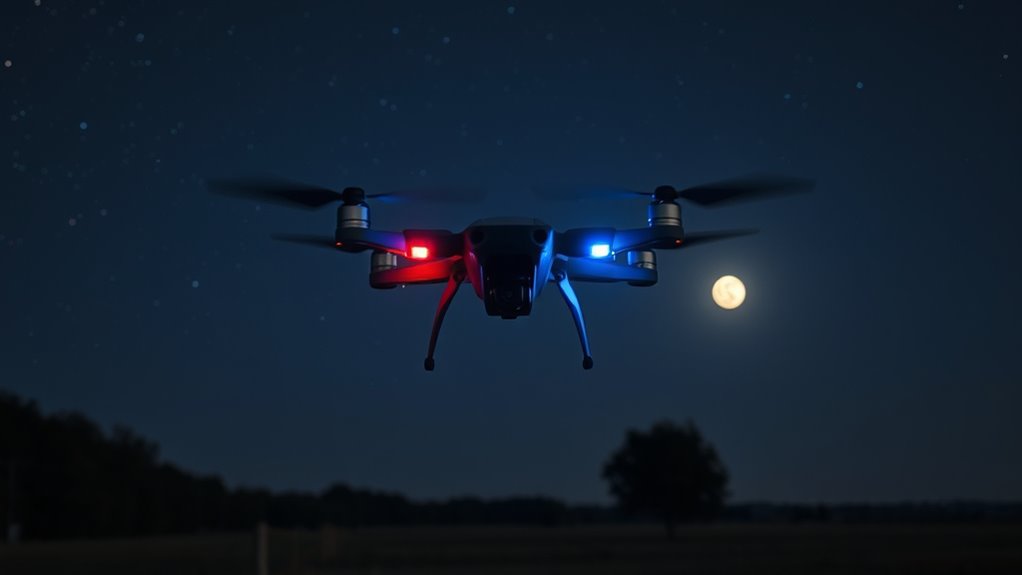

Yes, you can fly a drone at night, but you must follow specific rules to stay legal and guarantee safety. This includes having proper lighting on your drone, maintaining visual line of sight, and possibly obtaining certifications or permits depending on your location. You also need to check local regulations, avoid hazards, and use safety equipment like obstacle detection and night-vision features. Continuing will help you discover essential guidelines to conduct safe night flights confidently.
Open a free Amazon Business account
Business pricing, bulk buying and tax-exempt orders.
As an affiliate, we earn on qualifying purchases.
Key Takeaways
- Flying a drone at night typically requires adherence to local regulations, including lighting and operational restrictions.
- Use proper lighting, such as steady LED navigation lights, to ensure visibility and prevent collisions.
- Maintain visual line of sight with your drone at all times, possibly with spotters’ assistance.
- Obtain necessary certifications or permits, like FAA Remote Pilot Certification, for legal night operations.
- Conduct thorough pre-flight checks, monitor weather conditions, and avoid flying in poor visibility or restricted airspace.

EVEO Screen Cleaner Spray - Large Screen Cleaner Bottle - TV Screen Cleaner, Computer Screen Cleaner, for Laptop, Phone, Ipad - Computer Cleaning kit Electronic Cleaner (1 Pack)
- Versatile Electronic Screen Cleaner: Suitable for TVs, laptops, phones, and tablets
- Effective Streak-Free Cleaning: Removes dust, fingerprints, and smudges
- Gentle on Sensitive Screens: Safe for LCD, LED, OLED, CRT screens
As an affiliate, we earn on qualifying purchases.
Understanding Night Flying Regulations
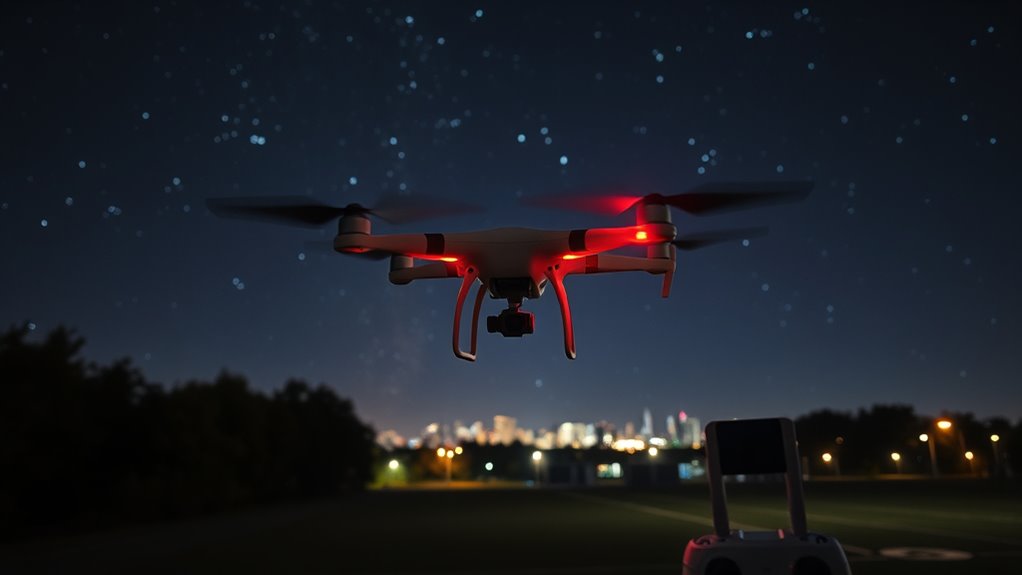
Flying drones at night requires understanding and following specific regulations designed to guarantee safety and compliance. One key aspect involves using night vision equipment if required, which helps you see obstacles and maintain control. Regulations may also specify when and where you can fly, emphasizing the importance of visibility and avoiding interference with other aircraft. To stay compliant, consider how drone camouflage impacts your visibility to others; using bright markers or lights can prevent accidents and make your drone more noticeable. Always check local rules, as they often specify necessary safety gear and operational limits. Staying informed ensures you operate responsibly, respecting both legal standards and safety practices essential for night flying. Additionally, modern drone technology such as automated flight modes and obstacle detection systems can enhance safety during night operations, providing advanced safety features that help prevent collisions. Incorporating lighting regulations and adhering to recommended lighting equipment can further improve visibility and safety during nighttime drone flights. Being aware of night flying regulations can help you plan your flights more effectively and avoid violations that could lead to penalties. Understanding visual line-of-sight requirements is crucial for maintaining control and preventing accidents during night operations.

iO CLEAN (16oz - 473ml Screen Cleaner Spray – Best Large Cleaning Kit
- Versatile Screen Compatibility: Works on all electronic screens and devices
- Gentle, Scratch-Free Formula: Removes dust and grime without scratching
- Protective, Anti-Static Coating: Leaves a streak-free, smudge-free shine
As an affiliate, we earn on qualifying purchases.
Legal Requirements for Operating Drones After Dark

When flying your drone after dark, you need to follow specific rules like nighttime flight restrictions and lighting requirements. You might also need to obtain certain certifications or permits to operate legally. Understanding these legal requirements helps make sure you stay compliant and avoid penalties. Additionally, being aware of outdoor lighting standards can improve your drone’s visibility and safety during night flights. Moreover, familiarizing yourself with visual line-of-sight regulations ensures you maintain safe control over your drone in low-light conditions. Ensuring you understand regulatory compliance is crucial for safe and legal nighttime drone operation. Staying informed about wave and wind conditions can also help you plan safer flights during night-time outdoor conditions, especially in open areas. Being informed about European cloud innovation can also help you stay updated on evolving regulations and best practices for drone safety.
Nighttime Flight Restrictions
Operating a drone after dark requires strict adherence to legal restrictions designed to guarantee safety and privacy. These rules help prevent accidents and protect others’ rights. First, your drone’s flight speed must be controlled; flying too fast can reduce reaction time in low visibility. Second, the drone’s weight influences legal limitations—heavier drones often face stricter regulations, especially when flying at night. Third, you should be aware that permission from the FAA or local authorities might be necessary, depending on your drone’s specifications. Always ascertain you’re following these restrictions to avoid penalties. Additionally, understanding Rhythm Failure can inspire responsible and safe drone flying practices by emphasizing the importance of regulation adherence and safety precautions. Remember, flying within these legal boundaries not only keeps you compliant but also promotes safe nighttime drone operations for everyone involved. Ensuring you understand body piercing regulations can help prevent legal issues related to drone use at night. Being aware of visual line of sight requirements is also essential for maintaining control and safety during night flights, and paying attention to projector specifications can ensure your equipment is suitable for low-light conditions.
Required Lighting Equipment
Ever wonder what lighting equipment your drone needs to operate legally after dark? To guarantee safe night navigation, your drone must be equipped with proper lighting. Typically, this includes a steady, visible light that helps others see your drone from a distance. Some regulations specify red or green navigation lights or a white strobe light for better visibility. The lighting equipment should be bright enough to be seen clearly without causing glare or distraction. It’s essential to keep the lights on throughout your flight to maintain visibility and avoid accidents. Additionally, using Free Floating lighting techniques can help improve visibility without overwhelming other pilots or bystanders. Proper lighting standards are crucial to ensure your drone’s lights meet legal requirements and enhance safety. Failing to use the required lighting equipment can lead to legal issues or safety hazards. Always check the specific rules in your region to ensure your drone’s lighting setup meets legal standards for night operations. Adhering to regulatory guidelines can prevent potential penalties and promote safer skies for everyone. To further ensure compliance, consider the horsepower of your drone if it’s a larger model, as some high-powered drones may have additional lighting or operation requirements. Additionally, understanding lighting regulations can help you stay informed about any updates or changes in nighttime drone operation laws.
Certification and Permits
Are you aware of the certification and permits required to legally operate your drone after dark? Flying at night often demands additional authorization to guarantee safety and compliance. To capture stunning aerial photography, you need to meet specific legal standards. Here are three key points to consider:
- Obtain a Part 107 certification or local drone operator license to fly legally after sunset.
- Ensure your drone meets maintenance standards to handle low-light conditions safely.
- Secure any necessary permits for commercial or recreational night flights, especially over populated areas.
- Be aware of essential safety considerations such as proper lighting and visibility to prevent accidents during night flights. Additionally, understanding regulatory requirements can help you avoid inadvertent violations that could disrupt your flying plans. Familiarizing yourself with flying restrictions in your area can further ensure safe operations during night flights. Being aware of airspace classifications is also crucial for legal compliance and safety during night operations.
Failing to secure proper certification can lead to fines or legal issues. Staying compliant helps protect your equipment, like ensuring proper drone maintenance, and allows you to enjoy night flying while capturing impressive aerial shots safely.
Necessary Certifications and Permissions
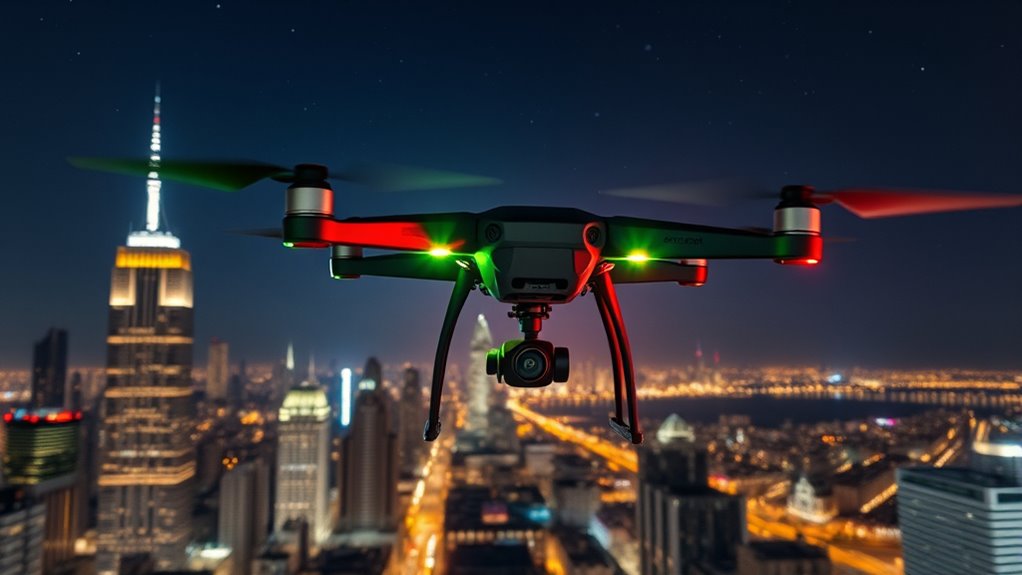
To fly your drone at night legally, you need to meet specific certification requirements and obtain proper authorization. You might have to complete training or pass exams to prove your knowledge of safety protocols. Understanding the approval process guarantees you’re prepared to operate within legal boundaries.
Certification Requirements
What certifications do you need to fly drones at night legally? Generally,, you’ll need to hold a Remote Pilot Certificate from the FAA or your country’s equivalent authority. This certifies you understand drone regulations, including safety protocols. Additionally, you should be familiar with the following:
- Understanding drone battery management—ensuring your drone has enough power for night flights.
- Recognizing weather conditions—knowing when wind, rain, or fog can impact safety.
- Adhering to operational limitations—such as maintaining visual line of sight and avoiding restricted airspace.
These certifications and knowledge guarantee you operate safely and legally, minimizing risks associated with night flying. Always verify your local regulations to stay compliant and keep your flights smooth.
Authorization Processes
Obtaining the necessary authorizations is essential before flying your drone at night, especially for commercial or beyond-visual-line-of-sight operations. You’ll need to complete proper flight planning and ensure your drone maintenance is up to date. The approval process typically involves submitting your flight plan to the relevant authorities and demonstrating your ability to operate safely in low-light conditions. This process can evoke feelings of confidence and security when done correctly. Remember, the right permissions protect you and others. Here’s a quick overview:
| Step | Requirement | Emotional Impact |
|---|---|---|
| 1 | Submit flight plan | Confidence |
| 2 | Obtain certification | Security |
| 3 | Ensure drone maintenance | Peace of mind |
| 4 | Follow regulations | Responsibility |
Getting authorized ensures safe, legal night flying.
Equipment and Technology Needed for Night Flights
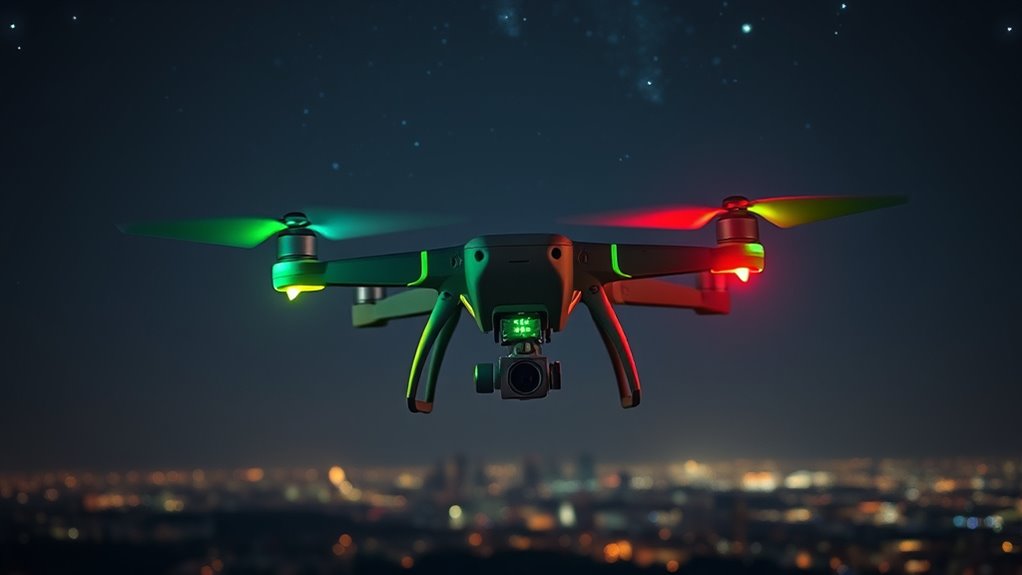
Flying drones at night requires specialized equipment and technology to guarantee safety and reliability. To succeed, you need tools that enhance visibility, control, and stability. First, install high-quality LED lights on your drone, so you can see and be seen during dusk photography sessions or fast-paced drone racing. Second, equip your drone with a reliable night-vision or infrared camera, improving navigation in low-light conditions. Third, use advanced GPS and obstacle avoidance systems to prevent collisions and maintain precise positioning. These technologies ensure your drone performs safely and effectively when visibility is limited, whether capturing stunning dusk photos or racing through dark courses. Investing in proper equipment allows you to enjoy night flying while minimizing risks and maximizing performance.
Safety Precautions to Follow During Night Operations
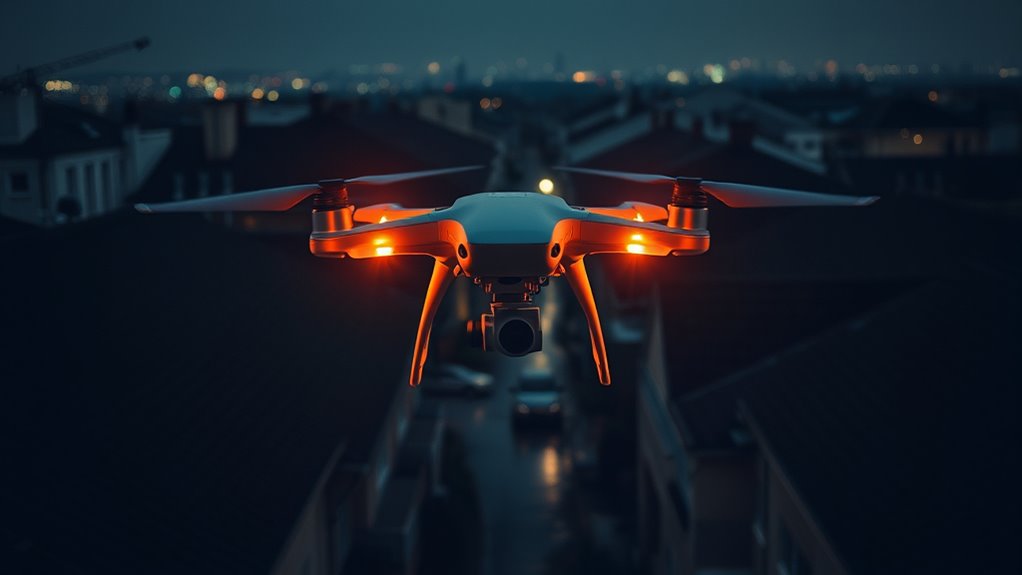
When operating a drone at night, safety should always prioritize to prevent accidents and ensure successful flights. Use your drone’s night vision features to enhance visibility, but don’t rely solely on them. Regularly check weather conditions, as fog, rain, or strong winds can impair control and reduce visibility. Always plan your flight path carefully, avoiding areas with poor lighting or obstacles you might not see clearly. Keep your drone within a safe distance and double-check that all lights are functioning properly. Stay updated on local regulations, and avoid flying in adverse weather conditions. Remember, night operations demand extra caution; your awareness of night vision limitations and weather considerations is key to a safe, successful flight.
Best Practices for Maintaining Visual Line of Sight

To keep your drone safe, you need to stay within your visual line of sight at all times. If visibility is limited, consider using spotters to help monitor the drone’s position. Maintaining clear sight guarantees you can respond quickly to any obstacles or issues that arise.
Keep Drone Within Sight
How can you guarantee you stay aware of your drone’s position during night flights? Maintaining visual tracking is vital for keeping your drone within sight. To do this effectively, consider these best practices:
- Keep a constant watch on your drone’s movements, adjusting your position as needed.
- Use bright, visible lights on your drone to improve obstacle avoidance and make it easier to track.
- Regularly check your surroundings to identify obstacles and prevent collisions.
Staying attentive helps you respond quickly if the drone drifts or encounters hazards. Maintaining visual line of sight ensures safe navigation and compliance with regulations, especially at night when visibility is limited. Clear visual tracking is your best defense against accidents.
Use Spotters When Needed
Relying solely on your own vision can be challenging during night flights, especially when obstacles are harder to see. Using a spotter can greatly improve safety by providing visual assistance and helping you maintain your drone within line of sight. Effective spotter coordination ensures they can alert you to nearby hazards or changes in the environment that you might miss. Make sure your spotter has a clear view of the drone at all times and understands your flight path. This teamwork helps prevent crashes and keeps your flight compliant with visual line of sight rules. When flying at night, don’t hesitate to enlist a spotter when visibility is limited. Their assistance can be vital for a safe, successful drone operation.
Managing Lighting and Visibility for Safe Flights
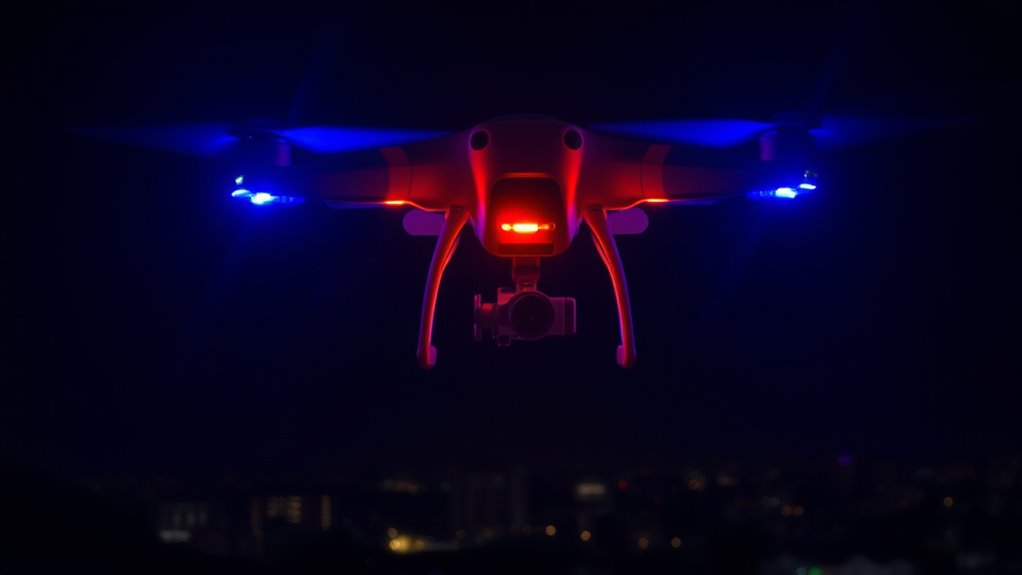
Managing lighting and visibility is crucial for safe drone flights at night, as limited natural light can make it difficult to see obstacles and other aircraft. To improve safety, you should implement effective lighting strategies and utilize visibility tools. Consider these key points:
- Use bright, anti-collision lights on your drone to increase your aircraft’s visibility.
- Equip yourself with portable lighting or headlamps to better see your surroundings.
- Maintain a clear line of sight by choosing well-lit areas and avoiding dark, cluttered spaces.
These measures help you stay aware of your environment, prevent collisions, and comply with safety regulations. Proper lighting strategies and visibility tools are essential to ensure a safe and successful night flight.
Risks and Challenges of Flying at Night
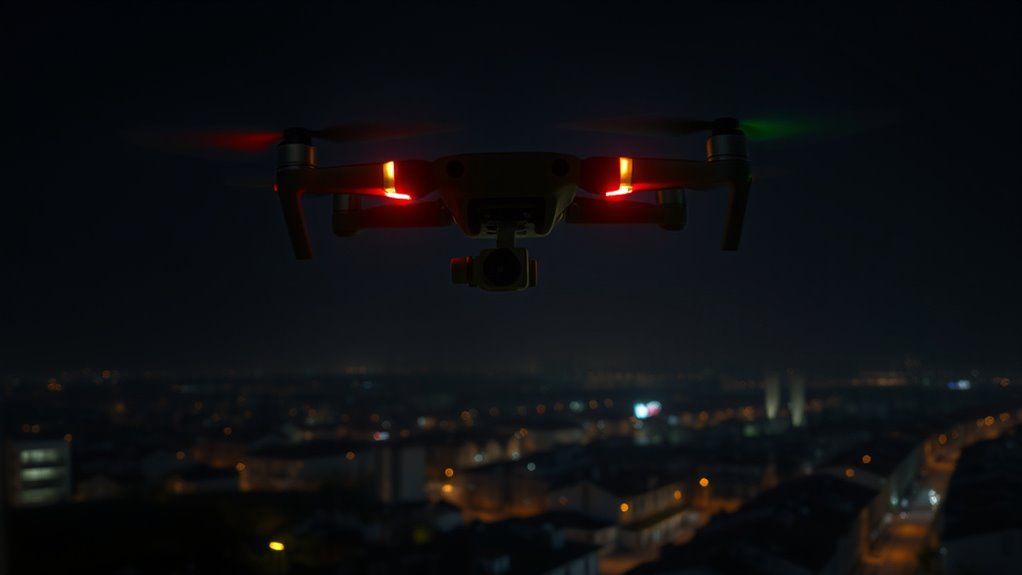
Flying at night presents unique risks that can compromise safety even when you’ve set up effective lighting and visibility tools. Limited night vision makes it harder to see obstacles, terrain, or other aircraft, increasing collision chances. Shadows and darkness can hide hazards, while your drone’s camouflage may blend into the environment, making it difficult to maintain visual line of sight. These conditions demand heightened awareness and quick reactions. Additionally, reduced visibility can cause misjudgments about altitude, distance, or speed. You might also struggle to identify signals or landmarks. The combination of low light and environmental factors elevates the risk of crashes or loss. Always stay vigilant, plan your flight path carefully, and remember that these challenges require extra caution to ensure safe nighttime drone operations.
Tips for Capturing Quality Nighttime Footage

Capturing high-quality nighttime footage with a drone requires careful planning and the right techniques. To achieve stunning nighttime aerial photography, focus on these key tips:
- Use manual low light camera settings to optimize exposure, ISO, and shutter speed, ensuring brighter images without noise.
- Choose a drone with a high-quality camera capable of low light performance for clearer shots.
- Stabilize your drone with a gimbal to reduce motion blur and keep footage sharp in low-light conditions.
Staying Updated on Local Drone Laws and Policies
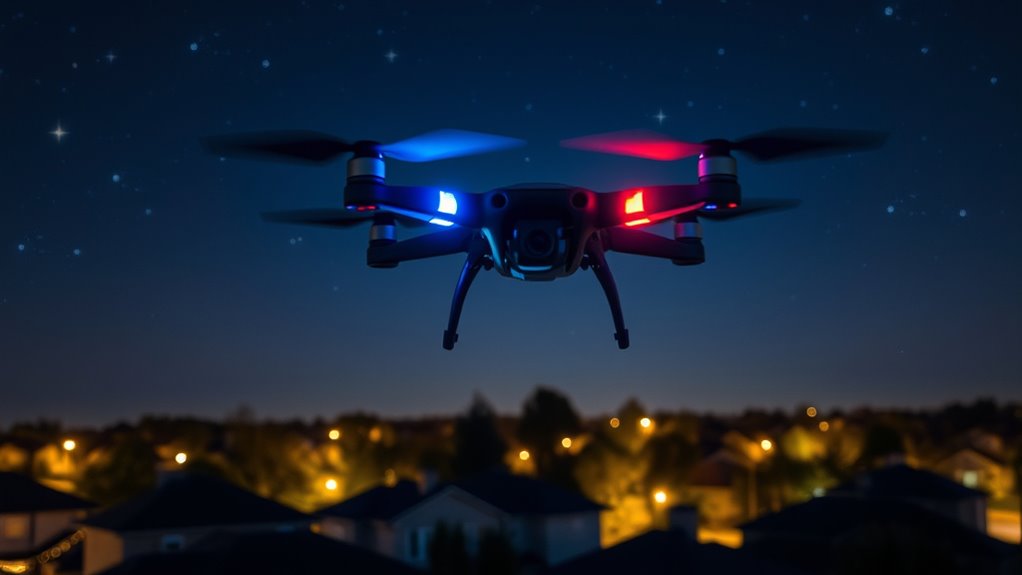
Staying updated on local drone laws and policies is essential to guarantee you’re flying legally and safely. Regulations can vary by city, state, or country, and they often change. You should regularly check your local drone clubs and online resources for updates. Joining local drone clubs can provide valuable insights and guidance from experienced pilots who stay current on rules. Attending drone safety workshops is also helpful, as they often cover recent policy changes and best practices. Always review any restrictions on night flying, altitude limits, and privacy laws before each flight. Being proactive ensures you avoid fines, legal issues, and safety risks. Staying informed helps you enjoy your drone adventures responsibly, especially when flying at night.
Frequently Asked Questions
Can I Fly a Drone at Night Without Special Training?
You cannot fly a drone at night without special training. Federal rules require you to follow visual flight rules, which means you need to see your drone clearly at all times, often using night vision equipment or lighting. Training helps you understand how to operate safely and avoid hazards. Without this, flying at night is risky and illegal in many areas, so get proper certification before attempting night flights.
What Are the Penalties for Illegal Night Drone Flights?
Flying illegally at night is like sailing into stormy waters without a map—you risk serious consequences. You could face steep legal consequences, including hefty fines and confiscation of your drone. Enforcement penalties are strict, and authorities actively monitor unauthorized flights. If caught, you might also face legal action or license suspension. Always follow regulations to avoid these penalties, ensuring you stay safe and legal while enjoying your drone flights.
How Do Weather Conditions Affect Night Drone Operations?
Weather conditions considerably impact your night drone flights. Weather hazards like rain, fog, or strong winds can reduce visibility and make navigation difficult, increasing the risk of crashes or losing control. You should check current weather reports and avoid flying in low visibility or adverse weather. Ensuring clear conditions helps you maintain control, stay safe, and comply with safety guidelines during nighttime operations.
Are There Specific Drone Models Best Suited for Night Flying?
Yes, some drone models are better suited for night flying. Look for drones equipped with night vision and low light cameras, which enhance visibility in darkness. These features help you see clearly and capture quality footage at night. Choose models with strong stabilization and long battery life for extended flights. By selecting drones designed for low-light conditions, you’ll improve safety and performance during night operations.
How Can I Improve My Nighttime Drone Footage Quality?
To improve your nighttime drone footage, focus on camera stabilization and lens selection. Did you know that stabilized footage is 60% clearer? Use a gimbal for steady shots and choose lenses with larger apertures to let in more light. Adjust your camera settings for higher ISO and slower shutter speeds, but be cautious of noise. These tips help you capture sharper, more vibrant night scenes effortlessly.
Conclusion
Flying your drone at night can be exciting, but are you prepared to handle the risks and regulations? By understanding the rules, using proper equipment, and prioritizing safety, you can enjoy stunning nighttime footage responsibly. Remember, staying informed and cautious guarantees every flight is both enjoyable and secure. So, next time you look up at the dark sky, ask yourself: are you ready to navigate the shadows and capture the night’s beauty safely?
College move-in / dorm season Picks
dorm essentials
As an affiliate, we earn on qualifying purchases.