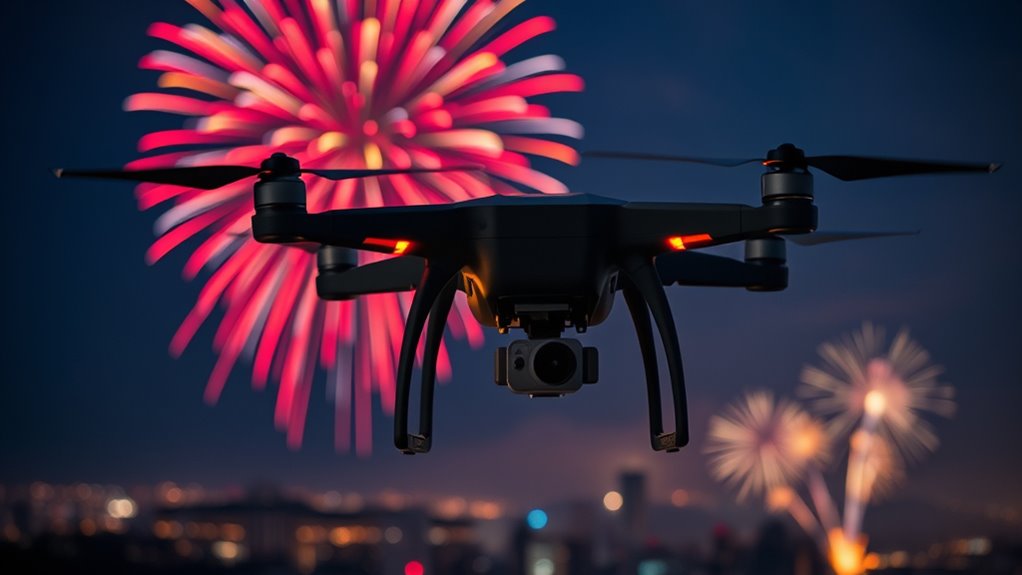

To film fireworks safely and effectively with a drone, first check FAA regulations and obtain any necessary airspace permissions, especially for night flights. Prepare your drone with fully charged batteries and activate anti-collision lights. Choose a safe, open location away from crowds, and set your camera to low ISO, long exposures, and flat profiles to capture bright light trails. guarantee safety procedures are followed throughout, and you’ll improve your footage—discover more tips to get outstanding shots.
Key Takeaways
- Obtain FAA approval via LAANC for controlled airspace and avoid restricted zones or TFRs.
- Use long exposure settings (4–5 sec) and manual controls to capture light trails without flickering.
- Ensure anti-collision lights are active and keep the drone below 400 ft for night safety.
- Choose open, unobstructed locations away from crowds, airports, and buildings for safe filming.
- Coordinate with event organizers and follow all safety regulations to ensure legal, effective footage.
Understanding the Legal Framework for Fireworks Filming

Understanding the legal framework for fireworks filming is *vital* to *guarantee* you stay compliant and avoid penalties. You need to be aware of FAA regulations, such as prohibiting drones over crowds during fireworks displays. Drones must stay below 400 feet unless authorized for commercial use, and nighttime flights require anti-collision lights visible for three miles. Flying in controlled airspace (Class B, C, D, E) demands prior approval through LAANC, while flying near airports or within Temporary Flight Restrictions (TFRs) is strictly forbidden. Always check airspace classifications with apps like Aloft or SkyVector. Coordination with event organizers is *crucial* if you plan to film close-up or special shots. Being aware of aerospace regulations is essential for safe, legal drone operation during fireworks events. Additionally, understanding airspace classifications helps prevent accidental violations and ensures your filming remains within legal boundaries. Familiarizing yourself with airspace restrictions and potential no-fly zones will further safeguard your operations and help you plan effective filming strategies.
Preparing Your Equipment for Nighttime Fireworks Shots
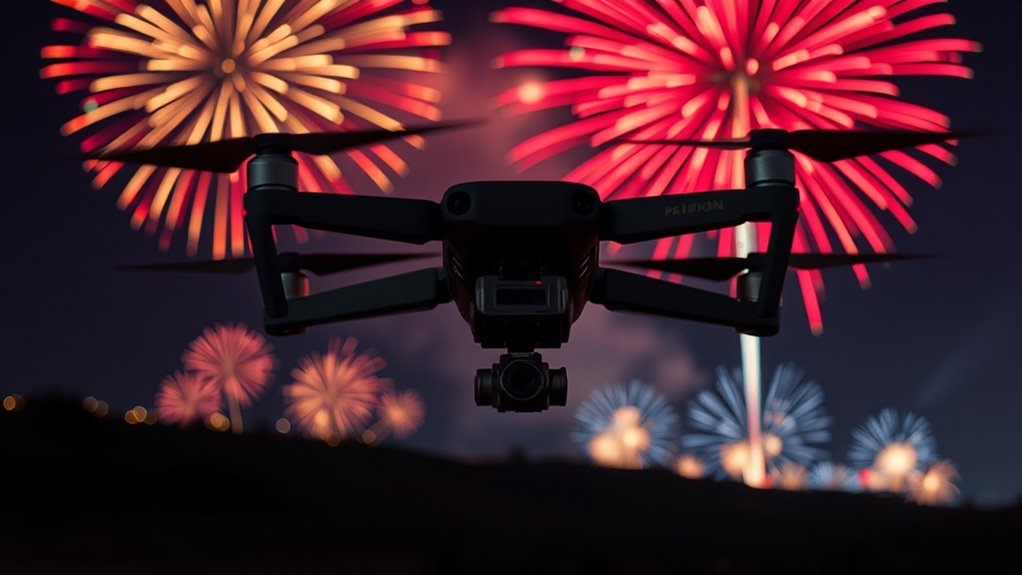
To capture stunning fireworks at night, you need to set up your drone equipment carefully beforehand. First, verify your drone’s anti-collision lights are attached and working, making your craft visible from at least three miles away. Next, adjust your camera’s settings manually: set ISO between 100 and 800, use a flat color profile, and select long exposure times (4–5 seconds) to capture light trails effectively. Finally, double-check your drone’s battery levels and fully charge them beforehand, bringing extras if possible. This preparation guarantees your drone is ready for night filming and helps you avoid interruptions during the show. Proper setup minimizes technical issues, allowing you to focus on capturing those breathtaking fireworks displays safely and effectively.
Finding the Ideal Location and Airspace Permissions

Finding the perfect location for filming fireworks with a drone requires careful planning to guarantee safety and legal compliance. First, choose an open area with a clear line of sight, away from crowded spectators and buildings. Use apps like Aloft or SkyVector to check airspace classifications. If you’re in controlled airspace (Class B, C, D, E), obtain LAANC approval beforehand. Always respect Temporary Flight Restrictions (TFRs) around fireworks events and airports—they’re strictly off-limits. Coordinate with event organizers when possible to ensure you’re authorized to film close-up shots. Remember, flying over crowds or near restricted zones violates FAA rules and can lead to hefty penalties. Prioritize safety, legality, and coordination to set yourself up for successful, stress-free fireworks footage. Additionally, understanding navigation and mapping can help plan precise flight paths and avoid obstacles during your shoot.
Mastering Drone Settings and Shooting Techniques

Optimizing your drone’s camera settings is key to capturing stunning fireworks displays. To get the best shots, adjust your settings before launch. Here’s what to focus on:
Optimizing drone camera settings before launch ensures stunning fireworks footage with vibrant, crisp light trails.
- Use manual exposure to control brightness and prevent auto-exposure flickering during bursts.
- Set ISO between 100 and 800 to balance light sensitivity and noise.
- Use long exposure times (4–5 seconds) to create dramatic light trails from fireworks.
- Remember to Free Floating elements in your shot composition to add natural movement and interest.
Additionally, switch to a flat color profile and reduce sharpness for better post-processing flexibility. Confirm your drone’s anti-collision lights are active for safety, especially at night. Practice your camera controls beforehand to react quickly during the show. Fine-tuning these settings will help you capture crisp, vibrant footage of the fireworks.
Ensuring Safety and Compliance During Fireworks Filming

Ensuring safety and compliance during fireworks filming requires careful planning and adherence to regulations to prevent accidents or legal issues. First, always check airspace classifications with apps like Aloft or SkyVector. Flying in uncontrolled (Class G) airspace is usually permitted without prior approval, but controlled airspace (B, C, D, E) demands LAANC authorization. Never fly over crowds, and avoid restricted zones such as airports or TFRs. Nighttime flights must have anti-collision lights visible for three miles, and landing zones should be well-lit. Remember, flying near fireworks events or within TFRs is strictly prohibited. Coordinate with event organizers when necessary. Stay current on FAA rules—recreational pilots must pass the TRUST test, and commercial operators need FAA certification for night flights. Additionally, understanding airspace regulations is essential to avoid violations and ensure safe drone operations. Familiarity with Vetted – Security Zone Info can help in identifying restricted areas and maintaining compliance.
Frequently Asked Questions
Can I Film Fireworks With a Drone in a National Park?
You can’t film fireworks in a national park with a drone. National parks have strict regulations prohibiting drone flights to protect wildlife and visitors’ experience. Flying in these areas requires special permits, which are rarely granted, especially during fireworks displays. Always check park rules and obtain necessary permissions before flying. Respect the regulations to avoid penalties, and prioritize safety and conservation when considering drone use in protected areas.
What Are the Best Drone Models for Capturing Fireworks?
You should consider drones like the DJI Mavic 3 or Autel Robotics EVO Lite+ for capturing fireworks. These models feature high-quality cameras with adjustable settings, long battery life, and stable flight capabilities, essential for night filming. Their obstacle avoidance and GPS systems help keep your shots steady and safe. Always verify your chosen drone complies with FAA regulations, especially regarding night flights and airspace restrictions.
How Do I Avoid Camera Shake During Long Exposure Fireworks Shots?
To avoid camera shake during long exposure fireworks shots, you should use a gimbal stabilizer to keep your drone steady, especially in windy conditions. Set your camera to manual mode and use a tripod or landing gear if available. Keep your drone’s movement minimal, and practice smooth, slow adjustments. Additionally, opt for a remote shutter release or timer to prevent vibrations caused by pressing the shutter button.
Is It Legal to Film Fireworks on Private Property Without Permission?
Imagine capturing a fireworks display on your own land, feeling like you’re holding a piece of the sky. Legally, filming fireworks on private property without permission isn’t allowed unless you own the land or have explicit consent from the owner. It’s like trying to catch lightning in a bottle—you need permission, or you risk legal trouble. Always check local laws and secure necessary permissions before filming.
How Can I Prevent My Drone From Overheating During Extended Night Flights?
To prevent your drone from overheating during extended night flights, you should take breaks to let it cool down, especially if it feels warm. Avoid direct sunlight and high ambient temperatures, and keep the drone in a shaded area when not flying. Monitor the battery temperature and avoid pushing the drone beyond its recommended flight time. Using a cooling fan or vented case can also help keep the drone’s components cool.
Conclusion
Now that you know the basics, blast through your fireworks filming with confidence and care. Remember, safety and legality lead to spectacular shots and stress-free skies. By planning properly and practicing patience, you’ll produce brilliant, breathtaking fireworks footage. Stay smart, stay safe, and seize the skies—your stunning shots are just a drone’s reach away. With preparation and professionalism, your fireworks filming will be flawless, fantastic, and fun!